Help and Hear a Writer about Spain/Ayuda a un escritor sobre España

Tumblr

Off I go again, time to write another book. In fact, I have three projects on the go at the moment, but it’s time to knuckle down and finish (read: start) Death in the Valencian Dust. This project was planned and researched long ago, and now it’s time to start the first draft of this story, the third book in the Secrets of Spain series. Even though I have all this well in hand, I am putting out a request for assistance for any of the following –

Any photos of Valencia and Madrid in 1975 – people, buildings, anything big or small

Newspaper articles relating to ETA in 1975

Coverage of Franco’s death in 1975

Any tidbit in relation to the assassination of Luis Carrero Blanco in 1973

Pretty much anything about the Movimiento Nacional

Bullfighting photographs from the late 60’s and through the 70’s

The execution of Catalan anarchist Salvador Puig Antich in 1974

Any piece of information is useful, no matter how simple. While I have already been studying all these subjects, sometimes the most helpful tips come from others. Be it a photo, link to an article, either one or one hundred pages long, anything would be much appreciated from all the fine Spain lovers out there. Everyone who helps will of course be acknowledged in the book.

I get asked often how the process of booking writing goes. I can only speak for myself, so throughout this book I will be tweeting each day I work, and what I managed to achieve (or not achieve). I will use the hashtag #ValencianDust in my tweets (even if just so I can keep track of my own progress!). I will start tomorrow, September 8, day 1 of the project. I was meant to start last week but an emergency situation got in the way. Let’s see if I can start on a high, since I am also starting my Spanish language studies again (God knows my nerves when speaking Spanish hinder my ability to ever progress).

Thank you!

Tiempo para escribir otro libro. De hecho, tengo tres proyectos en marcha en este momento, pero es hora de que los nudillos hacia abajo y acabado  Muerte en el polvo Valenciana. Me estoy poniendo a cabo una solicitud de asistencia por cualquier de los siguientes –

Las fotos de Valencia y Madrid en 1975 – las personas, edificios, cualquier

Los artículos de prensa relacionados con ETA en 1975

La cobertura de la muerte de Franco en 1975

Cualquier dato en relación con el asesinato de Luis Carrero Blanco en 1973

Casi cualquier cosa sobre el Movimiento Nacional

Tauromaquia fotografías de los años 60 e 70

La ejecución del anarquista catalán Salvador Puig Antich en 1974

Cualquier pieza de información es útil, no importa cuán simple. he estado estudiando todos estos temas, a veces los consejos más útiles provienen de otros. Ya sea una foto, enlace a un artículo, ya sea uno o cien páginas, nada sería muy apreciada. Todo el que ayuda, por supuesto, ser reconocido en el libro.

Gracias!

SPAIN BOOK REVIEW: ‘Nada’ by Carmen Laforet

nada

One of the most important literary works of post-Civil War Spain, Nada is the semi-autobiographical story of an orphaned young woman who leaves her small town to attend university in war-ravaged Barcelona. Edith Grossman’s vital new translation captures Carmen Laforet’s feverish energy, powerful imagery, and subtle humor. Nada, which includes an illuminating Introduction by Mario Vargas Llosa, is one of the great novels of twentieth-century Europe

~~

Nada is one of those books which sat in my to-read pile for far too long. Classics sit waiting while newer releases get sent to me for reviewing. Now, after reading this book in one day, I feel the need to facepalm for sidelining such a novel for so long. I find it difficult to connect with fiction (yes, I know…) but this book is an instant hit.

Nada is the story of 18-year-old Andrea, an orphan who moves to Barcelona from the country, to live with maternal relatives while starting university. Andrea had visited her grandparents’ home before the civil war as a very young child, and was filled with loving memories of city life. But life on Calle de Aribau has become a nightmare.

Gone is the lavish apartment of her family; now they in one half of the house, a dark, scary place filled with odd objects like a grand piano, huge mirrors, big heavy unused furniture and a candelabra, a hint of the former life of the family. As time passes, each of these expensive once-loved items gets sold off to pay for food and hope of survival. The opening chapter where Andrea meets her family is dark enough – they are like skeletons, ghosts in the night, in a home where a cold shower is relief from company, but the damp stains on the wall look like evil clutching hands. Andrea’s grandmother is a starving, frail old woman, surrounded by her adult children – Román, a vile man with hidden depths, tortured by the Republicans for being a Francoist spy. His brother, Juan, an artist who hates his life, beats his wife without remorse, with a demeanor of a broken man who has deeply suffered during the war. Gloria, Juan’s wife, a beautiful but simple-minded woman, who feeds everyone by leaving her baby son at home and winning card games in Barrio Chino. Andrea’s grandfather has died, like her own parents, and are unexplained, by it’s easy to imagine what may have happened to them.

The creepiest character lies in Angustias, the aunt from hell. She is a religious fanatic, who, in standing with her high and mighty attitude, sees Andrea as her charge, who needs to be broken and obedient. Angustias is hell-bent on making sure Andrea has no life, sees nothing, hears nothing, experiences nothing. As Angustias fails and hates Andrea, who has done nothing wrong, she tells her that she should have been beaten to death as a child. Angustias has been hiding a hypocritical lifestyle for so long that she has become almost insane. Even the crazy maid, Antonia, is a horrid and bewildering.

Andrea is a saint for coping with these vicious and hateful people in a dark, freezing cobwebbed environment. While the past hurts and torments her family, Andrea tries to break out – she makes friends, hangs out with artists, meets boys she doesn’t really like much, but reality  is still in the way. Andrea’s close friend Ena is wealthy, which puts a gap between the pair. Ena has the attitude of a child who has wanted for nothing, and has the luxury of wanting and experimenting. Andrea is starving, resorting to drinking water the family’s vegetables have been boiled in. Old pieces are bread are treats.

The book shows the pain of Barcelona post-war in human terms. With its will crushed by Francoism, some have flourished and the losers have been ground down to nothing. Being sniffed out by police for being a ‘red’ is still a threat. Work is hard to find, and money is only for some. The cathedral, in its religious beauty, shines like a beacon while people starve in the alleys nearby. There is little hope for people like Andrea. As the stories of all the characters come together, the haves and have-nots have history that provides both a big twist, and ultimately, a vicious death.

While the Barcelona that Andrea lives in no longer exists, the book gives a perfect feeling to post-war reality. The book was autobiographical, written after Carmen Laforet went to study in Barcelona, before moving on to Madrid. This book will leave you wondering about the long-term fates of all the characters (and their real-life counterparts), if indeed they had one at all.

Nada was published in 1945, the first of LaForet’s novels. If you prefer English, it was excellently translated by Edith Grossman in 2007. Don’t wait to read another week to read Nada.

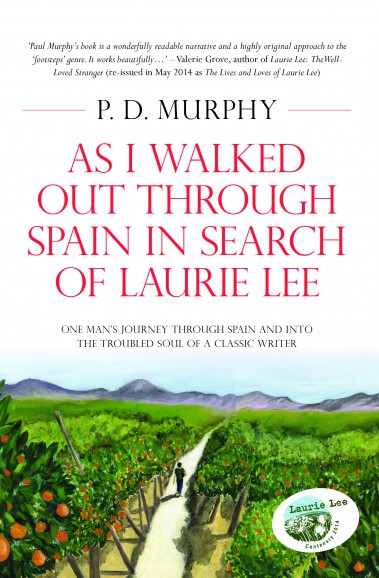
SPAIN BOOK REVIEW: ‘As I Walked Out Through Spain in Search of Laurie Lee’ by P D Murphy

As-I-Walked-Out

Have you ever read a book that changed your life? Had a hero who shared your life? Wanted a second chance in life?

In the summer of 2012, Paul’s life is falling apart: he needs to change things; find some inspiration; he needs to walk out.

Paul sets out across Spain to retrace the footsteps of his literary hero, Laurie Lee. He walks from the Atlantic Ocean in the north all the way down to the Mediterranean Sea. Lee made the same journey in 1935 and walked straight into the perfect storm of the Spanish Civil War and described the experience in his rite-of-passage book As I Walked Out One Midsummer Morning.

Like so many, as a young man, Paul read the book and fell in love with both Spain and Lee. Paul, like Lee, has always dreamed of walking down those white, dusty roads, lined by orange groves, all the way to Seville.

Paul looks deep into the troubled soul of the English national-treasure writer on an emotional journey that stretches to breaking point his relationship with Lee.

Paul is the first writer to fully retrace Laurie Lee’s classic 1935 journey through Spain.

Book cover and blurb via amazon.com

~~

Paul Murphy had a great plan – to retrace Laurie Lee’s step around Spain, as chronicled in his classic As I walked Out One Midsummer Morning. In seeing all the similarities and differences between 1935 and 2012, the author also found himself.

Anyone who has read Lee knows of his style, his matter-of-fact yet poetic prose. British born Murphy has delivered a book with a similar manner – all the details and facts on the trek, along with florid descriptions, amusing anecdotes and a style that is enjoyable to read. Visiting Spain very regularly since 1970, Murphy decided to set out across Spain in Lee’s footsteps, to be written and ready by June 2104, Lee’s 100th birthday. As I Walked Out One Midsummer Morning is a true classic, and to take on this trek would be no easy task, and that is evident throughout reading the book. As I Walked Out Through Spain in Search of Laurie Lee battles many internal demons, such as the issue that heroes can be easily shattered when examined close up. It is easy to idolise, something Murphy did with Lee, but when faced with the reality of Spain, with its powerful emotional pull, Murphy begins to see Lee in a whole different light, far from his pedestal.

Laurie Lee took a long route through Spain, a ferry from the UK to Vigo, and walked to Madrid via Zamora, Valladolid and Segovia. Then we went to Malaga via Toledo,  Valdepeñas, Cordoba, Seville, Cadiz and Gibraltar. Murphy altered the course a little, skipping Gibraltar and visiting Aracena and Ronda. The two-year task from the first steps taken until the release of the book has produced a quite a tale.

The book is laid out as a series of observations by Murphy, peppered with meetings along the journey, with those who fill the author’s conscience and pull him from his beaten path. From flamenco music, to bullfighting, to the fascist call-to-arms, the legacy of the war and Franco years, and lost loves along the way, Murphy delivers all the things people know about Spain, along with finding himself in among the contrasting nation. The book delves deep in the author’s personal life and feelings – lost love, divorce, his relationship with his own family – as a man in his fifties, Murphy goes through an immense change, one many could sympathise with, but perhaps not have the courage to fully understand, let alone express. Spain with its sights, sounds, smells, characters, noise and enlightenment can also be a lonely place, one that can invoke melancholy and a sense of feeling flat. Murphy goes through all the emotions of Spain and sugar coats nothing.

Many of Lee’s writings are open to interpretation and some believe his view too rose-tinted, or even outright lies, but irrespective of these opinions, Murphy does find some of Lee’s Spain still lurking, away from the main centres. Larger towns and cities seem to both educate and show a more modern Spain, with plenty of old opinions still interacting with the 21st century. Like Lee, Murphy is most comfortable in Granada, a wondrous place well described in the book.

We are all searching for something in life, things happen, people change, and Spain is a marvellous place to effect new directions. This huge challenge has been written up by Murphy as if this book was waiting for him all along. Of the 100-plus books I have read this year, only a few have held my interest as much as As I Walked Out Through Spain in Search of Laurie Lee. 

Whether you’re in your late teens like Laurie Lee, your mid-fifties like Paul Murphy, or somewhere in the middle like myself, this book will have something to take away and ponder. Murphy doesn’t try to become Lee, or copy him, but finds his own voice. Honest, fresh and motivating.

Read Fiona Flores Watson’s interview with Paul Murphy here – As I Walked Out: One man’s journey in the footsteps of Laurie Lee

Valencia Photos of the Month: La Lonja

La Lonja de la Seda de Valencia (Silk Exchange, or Silk Llotja in Valencian) is one of Valencia’s greatest marvels. Set in the Plaza Mercado, next to other great buildings (which I’ll have to blog in a separate post due to their awesomeness), the La Lonja is a great representation of Valencia in its golden age. Designed in a Gothic style by Pere Compte, construction started in late 1482,  after 20 homes were demolished to make way for the building. Its Sala de Contractació, (Trading Hall or Hall of Columns), was completed in just fifteen years. However, the complex building, named a UNESCO site in 1996, wasn’t completed in 1548.

Since 1341, Valencia had been trading all major products from the Llotja de l’Oli (Oil Lonja) on a nearby site, but as the city boomed, it was time to upgrade the trading hall. Silk was becoming a major product in Valencia, and the city had big plans. Opting for the style of trading halls in Barcelona, Mallorca and Zaragoza, Valencia set to building La Lonja, comfortable that sales in the market would recover costs due to Valencia being Europe’s biggest port. The Trading Hall was built in the traditional style of a tall building held up columns. La Lonja’s main room is 36m by 21m, with 24 columns holding the spectacular ceiling 17.4m high. Despite other major works going on in Valencia, multiple sculptors and artists were employed to make this vital building a success. The quality and speed of the build cemented La Lonja as the symbol of Valencia’s golden era. The spiral columns were to represent palm trees, and the ceilings painted bright blue with golden stars, and around the building is a latin inspiration – Inclita domus sum annis aedificata quindecim. Gustate et videte concives quoniam bona est negotiatio, quae non agit dolum in lingua, quae jurat proximo et non deficit, quae pecuniam non dedit ad usuram eius. Mercator sic agens divitiis redundabit, et tandem vita fructur aeterna. (A rough translation says that the famous building requires no particular religion or nationality in those who wish to sell their wares. Merchants can enjoy wealth and eternal life). 

At the same time as the Trading Hall build, La Torre was also built, a third higher than the rest of the building. The bottom floor of the tower became a chapel designed by Juan Guas and the second and third floors were for prisons where merchants were held if they missed payments to La Lonja. The glorious staircase leading up to these cells is off-limits, but is beautiful example of the architecture of the building. The tower underwent a good quality restoration by Josep Antoni Aixa Ferrer between 1885 and 1902, to bring the simple roof details more into line with the rest of the building.

Once these aspects were completed in 1498, the Patio de los Naranjos was started. The courtyard was filled with orange and cypress trees, native to the area, with an eight-pointed star fountain, Moroccan style. The courtyard walls are covered with gargoyles, humorously representing figures of the time. The courtyard held many of the city’s most important fiestas and meetings, including royalty and ceremonies. The courtyard is accessed through the beautiful Chambers of Trade doorway.

But the La Lonja needed more beauty. Pere Compte died in 1506, and Joan Corbera carried on his work with an additional building off the courtyard, to be named the  Consulado del Mar (Consulate of the Sea). Started in 1238, the court held meetings on matters relating to maritime trade and commercial matters. They were given a large space within La Lonja and the room beholds a golden detailed ceiling. All of these rooms have been well maintained and all accessible for visitors. The cellars have also been recently restored and can be visited (and would have made great prison cells, not sure why they wasted the good views on the prisoners in the tower!).

The main door to the La Lonja, the portal sins (since the ‘original sins’ are carved around it) is not always accessible. When I first moved to Valencia, it was the main entry to the building, but now the building can be accessed from the back entry only, in Plaza de la Companyia (where you can see the plaque to El Palleter) and only costs a few euros for entry. The exterior is fully covered in gargoyles and carvings representing the kingdom of Valencia, and also has many Renaissance designs over the original Gothic details. Each doorway and window is heavily detailed and designed for a glorious all over effect. La Lonja became known at the Silk Llotja because the product was so essential to the city (around 25,000 people were working at around 3000 looms in Valencia at their height), though all items were traded here along with the silk. Sadly, the bottom fell out of Valencia silk industry in 1800, and the city lost its golden age forever. The building now exists as a tourist attraction after trading ended 30 years ago, but has been kept in perfect condition.

Spain named the building as a Property of National Interest in 1931, survived relatively unscathed in the civil war, and La Lonja became a world heritage site because “the site is of outstanding universal value as it is a wholly exceptional example of a secular building in late Gothic style, which dramatically illustrates the power and wealth of one of the great Mediterranean mercantile cities.” Valencia deserves great praise for maintaining such a priceless gem.

Click on each photo to start slideshow or see year of each shot.

Historical photos via Valencia Historia Grafica

SPAIN BOOK REVIEW: ‘Sketches of Spain (Impresiones y Paisajes)’ by Federico García Lorca

Lorca cover

At age 17, Federico García Lorca travelled around Spain with his university professor and accompanying students. This trip proved a turning point for Lorca, who, at 19, published Impresiones y Paisajes (Impressions and Landscapes 1918), an account of how he saw his homeland.  Lorca wrote this book while in Granada, before he moved to Madrid in 1919 to produce many of his well-known works. Sketches of Spain is a fine chance to read Impressions and Landscapes in English, and hear him find his own voice as an artist.

From the prologue, you can hear and understand Lorca’s prose – ‘Friend and reader: if you read the whole of this book, you will recognise a rather vague melancholy. You will see things that fade and pass on, and things portrayed always bitter, if not sadly”. Clearly, Lorca finds beauty in all things, even in the less-than pristine places that he visits. It feels like less of a story, and more of a poem, or of reading out the words to a song. Lorca finds feeling in everything he discovers on his journeys.

In each chapter as Lorca drifts from town to town, the physical is described, along with the depth of feeling and symbolism he finds in the everyday. Each description is poetic, and delivers on the promises of melancholy, along with flashes of solitude and wanting. Each place is explained until the reader can ‘feel’ them, understand them, and have moments in their own minds triggered by sounds, smells and ideas.  Lorca visits places of religion – monasteries, churches and convents, and sees the beauty in the buildings, but not the nature of them. Lorca seems to feel as if these structures are burdens on towns and people. He clearly finds no solace in religion, nor the people he meets on his visits. He feels that prayers are never answered, and that penitence has no purpose, that instead charity would be a more suitable aspiration.

The poverty of Spain during this time (1916/17) is highlighted, along with the cruelty it inflicts on the populace, yet Lorca finds moments of light within it, showing how this poor lifestyle means people can easily appreciate simple pleasures, such as the smell of their food, or the sunshine on their skin. Galicia is filled with rain, poor children and social injustice; Granada with flamenco and austerity; Castile is a wide open existence of fine scenery but harsh reality. He reflects on death in Burgos when looking through empty tombs. It’s as if Lorca travelled through Spain with his eyes sometimes closed, but the rest of his senses dramatically heightened.

Of Castile, Lorca writes – ‘Eternal death will lock you into the gentle, honeyed sound of your rivers, and hues of tawny gold will always kiss you when the fiery sun beats down… You grant the sweetest consolation to romantic souls that our century scorns, you are so romantic, so bygone, and they find tranquillity and blissful exhaustion beneath your curved ceilings…’

Given Lorca’s young age when he made this trip, it is easy to feel a soul which is still learning of who it will one day become. While you get a real insight into Lorca’s style, he himself is hidden behind the words. The book has been translated into English by Peter Bush, and it rare to find a translation that comes out feeling so smooth and comfortable. The illustrations for the book are done by Julian Bell, and easily reflect the desperate sights where Lorca once tread.

This book would go well with a chair in the sunshine, and a glass of wine in hand. (Sadly, I had access to neither of these things, so have a sip for me!) This book is perfect for escaping reality and to discover how a genius once saw the world.