This Week in Spanish Civil War History – Week 44/45/46: 15 May – 5 June 1937

Sorry the delays over the Shakespeare season. Weekly posts will now return.
May 15

Prime Minister Largo Caballero resigns from his post, now having no alliance with either Anarchists, Socialists or Communists. A member of the centre-left PSOE, Juan Negrín, is appointment Prime Minister, and selects a group of ministers from all groups, Republicans, Communists, Socialists and Basque men to form the government. The CNT however are now cut out entirely from Spain’s government, despite having huge support around the country. The Anarchists are quickly losing strength and the POUM is about to be outlawed completely in Barcelona and around Spain.

May 20

The Nationalist offensive on the Basque Country is destroying the Republicans, who come up with a plan to divert Nationalist troops away from the north. Republican troops in Aragon start plans to take Huesca, and troops in Madrid decide to launch an offensive on Segovia, both to take place by the beginning of June. Bilbao in the north has not yet been taken by Nationalists, but the Republicans/Basque fighters have no reinforcements nor supplies getting into port, and need the Nationalists distracted.

May 27

The La Batalla newspaper, run by the Soviet anti-Stalin POUM ( Workers’ Party of Marxist Unification) is banned in Spain by the new centre-left Negrín parliament. Other communist factions are destroying the POUM.

May 28

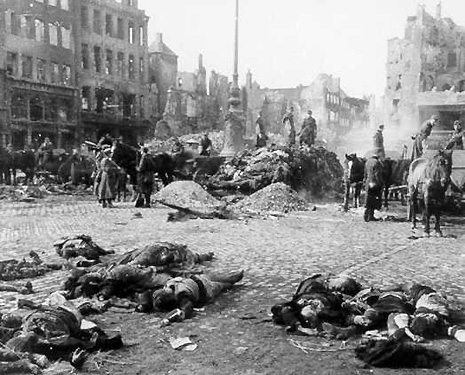
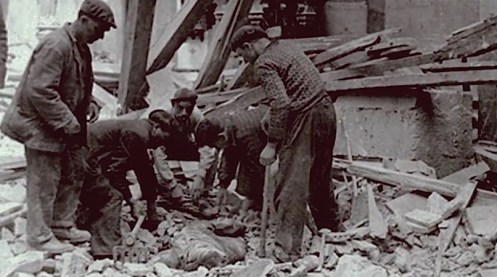
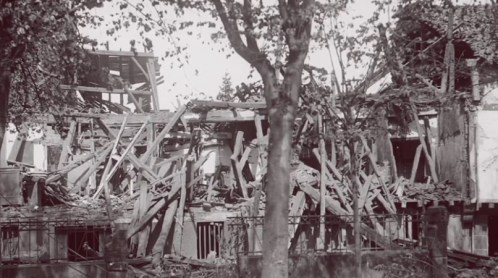
The temporary capital city of Valencia is bombed from the air by Nationalist planes, killing 200 people and destroying 50 buildings while attempting to bomb ships in Valencia’s large port. The bombing is done while the city is sleeping, and the Red Cross hospital is targeted during the attack.

NB: A separate post on the attack of Valencia will also be posted.

May 29

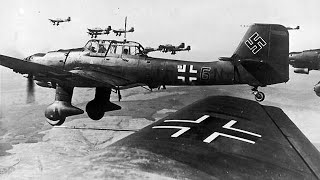
Madrid is still surrounded by Nationalist troops since the siege on the city in November 1936. Daily air raids continue to hammer the innocents civilians of the city, and Republican troops devise a plan to break out of the city and push back Nationalist front lines. Republican men, led by a Polish communist leader, use armoured vehicles to try to push back the Nationalists, but the plan is quickly beaten by strong Nationalist troops. The city has been surrounded by large battles in Jarama and Guadalajara, and now the Republicans begin plans to take Brunete, a town 25 kilometres west of the city, and Segovia 90 kilometres north, to push back front lines and relieve Madrid. In the meanwhile, the daily air raids continue from German Condor Legion planes, and Spanish men are taken to Russia to be trained in Russian planes to aid the Republicans against this onslaught.

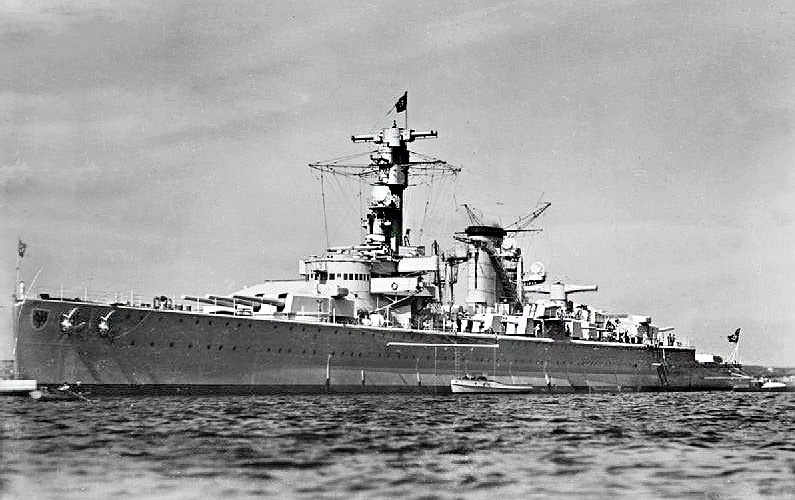
Two Soviet bombers, on behalf of the Republican forces, bomb air bases at Ibiza, off the coast of Nationalist-held Mallorca. The planes, sent from Cartagena, bomb the German cruiser Deutschland, mistaking it for the Nationalist cruiser Canarias. The Deutschland was off the coast of Ibiza as part of the Non-Intervention Committee’s patrol. Both pilots misidentify the ship and drop bombs, killing 31 and wounding another 74.
May 31

Due to the bombing of the Deutschland, both Germany and Italy decide to leave the Non-Intervention Committee. (Pointless as both had defied the Committee from the very beginning and had been killing Spaniards throughout the entire war.) German forces fight back by attacking the port city of Almería, relatively safe during the war until now. The cruiser Admiral Scheer fires off 200 rounds, killing 19 and wounding another 55. Around 150 buildings are destroyed. All the German and Italian ships on the Mediterranean are all backing the Nationalists, not neutral at all.

Spanish prime Minister Juan Negrin defies calls to attack Germany for these killings, as he does not want open war with Germany. The League of Nations calls the attack on Almería justified for the accidental attack on the Deutschland, reminding Spain that Europe and the world do not care about their pain.
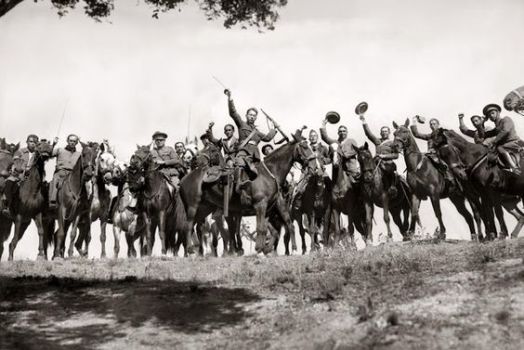
The Republican army have three divisions in the Sierra de Guadarrama, the mountains on the north side of Madrid. The 34th, 35th and 69th divisions are brought together under Colonel Domingo Moriones, and given artillery and T-26 tanks. The Guadarrama is held by Nationalist troops and the Republicans attack, and break through the front line at San Ildefonso, around 80 kilometres north of Madrid. the 69th division also take nearby Cruz de la Gallega. The XIV International Brigade head towards La Granja, which brings them close to the strategic Segovia Road and advance towards Cabeza Grande, but only through suffering serious casualties.

June 1

The Republican forces reach La Granja north of Madrid on their way to Segovia, but  the Nationalists begin to fight back with air raids on advancing Republicans on the ground. The Republicans lose the town of Cabeza Grande and casualties begin to mount.

June 3

High ranking Nationalist General Emilio Mola y Vida is killed when his Airspeed Envoy twin-engined aircraft crashes in bad weather on route to Vitoria. Mola is head of the northern Nationalist army, which has been successfully attacking the Basque Country, while Franco is able to focus on Madrid and the south. The war began with Franco, Mola and Sanjurjo all in equal power, but Sanjurjo died in a light plane crash in July 1936. Now with Mola also dead in a light plane crash, Franco is able to assume total control and no one is capable of standing up to him. Rumours that Franco had the men killed swirled, but nothing to suggest more than accidents almost a year apart was ever found. In 1948, Mola will would posthumously named a Grandee of Spain and made a Duke, the title given to his son.

Fidel Dávila is named head of the Nationalist troops in the north to continue the assault on Bilbao.

~~

This is not a detailed analysis, just a highlight (lowlight?) of the week’s events. Things get lost in translation – Feel free to suggest an addition/clarification/correction below. The more the world remembers, the better. All photos and captions are auto-linked to source for credit, and to provide further information.

This Week in Spanish Civil War History – Week 42 and 43: The May Days of Barcelona 1 – 15 May 1937

Barcelona, May 1937

The Barcelona Generalitat is run by members of many political groups as they fight to both repel the Franco Nationalist invasion, and cope with anarchist-led social revolution, giving workers and the poor equal rights and freedoms. Many sub-groups and belief systems also exist, but to simplify, listed are the major players, in which all these smaller groups are affiliated. All groups are either left-wing, or centre-left, all battling against Franco and fascism, but have been infighting in Barcelona

CNT – Confederación Nacional del Trabajo, National Confederation of Labour, a powerful anarchist workers’ union, enacting social revolution and the downfall of the rich bourgeoisie. Aligned to Republican Socialist government but only out of necessity for survival
.
FAI – Federación Anarquista Ibérica, Iberian Anarchist Federation, anarchist workers’ union, heavily sided with the CNT
.
UGT – Unión General de Trabajadores, General Union of Workers, Socialist workers’ union aligned with government after breaking away from the CNT. Not heavily involved with social revolution but pro-workers’ rights
.
POUM – Partido Obrero de Unificación Marxista, Workers’ Party of Marxist Unification, a Communist group also aligned with Troksyists. They wish to promote Communist freedoms but reject Stalin and Soviet Communism
.
FIJL – Federación Ibérica de Juventudes Libertarias, Iberian Federation of Libertarian Youth, a group of young people believing in social revolution and freedom, aligned with the CNT
.
PSUC- Partit Socialista Unificat de Catalunya, Unified Socialist Party of Catalonia, a member of the Comintern, International Communism, supported by Stalin. The rich bourgeoisie support the party as they seek to regain control over Spain. Keen to destabilise the Republican government in order to take over when all is destroyed
.
PCE – Partido Comunista de España, Communist Party of Spain, the largest national Communist party in Spain, including the Communist workers’ unions
.
Estat Català – Catalan State, pro-independence group. Supportive of the Catalonian government, but opposed to power given to the Anarchist workers’ unions. Torn internally between supporting the government and overthrowing it for total control
.
Generalitat de Catalunya, the Socialist government of Catalonia, which controls the city of Barcelona and all regions of Catalonia independently from Spain
.
Second Spanish Republic – the Spanish Republican government, led by Prime Minister Largo Caballero, currently housed in Valencia during the war against Franco, and supporting the Catalonian government. Made up of all political parties fighting against Franco’s Nationalists, but struggling on the frontlines and internally
May 1

The May Day parades are canceled in Barcelona by the CNT and UGT, to avoid riots and clashes. Since the victory for the workers’ unions in Catalonia at the outbreak of war, infighting between leftist factions have been escalating. The Anarchists have established social revolution in rural Catalonia and Aragon, which is coming under constant fire from Communists who oppose social revolution and promote government-led societies. The CNT, FAI and UGT workers unions have been working as part of the Catalonian government alongside the Communists, who fear anarchism (and their hatred of leaders and leadership roles). The Spanish PCE Communist group, along with Soviet-doctrine PSUC Communists have been pushing back against the Anarchists for months in the Catalonian regions. The Marxist POUM have sided with the Anarchists, despite their Soviet roots. Constant outbreaks of fighting have resulted in deaths, and tensions have been growing all year. Leaders and prominent men in all parties have been targeted, many killed in assassinations.

May 2

The Patrullas de Control, Control Patrols, made up of men from all unions, maintain the fragile peace in Barcelona, but are losing control. Errant Civil Guards and Communist gunmen are killing people around the city. Rather than working together, all these leftists groups are splitting apart for power. Spanish President Azaña tries to call Lluís Companys, leader of the Catalan government, but is cut off by workers at the telephone exchange, stating lines are too important for their conversations. Marine and Air Minister Prieto calls from Valencia, only to be told that the Catalans have no government anymore, only a defense committee.

Shooting breaks out on the streets in central Barcelona between pro-independence Catalan State members and anarchist FAI men, who lose a man in the shooting. These outbreaks have become common in resent months.

May 3

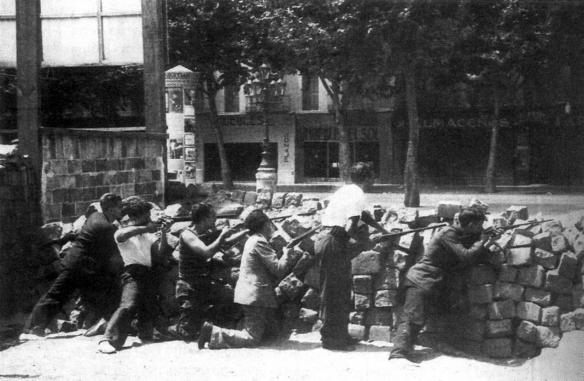
The strategic Telefonica building, controlled by the CNT and UGT, is attacked at 3pm. Around 200 guards from the Communist-led police units, under orders from Catalan government members, storm the building. Anarchist guards armed with machine guns manage to repel the Communists, who only claim the first floor of the building. This outbreak of shooting marks the start for other fighting to break out through the city. Hastily made barricades go up in the streets, Communist men occupy tall buildings and bell towers at churches, and start shooting at everyone they can find. CNT, FAI and UGT supporters are targeted, along with the Marxist POUM members. Check points are set up to arrest anyone a member of the CNT or POUM. The army stays neutral but CNT and POUM officers are arrested. Together, the Control Patrol and police leaders, both CNT sympathisers, go to the telephone exchange and appeal for calm. Catalan government leader Companys had no prior knowledge of the outbreak but sides with the police and patrols. The CNT and FAI are forced to get their own union members to maintain peace and calm in the city.

By nightfall, the Catalan State and PSUC Communists have the centre of Barcelona. The CNT have the suburbs and the western portion of the city itself. The POUM, along with the Bolshevik-Leninists and Libertarian Youths are all barricaded in within central Barcelona. The POUM propose an alliance between groups to gain control over the Communists, with no success. Gunfire continues in the city centre, where all parties have their headquarters, while the telephone building is at a truce, to allow vital communications to continue.

May 4

Buildings are barricaded shut in Barcelona, and shops are closed to keep people safe. Only gunfire can be heard through the city. The police seize the Justice building and several CNT bases around the city. Civil war inside civil war is threatening to break out. CNT members in the government meet with other groups at 11am, eager to promote calm. CNT leaders appeal for their members, via radio and newspaper, to lay down weapons and go back to their lives, while executive leaders of the CNT and arrive in Barcelona to plea for peace.

Word comes in that Communist-led military units are not going to abandon the frontlines and come to Barcelona, giving hope to calm. But at 5pm, a CNT car is stopped by Catalan State and PSUC Communists at a barricade as they attempt to get to the CNT-FAI headquarters. All CNT men surrender but are gunned down on the main street of Via Durruti (Via Laietana). Shootings have been breaking out all day, and among them are the deaths of the Aragon Defence Council president Joaquín Ascaso and famous libertarian Domingo Ascaso, family to famed Francisco Ascaso, killed last July. The POUM are openly supporting the Anarchists and Libertarians, and call for a general truce throughout Barcelona in defiance of the Communist uprising.

May 5

Overnight the entire Catalan government has resigned. Each faction in the city is given one member each in a provisional government to negotiate peace. But assault guards attack the Medical Union building in Plaza Santa Ana and the Libertarian Youth building where six men are killed. The CNT-FAI put out more men and armoured cars to protect their headquarters and members, but many Anarchists are trapped and killed around the city. While a truce is called by leaders in negotiations, the units are no longer taking orders from any one person and are impossible to control, and fighting continues.

May 6

Around 5,000 neutral troops, chosen evenly among their units to promote neutral agreements, start arriving from Valencia. They quickly occupy much of the central city, and barricades are abandoned in the streets. The CNT officers reclaim the telephone exchange. While anarchist left-wing parties are facing backlash all over Spain, many of these neutral officers are CNT members and are keen to salute their headquarters as they take over Barcelona.

May 7

Troops from the Jarama frontlines are in the region now, taking control of the area as Barcelona finally stops fighting. The CNT calls for everyone to lay down arms and return to work, but assault guards new to the Catalonia region are still killing and arresting CNT, FAI, UGT, Libertarian Youth and POUM members. The arrests are illegal and they are held in Communist-led military barracks, secret prisons and police stations. Over the past several days, 500 are killed and another 1500 injured.

May 8

Peace has been restored in the city, along with the Barcelona and Tarragona regions of Catalonia, with all anarchist groups defeated. Barcelona police find twelve bodies, all young men who have been mutilated. They had been arrested on May 4, pulled from a CNT truck outside Communist barracks. Cesar Fernández Neri, Jose Villena, Juan Antonio, and Luis Carneras are identified, but the other eight are too badly mutilated to be named. Also found is popular Italian anarchist Professor Berneri and two friends, found dead in a Communist barracks building.

May 11

The Communist PCE and PSUC lay the blame on the May Days on the small POUM, for supporting Anarchism instead of Communism. The Spanish Prime minister Largo Caballero disagrees, but he is losing power against the Communists. The Anarchists are reeling from the fighting in their home power base, knowing they cannot hold power alone and need alliances to continue social revolution, but the Communists are constantly gaining strength.

May 13

The Communists are still pushing blame on the POUM, now claiming they are fascists for Franco. They have also made the same accusation at the social revolution Anarchists who hold control over Aragon. While peace is restored, the hatred between groups continues to swirl.

May 15

Prime Minister Largo Caballero resigns from his post, now having no alliance with either Anarchists, Socialists or Communists. A member of the centre-left PSOE, Juan Negrín, is appointment Prime Minister, and selects a group of ministers from all groups, Republicans, Communists, Socialists and Basque men to form the government. The CNT however are now cut out entirely from Spain’s government, despite having huge support around the country. The Anarchists are quickly losing strength and the POUM is about to be outlawed completely in Barcelona and around Spain.

~~

This is not a detailed analysis, just a highlight (lowlight?) of the week’s events. Things get lost in translation – Feel free to suggest an addition/clarification/correction below. The more the world remembers, the better. All photos and captions are auto-linked to source for credit, and to provide further information.

This Week in Spanish Civil War History Extra: 80 Years Since the Guernica Bombing

26 April 1937 – Guernika-Luma, a Basque town of 7,000 people, entered the history books when it was attacked by the German Condor Legion (aided by the Fascist Italian Aviazione Legionaria) fighting on behalf of Franco’s Nationalist forces. The small town of Guernica, in the Biscay region of the Basque Country was a communication hub for the Basque fighters, who had sided with the Republican forces since the outbreak of the Spanish Civil War. Guernica, the spiritual home to the Basque people, became a target for a sustained and pre-panned terrorist bombing, where civilians, not military targets, would be bombed, to inflict devastation and murder. Operation Rügen would go down in history as a horrific slaughter of innocents which would shock the world, and single itself out as a vile test run for what Germany would inflict throughout Europe only a few years later.

Guernica is a town just inland from the Bay of Biscay, and just 30 kilometres from the Basque capital of Bilbao. The area had been under intense stress from the War of the North, carried out by the Nationalists in the months leading up to the bombing, hot on the heels of years of struggle for the Basque people. Guernica is the home of the Gernikako Arbola (Tree of Gernika), the symbol of freedom to the Biscayan and Basque people. Guernica was also home to a manufacturing plant which produced firearms to the police and military, which became a vital resource during the Spanish Civil War, when the Basque Army supported the Republicans’ cause over Franco’s Nationalist rebels.

By April 1937, the Basque Country was under constant bombardment by the Nationalist advance, coming at them on all fronts. The small Basque Army, set up by the independent Basque Government, sought to protect the Biscaya and Guipuzcoa regions. With the Basque capital of Bilbao only 30 kilometres west, Guernica was vital in protecting the capital, and also a point where Republicans could retreat to if needed. Throughout the war, Guernica had no seen direct front-line fighting, though 23 Basque battalions were now nearby to the east. The area had no airforce protection, no air base and only room to house two battalions if needed.

The attack on the Basque Country has been planned a month earlier by Franco, in conjunction with murderous General Mola, who lead the northern army, along with the German Condor Legion. The town of Durango suffered civilian bombing on March 31, part of a test run of killing innocents, and troops starting pouring into the region. Many people sought refuse in the town of Guernica, away from the fighting. But eventually, there was nowhere else to flee as the Republian and Basque fighters were slowly beaten back by the Nationalist forces. General Mola planned a devastating attack on Guernica, all done with Franco’s blessing. They planed for 21 German and three Italian bombers, carrying 22 tonnes of bombs, to be dropped on innocent people.

Monday was market day in the town of Guernica. While market days had been largely banned or discouraged in the region for safety, people still needed supplies. Monday 26 April was a typical Monday market day which could see up to 10,000 people in the town from surrounding areas, all in the main plaza. Coupled with around 1,000 refugees from the area, the town was full, the roads more congested than usual.

At 4.30pm, the first wave of bombers came from the north from over the Bay of Biscay, along the Urdaibai estuary which connects Guernica to the sea. The initial plan was to cut off bridges to block movements in the area with two 50 kg bombs, while the Italian bombers dropped another 36 50kg bombs on people. The first wave took only a minute, destroying bridges and the San Juan church and Republican Left headquarters, as the people of the town looked to take cover in panic. For the next 90 minutes, another four waves of attack would fly over the town, this time dropping bombs at random, killing innocent people, all cowering for cover in a town overfilled with people trying to buy and sell food. Guernica had no strategic assets to be captured, nor had seen any major wartime fighting, and was totally obliterated without warning or reasoning.

The people of Guernica were given 30 minutes of silence at around 6pm, thinking the bombing was complete. But by 6.30pm, the bombers were back in formation again, spread out over 150 metres, to drop the remainder of their arsenal. Then in came German biplanes, to bomb streets leading out of the town and machine-gun down people fleeing the carnage over a brutal 15 minute period. This cruel attack on civilians would have a larger impact than Franco could have anticipated.

This short space of time saw 75 percent of the town reduced to rubble. While the raid was considered a failure, as it was supposed to have been a military, not civilian attack, to bomb the area and cut off the Republican fighters from communications and reinforcements in Bilbao. As a result for the killings, within days, the Nationalists were able to swarm the area, not that they was much left to ‘conquer’. The firearm manufacturing plant was saved, as planned, along with the Gernikako Arbola (Tree of Gernika) and its government building. The town had become a testing ground for what would go on to be labelled carpet bombing, or blitz bombing, a popular tactic by German planes.

News quickly spread about the horrific acts at Guernica. First spreading through Europe and then the rest of the world, the Nationalists were branded as murders and barbarians (which should have been obvious already) as the blatant killing of innocents became apparent. Franco quickly had to have the propaganda dialled up, and denied the Nationalists’ own involvement, and claimed the Republicans destroyed the own town and killed their own people while in retreat from ground troops. Germany claimed no knowledge of the attack, claiming to have bombed a strategic bridge, the rest nothing to do with them. No such luck; journalists in the area were quick to file stories on the truth of Guernica.

But in the aftermath, the death toll was hard to quantify. The Basque government were unable to do much in way of assistance as Nationalists forced swarmed the area, and they made no attempt to calculate the dead and injured. Many left to die in the rubble were never accounted for, likewise the number of people who fled the region, never to return.

For decades the number of killed sat at 1,654, another 889 injured. A British journalist for The Times was in the area, and also came up with similar numbers. These incorrect figures became commonly adopted as accurate, though with the Nationalists not helping the wounded when then they invaded, and without proper funerals and records, there was no official death and injury toll. Even in the 1970’s the Nationalists were still denying everything and claimed only a dozen people were killed. Without further details coming to light over the years, historians now recognise the number of dead about approximately 300. A comprehensive study in the region in the 1980’s suggested 153, based on what records survived, with another 592 people who either died or recovered in Bilbao’s nearby hospital. While in context with many atrocities which occurred in Europe over intervening years make the numbers appear ‘small’, the casualty rate per bomb was much higher than many carpet bombings to come in the future, setting Guernica apart for yet another reason.

British journalist George Steer reported the story to the world, Guernica on the front pages in England for over a week as the horrors emerged. Cartoons emerged of the Basque ‘holy city’ being crushed by Hitler and his bloody swords in the US. The fact Guernica had no military targets quickly turned on the panic in many around the world, as people realised nothing was safe anymore. Guernica became a symbol of international horror and innocent suffering as deviant fascists sought to kill and destroy all in their way.

On the 60th anniversary of the bombing, Germany formally apologised for their role in the massacre, and in 2003, Guernica was commemorated alongside Dresden at the own commemorations, for suffering such a similar attack, but far less honoured and remembered. On Guernica’s 70th anniversary, officials in Hiroshima spoke of Guernica’s legacy in line with their own experiences. It has been suggested that Guernica be the world capital for peace.

For all the historical significance, the destruction and most importantly, the death toll, Guernica is probably best known internationally due to the Picasso painting of the same name. Picasso, living in exile in Paris, had been commissioned for war painting three months prior, and when he hard of Guernica, all of Picasso’s ideas were scraped for the depiction of those suffering. To Picasso, to bomb women and children was  to victimize humanity. The painting was complete by June 3. In black and white, the painting shows innocents dying, along with the Spanish symbols of the horse and bull, as Spain is ruined, along with tiny symbols of hope trying to shine through while destruction comes from all angles. When German soldiers came into Picasso’s Paris apartment years later during WWII, and was asked if he did the work, he told the Nazi’s – ‘no, you did’. Guernica traveled the world but was not able to return to Spain until 1981 when freedom was achieved for the Spanish people. It now sits in the Reina Sofia gallery in Madrid (if you haven’t been, you should).

After the bombing of Guernica, the town was in flames, seen 10 miles (16 kilometres) away, according to George Steer, as buildings continued to crumble and crush the injured and trapped. Yet, pilots who belonged to the Condor Legion, whom Franco let practice on his own people, received a mausoleum in La Almudena in Madrid. Many vicious men from the war were revered in Spain, these plaques and statues and memorials removed over the years. To mark the 80th anniversary of Guernica, the mausoleum in La Almudena for fallen Condor Legion pilots was quietly removed, to be replaced with simple names. No more “Here rest the German pilots who fell in the struggle for a free Spain. German aviators who died for God and for Spain”. The plaque had been removed in the past but had been quietly replaced by those who still love Franco and all that happened in his name.  It has taken 80 years for this last sign of pro-German acts to be removed. The wounds on Guernica will never fully heal.

~~

This is not a detailed analysis, just a highlight (lowlight?) of the events. Things get lost in translation – Feel free to suggest an addition/clarification/correction below. The more the world remembers, the better. All photos and captions are auto-linked to source for credit, and to provide further information.

This Week in Spanish Civil War History – Week 40 and 41: 17 – 30 April 1937

April 19

Franco creates the Falange Española Tradicionalista y de las Juntas de Ofensiva Nacional-Sindicalista (FET y de las JONS). This brings together the horrid Falange fascists and the hard-right Catholic Carlists into one big hate group. Franco appoints himself as leader, making him both a political and military leader, paving the way for dictatorship. The Falange has many of leaders killed during the war, more than any other group, and needs leadership. These groups together can go on to control all other parties and unions. Franco, with no real alliance to any group, told all what they wanted to hear, bending to suit to take over all parties he worked with, in order to slowly assume total control. This party can dominate enough to make Spain pro-Catholic, pro-monarchy, pro-fascism, pro-conservatism, pro-ultranationalism by combining their people. It allows the small fascist Falange group to swell to a peak of 900,000 (when combined together) and the women’s unit (needed because these groups were anti-women), Sección Femenina, grows to 500,000 during the war.

April 20

The Nationalist ‘government’ in Burgos has been battling the Basque ports now for two weeks. They launch a huge bombardment of Basque port towns to stop all flow of cargo entering to help the Republican cause, as British ships have defied blockades. The Nationalist 1st Navarrese bridge battle Basque troops at Elgeta, just 20 kilometres east of the newly destroyed town of Durango (see week 37).

Basque fighters must retreat to the Iron Ring, a series of tunnels built around Bilbao, which are simple and under-defended, but have no other option, as the German Condor Legion are bombing towns and forest areas through the region.

pro-Republic Basque fighters in Elgeta, Gipuzkoa, Basque Country

April 23

The Junta de defensa, Madrid defense council, is dissolved, in an effort to reshape the protection of the city. They have been active since the outbreak of war, but now have to change tactics. The Ministry of War, who control the command of the Republican army takes over the defense of Madrid, as fighting in the city has stabilised and the frontlines are outside Madrid itself.

April 26

The German Condor Legion launch their major terrorist offensive on the small Basque town of Guernica. After experimenting on several towns in previous weeks, the Condor Legion strike the unarmed Basques with airstrikes on civilians. The town of Guernica is bombed for three hours, and no military targets are identified; the bombing is purely to kill innocents. The Basque army in the area are forced to instantly retreat and bombed upon fleeing. They attack on a Monday, market day in Guernica, to maximise the civilian death toll. Military factories are spared, along with Gernikako Arbola, the Guernica Tree, symbolising freedom outside the old government building and the Casa de Juntas, the new location (and tree). These are spared as the Nationalist want the locations for themselves once they invade. The bombing shocks the world, and Nationalists have to hide and lie about what really happened at Guernica.

A separate post about Guernica will be posted.

April 30

Nationalist-supporting Italian troops take the port town of Bermeo, but the España, a 132 metre Nationalist battleship hits one of its own mines and sinks off the coast of Santander 150 kilometres away, and never reaches the port. The España was aiding fellow destroyer Velasco in stopping a British ship of getting into port when it hit its own mine. Five seaman die as Republican planes bomb the sinking ship, but all other men were rescued by the Velasco.

As Nationalist troops close in on Bilbao, the Basque government makes a plea, asking that 20,000 children be shipped out of Spain in temporary exile. The first ship leaves a month later, 4,000 Basque refugee children to Britain, while others are sent to France, Belgium, the Soviet Union and Mexico. Many never return home.

Basque children in the French Pyrenees. Children in western countries have to suffer the Second World War during their return home. Children in Communist countries could not return for nearly 20 years

~~

This is not a detailed analysis, just a highlight (lowlight?) of the week’s events. Things get lost in translation – Feel free to suggest an addition/clarification/correction below. The more the world remembers, the better. All photos and captions are auto-linked to source for credit, and to provide further information.

This Week in Spanish Civil War History Extra: 80 Years Since the Bombing of Durango

The Nationalists had tried everything to get into Madrid. Both the city and surroundings areas in all directions had already been bombarded by March 1937, eight months since the start of the SCW. Franco decided to turn his attention away from the broken yet defiant capital, and launched a new War on the North. General Emilio Mola y Vidal, who was named the leader of the north during the war while Franco commanded the south, decided to wipe out the Basque country. He already had launched offensives throughout the Basque region while basing himself in Burgos (160 kilometres south of the Basque city of Bilbao). Mola decided to deploy 50,000 troops and multiple German planes, but this time had a new plan – to launch ‘terror attacks’, where he would have his men attack civilians instead of military targets. This time, innocents were to be targeted, to inspire fear, to make the Republican held areas cower to the will of the Nationalists, or be hunted down and murdered.

The town of Durango was marked as the test target. Just 30 kilometres south of Bilbao, Durango was a small village, typical of the region and Spain as a whole. With 10,000 people, it was a rail stop between Bilbao and the front lines of the war. While it had no military operations, it was in Republican territory and ripe for attack. Mola wanted to burn the entire province of Vizcaya to the ground for being in Republican territory.

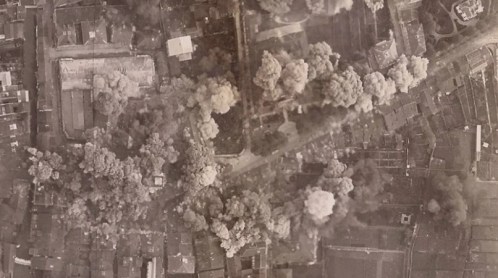
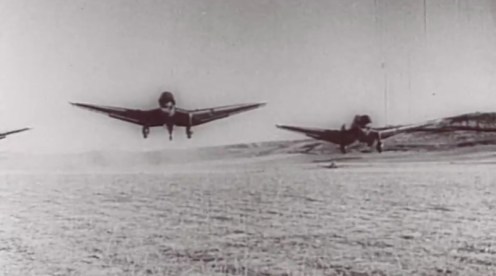
At 8.30am, inhabitants were at Mass at the Santa Maria basilica in the centre of town, and in the basilica arcade, where the local market was held. Five bombers, German Ju-52’s flown by the Condor Legion and Italian Savoia-Marchetti SM.8’s flown by the  Aviazione Legionaria, set out and used the basilica as the focal point. A direct hit was scored from the very beginning; the priest and 26 worshippers were bombed to pieces. The nearby cloister was also destroyed, killed all 14 nuns inside. The market was also hit directly, killing all those looking for food, others killed by falling buildings and horrific injuries from which they could not recover. A total of 281 bombs were dropped on Durango, almost 15,000kg of explosives. Just over 200 buildings were destroyed, though some have been rebuilt and their shrapnel wounds are still visible today.

The initial bombing sent the people first into panic, followed by a desperate attempt to rescue those under rubble once the bombers disappeared again. Word spread outside the village; Bilbao received news of the bombings, and send ambulances, doctors and police to help the stricken people of Durango. The tiny village of Ellorrio, ten kilometres from Durango, with no military targets at all, and just a few thousand civilians, was also bombed, like a cruel parting shot at the region.

As help from Bilbao tried to get to Durango and people rushed around their village to save as many as they could, the worst was not over. By 5.30pm that same afternoon, the planes returned, this time accompanied by eight Heinkel He-51 fighter bombers, equipped with machine guns. Bombs were dropped to stop those from Bilbao getting to Durango, and the people of the town were machine-gunned down as they tried to help the injured and those trapped in rubble. By the end of the day 250 were dead, with another 100 to die of their injuries, and 200 homes reduced to rubble.

Killings and executions were common by now in Spain; Durango itself had previously carried out executions on Nationalist sympathisers for earlier bombings of Republicans in their small town. Between this ugliness and the front line deaths, Spain was growing used to fear. But now Mola had ushered in a whole new era. Durango became the first place in Europe to be targeted to kill civilians and not military targets. A whole new world of death was born that day in Durango.

Nationalists denied their role entirely. Mola, and Franco henchman General Gonzalo Queipo de Llano said that the Republicans attacked and killed the priest, nuns and the churches of the village, as had happened in other places. They claimed their planes were looking for military targets and it was Cocialists and Communists who came out and used the opportunity to murder innocents.

By April 28, Nationalists soldier had entered Durango and taken over the area. By then, Mola and his killers had stepped up their missions and bombed Guernica (which needs a long post on its own on its commemoration date).

Where the bombs hit in the centre of the Durango old town is now a site for historical memory, and commemorated every 31 March.

~~

This is not a detailed analysis, just a highlight (lowlight?) of events. Things get lost in translation – Feel free to suggest an addition/clarification/correction below. The more the world remembers, the better. All photos are screencaps of the video and linked to source for credit.