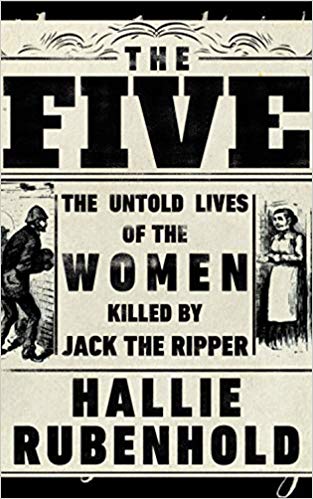
HISTORICAL BOOK REVIEW SERIES: “The Five” by Hallie Rubenhold

Five devastating human stories and a dark and moving portrait of Victorian London—the untold lives of the women killed by Jack the Ripper.

Polly, Annie, Elizabeth, Catherine and Mary-Jane are famous for the same thing, though they never met. They came from Fleet Street, Knightsbridge, Wolverhampton, Sweden, and Wales. They wrote ballads, ran coffee houses, lived on country estates, they breathed ink-dust from printing presses and escaped people-traffickers.

What they had in common was the year of their murders: 1888. The person responsible was never identified, but the character created by the press to fill that gap has become far more famous than any of these five women.

For more than a century, newspapers have been keen to tell us that “the Ripper” preyed on prostitutes. Not only is this untrue, as historian Hallie Rubenhold has discovered, it has prevented the real stories of these fascinating women from being told. Now, in this devastating narrative of five lives, Rubenhold finally sets the record straight, revealing a world not just of Dickens and Queen Victoria, but of poverty, homelessness and rampant misogyny. They died because they were in the wrong place at the wrong time—but their greatest misfortune was to be born a woman.

Cover and blurb via Amazon

~~

I read my first Ripper book as a teen, some twenty years ago, and had to lock it in my parents’ back shed, as the photos of Mary Jane Kelly were so disgusting. But every book on the subject is the same – lurid sexual innuendo, infinite bloody detail, the cunning of a killer, oh, who could he be?

This book answers who Jack the Ripper really was – he was no one. No one. A weak man preying on the weak. This book gives us the information we really need – who the victims were, where they started, what went wrong, and how they ended up alone in the dark in Whitechapel.

Women are beaten and/or killed and then discarded every day. Prostitutes? No one even bats an eyelid, they are just a thing, not a real person. Did no one ever find it odd that these victims were older women, not your typical prostitute trope? Did no one ever bother to check if these all women were prostitutes, or if that fact was simply a note written down by a policeman in 1888, who wouldn’t have cared either way?

We have been fed books on Jack the Ripper for years, all using the same so-called facts, same accounts, same coroner observations, same eyewitness stories. Rather than relying those details, which have been proven as unreliable, lacking, vague or just sloppy, Rubenhold has gone back further, and found a jam-packed history of these women’s lives, far from what happened the night they died. Their lives, their realities, their struggles. The strict and cruel reality of having to have a man in your life, whether you wanted one or not. The reality of alcohol destroying lives and families. The reality being young and brutalised, and needing to start all over again. In Mary Jane Kelly’s case, the reality of being young and pretty, and ending up as a prostitute to greedy and unforgiving men. All of the victims grew up away from the misery of Whitechapel, but forced into the slum due to the misfortune of being single or a discarded wife.

Was Jack the Ripper a doctor? Royalty? A lunatic, a butcher, a rich gentleman? He was just another man who hated women and took out his rage on whoever he could. These five women were vulnerable and alone, and a pathetic man chose to kill them while they were alone. Five women, who didn’t even get the chance to fight for their lives, were not murdered by some hero, but by someone who could barely call themselves human. How the Ripper could be considered interesting is so puzzling. These five women have complex and heartbreaking stories thanks to Rubenhold, a wonderful palate cleanser after years of books salivating about sex and murder.

This book will show you that society hasn’t moved on as much as we like to think, and the hatred spewed towards the author for writing about the victims instead of a weak and lazy killer is a sad indictment indeed.

HISTORICAL BOOK REVIEW SERIES: ‘Richard III: Loyalty Binds Me” by Matthew Lewis

King Richard III remains one of the most controversial figures in British history. Matthew Lewis’s new biography aims to become a definitive account by exploring what is known of his childhood and the impacts it had on his personality and view of the world. He would be cast into insecurity and exile only to become a royal prince before his tenth birthday.

As Richard spends his teenage years under the watchful gaze of his older brother, Edward IV, he is eventually placed in the household of their cousin, the Earl of Warwick, remembered as the Kingmaker; but as the relationship between a king and his most influential magnate breaks down, Richard is compelled to make a choice when the House of York fractures. After another period in exile, Richard returns to become the most powerful nobleman in England. The work he involves himself in during the years that follow demonstrates a drive and commitment but also a dangerous naïveté. 

When crisis hits in 1483, it is to Richard that his older brother turns on his death-bed. The events of 1483 remain contentious and hotly debated, but by understanding the Richard who began that year, it will become clearer what drove some of his actions and decisions. Returning to primary sources and considering the evidence available, this new life undoes the myths and presents a real man living in tumultuous times.

cover and blurb via Amberley Publishing

~~

I have to be honest, I am very much Ricardian. I can’t tell you how many times I’ve watched Richard III get vilified by Shakespeare (well, by 21st century actors, anyway) and barely contain my rage.  I don’t think Richard is perfect, a completely impeachable hero (no one is), but I also don’t think him a child-killing villain. There are few like Richard, a man who had suffered a great deal in a short time before his fateful battle at Bosworth. And it takes an author as fine as Lewis to dig into the details of Richard’s life. Most books either love or hate Richard, whereas this writer doesn’t go down either road, and instead gives us an insight into the mind of a man who became king, lost his own family, and then was overthrown by a man with a flimsy claim. Richard was a king, now a legend, but he was also just a man, and here is a book where we finally get to meet Richard. I moved books around on my Richard shelves to make room for this biography before it even came out.

While many books write about 1483 onwards, so much happened in Richard’s life leading up to the crown. The first half of the book digs deep into Richard, those in his life, the battles he fought, his ideals in life and religion, all as he grew into the king people focus on now. Much happened to Richard in his short life – overcoming a spinal deformity would have shaped his thoughts. He grew up around powerful people, like the Nevilles, who would do anything for power. Richard was prepared to lay down his life for his brother Edward, and yet his brother George betrayed them both, harm which would cause a wound that could never truly heal. Edward was king on the back of Richard’s hard work, and Richard ran the north in England and kept an eye on Scotland for his sovereign, all before the age of thirty.

But when King Edward died in April 1483, all the moments in Richard’s life which shaped him would come in play. The next three months have been debated since the moment they happened, but this book gives a reader a more detailed insight into why Richard acted as he did, thought as he did. It seems Richard was neither a murderous villain desperate for power, or an innocent caught up in a disaster. The illegitimacy of the Princes in the Tower is well discussed too, whether Richard was fooled, or did he simply miss important details, or was he the master? I can’t tell you, because spoilers, but the murky situation and Richard’s handling is a reflection of many events long before the mess with the Princes. Another important detail in the events of 1483 is the death of Hastings, a particular favourite subject of mine. Again, in the interest of spoilers (as in the excellent research on Lewis’ part) I won’t share all that is written, but the whole situation felt fresh to me, a tough feat after 500 years and a whole lot of writing on the subject.

Richard’s life went from a powerful ruler in the north after years of fighting, to having brother George executed, to his brother Edward dead before his time, to being thrust onto the throne, to his nephews disappeared, to his precious wife and son dead from illness, to betrayal by men he trusted… how much can one man take in only a few years? By the time Richard faced Henry Tudor at Bosworth, Richard’s life was circling the drain, yet he remained confident of victory. This book talks of Richard in a positive way, without soundly like it is gushing with adoration; rather, it shows the whole life of an extraordinary man. England could have had a fine king, had Richard been given the chance.

This book is worthy of five stars. Matthew Lewis wrote The Survival of the Princes in the Tower not to long ago, one of the best books I’ve ever read. Loyalty Binds Me is an excellent addition to any library. Imagine saying you like Richard III but don’t have Lewis in your collection?

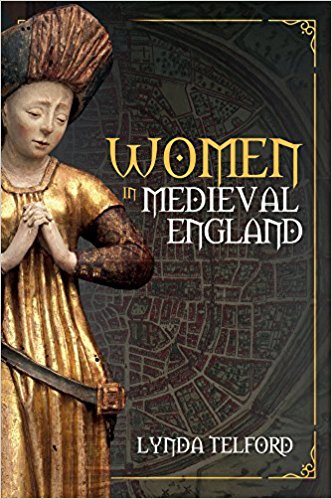
HISTORICAL BOOK REVIEW SERIES: ‘Women in Medieval England’ by Lynda Telford

This fascinating book explores the status of women in medieval England, both before and after the Norman Conquest.

The author starts by contrasting the differences in status between Anglo/Danish or Saxon women with those who fell under the burden of the feudal system imposed by the Normans. She covers such subjects as marriage and childbirth, the rights and responsibilities of wives, separation and divorce, safety and security and the challenges of widowhood. She also examines such issues as virginity and chastity and the pressures placed on women by religious groups.

At a time when women’s rights were minimal, the author charts their struggles against the sexual politics of the era, its inequalities and its hypocrisies. She also examines the problems of the woman alone, from forced marriage to prostitution. The lives of ordinary women are the centre of attention, painting a fascinating picture of their courage and resilience against the background of their times.

cover and blurb via amazon

~~

Resting on the theme of women in history is Women in Medieval England. My initial interest in this book was the pre-conquest women included. England and its rulers is so often detailed as post-1066, so someone like myself with limited knowledge of the Anglo-Saxon era found the overview and laws of the time useful. New leaders made for new husbands for noble women, who may not even be able to understand them, given language barriers. A nightmare of any woman, and to cap it off, not speaking your new husband/owner’s language is a scary thought.

What classified as marriage was quite different (as I’m sure everyone knows) which made for a messy history and difficult lives for the women traded to their husbands. The book even delves into what was birth control in the pots-1066 era, and lol-worthy concepts for cures for impotence. Life for women was exceptionally difficult, mostly due to the largely uncontrollable act of pregnancy, and the book shows just how damned awful it was for our predecessors to battle on creating a new generation.
Married life was all kinds of awful – as everyone knows the ‘rule of thumb,’ in that a man cannot beat his wife with anything thicker than his thumb. Though, in some ways, you read this and wonder how much life has altered for many women. This book digs through a realities of being a woman in the medieval period, where men are cast as sword-wielding heroes, women have been left standing in mud-floor huts. This shines a light on those women, who had the temperament of saints, strength tougher than any soldier, and bravery beyond that of a king. The world was a strange place for women; you could die of the plague, or you could survive an outbreak and clean up in the vacant jobs market.
This is no heavy book you will be reaching for when researching, it is a read on the lives of women in a world none of us would want to return to. There is plenty of information to be had in here, without feeling like you’re in a history lesson, a book for those who would like to read for pleasure, not study.

HISTORICAL BOOK REVIEW SERIES: ‘Heroines of the Medieval World’ by Sharon Bennett Connolly

These are the stories of women, famous, infamous and unknown, who shaped the course of medieval history. The lives and actions of medieval women were restricted by the men who ruled the homes, countries and world they lived in. It was men who fought wars, made laws and dictated religious doctrine. It was men who were taught to read, trained to rule and expected to fight. Today, it is easy to think that all women from this era were downtrodden, retiring and obedient housewives, whose sole purpose was to give birth to children (preferably boys) and serve their husbands. Heroines of the Medieval World looks at the lives of the women who broke the mould: those who defied social norms and made their own future, consequently changing lives, society and even the course of history.

Some of the women are famous, such as Eleanor of Aquitaine, who was not only a duchess in her own right but also Queen Consort of France through her first marriage and Queen Consort of England through her second, in addition to being a crusader and a rebel. Then there are the more obscure but no less remarkable figures such as Nicholaa de la Haye, who defended Lincoln Castle in the name of King John, and Maud de Braose, who spoke out against the same king’s excesses and whose death (or murder) was the inspiration for a clause in Magna Carta.

Women had to walk a fine line in the Middle Ages, but many learned to survive – even flourish – in this male-dominated world. Some led armies, while others made their influence felt in more subtle ways, but all made a contribution to their era and should be remembered for daring to defy and lead in a world that demanded they obey and follow.

cover and blurb viz amazon

~~

I have spent a long time with my head in academic history books, so to read something that reads more like a story was a welcome relief. Heroines of the Medieval World is a book hard to get here in NZ, so when a copy generously floated my way, I grabbed it with both hands. The first thing I thought was – do we still use the word ‘heroine?’ Should it not just be ‘heroes?’ But then people may purchase and then get their egos crushed by finding out all the heroes are women. That only made me like this book more.

The book is great, separated into chapters about women from all over Europe. The book writes about the women of England and France, but also from Spain (yay!) and even as far east as Kiev. There are Warrior Heroines, Literary Heroines, Religious Heroines and Scandalous Heroines. You can read them in order, or however you like depending on your mood. I enjoyed how The Pawns weren’t simply bartering gifts, but smart women in their own right, and the Medieval Mistresses were more fleshed out (excuse the pun) than the simply fallen women ideal.

You won’t be confused between your Eleanors, your Matildas or your Isabels, and while you will read about well-known heroines, they are also great forgotten women given fresh air. The women are not viewed as heroines through 21st century eyes, rather they are simply celebrated for their strength in the time period while on their own crusades. They are heroines for all centuries. Putting together such a thorough assembly of women must have taken considerable time and energy, so treat yourself to the author’s hard work and gain further insight to the women that came before us. Heroines have far more skills and techniques than any hero.

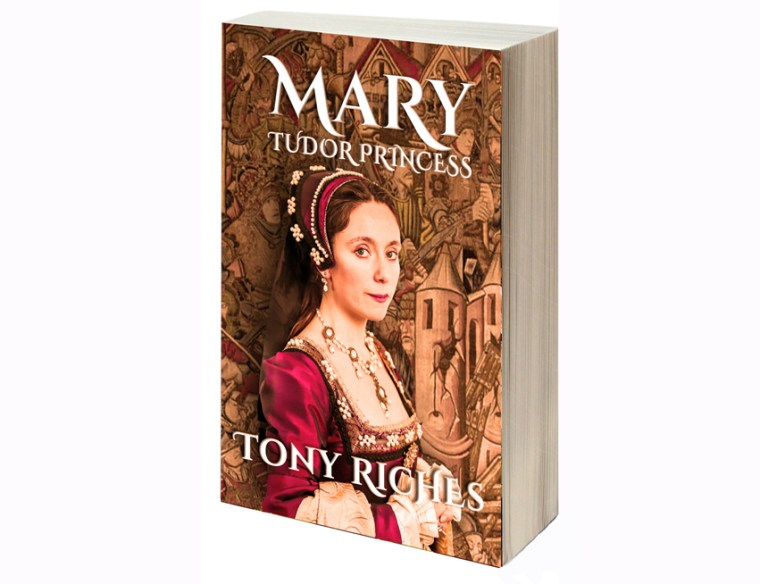
HISTORICAL BOOK REVIEW SERIES: ‘Mary: Tudor Princess’ by Tony Riches

From the author of the international best-selling Tudor Trilogy, the true story of the Tudor dynasty continues with the daughter of King Henry VII, sister to King Henry VIII. Mary Tudor watches her elder brother become King of England and wonders what the future holds for her. 

Born into great privilege, Mary has beauty and intelligence beyond her years and is the most marriageable princess in Europe. Henry plans to use her marriage to build a powerful alliance against his enemies. Will she dare risk his anger by marrying for love?

Meticulously researched and based on actual events, this ‘sequel’ follows Mary’s story from book three of the Tudor Trilogy and is set during the reign of King Henry VIII.

~~

I have read Owen, Jasper and Henry, and also Warwick, by this author, so having a woman as a title character is an exciting addition! But it is not about Mary I, but Princess Mary Tudor, Henry VIII’s sister. That’s when I really jumped for the book, as I love both Mary and Margaret, forever eclipsed by their king brother.

The book starts in 1509, and Princess Mary is but 13 years old. Her brother Henry is only five years older but has just been crowned King of England. Henry knows who he shall marry – Katherine of Aragon, widow of Arthur, and now Mary is going to be an equally powerful princess – powerful in that selling her to the highest bidder will help increase Henry’s power.

Mary has, in the past, been written as a fool, a simple girl interested in princes and gowns, no head for politics. What a silly notion, because Mary is the daughter of Henry VII and Elizabeth of York, her sister is Queen of Scots, Arthur was to be king, before Henry took poor Arthur’s place. How could Mary possibly be dim? Here, Mary is educated, confident and a brave young woman at the heart of a very serious political match for her country. Yes, she may break down in private, but her public face is one of total poise, the way only a royal upbringing could provide.

Mary considers Katherine of Aragon a sister when she marries Henry (Mary was very young when Katherine married Arthur). Henry and Mary are close, even though Henry is never an easy man to love, and is often heartless to Katherine. Mary has lost both her parents, and Henry breaks her betrothal to the  Holy Roman Emperor Charles, also just a child, and instead gives Mary in marriage to King Louis of France.

Mary may be a queen, but is also Europe’s most beautiful princess of 18 years when she marries the frail 52-year-old Louis. Mary does as she is bid (and has a child Anne Boleyn in her household, just a little side bonus) and marries the old Frenchman. But first Mary told her brother – I shall marry Louis if  can choose my second husband.

That is where Mary is so grand. Louis kicks the bucket three months in, and kings and dukes are clamouring for Mary less than a week into widowhood. But Mary has her suitor all ready, Charles Brandon, Henry’s best friend and (while the Duke of Suffolk) not at all good enough for her. Secretly married, Mary defies her brother and King, and is banished from court and from his kindness.

Never mind all these details; Mary is written as a woman, a wife, a mother, a sister. She becomes a queen of France (who killed her old husband with too much sex, so they gossiped, eww), then a woman who married for love, then a wife who had to endure infidelity, the births and deaths of children, the heartache she felt for Queen Katherine and the fortunes of all around her. Mary also suffered with her health for her whole life.

Mary was an important princess in the royal history of the time, and is not prone to being frivolous, and so is written as an educated woman. While the Tudor world is filled with politics, law, religion, it is also filled with love, friendship, parties and jousts, colour and excitement, and the book weaves all together.

Did Brandon love Mary back? The book gives hints about such as Mary’s life is followed. Mary’s death is beautiful and tragic, and the process starts over, as Brandon marries a child as a firm alliance just a few months later (he was a lucky man to capture both Princess Mary and Catherine Willoughby!). Mary’s granddaughter Jane would become queen for nine days many years later, and must have had the blood of THIS type of Princess Mary in Jane’s veins.

Thank you, Tony, for a wonderful novel!

~~

About the Author Tony Riches is a full-time author of best-selling historical fiction. He lives in Pembrokeshire, West Wales and is a specialist in the fifteenth century, with a particular interest in the Wars of the Roses and the lives of the early Tudors. For more information about Tony’s other books please visit his website tonyriches.com and his popular blog, The Writing Desk and find him on Goodreads as well as Facebook and Twitter @tonyriches