SPAIN BOOK REVIEW: ‘The Spy with 29 Names’ by Jason Webster


thespy

The Spy with 29 Names is a gripping account of the exploits of Juan Pujol, the most extraordinary double agent of the Second World War, who was awarded both an Iron Cross by Germany and an MBE by Britain.
 
After the Spanish Civil War, determined to fight the spread of totalitarianism, Pujol moved to Lisbon with his wife, persuading the German intelligence services to take him on. But in fact, he was determined all along to work for the British, whom he saw as the exemplar of democracy and freedom. Seeing the impact of the disinformation this Quixotic freelance agent was feeding to the Germans, MI5 brought him to London, where he created a bizarre fictional network of spies – 29 of them – that misled the entire German high command, including Hitler himself. Above all, in Operation Fortitude he diverted German Panzer divisions away from Normandy, playing a crucial role in safeguarding D-Day and ending the war, and securing his reputation as the greatest double agent in history.
Cover artwork and blurb from jasonwebster.net
~~~

The Spy with 29 Names is the story of a man who was almost lucky that the Second World War was raging. Had it not, his behaviour and attitude probably would have gotten him into trouble. A master of disguise, a man who had charming down to a fine art, a deceiver who could tell any lie. The spy known as ‘Garbo’ set up another, almost implausible, 28 spies from all walks of life and locales, and tricked the Germans into things no other spy managed during the war effort.

The book covers Juan Pujol Garcia’s early life from his birth in 1912 and the effects the Spanish Civil War had on his family in Barcelona. Pujol tried to fight for the Nationalists after his family got imprisoned by the Republicans, but he ended up with hate for the ideals of both sides of the conflict. Pujol harboured desires of being a WWII spy for the British but got rejected early on by the Embassy in Madrid, so he set out to work alone. Living in Lisbon, he started feeding downright false information to the Germans. The lies seemed to be trusted with impunity, so was Pujol’s ability to deceive.

British Intelligence crossed paths with Pujol first in 1941 when the code-breakers at Bletchley Park started finding messages to ‘Arabel’, a German agent who appeared to be in Britain. The messages started capturing their attention when they could see the information was blatantly false, but still seemed to be believed by the Germans. Kim Philby, the famous British spy, decided they needed to recruit ‘Arabel’ to help their own efforts and keep the British spy operations a secret. MI5 discovered the identity of ‘Arabel’ and Pujol went to Britain and worked with Tomás Harris to help with the effort and increase his false intelligence operation. While the information that Pujol spun to Germany was a pack of lies, he peppered it with a few genuine facts, only increasing his believability. The deeper Pujol went with Germany, the more elaborate he became, eventually having both male and female ‘spies’ on his side, reporting from the UK and abroad.

MI5 gave Pujol the code name ‘Garbo’ because he was a top-quality actor. Pujol went on to name his spy aliases with simple names, such as Rags the Indian poet, Mrs Gerbers the Widow, the Treasurer, the aptly named Con, and my personal favourite the Mistress, whom the Germans knew as Amy. Pujol’s ability to play the role of 29 different people would sound preposterous if it hadn’t been a real man who made such a massive contribution to the Allied endeavours. Pujol then become the main agent in ‘Operation Fortitude’, and his main objective was to tell the Germans that the proposed Allied invasion of Europe would happen anywhere other than Normandy.

As Pujol increased his involvement, even Hitler himself believed that Normandy would be not the D-Day location. For weeks leading up to the D-Day invasions, the Germans were diverting men and supplies away from Normandy. Pujol planned to tell the Germans a location and time of an invasion, only an hour before it happened. He then banked on them missing the transmission so his lying operation wouldn’t be blamed when the Allies stormed Normandy rather than up the coast, and ‘Garbo’ changed the war forever.

Two months after D-Day, the Germans awarded Pujol with the prestigious Iron Cross and a whopping payout for all his work. Even after the pivotal point in the war had damaged their operations, the Germans still believed all Pujol told them. Did anyone ever truly suspect Pujol? We will never know. Pujol moved to South America for his own safety after the war, and didn’t return until 1984 when he received his belated MBE and got the chance to visit the site of the D-Day landings. He passed away in 1988.

The story of Juan Pujol could have been lost to history while the stories of Kim Philby and other British spies were shared. Spain’s contribution to the Allied effort with one man’s charisma, lying and genius ideas is a story that needed to be told. Webster has woven a tale so astounding that it could be mistaken for a work of fiction and lets the light of day shine on the network of deception which saved countless lives. With meticulous planning and a clear, easy to read style, Webster has made an espionage tale that can appeal to those who enjoy war history and those who don’t. From the offices of the code-breakers to the complex conversations with the Germans and everyone in between, both the real-life and entirely fictional characters of the most fascinating spy are brought to life. Webster has written a book where everyone feels so authentic that a reader could be forgiven for falling for Pujol’s lies 70 years later.

Thanks to my father being a WWII buff, I grew up with a good knowledge of the war from the British point of view, but that level of knowledge isn’t required to enjoy this book. Webster also supplied a marvellous collection of photographs to feed the imagination of the reader. The book can sit proudly among all the fabulous works of fiction and non-fiction by this author. The Spy with 29 Names is an extraordinary account for all to enjoy as they recall how one of the most powerful weapons that saved the lives of our own relatives wasn’t a bomb – but a concoction of fiction.

Check out The Spy with 29 Names at jasonwebster.net and thespywith29names.com, and purchase on Amazon UK. Plus here is a video with the author about the locations where Pujol and Harris ran their operations.
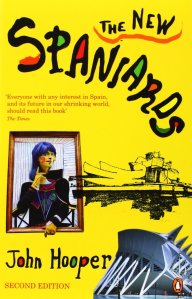
SPAIN BOOK REVIEW: ‘The New Spaniards’ by John Hooper

71treumJ37L._SL1355_

Modern-day Spain is a country changing at bewildering speed. In less than half a century, a predominantly rural society has been transformed into a mainly urban one. A dictatorship has become a democracy. A once-repressed society is being spoken of as a future ‘Sweden of the Mediterranean.’ John Hooper’s outstanding portrayal of the new Spanish society explores the causes behind these changes, from crime to education, gambling to changing sexual mores. This new, up-to-date edition is the essential guide to understanding twenty-first-century Spain: a land of paradox, progress, and social change.

~~~

The New Spaniards is a book which has sat on my to-read shelf for far too long. The second edition of this book got released in 2006, so by the time I pulled it from my shelf, I wondered if its information would be little irrelevant, given the changes to Spain in the past eight years. I could not have been more wrong.

So often mentioned in the same breath as Ghosts of Spain by Giles Tremlett, the book which pulled me from my slumber about Spanish history, The New Spaniards is a must read. The author brings together over 400 pages, creating a solid, credible and easy to read review of Franco and modern life. One chapter in, what immediately becomes clear is the efficient and clean writing style Hopper has; while other books on the subject can feel academic and stiff, the prose is fresh and makes the reader comfortable among a detailed and insightful presentation.

The book starts with a section of the Franco reign, from the years of hunger, the economic boom, the mass migration of Spaniards both abroad and within their own nation, and effects of the reforms made during the dictatorship. The 1970′s, once Franco had gone and democracy set in, is covered with excellent detail, without any confusion on what was undoubtably a dizzying time of change in so many ways. Then-young king Juan Carlos and Prime Minister Adolfo Suárez are well discussed, along with the placement of the young and the old to form a peaceful democracy. The changes made by the Socialist government in the 1980′s are well touched upon, their effect on the economy and the high unemployment rate (easy to identify with today), along with the stark changes in the 1990′s by successive governments.

Chapter 7 – Legacies, Memories and Phantoms – is an engrossing read, whether a reader understands Spain’s 20th century history or not. It explains how Francoism has not survived the passing of years, but a legacy has become ingrained in Spanish life. The pact of forgetting, which did not allow anyone to forgive or heal, is touched upon with honesty, as is Valle de los Caídos outside Madrid. Hooper’s accurate argument is that the omission of the civil war (and its mass graves) in school textbooks, because it is not old enough to be considered history, is an excuse wearing thin.

Part two sweeps in with a section on the churches’ role in Spain, along with the curious and absurd prudery of Franco and the changes to modern time, such with gay marriages. It makes an enlightening read for those less acquainted with subjects such as prostitution, abortion, contraception and gay rights in Spain. Another absorbing chapter is the death of machismo in Spain as women gain rights after being so deeply and cruelly oppressed under Franco. The fact Spanish women are still suffering sexism, like all nations, is also explained, with the all the relevant details to back up the claims. The role of family in Spanish life is given a thorough and honest portrayal, as are the changes in domestic violence and divorce laws which have changed the precious Spanish family for the better.

Part four sheds light on the autonomous regions of Spain, something not well understood by those not living in the country. The Basques, the Catalans and the Galicians are all opened up as Hooper shares their desire for self-governance, with all the information on the remarkably different laws and goals for their regions. (I wanted to wave the flag for the region of Valencia at this point, which has been trapped under their corrupt PP mayor for over 20 years). The book covers the how’s and why’s of the 17 autonomous regions of Spain, their individual paths to freedom, and what lies ahead for these proud places. I learned more about this process, despite having studied it in the past, a testament to the author’s respect for detail.

 This book covers so many subjects that it can dizzying when looking back over all that is covered – from Spanish gypsies, to the welfare system, to the ups and down of the education system, housing and the booms and busts suffered, to the legal system, the media, the arts, but Hooper guides readers through every subject with a smooth yet meticulous manner, opening up each of these fundamental subjects. For me, one of the final sections on changing traditions was especially fascinating. Bullfighting is covered in-depth with an unbiased yet accurate voice. I have read much about bullfighting, but it can be hard to find anything written that does not either lean heavily in favour or against the art form. Regardless of your opinions on the subject, any reader can gain from the information shared by the author.

While much as happened politically, socially and economically to Spain since this book was written, it still serves to provide a clean, realistic picture of Spain and why the nation sits in its current form. The book shows how the past has shaped the present, and can also show that what Spain is currently suffering is not unique. Each generation of Spaniard has seen suffering, but also moments of hope in the time since Franco died. If anyone wanted to learn from the past mistakes, the tips to succeed could well lie in the words of John Hooper.

This book got first published in 1986, rewritten in 1995 and revised in 2006, and could be easily overwhelming if it was not so well planned and laid out. I have yet to find a book that captures Spain’s identity as well as The New Spaniards. It should be handed out to each person who arrives in Spain and plans to make a life there.

My only gripe is that my paperback copy has a tiny font! While this has nothing to do with the quality of the author’s work, I had a headache the entire time. I can understand a publisher’s desire to make the text small, with so much to give to a reader, but it was difficult to read. Going to a Kindle version and sizing up the text is needed for everyone with delicate eyes.

SPAIN BOOK REVIEW: ‘The Angel’s Game’ (El juego del ángel) by Carlos Ruiz Zafón

In an abandoned mansion at the heart of Barcelona, a young man, David MartÌn, makes his living by writing sensationalist novels under a pseudonym. The survivor of a troubled childhood, he has taken refuge in the world of books, and spends his nights spinning baroque tales about the city’s underworld. But perhaps his dark imaginings are not as strange as they seem, for in a locked room deep within the house lie photographs and letters hinting at the mysterious death of the previous owner. 

Like a slow poison, the history of the place seeps into his bones as he struggles with an impossible love. Close to despair, David receives a letter from a reclusive French editor, Andreas Corelli, who makes him the offer of a lifetime. He is to write a book unlike anything that has existed – a book with the power to change hearts and minds. In return, he will receive a fortune, perhaps more. But as David begins the work, he realises that there is a connection between this haunting book and the shadows that surround his home. 

~~

The first installment of this series, The Shadow of the Wind, was a triumph and to follow-up such a tale would have been a huge undertaking. But this book, The Angel’s Game not only continues the story, it also becomes a whole tale on its own and makes Barcelona come to life in a dark, gloomy way.

The story starts with David Martín as a young boy of a murdered father, working as a writer for The Voice of Industry. He manages to get himself work writing fiction, dramatic over-the-top murder mysteries for the newspaper, which doesn’t turn out to be as fun as he thinks it will be. Thanks to having a wealthy friend, Pedro Vidal, a failed writer to lean on, Martín is lucky to eek out a living in gloomy and depressing Barcelona.

Martín’s fortune changes when he gets a new publisher, two greedy men who aren’t worth his time, and Martín is able to lease the tower house of his dreams, an ancient and dismal place where he quickly falls into a habit of writing and neglecting his life and self. Writing as Ignatius B. Sansom, Martín pumps out dark murderous novel after novel, barely eating or sleeping. He soon finds that his 20’s are just rolling by as he sits at the top of his poisonous tower house and bleeds onto his typewriter.

Gothic is the best way to describe the scenes as Martín goes through many changes in 1920’s Barcelona. The scenes are rich and easy to understand, and the characters, while all dark and troubled, are all equally entertaining. Enter Andreas Corelli, a French publisher with an offer too good to be true. With love-life trouble of the highest order, Martín has little else to do but work on the most dreary and thought-provoking novel, one never quite accurately described. A fable, a religious work, a family story – but what ends up on the pages turns out to be pure evil.

As Martín deals with increasingly terrifying meetings with Corelli, ‘the boss’, the history of the tower house and the last writer who lived there and attempted to write a great tale takes ever murderous and scary turns. From basements filled with dummies, evil dogs lurking in the shadows, doves stabbed through the heart, an ageless boss who smiles like a wolf, fires and disasters all over the city, and even a spiderweb-like tumour, Martín’s life descends into madness.

As this book is the prequel of the first in the series, Martín has one bright spot in his life, the Sempere and Sons bookstore. The characters are the grandfather and father of Daniel Sempere, protagonist of the first book, and give more insight into the lives of the Sempere family. Another bright spark is Isabella, a young aspiring writer who latches herself onto Martín and is his saviour multiple times over. Isabella is the only person who can cope with Martín and his bleak attitude, and it’s great to have a strong female character in a book that isn’t there to be some kind of love interest, but a fully fledged character with thoughts and actions that contribute to the story.

The first half of this book is immense; the detail and the writing is superb. Through the latter half of the book, hints fall from all over to give the full picture of what is happening to Martín as he fights to stay alive and try to protect those he loves. Both his friend Pedro Vidal and his wife Cristina, the love of Martín’s life, get in the way of Martín’s spiralling determination to discover the fate of the last owners of the tower house, and the whole picture becomes very desolate. In the end, the body count is high, prices are well and truly paid and Martín’s fate is disturbing indeed.

I rarely read reviews by others before I review, so it doesn’t influence my own opinion, but I couldn’t resist reading a few between reading and reviewing. Yes, this book is very complex, and it seems that this book divides people. There are people who relish the florid prose and detailed vision of the author, and some seemed disappointed. Some felt the book was too complicated at the end. Personally, there are so many hints to the fate of Martín and of Andreas Corelli. Yes, there is a huge cache of characters to follow, but with such vivid descriptions, I felt it easy to keep up and the outcome, to me, was sad but simple. This book is far removed from the first in the series, it’s a dark prequel which only has a slim connection to the first book. Readers should be prepared for that fact. There is a third book in the series, which I will review next week, and that ties together The Shadow of  the Wind and The Angel’s Game  beautifully, for all to see. If you do find The Angel’s Game complex, you should read the third book, as it gives you a clearer picture of the characters and how they bind together.

The first book is a dream; no question. The Angel’s Game feels like the author let go and wrote everything he had ever dreamed of, and was given all the rope he needed to produce the work he loved. If I was asked to pick which book is best in the series, I would say The Angel’s Game is the narrow winner, because it’s dark, complex, sophisticated and you can feel the dampness of the tower house, the pain in Martín’s head, the warmth of Sempere and Sons bookstore and the ice underneath Cristina’s bloodied feet. I did a little Carlos Ruiz Zafón wander last May on my last visit to Barcelona, and he makes the city seems so alive in all new ways. This book is for everyone who wants characters who hold nothing back. Just don’t sit alone in the dark while you read.

SPAIN BOOK REVIEW: ‘Adventures of a Doctor’ by E. Martínez Alonso

Martínez

Adventures of a Doctor by Eduardo Martínez Alonso seems to be so rare, I can’t find any cover art or a blurb about this book. I managed to purchase a damaged copy from the New Zealand parliamentary library, and when they tossed this book to me for a mere $6 (about €3.60), they obviously didn’t know what a treasure they had. Eduardo Martínez is quite an extraordinary man with a story that seems to have been largely lost. With the market flooded with 1001 Spanish civil war books, it comes as a great surprise that this book doesn’t get more recognition.

The story starts with the author born in Vigo, Galicia in 1903. His father was from Uruguay, and was the consul in Vigo. As a young boy, Martínez travelled to his father’s homeland, along with his family (he was one of eleven children, and talks of his mother constantly having to nurse his siblings). The story tells of life in northern Spain in the era, and exploits with his brothers and attending a boarding school with mixed success. In 1912, Martínez’s father received a post to Glasgow, and the whole family moved north for a new life. Martínez dreamed of working in hotels or on ships, able to meet people and travel far and wide. He became bilingual at a young age, seeing the benefit of speaking Spanish, English, French and more. But it was his father who said he would be a doctor, not a sailor. As each of the eight boys grew and carved out professions (sisters, of course, were to be wives and caregivers), the prophecy of the hard-working consul came true. The family and Martínez recalls the first world war, his school years and an eventual trip back to Uruguay.

As a trained doctor, Martinez moved to Madrid with his grandmother, and speaks of seeing Anna Pavlova dance at Teatro Real, with the King and Queen in attendance.  He quickly took up a post at Red Cross Hospital, and met Queen Ena, British wife of King Alfonso XIII, and the Duchess of Lecera, who were delighted to have an English-speaking doctor. News travelled of an English-speaking doctor in favour with the queen, and Martínez was in hot demand. Just eighteen months later, Martinez graduated from San Carlos Medical Facility and while meeting the King and Queen socially and professionally, was appointed the medical adviser to the royal family. This proved to be an amazing and dangerous post.

When the Second Spanish Republic was founded in 1931, Martínez was in the palace in Madrid with the royal family as they were deposed. He tells of sitting casually with Queen and princesses as the monarchy fell. As the family were forced into exile and as Spain underwent revolution, Martínez’s position as a monarchist him an easy target. As civil war came five years later, things changed dramatically. Martínez got his family out of Spain in July 1936, or off to the safety of Vigo, and knew he would be in danger as a former royal family aide. Through his work for the Red Cross, he was ordered by a Communist faction to work as a doctor for the Republican side of the war.

On Saturday morning the shooting started. We sat in a bar and heard the crackling of machine guns, the burst of hand grenades, and I saw smoke arising from many quarters of Madrid. By Monday morning a general strike had been called. Everything was paralysed except murder, arson, and rape. The Spanish civil war had commenced – Pg 70

Martínez talks of watching a church burning as priceless works of art were set alight along with the riches of the churches of Madrid. He saw a priest thrown on the flames but was unable to save his life when he pulled the screaming body from the blaze. Most priests were taken out to Casa del Campo to be shot. Men were burning priests but trying to revive pigeons which fell from bell towers, overcome by smoke. Martínez had an apartment in Madrid, and he hid as many people  as he could throughout the war. Nuns and priest were hidden, and forced to serve meals to men who sat and spoke of vicious murders they had committed against the clergy.

Martínez was posted to a town outside Badajoz, Cabeza del Buey,  in the south-west, working for the Communists. While running the hospital, a young nurse, Guadalupe, suggested they flee and work for Franco’s troops instead, but Martínez seemed convinced that he would be killed at some stage, regardless of where he was posted, and claimed no political alliances. In Cabeza del Buey, he was forced to attend mass executions of seemingly innocent men, and despair at violent speeches about revolution and vengeance. He performed many surgeries and saved lives in the  most atrocious conditions. But with no warning, Martínez was shipped off, with Guadalupe, and sent to Ocaña, just outside Aranjuez, to work in the prison there, and be a prisoner himself. As he had in Cabeza del Buey, Martinez managed to get some nuns freed from prison to work as nurses, and treated patients while living in a cell himself. Between dire conditions and deadly activities, a patient told Martínez that his turn to be executed was near. An in understated manner, Martínez talked of his prison escape to Valencia in March 1937, were he managed to procure a fake passport and get aboard the Maine, a ship bound for Marseilles. 

Martínez quickly got himself back in Spain, despite the dangers. He chose to cross the lines and work for the ‘white’ side of Spain, Franco’s rebel army. Red Spain (the Republicans), he felt, thought nothing of him, his work, and long suspected their cause would lose the war, one they never had a chance to win. Posted to Burgos, Valladolid and then San Sebastien, Martínez  then found himself working on the front lines as Franco’s army continued to advance into enemy territory. Towns fell one by one as Martínez fought to save lives, but writes in such a  humble, unassuming manner. Once in Zaragoza, Martínez worked hard to care for patients at the hospitals, and pioneered the use of closed casts on wounds, a procedure first tried with less success twenty years earlier. Despite the smell offending wealthy female volunteers, Martínez’s experiment helped the lives of many patients otherwise in agony as they recovered. He was then moved on to his own mobile surgical unit in Teruel in 1938.

Martínez was there on the ground when troops stopped in Sarrión, 100kms north-west of Valencia, as the war finally came to its brutal end. On April 1st, 1939, the war was over and declared won by Franco in this small town, and after helping a man and his son to Valencia, Martínez sought out all those who had helped him during the war, and moved back to Madrid. No sooner than Martínez had helped his friends and former nurses, and begged for clemency for some condemned to death by the new regime, the second world war broke out. With some family in Vigo and some Britain, travelling on multiple passports, danger was again faced. As Hitler plowed through Europe, Madrid suffered greatly after the civil war and Martínez went to work at Miranda de Ebro, near Burgos, to help war refugees from all nations. With such a humble attitude, he glossed over his feat to aid refugees out of Spain, saving their lives, until in 1942, when his ferrying of innocents was discovered and he was forced to flee Spain. His time working with British Naval Attaché, Captain Alan Hillgarth is barely touched upon, but should surely serve as an incredible tale of a man saving lives at great risk to his own. This two-year period alone could serve as a story all of its own. Just his dramatic escape would serve as its own story, but the author covers it in a few sentences, and neglects to mention he fled with a new wife. He also failed to mention his first marriage which produced two children, but was annulled after Franco took power in 1939 (His wife was a British woman who went home without him). I only found about either marriage after studying the doctor further myself. There are no clues to whom these women are at any point in the book. His personal life is never touched upon.

Again, Martínez talks little of his involvement with the rest of the world war, after being detained when first arriving in Britain (no idea if his Spanish wife was also detained), but worked as a spy for Britain throughout and barely talks about it. He worked at Queen Mary Hospital after the war and oversaw great new procedural advances, meeting some of Europe’s finest surgeons, but then returned home to Madrid. Life was hard in the beleaguered nation, and he again went to work at Red Cross Hospital, specialising in chest surgery. He then moved on to working as the doctor for the Castellana Hilton, newly opened in 1953. He recounts stories of wealthy Americans, and famous movies stars (unnamed) alike, who came to Madrid for all sorts of reasons. He spoke with frustration at his patients demanding penicillin shots, not wanting to discuss why they need this medication. Many guests, male and female, had a penchant for sleeping around and wanting medicine to atone their sins, either before or just after the liaisons which bore infections. One guest talks of being raped and demanding penicillin, though the story is far from convincing to the doctor. Sexual liberation had come to the foreign guests at the Hilton, and expected Martínez’s penicillin to cover it up. He makes his disdain clear for these patients and the abuse of this groundbreaking medication, and of the myriad of alcoholics he was forced to attend to, when little could really be done for them.

The book is written in the manner of a doctor – no-nonsense, no fussing with detail, just the raw facts given out without prejudice. Martínez is a man with the story worthy of a Hollywood blockbuster, but it wouldn’t be his style. This book was written in 1961, and Martinez lived until 1972. It shows what really stood out to the doctor in his life, because details are excluded, and there are many secret operations he simply never wanted to discuss. He is free and easy with dates – because I know the civil war, I could piece together the timelines of the book, but needed to look up world war details and the opening of the Madrid Hilton, just to give myself an idea of how much time passed between chapters.

Martinez’s daughter, Patricia Martínez De Vicente, has written several books in Spanish about her father, notably La Clave Embassy: La Increíble Historia De Un Médico Español Que Salvó a Miles De Perseguidos Por El Nazismo. The stories not told by her father in his memoir are a whole other side to this man who worked tirelessly for others, and had a strong ability to do good, without any need to be recognised.  To read his book is a gift, and I will be also reading his daughter’s books.

*above photo taken just prior to release from the Spanish army, 1939. Photo supplied in the book (page 112)

SPAIN BOOK REVIEW: ‘Spanish Cooking Uncovered: Farmhouse Favourites’ by Paco de Lara and Debbie Jenkins

front-cover-outline

There are so many recipe books available these days, and to be honest, I am put off purchasing any of them. I am no cook; I am not a fan of spending time in the kitchen, and the thought of following a convoluted set of instructions for an hour puts me off dinner completely. Spanish cooking is great for people like me; there are many great flavours and the simplicity means everyone, including the cook, can look forward to a meal.

The story of Grandma María Luisa is one that could have easily never been told. María Luisa, suffering from serious asthma problems, took her doctor’s advice and moved to their family finca (country home) in Murcia in the 1930’s, in an effort to improve her heath. When the Spanish civil war broke out in 1936, María Luisa stopped marking her regular trips between the finca and Valencia, and stayed in the (relative) safety of the country home while the nation underwent a cruel transformation. Like for so many around Spain during this time, life became increasingly dire and families needed to become inventive and self-sufficient if they were to have anything to eat. The war had a devastating effect on all industries, leaving people to survive with next to nothing. After the end of the war in 1939, the following decade brought little more than hardship and starvation to much of the population. María Luisa took on a challenge and was able to help her family by creating recipe ideas to help them through an impossibly difficult period in their lives.

Today, the family finca is an ecotourism farm, and during renovations, María Luisa’s grandson, Paco de Lara, came across old papers. He had stumbled upon over 2,600 wartime recipes in María Luisa’s beautiful handwriting. Combined with María Luisa’s ideas and techniques, these terrific recipes have been transformed into 80 traditional Spanish recipes that anyone can undertake, 70 years after they became a symbol of creativity in a harsh landscape. These recipes were created when food was at its simplest; fresh vegetables, meat, poultry, all healthy options that give the cook and the family an opportunity to enjoy Spanish food at its best. The best part is that Spanish cooking is uncomplicated. This is no book that will have you hunting for many ingredients to create a meal; this is food at its most honest, with wonderful flavours that won’t send your wallet into a spin.

The book details life at the finca during the civil war, and while the recipes have been updated for modern cooking, a few little details about cooking in the 1930’s prevail for your enjoyment. The book is filled with both photos of the recipes and life at the finca.  María Luisa’s Farmhouse Favourites garners no pretensions, just good food, healthy eating, all created by the spirit of a woman with a will to be proud of.

Buy Spanish Cooking Uncovered: Farmhouse Favourites on Kindle and on paperback through Amazon (great Kindle price!), and copies are available at everyone’s favourite English bookstore, Offside Librería  – Calle Torrija 8, Madrid.

See more about Debbie Jenkins at nativespain.com and ecotourism at Finca Torrecillas