SPAIN BOOK REVIEW: ‘Hotel Florida: Truth, Love, and Death in the Spanish Civil War’ by Amanda Vaill

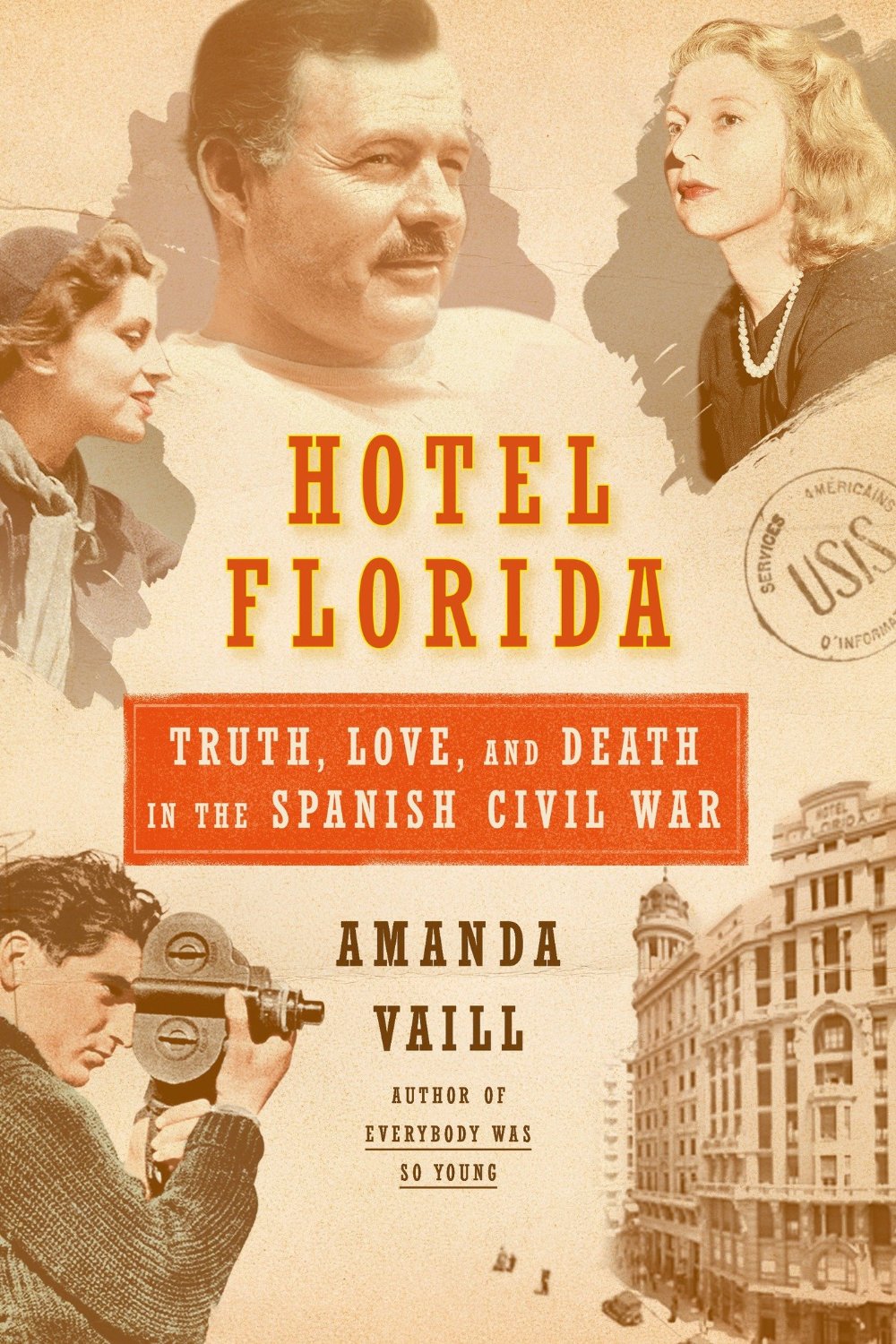
Hotel Florida

Madrid, 1936. In a city blasted by a civil war that many fear will cross borders and engulf Europe—a conflict one writer will call “the decisive thing of the century”—six people meet and find their lives changed forever. Ernest Hemingway, his career stalled, his marriage sour, hopes that this war will give him fresh material and new romance; Martha Gellhorn, an ambitious novice journalist hungry for love and experience, thinks she will find both with Hemingway in Spain. Robert Capa and Gerda Taro, idealistic young photographers based in Paris, want to capture history in the making and are inventing modern photojournalism in the process. And Arturo Barea, chief of Madrid’s loyalist foreign press office, and Ilsa Kulcsar, his Austrian deputy, are struggling to balance truth-telling with loyalty to their sometimes compromised cause—a struggle that places both of them in peril.
     Hotel Florida traces the tangled wartime destinies of these three couples against the backdrop of a critical moment in history. As Hemingway put it, “You could learn as much at the Hotel Florida in those years as you could anywhere in the world.” From the raw material of unpublished letters and diaries, official documents, and recovered reels of film, Amanda Vaill has created a narrative of love and reinvention that is, finally, a story about truth: finding it out, telling it, and living it—whatever the cost.

~~

I rarely read reviews before I start reading a book, so they don’t influence my opinion while reading. However, Hotel Florida seemed to pop up everywhere just prior to its release, with reviews written by those with advance copies and the like. Once I received my own copy of the book, I already had the opinions of others going around in my head. For once, it’s not a big deal, and the word that seems to be thrown at this book is ‘compelling’. With characters like Hemingway, Capa, Taro and Gellhorn, how could it be anything but compelling? Given that these characters are not new to anyone, how can pre-conceived stereotypes of characters not interfere with reading? There was only one way to find out.

For those without knowledge of the Spanish Civil War, the book starts out with timelines and facts of the who/what/ where/why’s of the conflict. I must confess I skimmed over these since I already knew the details, but this would prove invaluable to those who need to be shown the way through the civil war. They immediately show a reader that the author has gone to a great deal of effort to produce a quality read.

The book has a stellar cast – Ernest Hemingway, (the man who needs no introduction, booze, girls, writing and fighting), Martha Gellhorn (the hardest character to like, known for being lazy and lying), Robert Capa (brilliant but also fluid with the truth), Gerda Taro (young, intelligent, easy to root for, killed in her prime), Arturo Barea (a budding Spanish writer, a character who could have a whole book to himself) and Ilsa Kulcsar (a brave and intelligent Austrian leftist assisting Barea in his pursuits).

These three couples don’t have a large deal of interaction in the books, and the reader gets to jump from the mind of each character chapter by chapter, in a book which moves at a quick pace. The danger faced in Spain as intensely real and would leave a mark on each of these people forever. Hemingway folds into the role he is known for – brash, loud, writing well enough to tell the world what was happening in Spain, but also jealous and petty around other people. Gellhorn wiggles her way into Hemingway’s life, and his marriage, always possessing the air of someone who can’t be trusted, but could be a good writer with more effort. No one could ever suggest going to Spain during the war was an easy task, and these two were changed by their experiences, but at times seemed to be enjoying the war. It was a grand adventure, of front line reporting and loud Madrid parties. Fans of Gellhorn may enjoy her role in this book, though to the less informed reader, she seems like a privileged girl who lives on her whims. Only after her time in Spain did Gellhorn really come into her own, which only served to crush her marriage to Hemingway.

Capa and Taro are an infamous pair, escaping unsafe homelands in Germany and Hungary, changing their names, and setting out to make a massive impact on how the world saw the Spanish Civil War. The iconic moment when Capa (may or not may not – the book doesn’t say) faked the shot of the falling soldier weaves its way into the narrative as the pair photograph the war. It’s been said that Taro was the genius of the pair, but her death was cruel and left a deep wound in Capa, who had found a soul-mate in Taro in more than a romantic sense. The pair makes for reading that would interest even those who don’t know their exploits and photographs.

Arturo Barea is the best character in the book. The Madrileño, who opens the book contemplating how he doesn’t love his wife or mistress, has a quality different to the others. Barea has more faith in the telling the truth and doesn’t enjoy twisting the facts to make reports sound more favourable for the ever losing Republicans. While Hemingway, Gellhorn, Capa and Taro are not fixated on the truth, rather getting published, Barea is left at odds with them all. Barea finds Hemingway and is ilk to be ‘posturing intellectuals’, and Barea better understands what is stake during the conflict. The Spaniard can see the fate of the Republicans as the war unfolds and realises all Spaniards are going to pay and suffer as a result of the fighting. While others can flee, it is Barea’s home that has to live with the realities of war. He engages in an affair with Ilsa Kulcsar, who had come to Spain from Austria in an attempt to aid the Republicans, and Barea divorced his wife to be with Ilsa, which meant he never saw his children again. By the end of the war, Barea and his disdain for the war and those around him made him an outcast, and he and Ilsa had to flee to Paris with little more than the clothes on their backs. They made lives in Britain with their knowledge of Spain, war and languages in what appeared as a life long love affair.

I wasn’t sure what to expect when reading Hotel Florida – fitting all these larger-than-life characters into one book can’t be easy. It is described as ‘a narrative rather than an academic analysis’, which gives the possibility for rich, engaging characters. All the reviews I have read rave about the work, no doubt because of the level of effort Vaill has exuded while writing. While reading, I couldn’t be sure how I felt about the book – the pace made me feel as if I had fact after fact tossed to me, with so many details to absorb as the characters sped along. The book has an ode to Hemingway with some  long sentences – I counted one at 76 words, just as in the style of the big man himself. Being a narrative, I expected to be shown the story rather than to be told the tale, but this did not happen. The story of Hotel Florida is told to the reader; it does not unfold in any way, rather all the details are laid out and presented. Readers do not need to imagine anything, nor put the pieces together, rather everything is laid on the table with sharp sentences. While you cannot doubt the level of devotion Vaill has for her characters, they don’t have personalities, and readers need to rely on the details given out when engaging with these well-known people. Anyone who has edited a book knows the irritation of having to reduce adverbs or fix sentences ending in a preposition, and these basics haven’t been done in this book, but it makes the story more relaxed as a result.

The book ends with forty pages of notes (around 25% of the book on my Kindle), which shows how much effort the author put into this book. The attention to detail is meticulous, and much credit should go to Vaill for her hard work and commitment to perfection. If you are looking for a sweeping tale of wartime Spain this may not be the book for you, but if are looking for a tell-all of famous faces, then you have come to the right place. An added bonus is the cameo roles of powerhouses such as George Orwell, Kim Philby and others who also made their names in Spain in this era. Whether you want war, idealism (foolish or otherwise), love, lust and sex, or celebrity jealousy and pettiness, Vaill has rolled them together in Madrid’s Hotel Florida.

SPAIN BOOK REVIEW: ‘Unlikely Warriors’ by Richard Baxell

When a Nationalist military uprising was launched in Spain in July 1936, the Spanish Republic’s desperate pleas for assistance from the leaders of Britain and France fell on deaf ears. Appalled at the prospect of another European democracy succumbing to fascism, volunteers from across the Continent and beyond flocked to Spain’s aid, many to join the International Brigades.

More than 2,500 of these men and women came from Britain, Ireland and the Commonwealth, and contrary to popular myth theirs was not an army of adventurers, poets and public school idealists. Overwhelmingly they hailed from modest working class backgrounds, leaving behind their livelihoods and their families to fight in a brutal civil war on foreign soil. Some 500 of them never returned home. 

In this inspiring and moving oral history, Richard Baxell weaves together a diverse array of testimony to tell the remarkable story of the Britons who took up arms against General Franco. Drawing on his own extensive interviews with survivors, research in archives across Britain, Spain and Russia, as well as first-hand accounts by writers both famous and unknown, Unlikely Warriors presents a startling new interpretation of the Spanish Civil War and follows a band of ordinary men and women who made an extraordinary choice.

~~

This book caught my eye while I waited in the entry queue at the Museo Nacional Centro de Arte Reina Sofia in Madrid last year. Off to see the Dali exhibit, along with a trip to see Guernica and the civil war exhibition for a second time, I spotted this book in the gift shop as I shivered in the cold. Me – war book – sold.

Talk about finding a gem. Unlikely Warriors is a remarkable accomplishment, with solid five-star reviews for excellent reason. Baxell has taken research to a new level, and used archives and interviews in the UK and the Abraham Lincoln files in New York, and material not yet published. Interviews from the Imperial War Museum in London have been accessed to give a rich account of those who went to Spain to fight the righteous fight. The International Brigades have been fleshed out like never before, along with those who went to fight for various other factions, including those who went to serve Franco’s side.

The book starts off with the realities of life in the UK for those who heard the calling to Spain. While the stereotypes stated that volunteers were ‘radical romantics or middle-class Marxists’, the reality was far different. A large majority were working class, and no doubt imagined they understood the battle that Spaniards faced. However, the upper class, intellectuals and writers were littered among the brave men, from a great range of lifestyles across the class divide. What the International Brigades had was working class men fighting alongside those highly educated, for a common cause, and Baxell has written about these people in a fluid and enjoyable down-to-earth style. The men, the majority Communists, fought under the premise that if Franco won in Spain, Hitler would then go on to victory with his own endeavours. While Britain and France sat idly by, individuals were able to see past self-interest and faced a brutal reality for the common good.

The reality put volunteers at a disadvantage from the start, with many without military training, and provided with exceptionally little. With the International Brigades, just one part of many groups fighting together in an uneasy alliance for the Republican cause, leadership was haphazard, as was any type of planning, along with weapons and gear given. While many volunteers were Communists, those in power among the forces also had to battle against other leaders from other groups. It meant that those on the ground never genuinely formed a coherent group, unlike the united forces under Franco. The massive battles undertaken by British forces, such as Madrid, Ebro, Brunete and Jarama, were bloody affairs littered with an enormous death toll. Just the struggle alone within the medical divisions was horrific as they fought to save the lives of young men, whose cause became increasingly hard to identity. Fighting fascism is a broad notion, to be romanticised as men, gun in hand, throw themselves at the enemy, but Baxell does not subscribe to this notion. The author gives a more realistic and honest account of war, where individuals are convinced of one thing at home, and struggle when faced with the gruesome battles in Spain. Some volunteers were hopelessly inadequate for the war in Spain, due to age or experience, and some were there for the wrong reasons.

Unlikely Warriors doesn’t just cover what happened in Spain. The book explains how these volunteers suffered, and many were lost, but those who survived considered their fight to be one of the greatest moments in their lives. Many went home with little or no regrets. The May Day battles in Barcelona are well covered in the book, explaining how the communist sympathisers fought enemies on all sides. When international volunteers were all ordered out of Spain in late 1938, dreams of these men being able to live in Spain as citizens were not realised until long after Franco’s death. Tales of men held prisoner are told with clarity, showing what many volunteers endured through their time on the peninsula. While British men went home once their battalions got disbanded, they struggled to enlist to serve in WWII and some nationalities were either imprisoned or stripped of their home country citizenship. Their battles did not win the war, just as Europe fell into a state which allowed evil to flourish.

Baxell has created a book where those new to the subject can learn and understand, but at the same time, give more knowledgeable readers a more personal and vulnerable perspective to the battles. Many books on the war can read as stiff or academic, but Baxell has created a marvellous account which humanises but does not romanticise the role of international volunteers in a complex war. The book breaks down the struggles in Spain, to give a realistic account of what life was like for those who sacrificed for a cause which did not succeed in victory. Unlikely Warriors is a must-read for anyone interested in Spain and its recent history.

Richard Baxell is a research associate at the London School of Economics and a trustee of the International Brigade Memorial Trust. Learn more about the author on his website – Richard Baxell

Purchase Unlikely Warriors on Amazon

On Wednesday 30 April, Richard Baxell will be appearing at Offside Librería bookstore in Madrid, giving a presentation on his work from 8pm.

Book covers and blurb via Amazon

SPAIN BOOK REVIEW: ‘The Spy with 29 Names’ by Jason Webster


thespy

The Spy with 29 Names is a gripping account of the exploits of Juan Pujol, the most extraordinary double agent of the Second World War, who was awarded both an Iron Cross by Germany and an MBE by Britain.
 
After the Spanish Civil War, determined to fight the spread of totalitarianism, Pujol moved to Lisbon with his wife, persuading the German intelligence services to take him on. But in fact, he was determined all along to work for the British, whom he saw as the exemplar of democracy and freedom. Seeing the impact of the disinformation this Quixotic freelance agent was feeding to the Germans, MI5 brought him to London, where he created a bizarre fictional network of spies – 29 of them – that misled the entire German high command, including Hitler himself. Above all, in Operation Fortitude he diverted German Panzer divisions away from Normandy, playing a crucial role in safeguarding D-Day and ending the war, and securing his reputation as the greatest double agent in history.
Cover artwork and blurb from jasonwebster.net
~~~

The Spy with 29 Names is the story of a man who was almost lucky that the Second World War was raging. Had it not, his behaviour and attitude probably would have gotten him into trouble. A master of disguise, a man who had charming down to a fine art, a deceiver who could tell any lie. The spy known as ‘Garbo’ set up another, almost implausible, 28 spies from all walks of life and locales, and tricked the Germans into things no other spy managed during the war effort.

The book covers Juan Pujol Garcia’s early life from his birth in 1912 and the effects the Spanish Civil War had on his family in Barcelona. Pujol tried to fight for the Nationalists after his family got imprisoned by the Republicans, but he ended up with hate for the ideals of both sides of the conflict. Pujol harboured desires of being a WWII spy for the British but got rejected early on by the Embassy in Madrid, so he set out to work alone. Living in Lisbon, he started feeding downright false information to the Germans. The lies seemed to be trusted with impunity, so was Pujol’s ability to deceive.

British Intelligence crossed paths with Pujol first in 1941 when the code-breakers at Bletchley Park started finding messages to ‘Arabel’, a German agent who appeared to be in Britain. The messages started capturing their attention when they could see the information was blatantly false, but still seemed to be believed by the Germans. Kim Philby, the famous British spy, decided they needed to recruit ‘Arabel’ to help their own efforts and keep the British spy operations a secret. MI5 discovered the identity of ‘Arabel’ and Pujol went to Britain and worked with Tomás Harris to help with the effort and increase his false intelligence operation. While the information that Pujol spun to Germany was a pack of lies, he peppered it with a few genuine facts, only increasing his believability. The deeper Pujol went with Germany, the more elaborate he became, eventually having both male and female ‘spies’ on his side, reporting from the UK and abroad.

MI5 gave Pujol the code name ‘Garbo’ because he was a top-quality actor. Pujol went on to name his spy aliases with simple names, such as Rags the Indian poet, Mrs Gerbers the Widow, the Treasurer, the aptly named Con, and my personal favourite the Mistress, whom the Germans knew as Amy. Pujol’s ability to play the role of 29 different people would sound preposterous if it hadn’t been a real man who made such a massive contribution to the Allied endeavours. Pujol then become the main agent in ‘Operation Fortitude’, and his main objective was to tell the Germans that the proposed Allied invasion of Europe would happen anywhere other than Normandy.

As Pujol increased his involvement, even Hitler himself believed that Normandy would be not the D-Day location. For weeks leading up to the D-Day invasions, the Germans were diverting men and supplies away from Normandy. Pujol planned to tell the Germans a location and time of an invasion, only an hour before it happened. He then banked on them missing the transmission so his lying operation wouldn’t be blamed when the Allies stormed Normandy rather than up the coast, and ‘Garbo’ changed the war forever.

Two months after D-Day, the Germans awarded Pujol with the prestigious Iron Cross and a whopping payout for all his work. Even after the pivotal point in the war had damaged their operations, the Germans still believed all Pujol told them. Did anyone ever truly suspect Pujol? We will never know. Pujol moved to South America for his own safety after the war, and didn’t return until 1984 when he received his belated MBE and got the chance to visit the site of the D-Day landings. He passed away in 1988.

The story of Juan Pujol could have been lost to history while the stories of Kim Philby and other British spies were shared. Spain’s contribution to the Allied effort with one man’s charisma, lying and genius ideas is a story that needed to be told. Webster has woven a tale so astounding that it could be mistaken for a work of fiction and lets the light of day shine on the network of deception which saved countless lives. With meticulous planning and a clear, easy to read style, Webster has made an espionage tale that can appeal to those who enjoy war history and those who don’t. From the offices of the code-breakers to the complex conversations with the Germans and everyone in between, both the real-life and entirely fictional characters of the most fascinating spy are brought to life. Webster has written a book where everyone feels so authentic that a reader could be forgiven for falling for Pujol’s lies 70 years later.

Thanks to my father being a WWII buff, I grew up with a good knowledge of the war from the British point of view, but that level of knowledge isn’t required to enjoy this book. Webster also supplied a marvellous collection of photographs to feed the imagination of the reader. The book can sit proudly among all the fabulous works of fiction and non-fiction by this author. The Spy with 29 Names is an extraordinary account for all to enjoy as they recall how one of the most powerful weapons that saved the lives of our own relatives wasn’t a bomb – but a concoction of fiction.

Check out The Spy with 29 Names at jasonwebster.net and thespywith29names.com, and purchase on Amazon UK. Plus here is a video with the author about the locations where Pujol and Harris ran their operations.

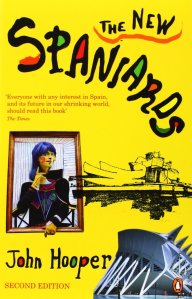
SPAIN BOOK REVIEW: ‘The New Spaniards’ by John Hooper

71treumJ37L._SL1355_

Modern-day Spain is a country changing at bewildering speed. In less than half a century, a predominantly rural society has been transformed into a mainly urban one. A dictatorship has become a democracy. A once-repressed society is being spoken of as a future ‘Sweden of the Mediterranean.’ John Hooper’s outstanding portrayal of the new Spanish society explores the causes behind these changes, from crime to education, gambling to changing sexual mores. This new, up-to-date edition is the essential guide to understanding twenty-first-century Spain: a land of paradox, progress, and social change.

~~~

The New Spaniards is a book which has sat on my to-read shelf for far too long. The second edition of this book got released in 2006, so by the time I pulled it from my shelf, I wondered if its information would be little irrelevant, given the changes to Spain in the past eight years. I could not have been more wrong.

So often mentioned in the same breath as Ghosts of Spain by Giles Tremlett, the book which pulled me from my slumber about Spanish history, The New Spaniards is a must read. The author brings together over 400 pages, creating a solid, credible and easy to read review of Franco and modern life. One chapter in, what immediately becomes clear is the efficient and clean writing style Hopper has; while other books on the subject can feel academic and stiff, the prose is fresh and makes the reader comfortable among a detailed and insightful presentation.

The book starts with a section of the Franco reign, from the years of hunger, the economic boom, the mass migration of Spaniards both abroad and within their own nation, and effects of the reforms made during the dictatorship. The 1970′s, once Franco had gone and democracy set in, is covered with excellent detail, without any confusion on what was undoubtably a dizzying time of change in so many ways. Then-young king Juan Carlos and Prime Minister Adolfo Suárez are well discussed, along with the placement of the young and the old to form a peaceful democracy. The changes made by the Socialist government in the 1980′s are well touched upon, their effect on the economy and the high unemployment rate (easy to identify with today), along with the stark changes in the 1990′s by successive governments.

Chapter 7 – Legacies, Memories and Phantoms – is an engrossing read, whether a reader understands Spain’s 20th century history or not. It explains how Francoism has not survived the passing of years, but a legacy has become ingrained in Spanish life. The pact of forgetting, which did not allow anyone to forgive or heal, is touched upon with honesty, as is Valle de los Caídos outside Madrid. Hooper’s accurate argument is that the omission of the civil war (and its mass graves) in school textbooks, because it is not old enough to be considered history, is an excuse wearing thin.

Part two sweeps in with a section on the churches’ role in Spain, along with the curious and absurd prudery of Franco and the changes to modern time, such with gay marriages. It makes an enlightening read for those less acquainted with subjects such as prostitution, abortion, contraception and gay rights in Spain. Another absorbing chapter is the death of machismo in Spain as women gain rights after being so deeply and cruelly oppressed under Franco. The fact Spanish women are still suffering sexism, like all nations, is also explained, with the all the relevant details to back up the claims. The role of family in Spanish life is given a thorough and honest portrayal, as are the changes in domestic violence and divorce laws which have changed the precious Spanish family for the better.

Part four sheds light on the autonomous regions of Spain, something not well understood by those not living in the country. The Basques, the Catalans and the Galicians are all opened up as Hooper shares their desire for self-governance, with all the information on the remarkably different laws and goals for their regions. (I wanted to wave the flag for the region of Valencia at this point, which has been trapped under their corrupt PP mayor for over 20 years). The book covers the how’s and why’s of the 17 autonomous regions of Spain, their individual paths to freedom, and what lies ahead for these proud places. I learned more about this process, despite having studied it in the past, a testament to the author’s respect for detail.

 This book covers so many subjects that it can dizzying when looking back over all that is covered – from Spanish gypsies, to the welfare system, to the ups and down of the education system, housing and the booms and busts suffered, to the legal system, the media, the arts, but Hooper guides readers through every subject with a smooth yet meticulous manner, opening up each of these fundamental subjects. For me, one of the final sections on changing traditions was especially fascinating. Bullfighting is covered in-depth with an unbiased yet accurate voice. I have read much about bullfighting, but it can be hard to find anything written that does not either lean heavily in favour or against the art form. Regardless of your opinions on the subject, any reader can gain from the information shared by the author.

While much as happened politically, socially and economically to Spain since this book was written, it still serves to provide a clean, realistic picture of Spain and why the nation sits in its current form. The book shows how the past has shaped the present, and can also show that what Spain is currently suffering is not unique. Each generation of Spaniard has seen suffering, but also moments of hope in the time since Franco died. If anyone wanted to learn from the past mistakes, the tips to succeed could well lie in the words of John Hooper.

This book got first published in 1986, rewritten in 1995 and revised in 2006, and could be easily overwhelming if it was not so well planned and laid out. I have yet to find a book that captures Spain’s identity as well as The New Spaniards. It should be handed out to each person who arrives in Spain and plans to make a life there.

My only gripe is that my paperback copy has a tiny font! While this has nothing to do with the quality of the author’s work, I had a headache the entire time. I can understand a publisher’s desire to make the text small, with so much to give to a reader, but it was difficult to read. Going to a Kindle version and sizing up the text is needed for everyone with delicate eyes.

SPAIN BOOK REVIEW: ‘The Angel’s Game’ (El juego del ángel) by Carlos Ruiz Zafón

In an abandoned mansion at the heart of Barcelona, a young man, David MartÌn, makes his living by writing sensationalist novels under a pseudonym. The survivor of a troubled childhood, he has taken refuge in the world of books, and spends his nights spinning baroque tales about the city’s underworld. But perhaps his dark imaginings are not as strange as they seem, for in a locked room deep within the house lie photographs and letters hinting at the mysterious death of the previous owner. 

Like a slow poison, the history of the place seeps into his bones as he struggles with an impossible love. Close to despair, David receives a letter from a reclusive French editor, Andreas Corelli, who makes him the offer of a lifetime. He is to write a book unlike anything that has existed – a book with the power to change hearts and minds. In return, he will receive a fortune, perhaps more. But as David begins the work, he realises that there is a connection between this haunting book and the shadows that surround his home. 

~~

The first installment of this series, The Shadow of the Wind, was a triumph and to follow-up such a tale would have been a huge undertaking. But this book, The Angel’s Game not only continues the story, it also becomes a whole tale on its own and makes Barcelona come to life in a dark, gloomy way.

The story starts with David Martín as a young boy of a murdered father, working as a writer for The Voice of Industry. He manages to get himself work writing fiction, dramatic over-the-top murder mysteries for the newspaper, which doesn’t turn out to be as fun as he thinks it will be. Thanks to having a wealthy friend, Pedro Vidal, a failed writer to lean on, Martín is lucky to eek out a living in gloomy and depressing Barcelona.

Martín’s fortune changes when he gets a new publisher, two greedy men who aren’t worth his time, and Martín is able to lease the tower house of his dreams, an ancient and dismal place where he quickly falls into a habit of writing and neglecting his life and self. Writing as Ignatius B. Sansom, Martín pumps out dark murderous novel after novel, barely eating or sleeping. He soon finds that his 20’s are just rolling by as he sits at the top of his poisonous tower house and bleeds onto his typewriter.

Gothic is the best way to describe the scenes as Martín goes through many changes in 1920’s Barcelona. The scenes are rich and easy to understand, and the characters, while all dark and troubled, are all equally entertaining. Enter Andreas Corelli, a French publisher with an offer too good to be true. With love-life trouble of the highest order, Martín has little else to do but work on the most dreary and thought-provoking novel, one never quite accurately described. A fable, a religious work, a family story – but what ends up on the pages turns out to be pure evil.

As Martín deals with increasingly terrifying meetings with Corelli, ‘the boss’, the history of the tower house and the last writer who lived there and attempted to write a great tale takes ever murderous and scary turns. From basements filled with dummies, evil dogs lurking in the shadows, doves stabbed through the heart, an ageless boss who smiles like a wolf, fires and disasters all over the city, and even a spiderweb-like tumour, Martín’s life descends into madness.

As this book is the prequel of the first in the series, Martín has one bright spot in his life, the Sempere and Sons bookstore. The characters are the grandfather and father of Daniel Sempere, protagonist of the first book, and give more insight into the lives of the Sempere family. Another bright spark is Isabella, a young aspiring writer who latches herself onto Martín and is his saviour multiple times over. Isabella is the only person who can cope with Martín and his bleak attitude, and it’s great to have a strong female character in a book that isn’t there to be some kind of love interest, but a fully fledged character with thoughts and actions that contribute to the story.

The first half of this book is immense; the detail and the writing is superb. Through the latter half of the book, hints fall from all over to give the full picture of what is happening to Martín as he fights to stay alive and try to protect those he loves. Both his friend Pedro Vidal and his wife Cristina, the love of Martín’s life, get in the way of Martín’s spiralling determination to discover the fate of the last owners of the tower house, and the whole picture becomes very desolate. In the end, the body count is high, prices are well and truly paid and Martín’s fate is disturbing indeed.

I rarely read reviews by others before I review, so it doesn’t influence my own opinion, but I couldn’t resist reading a few between reading and reviewing. Yes, this book is very complex, and it seems that this book divides people. There are people who relish the florid prose and detailed vision of the author, and some seemed disappointed. Some felt the book was too complicated at the end. Personally, there are so many hints to the fate of Martín and of Andreas Corelli. Yes, there is a huge cache of characters to follow, but with such vivid descriptions, I felt it easy to keep up and the outcome, to me, was sad but simple. This book is far removed from the first in the series, it’s a dark prequel which only has a slim connection to the first book. Readers should be prepared for that fact. There is a third book in the series, which I will review next week, and that ties together The Shadow of  the Wind and The Angel’s Game  beautifully, for all to see. If you do find The Angel’s Game complex, you should read the third book, as it gives you a clearer picture of the characters and how they bind together.

The first book is a dream; no question. The Angel’s Game feels like the author let go and wrote everything he had ever dreamed of, and was given all the rope he needed to produce the work he loved. If I was asked to pick which book is best in the series, I would say The Angel’s Game is the narrow winner, because it’s dark, complex, sophisticated and you can feel the dampness of the tower house, the pain in Martín’s head, the warmth of Sempere and Sons bookstore and the ice underneath Cristina’s bloodied feet. I did a little Carlos Ruiz Zafón wander last May on my last visit to Barcelona, and he makes the city seems so alive in all new ways. This book is for everyone who wants characters who hold nothing back. Just don’t sit alone in the dark while you read.