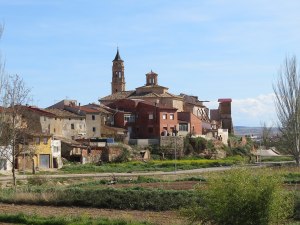
Letux today, home to about 350 people, half the number of 1936, via WIkimedia Commons
Zaragoza, Aragon
By October 1936, the frontline in Aragon had hardened, splitting the province of Zaragoza into two ideologically opposed zones. The capital and its western surroundings were controlled by General Francisco Franco’s Nationalist forces, while eastern villages fell under the influence of advancing Republican militia columns streaming in from Catalonia. On 1 October 1936, two horrific events occurred just 40km apart in María de Huerva and Letux. Together, they illustrate how the civilian population bore the brutal brunt of rearguard violence from both factions during the opening months of the Spanish Civil War.
.
South of Zaragoza capital, the town of María de Huerva became home to one of the largest and most notorious clandestine execution sites in the Nationalist-controlled sector. On or around 1 October 1936, a massive wave of extrajudicial killings concluded at the bottom of the Barranco Salado (Salt Ravine), a deep gorge running alongside the old N-330 highway. Nationalist death squads and Falangist militias used this isolated ravine as a systematic dumping ground for political prisoners. Lorries filled with detainees, captured from nearby Republican-leaning towns like Belchite, Cadrete, and Fuendetodos, were driven to the edge of the ravine and shot. Historical databases maintained by the Government of Aragón and local memory associations presume that the aggregate number of victims buried in the mass graves at Barranco Salado exceeds 100 individuals. While many remain anonymous, specific groups executed here have been identified by name. This includes the socialist mayor and union leaders from the neighbouring district of La Cartuja Baja, who were methodically hunted down and executed in the ravine.
.
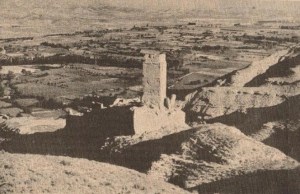
Cadrete Castle and landscape, via unknown
.
To lose 100 people from a community of only 800 all at once, which was happening all over the country, but repeatedly on Zaragoza, and had caused a catastrophic tearing of the social fabric. In the context of the Spanish Civil War, and particularly within the small agrarian towns surrounding Zaragoza in 1936, such a loss did not just cause individual grief; it fundamentally altered the architecture of everyday life for generations. In the 1930s, Spanish villages were tightly knit ecosystems where everyone was interconnected by blood, marriage, or lifelong labour. A single death affected a street; 100 deaths meant virtually every household lost a father, son, brother, or cousin. Because these were extrajudicial executions, there were no wakes, no funerals, and no religious burials. Families were denied the closure of seeing the bodies. This created a state of ambiguous loss, a psychological limbo where the brain struggles to fully process the death because the physical evidence is missing and hidden in a ravine.
.
The loss of 100 people, primarily working-age men, was an immediate economic death sentence for the families left behind. In an agrarian society dependent on physical labour, the sudden removal of dozens of farmers, miners, and laborers left widows and elderly parents destitute. Under the Nationalist rearguard, execution was frequently accompanied by the confiscation of property. The families of the disappeared had their land, livestock, and savings seized by local authorities. Widows were left not only heartbroken but utterly impoverished, forced to raise children in a society that actively boycotted them from employment. Survivors could not publicly weep, wear black in mourning, or ask where the bodies were without risking their own execution. This created a profound, internalised terror. Grief became a dangerous secret whispered only behind closed doors. Neighbours who had pointed fingers or signed the execution lists continued to live across the street from the widows and orphans. This created a toxic atmosphere of chronic suspicion and social paralysis. The community survived, but its trust was entirely broken.
.
Children grew up sensing a massive, unspeakable void in their family trees. They learned from an early age never to ask about their grandfathers or uncles, absorbing a foundational anxiety that historians call the transmission of terror. Landscapes like the Barranco Salado became open-air ghosts. Locals knew exactly what lay at the bottom of the ravine, yet they had to walk past it, farm next to it, and live alongside it for forty years of dictatorship without ever pointing at it.
.
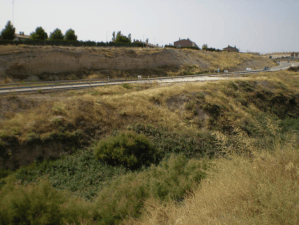
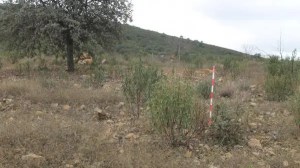
The remains of the mass grave in María de Huerva is located at the bottom of the Barranco Salado ravine, which runs alongside the old N-330 Zaragoza-Valencia national highway. Specifically, it is located near the Puente de las Canales (Canal Bridge), right between the new El Plano industrial park and the town centre. The Forum for the Memory of Aragon carried out some surveys with a view to its possible reopening, but these did not yield the desired results. Currently, the entire area lies within the ravine bed or under the embankment of the old highway.
.
Simultaneously, a different manifestation of rearguard violence was taking place in the Republican-held territory further southeast. On that exact same day, 1 October 1936, an antifascist anarchist militia column operating out of the Belchite sector entered the small village of Letux and its 700 people. Unlike the highly institutionalised, military-led purges of the Nationalists, violence in the Republican zone during this early phase was driven by radical, uncontrolled militia groups taking direct action against perceived class enemies. Upon entering Letux, the militia rounded up ten local residents. The victims, who included local smallholders, conservative sympathisers, and deeply religious villagers, were executed on the spot. Following the end of the war, their bodies were recovered and placed in a mass grave inside the Letux Cemetery. A permanent memorial stone listing all ten victims by name stands as a historical record of the village’s losses during the Red Terror.
.
The parallel events of 1 October 1936 in María de Huerva and Letux showcase the grim reality of the war behind the lines. While soldiers fought along the Aragon front, the rearguard became a space for total ideological cleansing. Whether driven by a centralised military apparatus looking to pacify a province through terror, or by radical armed factions carrying out spontaneous revolutionary justice, the victims were ultimately ordinary citizens. Ninety years later, the graves at Barranco Salado and Letux serve as permanent reminders of a fractured region.
.
The large pit of María de Huerva is located in the ravine that borders the old main road 330, Zaragoza-Valencia, at the height of the Puente de las Canales, between the town centre and the new industrial park, via ARMHA
Valencia
As the central government of the Second Spanish Republic struggled to contain radical paramilitary groups in the autumn of 1936, the rearguard in the Valencian region was gripped by intense ideological cleansing. On 1 October 1936, a wave of coordinated extrajudicial executions swept through the province. From a large-scale massacre at the notorious Picadero de Paterna to the systematic assassination of professional and municipal figures from Carlet, this single day left a profound scar on the region’s social fabric and remains a critical date for modern forensic and historical research.
.
The most devastating single action of the day took place ten kilometres northwest of Valencia city, at the infantry and cavalry barracks of Paterna. The facility’s indoor riding arena, known as the Picadero, was transformed by radical antifascist milicianos into a principal execution site. On the morning of 1 October, dozens of political prisoners, held under the loose authority of revolutionary defence committees, were transported to the Picadero and summarily shot without a trial. Historical documentation compiled by researchers like Rafael Revilla highlights this specific date as a major milestone for regional mass grave (fosa) investigation due to the sheer concentration of casualties.
.
Among the victims uncovered in surviving historical lists was an entire generation of a single family: the Cuevas Ribes siblings. Manuel (60), Rosa (58), Josefa (56), Trinidad (51), María (47). The simultaneous execution of five middle-aged and elderly siblings underscored the ruthless, indiscriminate nature of the early wartime purges, where entire families could be wiped out in a single night based solely on their social class, religious devotion, or suspected conservative sympathies.
.
Simultaneously, a targeted purge was carried out against prominent residents of Carlet, a prominent agricultural municipality south of Valencia. On 1 October, militia death squads rounded up and executed a cross-section of Carlet’s civic and professional elite to systematically disable the town’s traditional power structures. The casualties from Carlet on that day included Alfonso Pellicer Vanaclocha, the municipal secretary (secretario del ayuntamiento) of Carlet, a high-ranking institutional representative of the old local administration, José Chabinete Muñoz, a 45-year-old local veterinarian, representing the educated, professional class, José García García, an 18-year-old agricultural labourer, explicitly targeted for his active involvement with the fascist Falange, José Picó Vanaclocha, a local bricklayer, and Salvador García Ferrer, a local farmer. The inclusion of labourers and bricklayers alongside high-ranking municipal officials reveals that the rearguard violence in Valencia was not exclusively a class war against the wealthy bourgeoisie. Instead, it was an ideological dragnet that ensnared anyone suspected of political divergence or traditional Catholic ties.
.
Carlet before the war, via Obesia
Basque Country
As autumn arrived in 1936, the Basque provinces found themselves violently fractured. While the Republican Cortes in Valencia was busy approving the Basque Statute of Autonomy on 1 October, the reality on the ground in the north was defined by brutal rearguard violence.
Over the course of 1 and 2 October 1936, the Basque Country witnessed two starkly different but equally devastating tragedies: a calculated Nationalist execution of local citizens in Tolosa and a massive, chaotic Republican reprisal massacre aboard a prison ship in the Ría de Bilbao.
.
In Gipuzkoa, which had been rapidly overrun by General Emilio Mola’s Nationalist columns during the summer campaign, a highly institutionalised campaign of political cleansing was underway. On 1 October 1936, Nationalist execution squads took four prisoners to the municipal cemetery of Tolosa and summarily shot them. Thanks to meticulous independent documentation by Basque memory associations, the identities of three of the victims are well-known – Agustín Garmendia Urkola, Joxe Garmendia Iraola, Cruz Iribarren Ezkioga, and a fourth victim, executed alongside them, is historically believed to have been an unidentified refugee or soldier originally from Madrid.
.
The execution of Agustín and Joxe Garmendia ripped through the social fabric of their tight-knit community, leaving two fractured families and four fatherless children behind. Following the executions, the bodies were hastily buried in a clandestine fosa at the cemetery. Years later, in a quiet act of defiance and remembrance, their remains were secretly exhumed and reburied in the cemetery of Amasa, ensuring they rested closer to home.
.
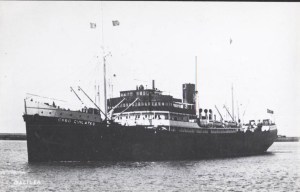
Just one day later, across the provincial border in Bizkaia, a horrific mirror image of rearguard violence exploded in the Republican-controlled waters of the Ría de Bilbao (Bilbao Estuary). Following a series of devastating Nationalist aerial bombings on Bilbao that left dozens of civilians dead, an angry, radicalised crowd of Republican naval personnel and leftist militiamen gathered at the docks on 2 October 1936. Seeking immediate retribution, the armed group boarded the Cabo Quilates, a commercial steamship that the Basque autonomous authorities had repurposed as a floating prison to hold right-wing suspects, conservative sympathisers, and mutinous military officers. The boarding quickly devolved into a mass slaughter. Overriding the official prison guards, the mob dragged prisoners from the ship’s hold and executed them on deck or threw them into the water.
.
Cabo Quilates, via Visit Barakaldo
.
The exact casualty count for that bloody afternoon remains a subject of historical debate. The Francoist regime’s official investigation specifically recorded 38 victims killed directly aboard the Cabo Quilates. Other regional histories place the total significantly higher, combining the Cabo Quilates casualties with a simultaneous or closely linked raid on the neighbouring prison ship Altuna-Mendi, pushing total estimates well over 50 dead. The synchronised horrors of 1 October in Tolosa and 2 October in Bilbao perfectly encapsulate the tragic duality of the Northern Front. In Tolosa, the violence was cold, state-sanctioned, and designed by the Nationalist command to permanently pacify the Basque population. In Bilbao, the violence was an uncontrolled, emotional explosion of the Republican rearguard, triggered by the trauma of aerial bombardment. For modern Basque historians, these two dates serve as permanent markers of how quickly traditional judicial systems dissolved in the autumn of 1936, leaving ordinary citizens on both sides of the lines completely exposed to the crossfire of total war.
.
A Coruña, Galicia
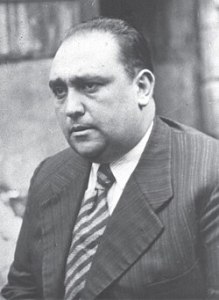
In the province of A Coruña, the Nationalist forces executed Tomás López Datorre, the former socialist mayor of Betanzos, a dedicated member of the UGT trade union, and an influential provincial deputy. López Datorre’s execution was not a chaotic rearguard assassination; it was a highly formalised, state-sanctioned execution following a military court-martial. His death remains a key historical event, illustrating how the Nationalist regime used the facade of military law to systematically eliminate the democratically elected leadership of the Second Spanish Republic.
Following the military coup of July 1936, Galicia was one of the first regions to be rapidly secured by the Nationalist forces. López Datorre was arrested early in the conflict, on 22 July 1936, as part of a sweeping operation to decapitate the local left-wing administration. Unlike victims who were dragged from their homes and shot in ditches without a trace, López Datorre spent more than two months in institutional detention. On 26 September 1936, he was brought before a military court-martial (juicio sumarísimo). In a bitter distortion of legal reality that characterised Francoist justice, democratically elected officials who remained loyal to the constitution were charged with military rebellion against the very forces staging the coup. He was swiftly found guilty and sentenced to death by firing squad.
.
On the eve of his execution, López Datorre penned a final letter to his family that provides historians with a profound insight into the underlying motives of his prosecutors. In the letter, he explicitly linked his death sentence to his previous legal and political activism, specifically his defence work on behalf of workers and activists prosecuted following the October 1934 Asturias mining uprising. In the wake of the 1934 revolt, which had been brutally suppressed by the right-wing government of the time (with Franco playing a major role in coordinating the military response), López Datorre had used his political position to advocate for the amnesty, legal defence, and material relief of the imprisoned miners. To the right-wing military establishment of 1936, this past solidarity was unforgivable. His prosecution was a direct act of political retribution, proving that the Nationalist courts were settling ideological scores dating back years before the civil war erupted.
.
Tomás López Datorre, via Wikimedia Commons
.
The execution of Tomás López Datorre on 1 October 1936 dealt a crushing psychological and institutional blow to the community of Betanzos and the broader Galician labour movement. By executing a sitting provincial deputy and former mayor through a highly publicised military sentence, the Nationalist high command sent a clear, uncompromising message to the population: total obedience to the new regime was mandatory, and the democratic structures of the Republic were being permanently dismantled.
.
Today, historical memory projects in Galicia view López Datorre’s final letter and trial transcripts as vital evidence documenting the institutionalised nature of the White Terror. It strips away any lingering post-war arguments that the executions were merely erratic frontline excesses, revealing instead a calculated, legalistic machinery designed to purge the intellectual and political foundations of Spanish democracy.
.
Cuidad Real, New Castile
By October 1936, the province of Ciudad Real sat securely within the Republican rearguard, away from the immediate frontlines. However, the region remained deeply marked by the radical revolutionary transformations that had reshaped everyday life since July.
Over the first days of October, the province experienced a complex transition. While individual acts of ideological cleansing continued, such as the execution of a surviving Claretian brother in Fernán Caballero, the broader structural landscape in nearby towns like Daimiel began to shift, as formal governmental bodies launched an aggressive campaign to rein in the absolute power of local revolutionary committees.
.
On or around 1 October 1936, the municipal cemetery of Fernán Caballero became the final stop for Brother Felipe González, a Claretian religious brother. His death was a tragic continuation of one of the most notorious anti-clerical actions in the province’s wartime history. Weeks earlier, on 28 July 1936, a train transporting a large community of Claretian seminarists and brothers from Barbastro and Ciudad Real was forcefully halted by radical leftist milicianos at the Fernán Caballero railway station. In the chaotic violence that followed, fourteen Claretians were dragged from the carriages and summarily executed right on the station platforms. Brother Felipe González had somehow managed to survive the initial July railway massacre, slipping away or being held in temporary revolutionary detention. However, his reprieve was short-lived. By early October, local militia death squads tracked down and identified the surviving brother. He was taken to the town cemetery and shot, concluding the systematic liquidation of the local Claretian presence.
.
Just a short distance away in the prominent town of Daimiel, the first days of October brought a starkly different structural evolution. Throughout July, August, and September, Daimiel had been subjected to severe revolutionary repression. Local right-wing, Catholic, and conservative citizens had been swept up in mass detentions, held in improvised prisons like the Convent of Las Mínimas, and frequently subjected to extrajudicial paseos at the gates of the Daimiel cemetery.
.
Convent in Daimiel, via Memoria Democrática de Castilla-La Mancha
.
By October, however, historical data curated by the Plan Regional de Memoria Democrática de Castilla-La Mancha documents a noticeable decline in extrajudicial killings. This drop in violence was not accidental; it marked the beginning of a coordinated political push by the provincial Republican government to re-establish formal judicial authority. While the radical local defence committees and armed militia squads still held immense influence on the streets, the central and provincial governments began systematically stripping these autonomous groups of their policing powers. The state insisted that all detainees be processed through official Popular Tribunals rather than face summary justice behind a convent wall.
.
The parallel realities of Fernán Caballero and Daimiel in early October 1936 perfectly illustrate the internal battle for the soul of the Republican rearguard. While individual, lingering acts of ideological vengeance like the execution of Felipe González still occurred, the unchecked, chaotic power of the early summer militias was drawing to a close. The institutional stabilisation taking root in Daimiel marked the Republic’s transition toward a centralised wartime state, a necessary step to present a legitimate face to international allies, though it came too late for the thousands who had already perished in the opening months of the conflict.
.
Retamosa and Robledollano, Cáceres, Extremadura
As the Nationalist armies advanced through the province of Cáceres in the autumn of 1936, the local population was subjected to a rigid system of territorial control. On 1 October 1936, a devastating act of proxy reprisal violence unfolded along the mountainous highway connecting the villages of Retamosa and Robledollano. In a chilling showcase of the psychological terror used to enforce order in the rearguard, three local men were rounded up, driven into the mountains, and executed solely to punish the community for the escape of three Republican targets the night before. The event remains a prominent milestone in the forensic history of Extremadura’s mass graves, demonstrating how the White Terror targeted family members and neighbours to suppress any lingering spirit of resistance.
.
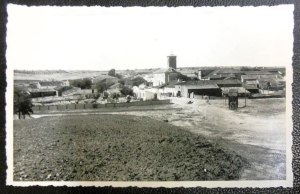
Retamosa, via unknown
.
The tragedy began on the night of 30 September 1936 in the small village of Retamosa. Sensing their imminent arrest or execution by the local Nationalist garrison and Falangist guards, three prominent Republican figures managed to slip past their captors under the cover of darkness and escape into the surrounding sierras. The response from the Nationalist command was immediate and ruthless. Unable to capture the escapees, the local right-wing authorities decided that the community must pay a collective price to deter others from fleeing or aiding the guerrilla movement in the mountains. On the morning of 1 October, three alternative residents from Retamosa were arbitrarily selected from detention lists or dragged from their homes. They had committed no military offenses; they were chosen simply as human currency to satisfy the garrison’s quota for execution.
The three selected men were forced into the back of a transport truck at Retamosa. The vehicle set off toward the neighbouring town of Robledollano, climbing high into the rugged terrain of the Geopark region. However, the truck never reached its destination. Before reaching the town limits of Robledollano, the drivers pulled over at the Puerto de los Herreros, a steep, isolated mountain pass. The three men were ordered out of the vehicle, lined up by the roadside, and summarily executed by a Nationalist firing squad. Their bodies were hastily thrown into a shallow trench dug into the rocky mountain soil. For over seven decades, the families of Zoilo, Leandro, and Cesáreo knew exactly where their loved ones lay, yet the political climate of the Franco dictatorship forced them to pass the roadside grave in absolute silence.
.
The breakthrough finally came in 2007, when a team of forensic anthropologists and historical memory activists officially opened the Fosa del Puerto de los Herreros. The exhumation successfully recovered the skeletal remains of all three men, displaying clear evidence of perimortem gunshot wounds consistent with an execution. The MPR permanently registered the location as a verified historical site of extrajudicial repression dated precisely to 1 October 1936. By bringing the remains out of the mountain trench and returning them to their families for a dignified burial, the exhumation dismantled the ultimate goal of the 1936 reprisal, to erase these men from the living memory of their village.
.
Fosa en el Puerto de los Herreros at Robledollano, via RTVE
Huesca, Aragon
As autumn arrived in 1936, the provincial capital of Huesca found itself in a precarious and terrifying position. Unlike neighbouring Zaragoza, which sat securely in the Nationalist rearguard, Huesca was under an active, choking siege by Republican militia columns advancing from Catalonia. Inside the city walls, the Nationalist military garrison reacted to this external threat with intense internal paranoia against the 16,000 locals. On 1 October 1936, this climate of fear culminated in a highly institutionalised mass execution. Infamously recorded in local history as the Fusilamientos del 1 de octubre de 1936 en Huesca, 15 political prisoners were taken to the city cemetery and shot in a single morning.
.
Following the July 1936 military coup, Huesca was quickly secured for the Nationalist faction by the military governor. However, within weeks, anarchist and communist militias established a frontline just kilometres from the city centre, cutting off regular supply lines and subjecting the urban population to frequent artillery bombardments. To prevent any internal uprising or collusion with the besieging Republican forces, the Nationalist high command initiated what they termed a reducción, a systematic purging of anyone suspected of harbouring left-wing, unionist, or democratic sympathies.
.
Unlike the clandestine paseos occurring along provincial roadsides, the execution of the 15 individuals on 1 October was a highly structured, state-sanctioned military operation.
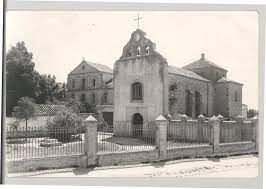
In the early hours of the morning, the prisoners were selected from the city’s main prison logs, loaded into transport vehicles under heavy guard, and driven to the exterior walls of the Huesca municipal cemetery, specifically an area near the Ermita de las Mártires (Hermitage of the Martyrs), which became a permanent killing ground throughout the war.
A formal military firing squad carried out the sentences. The 15 victims were shot simultaneously, and their deaths were systematically logged into the local civil and cemetery registries, often using bureaucratic euphemisms or leaving the cause-of-death field intentionally ambiguous to mask the political nature of the execution.
.
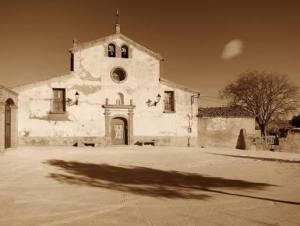
Ermita de las Mártires, via Wikimedia Commons
.
The mass execution on 1 October holds a distinct position in the historiography of the Spanish Civil War in Aragon. Because it was carried out as a single, large-scale collective action inside the provincial capital, it became an undeniable, documented anchor point for modern researchers calculating the true scale of the White Terror in the region. For decades under the Franco dictatorship, the families of these 15 individuals were forced to live alongside the very walls where their relatives had been killed, forbidden from publicly mourning or marking the burial site.
.
Today, data compiled by the Gobierno de Aragón and regional memory associations uses the precise date of 1 October to cross-reference historical court-martial transcripts with the physical exhumation data from the cemetery’s mass graves. By treating this day as a major, independent milestone of the repression, historians have been able to strip away decades of official silence, ensuring that the 15 individuals executed at Las Mártires are recognised as victims of a calculated, institutionalised strategy of wartime elimination.
.
Huesca itself has three large mass graves in town, and another four on the outskirts, which would been sites for roadside murders in 1936. Two large pits are believed to be located at the Las Mártires cemetery, occupying a significant portion of the site’s interior as well as areas near the burial ground. Highly precise information regarding the location of some of these graves has recently come to light thanks to new documentation concerning the 1,230 burials that took place there between September 3, 1936, and the end of the Republican siege of the city in March 1938.
.
While the existence of additional graves in the vicinity of the hill has not yet been conclusively proven, it is widely assumed to be the case; it is common knowledge in the city that numerous human remains were uncovered, and subsequently reburied, during the construction or expansion of a nearby healthcare facility. Between 1959 and 1964, a total of 820 – 854 bodies were exhumed, mostly from Las Mártires, for illegal transfer to Valle de los Caídos, yet a significant number of the deceased likely remain within the cemetery grounds and the surrounding area. In November 2022, ground-penetrating radar surveys were conducted, identifying an area where the grave might be located.


You must be logged in to post a comment.