This Week in Spanish Civil War History – Week 26: 8 – 15 January 1937

Anarchist supporters in Barcelona

January 8

The Popular Executive Committee of Valencia is dissolved. The Committee is one of eight main groups set up to look after regions (broken into almost smaller 600 collectives) which have been participating in the Spanish Revolution, an anarchist-driven change in way of life for workers of their regions. Aragon was the main driver of this movement, along with neighbouring Catalonia and Valencia regions. Workers unions were collectivised and land is redistributed between workers to create a new, more equal society. At its peak, between five to seven million people were involved in participating in this enormous and ambitious change. Now through three main phases of its operation, the end is coming to much of the programme, which is suffering for a myriad of reasons (this post could go on for months if I get too detailed). The Popular Executive Committee of Valencia, which set laws and rules in the region, is taken over by the Republican government, which can now take control of anarchist popular militias. The militias now have to join the Popular Army and fight officially for the Republicans and fight under the command of professional army officers (anarchist principles are against hierarchy). While the revolution is huge and successful many places, the collapsing of major collectives such as the Popular Executive Committee signals the beginning of the end for the anarchist revolution. (Click on the above or below photos captions to read more about the collectives and revolution)

Examples of anarchist money coupons issues in some collective areas. Other areas did away with money completely

January 9

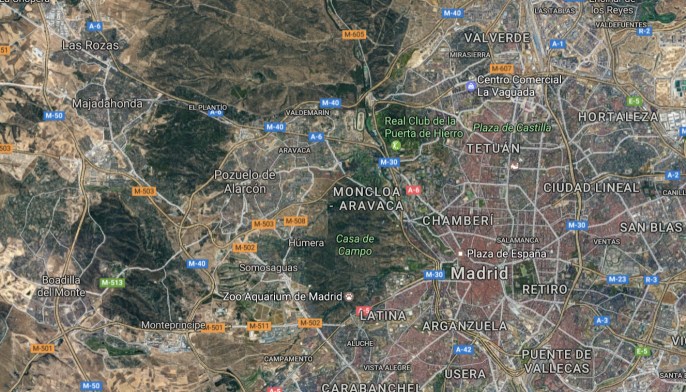
The second battle for Corunna Road outside Madrid is coming to a close. In one day, the Nationalists take seven miles of the road between Las Rozas and Puerta de Hierro. The Republicans and International Brigades have all been killed, and a handful have managed to flee, leaving the Nationalists to control the critical supply road into Madrid.

The Garabaldi battalion, part of the XII International Brigade

January 10

The XII International Brigades (mostly Spanish volunteers, along with Italian, Franco-Belgian and Albanian volunteers) enter the region from Madrid to start the third Corunna Road battle. The next five days of fighting shall see them fight to recapture the northwest Madrid areas of Majadahonda, Villanueva, Pozuelo and Boadilla, all areas taken during the Corunna Road battles. The heavy fog has dropped on the region again making fighting cold, wet and difficult.

January 11

The Nationalist forces, which have only just finished the battles killing so many Republicans, have lost up to 15,000 men themselves (the same as the Republican side) and take cover in trenches in the under siege Madrid areas, as they are suffering from their casualties and lack of supplies.
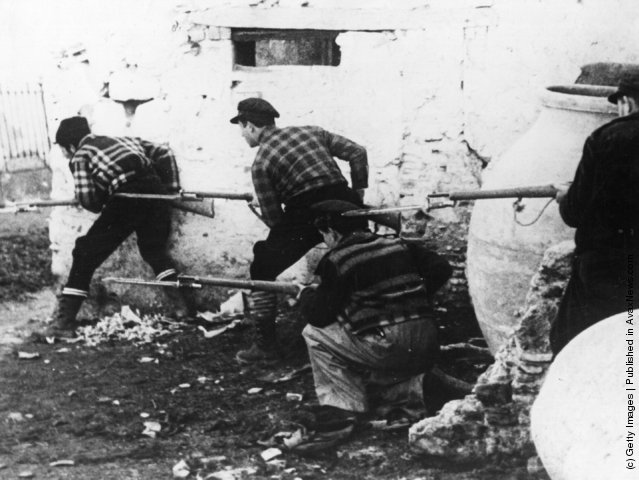
Republican forces lying in ambush in a village near Madrid

January 15

The third battle of Corunna Road ceases. The Nationalists have convincingly won the first and second waves of battle, and now both sides are exhausted. The XII International Brigades do not have the men or supplies to take back any of the northwest Madrid areas, and the Nationalists can’t get any further with their numbers. Both sides are now exhausted and give up in their plans. The Corunna Road route is still technically open and supplies still have a chance of getting through to Madrid, though now the city will have to rely more on the roads coming from Valencia and Aragon in the east/northeast.

~~

This is not a detailed analysis, just a highlight (lowlight?) of the week’s events. Things get lost in translation – Feel free to suggest an addition/clarification/correction below. The more the world remembers, the better. All photos are linked to source for credit.
This Week in Spanish Civil War History – Week 25: 1 -7 January 1937

January 1

By the 25th week of the war, neither side would be able to say their plans had been executed the way they hoped. The Nationalists had hoped to invade, take Madrid and rule the nation within weeks or months. The Republicans came together, multiple factions with similar principles, hoping to oust the fascists. At no stage were they prepared enough to see through their goals. 1937 would see Franco’s plans to take Spain become more established. Franco had much help from Hitler and Mussolini, while the Republicans still had the Soviets on their side, due to the large Communist faction in Spain. But with Republicans made up of many groups and no one clear leader, divisions were one of the main forces at play in the war, with Anarchists and Communists splitting constantly from the Socialists and workers’ militias. As with all wars, the regular people were constant losers.

January 3

The third battle for Corunna Road, just northwest of Madrid city, commences.  General Orgaz Yoldi has gained more Nationalist reinforcements and begins the offensive, known as the Battle of the Fog. The Nationalists retake the town of Boadilla del Monte, as the Republicans are still suffering from their earlier losses. The Republican have five divisions working together, along with the XIV International Brigades, but have little ammunition and have to surrender the town and that portion of the crucial supply route of Corunna Road.

January 4

With surging numbers of Nationalist soldiers coming from the right, the Republicans have to retreat even further away from Boadilla del Monte and also lose the town of Las Rozas, just 11km north of Boadilla del Monte. The weather is at freezing point all day and night and the fog continues to make battle ever more difficult.

The Republicans deploy more units from Pozuelo, ten kilometers west of Madrid city. The Modesto division, a brigade of four units combined, manage to secure the front while other units retreat from advancing Nationalists. The fog continues to thicken, aiding to secure the front for the Republicans and keep the Nationalists at bay, though the strategic towns have been lost. But once the fog lifts, the Republicans know they are in trouble.

Some of the Thaelmann battalion prior to battle

January 5

As the fog lifts, the Nationalists, with 18,000 troops and air support, attack Pozuelo, where many Republican forces are in retreat. The Republicans run out of ammunition, including for the T26 tanks from Russia, which have destroyed 25 German tanks throughout the day. The Republicans have to scatter, without weapons or communication, being split by the attack. Republican General Miaja tries to get the German Thaelmann battalion of the XIV International Brigade back together, along with Lister’s Communist unit, in order to try to regroup. The Nationalists continue to widen their hold over Corunna Road and also take the opportunity to bomb the city of Madrid, mostly by day.

All of the XIV International Brigades are forced far back from Boadilla del Monte and the Nationalists have Corunna Road. They meet up with other Republican groups and are ordered to retake Las Rozas, but they lack the men or firepower to do so. Among the young foreigner volunteers was untrained machine-gunner 17-year-old Esmond Romilly, nephew of Franco-sympathiser Winston Churchill. (It was rumoured that Romilly was Churchill’s own son, Churchill having bedded his wife’s sister. The sisters’ mother was a notorious cheater, and their real father(s) is unknown. Several men are options, one being the grandfather of young Romilly’s wife – meaning the young couple were first cousins. The rich do like to make their own rules, and the family is fascinating/bizarre.)

January 7

The Nationalists bomb Las Rozas from the air, destroying the town and killing almost all the Republicans and International Brigades huddled nearby for safety. The locals of the town have already long fled, hiding in caves in the Hoyo de Manzanares mountains nearby. All but 35 Republicans are killed, those not killed manage to retreat wounded. Those foreigners who survived, such as young Romilly, are sent home with wounds and illness. Romilly went on to write a book named Boadilla, all about the slaughter of  the battle. The Nationalists are in total control of the area, and ready to begin their final push to control all of Corunna road. Both sides have now lost around 15,000 men each.

I’ll will post a review when I get the chance

~~

This is not a detailed analysis, just a highlight (lowlight?) of the week’s events. Things get lost in translation – Feel free to suggest an addition/clarification/correction below. The more the world remembers, the better. All photos are linked to source for credit.