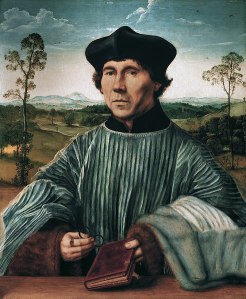
OTD with Thomas Cromwell – 10 June 1540: The full story of Cromwell’s arrest

A surprising thing happened on the afternoon of 10 June 1540 – Thomas Cromwell was running late. Sure, he had been at Parliament in the morning, and had a Privy Council meeting at 3pm, but Cromwell didn’t need to go far between his two important tasks for the day. Cromwell was never late for anything, and no record exists explaining why Cromwell had to rush into a Privy Council meeting already attended by all members – and William Kingston, Constable of the Tower.

What was not a surprise was the arrest of Thomas Cromwell. Many were stunned by the news that the Lord Privy Seal, the King’s Chief Minister, the most powerful man in England, was suddenly arrested on vague charges, sent to the Tower on the King’s command. But in truth, the clues had been spread out of the course of the previous year, and Cromwell’s chief enemies, Thomas Howard, Duke of Norfolk, and Stephen Gardiner, Bishop of Winchester, had slowly tightened the net around their common nemesis.

Parliament had been dissolved in July 1536 and did not sit again until Henry summoned his ministers in March 1539. Cromwell had ensured Parliament sat regularly from 1529, running yearly reformation parliaments, changing the nature of politics under King Henry. But the Pilgrimage of Grace, the death of Jane Seymour, and Henry’s increasing illness and paranoia had got in the way of Cromwell’s changes. Cromwell’s political to-do list was huge by 1539, although his religious reforms had continued without parliament and despite the rebellion of 1536-37.

Thomas Howard, 3rd Duke of Norfolk

Cromwell gets unlucky

Just prior to parliament’s opening on 28 April 1539, Cromwell fell ill, which he described by letter to Henry as an ague or tertian fever (possibly malaria).[1] Cromwell suffered a number of near-fatal illnesses throughout his time at court, usually always in spring, managing to beat them every time. Cromwell’s 1539 illness was a brutal one, rendering the Lord Privy Seal bedridden at Austin Friars and then at St James’ Palace, which was kept for his use, through most of April and May. Cromwell was seen outside St James’ when a muster of Henry’s troops, led by Ralph Sadler and included Richard and Gregory Cromwell, marched past the Palace, but the amount of work he completed almost ground to a halt.

While Cromwell lay in his sickbed, Norfolk was ready to pounce. He summoned the Convocation of Canterbury, and invited Convocation of York members as well, and pushed reform through the House of Lords, where Cromwell was too ill to attend. Norfolk was the face of The Six Articles,[2] which rolled back Cromwell’s reformist changes. The Six Articles, mostly dealing with matters of the Eucharist, clerical celibacy, vows of chastity, transubstantiation, private masses and confessions, brought King Henry and England way back to Catholic practises. By the time the first session of parliament closed in June, Cromwell still had not appeared before the House of Lords or House of Commons, and the damage to the Reformation had been done.

Cromwell loses his cool

King Henry wanted religious unity in England before he went on progress, and set up a banquet at Cranmer’s place, Lambeth Palace, but refused to attend himself. Cranmer was already in a poor mood, as he had just sent his wife and daughter from England,[3] as his marriage was deemed illegal by the Six Articles. All sides of religious debate attended the banquet, Cromwell included, on 2 July 1539. After years of backstabbing, rumours and snide comments, Cromwell and Norfolk had the public fight that had long been brewing. Norfolk gleefully slandered Wolsey before the banquet and Cromwell snapped, accusing Norfolk of supporting Rome over England. Norfolk had begged to go to Rome with Wolsey when the cardinal expected to be made Pope in 1523, remembering every detail, down to the money Norfolk made during the negotiations to have Wolsey elected, acting as the ‘protector of the future Pope’ and sailed the Mary Rose, to accompany Emperor Charles’ ship from England.[4] These details enraged Norfolk, essentially being accusing as a traitor to his king and his country.
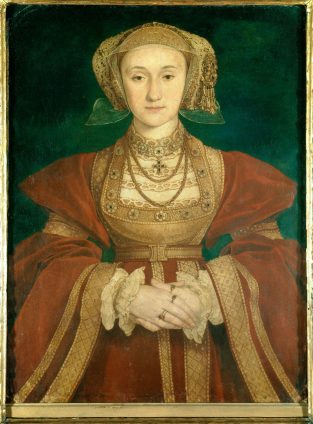
Duchess Anna, Daughter of Cleves

Cromwell accidentally picks the wrong queen

Cromwell wanted to push harder than ever to secure the Reformation in England. The monasteries were almost dissolved, and the delegation went to the German States to secure a royal bride and alliance with the Schmalkaldic League, with its powerful Lutheran army. Holbein brought home portraits of Anna and Amalia, Duchesses of Cleves in October 1539, and Henry decided to marry Anna in a rush.[5] There are no reports Cromwell ever bragged of Anna’s qualities, nor that Holbein’s over-exaggerated Anna’s beauty. Anna had a powerful Lutheran brother, Wilhelm, Duke of Jülich-Cleves-Berg, and her sister, Sybilla, Electress of Saxony, wife to the head of Schmalkaldic League. Duchess Anna was perfect for England; young, beautiful, clever and well-connected. The duchess of a Lutheran state, which was still part of the Holy Roman Empire. She was strongly supported by her Lutheran family but was Catholic like her mother.[6] Cleves was the perfect ‘middle-way’ of religion, needed to secure alliances and peace.

By the time that Anna had finally reached England to marry King Henry in January 1540, international movements had ruined everything Cromwell had crafted. Henry was listening to the whispers of Norfolk and Gardiner, turning back to Catholicism. Anna’s brother Wilhelm had all-but declared war against Emperor Charles over the German state of Guelders. Once Henry married Anna, England would be in alliance and could have to fight against Emperor Charles. France swayed back and forth, helping to undo all negotiations of alliances between these formidable powers of Europe. Cromwell couldn’t undo the marriage contract; he had helped to create it, and it was water-tight.

The long-held rumours of Henry calling Anna ugly, “a Flanders mare,” have dogged the tale through the centuries, despite documents telling a very different story. Jousts were held in Anna’s honour; the people spoke of her beauty and kindness.[7] England quickly warmed to Anna, but Henry wanted out of any alliance that could mean war. Emperor Charles was furious that England would align with the reformers, but the Germans were also unhappy with the marriage, with Henry not backing them on matters of war, and not undoing the infuriating Six Articles. Cromwell had promised the German ambassadors he would crush Norfolk and the Six Articles, but had lost the power in parliament and convocations to do so.
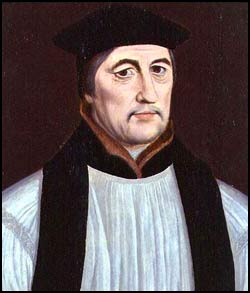
Stephen Gardiner, Bishop of Winchester

Cromwell makes a mistake

Despite all the troubles with Anna, Henry still believed in Cromwell, confiding in him about his impotence with Anna, and making Cromwell the Earl of Essex and Lord Great Chamberlain in April 1540. While the marriage was still sound, Cromwell had completed the Dissolution of the Monasteries and made Henry rich. Cromwell’s enemies, such as Norfolk and Gardiner, were stunned, as were Ambassador Chapuys and Ambassador Marillac. Gardiner and Cromwell had been together at dinner at Austin Friars only weeks before, where Cromwell made a mistake. Cromwell told Gardiner “if the king did turn from the Reformation, I would not turn from it; and if the king turned, and all his people too, I would fight them in the field, with my sword in my hand, against the king and all others.” [8] Cromwell had already lost many allies in parliament and at court as religious changes slowly peeled apart, and this comment would come back to haunt him.
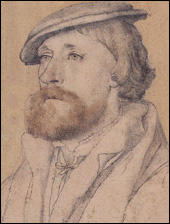
Thomas Wriothesley

Cromwell has a slip of the tongue

In May, Cromwell again made a mistake. He had almost secured an annulment for Henry and Anna, based on a flimsy pre-contract from Anna’s childhood, and was in initial stages of an alliance with France, seen running around the May Day jousts like a crazed man, trying to juggle national and international diplomacy. But he made a rare misstep soon after, admitting aloud of Henry’s impotence to Thomas Wriothesley one tired evening.[9] So many little moments were beginning to add up against Cromwell, just as it had for so many others.

For a long time so many men had sneered at Cromwell’s power. Norfolk had Henry’s ear, as did Gardiner, Bishop Bonner of London, Sir Anthony Browne, and Bishop Cuthbert Tunstall, all on the Privy Council. Cromwell’s life was still looking up in June 1540 – he had unlimited power in England, his son Gregory was happily married to Elizabeth Seymour and they had three healthy sons, Henry, Edward, and Thomas, at Leeds Castle. Richard Cromwell had just been knighted and called ‘the king’s diamond’ by Henry as he was given a diamond off his own hand. Ralph Sadler, a man so close to Cromwell he was practically a son, was now Principal Secretary to the king, shared with Thomas Wriothesley, one of Cromwell’s most loyal men, in a role Cromwell relinquished to them. Queen Anna’s marriage could be undone, giving Cromwell a chance to secure religious reform alongside Archbishop Cranmer.

Yet, for some unknown reason, Cromwell was late to the Privy Council meeting, where he was quickly called a traitor by most, if not all, of the councillors (though among them was his nephew Richard Cromwell, and close friends Thomas Cranmer and Thomas Audley, who never spoke against him). Even Richard Rich, a long-time colleague, did not defend his master. Sir John Russell, Sir Edward Seymour, Sir William Fitzwilliam and Sir Robert Radcliffe, while not on record as calling for Cromwell’s head, also did not defend the Lord Privy Seal. Charles Brandon, Duke of Suffolk and head of the Privy Council, likewise did not speak against Cromwell (Cromwell was godfather to Suffolk’s son Henry[10] and probable godfather to Suffolk’s granddaughter Jane Grey). But Suffolk allowed Kingston to arrest Cromwell, who threw his cap on the table before the Council and cried, “I am no traitor! Your Grace, members of the Council, is this reward for good service done unto His Majesty the king? I put it to your consciences, am I a traitor as your accusations imply? Well, no matter, for I renounce all pardons or grace needed, for I never offended the king, and it matters only if the king himself thinks me a traitor, and he would never have me linger long!”[11]

Norfolk pulled Cromwell’s golden collar from his shoulders, while Fitzwilliam pulled the garter from Cromwell’s leg,[12] as he was still wearing his parliamentary robes, no time to change between meetings. Cromwell was arrested as a traitor, almost eleven years after Reginald Pole had expected to see Cromwell rowed to the Tower alongside Cardinal Wolsey. Cromwell’s work on securing a Schmalkaldic alliance showed he was in league with Lutherans and Calvinists across Europe, that he had contacted a marriage that Henry couldn’t remain in, and he had uttered treasonous words to Gardiner over dinner.[13] The Six Articles had got in the way of so many of Cromwell’s reforms, making him appear ineffectual, and Henry knew of Cromwell’s slip-up to Wriothesley about impotence. Cromwell had been betrayed by people close to him, and he left Westminster in a boat to the Tower, where he was housed in the Queen’s rooms – the same rooms Anne Boleyn had stayed in only four years earlier.

Wriothesley himself drafted letters that day to John Wallop, Nicolas Wootton and Christopher Pate in France that very day, talking of Cromwell’s arrest,[14] though letters from Wallop arrived to Cromwell in the following days, having not received the news right away. French Ambassador Charles Marillac wrote to King Francis that very day, writing, “I have just heard that Thomas Cramuel, keeper of the Privy Seal and Vicar-General of the Spirituality, who, since the Cardinal’s death, had the principal management of the affairs of this kingdom, and had been newly made Grand Chamberlain, was an hour ago led prisoner to the Tower and all his goods attached. Although this might be thought a private matter and of little importance, inasmuch as they have only reduced thus a personage to the state from which they raised him and treated him as hitherto everyone said he deserved, yet, considering that public affairs thereby entirely change their course, especially as regards the innovations in religion of which Cramuel was principal author, the news seems of such importance that it ought to be written forthwith. I can add nothing but that no articles of religion are yet concluded, and that the bishops are daily assembled to resolve them, and meanwhile Parliament continues. They were on the point of closing this when a gentleman of this court came to say from the King that I should not be astonished because Cramuel was sent to the Tower, and that, as the common, ignorant people spoke of it variously, the King wished me to know the truth. The substance was that the King, wishing by all possible means to lead back religion to the way of truth, Cramuel was attached to the German Lutherans, had always favoured the doctors who preached such erroneous opinions and hindered those who preached the contrary, and that recently, warned by some of his principal servants to reflect that he was working against the intention of the King and of the Acts of Parliament, he had betrayed himself and said he hoped to suppress the old preachers and have only the new, adding that the affair would soon be brought to such a pass that the King with all his power could not prevent it, but rather his own party would be so strong that Cramuel would make the King descend to the new doctrines even if he had to take arms against him. These plots were told the King by those who heard them and who esteemed their fealty more than the favour of their master. The King also sent word that when he spoke with me that he would tell things which would show how great was the guilt of said Cramuel and that said lord has so long been able to conceal it and the right opportunity now came to give orders.”[15]

Marillac also wrote to Anne Montmorency, Constable of France, saying, “what I wrote last is now verified touching the division among this King’s ministers, who are trying to destroy each other. Cramuel’s party seemed the strongest lately by the taking of the dean of the Chapel, Bishop of Chichester, but it seems quite overthrown by the taking of the said lord Cramuel, who was chief of his group, and there remain only on his side the Archbishop of Canterbury, who dare not open his mouth, and the lord Admiral, who has long learnt to bend to all winds, and they have for open enemies the Duke of Norfolk and the others. The thing is the more marvellous as it was unexpected by everyone.”[16]

Tomorrow – 11 June: Cranmer begs for Cromwell’s life. 

~~~

[1] TNA xiv no. 783, SP 7/I f.53, 16 April 1539

[2] McEntegart, Henry VIII, 152

[3] SP I/152 f. 118, July 1539

[4] Ibid 142-44, SP I/142 f. 105

[5] Foxe 1570, 1399.

[6] See Anna, Duchess of Cleves by Heather Darsie for full information

[7] See Anna, Duchess of Cleves by Heather Darsie for full information

[8] TNA xv no. 486, 10 April 1540

[9] BL MS Cotton Titus B/I f.273, 12 June 1540

[10] TNA ix no. 386, 18 September 1535

[11] TNA xv no. 804, 23 June 1540

[12] TNA xv no. 804, 23 June 1540

[13] Foxe 1570, 1399.

[14] TNA xv no. 765, St. P. viii.349, 10 June 1540

[15] TNA xv no. 766, Kaulek, 189, 10 June 1540

[16] TNA xv no. 767, Kaulek, 190, 10 June 1540
OTD with Thomas Cromwell – 10 June 1536: Cromwell begs Princess Mary to pledge allegiance to the king

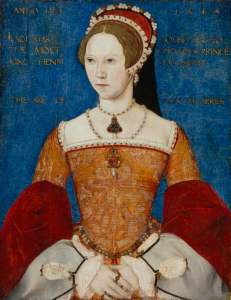
Princess Mary in 1544 by Master John Browne NPG428

In an uncharacteristically rude manner, Cromwell writes to Princess Mary, no doubt under command to the King, and admonishes her for not signing the oath and swearing loyalty to her father. Princess Mary was in grave danger by this time, and Cromwell knew that Mary’s allegiance to Henry was the only thing that would save her. But after years of kind words to Mary, this letter must have arrived at Hunsdon to her great surprise. 

CROMWELL TO THE PRINCESS MARY, 10 June 1536 (MSS Otho. C. x. 273)

I have received your letters, whereby it appears you be in great discomfort, and do desire that I should find the means to speak with you. Your discomfort can be no greater than mine, who upon your letters have spoken so much of your repentance for your wilful obstinacy against the King, and of your humble submission to obey his pleasure and laws in all things without exception or qualification. Knowing how diversely and contrarily you have proceeded at the late being of his Majesty’s Council with you, I am ashamed of what I have said and afraid of what I have done. What the sequel shall be God knows. With your folly you undo yourself, and I say to you, as I have said elsewhere heretofore, it were pity you should not be an example in punishment, if you will make yourself an example in the contempt of God, your natural father and his laws by your only fantasy, contrary to the judgments and determinations of all men that ye must confess do know and love God as well as you. To be plain with you, I think you the most obstinate woman that ever was, and I dare not open my lips to name you unless I have such a ground thereto that it may appear you were mistaken, or at least that you repent your ingratitude and are ready to do your duty. I have therefore sent you a book of articles to subscribe, on receiving which from you again, with a letter declaring that you think in your heart as you have subscribed with your hand, I will venture to speak for your reconciliation. If you do not leave all sinister counsels, which have brought you to the point of undoing, I take leave of you for ever, and desire you to write to me no more, for I will never think you other than the most ungrateful, unnatural, and most obstinate person living, both to God and your most dear and benign father. And I advise you to nothing, but I beseech God never to help me if I know it not so certainly to be your bounden duty, by God’s laws and man’s laws, that I must needs judge that person that shall refuse it not meet to live in a Christian congregation; to the witness whereof I take Christ, whose mercy I refuse if I write anything unto you that I have not professed in my heart and know to be true.

Princess Mary wrote to Cromwell that same day: ‘You will see I have followed your advice and will do so in all things concerning my duty to the King, God and my conscience not offended; for I take you as one of my chief friends next his Grace and the Queen. I desire you, for Christ’s passion, to find means that I be not moved to any further entry in this matter than I have done; for I assure you I have done the utmost my conscience will suffer me, and I neither desire nor intend to do less than I have done.’[1]

 Another letter arrived from Princess Mary on 13 June, saying she had copied the letter Cromwell had ordered her to copy out and send to Henry, and she added, ‘Good Mr. Secretary, I do thank you with all my heart for the great pain and suit you have had for me. I see by your letters that you mislike my exception in my letter to the King. I assure you I did not mean it as you take it, for I do not mistrust that the King’s goodness will move me to do anything which should offend God and my conscience. But that which I did write was only by the reason of continual custom; for I have always used both in writing and speaking to except God in all things, same word for word; and it is unsealed, because I cannot endure to write another copy.’[2]

[1] MSS Otho, C. x. 262 b, 125, 10 Jun 1536

[2] MSS Otho, C. x. 263 b, 13 Jun 1536

OTD with Thomas Cromwell – 28 June 1540: The complete attainder of Thomas Cromwell

THE ATTAINDER OF THOMAS CRUMWELL (Parl. Rolls, 32 Hen. 8, c. 62)

The final version of Thomas Cromwell’s attainder passed through Parliament on 28 June 1540, based on the assumption that his reformist books, bibles, instructions, and law changes were heresy. They based high treason charges on the argument with Stephen Gardiner on 31 March.

In their most humble ways showing to your most Royal Majesty, the Lords Spiritual and Temporal, and all your most loving and obedient Subjects, the Commons in this, your high Court of Parliament assembled, that where your most Royal Majesty, our Natural Sovereign Lord, is justly and lawfully, really entitled to be our sole Supreme Head and Governor of this, your Realm of England, and of the Dominions of the same; to whom, and to none other under God, the Kingly Direction, Order, and Governance of your most loving and obedient Subjects, and People of this your Realm, only appertained and belongs, and the which your most loving and obedient Subjects your Highness prudently and quietly, without any manner of disturbance, by a long time, most graciously has preserved, sustained and defended.

And your Highness, for the Quietness, Wealth, and Tranquility of your said humble and obedient Subjects, has made, and ordained, diverse and many most godly, virtuous, and wholesome Laws. And for due execution of the same, has not desisted to travel in your own most Royal Person, to support and maintain, as well the Laws or Almighty God, as the Laws by your Highness made and ordained, by due and condign Execution of the same Laws, upon the Transgressors offending contrary to the same. And your Majesty has always most virtuously studied and laboured, by all ways, and alt means, to and for the setting forth thereof, in such ways as might be most to the Honour, Glory, and Pleasure of Almighty God and for the common accord and wealth of this your Realm, and other your Dominions. And for the true execution of the same, has elected, chosen, and made diverse, as well of your Nobles as others, to be of your most Honourable Council, as to the Honour of a Noble Prince appertained. And where your Majesty has had a special Trust and Confidence in your said most trusty Counsellors, that the same, your Counsellors, and every of them, had minded and intended, and finally purposed to hear, followed, and pursued your most Godly and Princely Purpose, as of truth the more number hath most faithfully done. Yet nevertheless, Thomas Crumwell, now Earl of Essex, whom your Majesty took and received into your trusty Service, the same Thomas, then being a Man of very base and low degree, and far singular Favour Trust and Confidence, which your Majesty bore and had in him, and did not only erect and advance the same Thomas unto the state of an Earl, and enriched him with manifold Gifts, as well of Goods, as of Lands and Offices, but also him, Thomas Crumwell, Earl of Essex, did erect and make one of your most trusty Counsellors, as well concerning your Grace’s Supreme Jurisdictions Ecclesiastical, as your most high secret Affairs Temporal. Nevertheless, your Majesty now of late has found, and tried, by a large number of Witnesses, being your faithful Subjects, and Personages of great Honour, Worship, and Discretion, Thomas Crumwell, Earl of Essex, contrary to the singular trust and confidence which your Majesty had in him, to be the most false and corrupt Traitor, Deceiver, and Circumventor against your most Royal Person, and the Imperial Crown of your Realm, that has been known, seen, or heard of, in all the time of your most noble Reign.

Insomuch that it is manifestly proved and declared, by the Depositions of the Witnesses aforesaid, That Thomas Crumwell, Earl of Essex, usurping upon your Kingly Estate, Power, Authority, and Office, without your Grace’s Commandment or Assent, has taken upon himself to set at liberty diverse Persons being convicted and attainted of Misprision of High Treason, and diverse others being apprehended, and in Prison, for Suspicion of High Treason. And over that, many and diverse Times, at sundry Places in your Realm, for manifold Sums of Money to him given, most traitorously has taken upon him, by several Writings, to give and grant, as well unto Aliens, as to your Subjects, a great Number of Licenses for conveying and carrying of Money, Corn, Grain, Beans, Beer, Leather, Tallow, Bells, Metals, Horses, and other Commodities of your Realm, contrary to your Highness’s most Godly and Gracious Proclamations made for the Commonwealth of your People of your Realm in that behalf, and in Derogation of your Crown and Dignity. And Thomas Crumwell, elated and full of Pride, contrary to his most bounden Duty, of his own Authority and Power, with no regard for your Majesty Royal.

And further, taking upon him your Power, Sovereign Lord, in that behalf, diverse and many times most traitorously has constituted, deputed, and assigned many singular Persons of your Subjects to be Commissioners in many your great, urgent, and weighty Causes and Affairs executed and done in this your Realm, without the Assent, Knowledge, or Consent of your Highness. And further also, being a Person of as poor and low Degree, as few be within this your Realm, pretending to have so great a Stroke about you, our, and his, natural Sovereign Liege Lord, that he letted (made and allowed) Falsehoods. The said Thomas Crumwell, Earl of Essex, being a detestable Heretic, and being In himself utterly disposed to set and sow common Sedition and Variance among your true and loving Subjects, has secretly set forth and dispersed into all Shires, and other Territories of your Realm, and others of your Dominions, great Numbers of false erroneous Books. Whereof, many were printed and made beyond the Seas, and diverse others within this Realm, comprising and declaring, among many other Evils and Errors, manifest Matters to induce and lead your Subjects to diffidence, and refusal of the true and sincere Faith and Belief which Christian Religion binds all Christian People to have, in the most Holy and Blessed Sacrament of the Altar, and other Articles of Christian Religion, most graciously declared by your Majesty, by Authority of Parliament.

And certain Matters comprised in some of the said Books, has caused to be translated into our Maternal and English Tongue. And upon report made unto him by the Translator thereof, that the Matter so translated has expressly been against the said most Blessed and Holy Sacrament. Yet Thomas Crumwell, Earl of Essex, after he had read the same Translation, most heretically affirmed the same material Heresies so translated, to be good, and further has said that he found no fault therein, and over that, has openly and obstinately held Opinion That it was as lawful for every Christian Man to be a Minister of the said Sacrament, as well as a Priest.

And where also your most Royal Majesty, being a Prince of Virtue, Learning, and Justice, of singular Confidence and Trust, did constitute and make Thomas Crumwell, Earl of Essex, your Highness’ Vice-Gerent within your Realm of England, and gave unto him Authority and Power, not only to redress and reform all, and all manner of Errors, and erroneous Opinions, insuring and growing among your loving and obedient Subjects of your Realm, and of the Dominions, but also to order and direct all Ecclesiastical and Spiritual Causes within your Real, and Dominions. The said Thomas Crumwell, Earl of Essex, not regarding his Duty to Almighty God, and to your Highness, under the Seal of your Vice-Gerent, has without your Grace’s Assent or Knowledge, licensed, and authorised diverse Persons, detected and suspected of Heresies, to openly teach and preach amongst your most loving and obedient Subjects within your Realm of England.

And under the Pretense and Colour of the said great Authorities and Cures, which your Majesty has committed unto him in the Premises, has not only, of his corrupt and damnable Will and Mind, actually, at some time, by his own Deed and Commandment, and at many other Times by his Letters expressly written to diverse worshipful Persons, being Sheriffs, in sundry Shires of this your Realm, falsely suggested thereby your Grace’s Pleasure so to have been, caused to be set at large many false Heretics, some being there indicted, and some others being apprehended, and in Ward. And commonly, upon Complaints made by credible Persons unto Thomas Cromwell, Earl of Essex, of great and most detestable Heresies committed and sprung in many places of this your Realm, with Declaration of the Specialities of the same Heresies, and the Names of the Offenders, Thomas Crumwell, Earl of Essex, by his crafty and subtle Means and Inventions, has not only defended the same Heretics from Punishment and Reformation, but being a Fautor (patron), Maintainer, and Supporter of Heretics, diverse times has terribly rebuked diverse of the credible Persons being their Accusers, and some others of them were persecuted and vexed by Imprisonment and otherwise. So that thereby many of your Grace’s true and loving Subjects have been in much Dread and Fear, to detect or accuse such detestable known Heretics, the Particularities and Specialties of which said abominable Heroics, Errors, and Offences, committed and done by Thomas Crumwell, being over-tedious, long, and of too great a Number here to be expressed, declared, or written.

And to the Intent to have those damnable Errors and Heresies, to be inculcated impressed and infixed in the Hearts of your Subjects, as well contrary to God’s Laws, as to your Laws and Ordinances. Most Gracious Sovereign Lord, Thomas Crumwell, Earl of Essex, has allured and drawn unto him by Retainers, many of your Subjects sunderly inhabiting in every of your Shires and Territories, as well erroneously persuading and daring to them the Contents of the false erroneous Books, above written to be good, true, and best standing with the most Holy Word and Picture of God, as others of his false and heretical Opinions and Errors. Whereby, and by his Confederacies, he has caused many of your faithful Subjects to be greatly infected with Heresies, and other Errors, contrary to the right Laws and Pleasure of Almighty God. And Thomas Crumwell, Earl of Essex, by the false and traitorous Means above-written, supposing himself to be fully able, by Force and Strength, to maintain and defend his said abominable Treasons, Heresies, and Errors, not regarding his most bounden Duty to Almighty God, and his Laws, nor the natural Duty of Allegiance to your Majesty, in the last Day of March, in the 30 Year of your most gracious Reign,[1] in the Parish of St, Peter the Poor,[2] within your City of London, upon Demonstration and Declaration then and there made unto him, that there were certain new Preachers, as Robert Barnes, Clerk, and others, whereof part were committed to the Tower of London, for preaching and teaching of loud learning against your Highness’s Proclamations, the same Thomas, affirming the same preaching to be good most detestably, arrogantly, erroneously, willfully, maliciously, and traitorously expressly against your Laws and Statutes, then and there did not let to declare, and say, these most traitorous and detestable Words ensuing, amongst other Words of like Matter and Effect.

That is to say, ‘That if the King would turn from it, yet I would not turn; and if the King did turn, and all his People, I would fight in the Field in mine own Person, with my Sword this my Hand, against him and all others.’ And then and there, most traitorously milled out his Dagger, and held it on high, saying these Words, ‘Or else this Dagger thrust me to the Heart if I would not die in that Quarrel against them all. And I trust if I live one Year or two, it shall not lie in the King’s Power to resist or lett (prevent) it if he would.’ And further, then and there swearing by a great Oath, traitorously affirmed the same his traitorous Saying and Pronunciation of Words, saying, ‘I will do so indeed,’ extending up his Arm, as though he had had a Sword in his Hand; to the most perilous, grievous, and wicked Example of all your loving, faithful and obedient Subjects in this your Realm, and to the Peril of your most Royal Person.

And moreover, our most gracious Sovereign Lord, Thomas Crumwell, Earl of Essex, has acquired and obtained into his Possession, by Oppression, Bribery, Extort, Power and false Promises made by him to your Subjects of your Realm, innumerable Sums of Money, and Treasure. And being so enriched, has had your Nobles of your Realm in great Disdain, Derision, and Detestation, as by express words by him most opprobriously spoken has appeared. And being put in remembrance of others, of his Estate, which your Highness has called him unto, offending in like Treasons, the last Day of January, in the 31st Year of your most noble Reign, at the Parish of St. Martins in the Field, in the County of Middlesex, most arrogantly, willingly, maliciously, and traitorously, said, published and declared, ‘that if the Lords would handle him so, that he would give them such a Breakfast as never was made in England, and that the proudest of them should know,’ to the great Peril and Danger, as well of your Majesty, and your Heirs and Successors. For the which, his most detestable and abominable Heresies and Treasons, and many others of his like Offences and Treasons, over-long here to be rehearsed and declared.

Be it Enacted, Ordained, and Established by your Majesty, with the Assent of the Lords Spiritual and Temporal, and the Commons in this present Parliament assembled, and by the Authority of the same, that Thomas Crumwell, Earl of Essex, for his abominable and detestable Heresies and Treasons, by him most abominably, hectically, and traitorously practised, committed, and done, as well against Almighty God as against your Majesty and your said Realm, shall be, and stand, by Authority of this present Parliament, convicted and attainted of Heresies and High Treason, and be adjudged an abominable and detestable Heretic and Traitor. And shall have and suffer such Pains of Death, Losses, and Forfeitures of Goods, Debts, and Chattels, as in cases of Heresies and High Treason, or as in cases of either of them, at the Pleasure of your most Royal Majesty. And that Thomas Crumwell, Earl of Essex, shall, by Authority above said, lose, end, and forfeit to your Highness, and to your Heirs and Successors, all such of his Castles, Lordships, Manors, Messuages,[3] Lands, Tenements, Rents, Reversions, Remainders, Services, Possessions, Offices, Rights, Conditions, and all other his Hereditaments, of what Names, Natures, or Qualities so ever they be, which he, Thomas Crumwell, Earl of Essex, or any other to his Use had, or ought to have had, of any Estate of Inheritance, in Fee-Simple or Fee-Tail,[4] in Reversion or Possession, at the said last Day of March, in the said thirtieth (31st) Year of your most Gracious Reign, or any time since or after, as in Cases of High Treason.

And that all the said Castles, Lordships, Manors, Lands, Messuages. Tenements, Rents, Reversions, Remainders, Services, Possessions, Offices, and all other the Premises forfeited, as is above said, shall he deemed, invested, and adjudged, in the lawful, real, and actual Possession of your Highness, your Heirs and Successors forever in the same, and in such Estate, Manner and Form, as if the Castles, Lordships, Manors, Messuages, Lands, Tenements, Rents, Reversions, Remainders, Services, Possessions, Offices, and other the Premises, with their Appurtenances, and every of them, were especially or particularly founded, by Office or Offices, Inquisition or Inquisitions, to be taken by any Escheator or Escheators,[5] or any other Commissioner or Commissioners, by Virtue of any Commission or Commissions to them or any of them, to he directed in any County or Counties, Shire or Shires, within this your Realm of England, where the said Castles, and other the Premises, or any of them, been, or do lie, and returned Into any of your Majesty’s Courts.

Saving to all and singular Person and Persons, Bodies politic and corporate, their Heirs and Successors and their Successors and Assignees of every of them, other than Thomas Crumwell, Earl of Essex, and his Heirs, and all and every other Person and Persons, claiming by Thomas Crumwell, and to his Use, all such Right, Title, Entry, Possessions, Interest, Reversions, Remainders, .Lease, Leases, Conditions, Fees, Offices, Rents, Annuities, Commons, and all other Commodities, Profits, and Hereditaments whatsoever they or any of them might, should or ought to have had, if this Act had never been had or made. Provided always, and be it enacted by the Authority aforesaid, that this Act of Attainder, nor any Offence, nor other thing therein contained, extend not unto the Deanery of Wells in the County of Somerset; nor to any Manors, Lands, Tenements, or Hereditaments thereunto belonging; nor be in any ways prejudicial or hurtful unto the Bishop of Bath and Wells.

Nor to the Dean and Chapter of the Cathedral Church of St, Andrew of Wells, nor to any of them, nor to any of their Successors, but that the said Bishop, Dean, and Chapters, and their Successors, and every of them, shall and may have, hold, use, occupy, and enjoy, all and singular their Titles, Rights, Manors, Lands, Tenements, Rents, Reversions, and Services, and all and singular other their Hereditaments, Commodities, and Profits, of what nature, kind, or quality, or condition so ever they be, in as ample and large manner and form, as thorough this Act of Attainder, or any Offence therein mentioned, had never been had, committed, nor made; and that from henceforth the Dean, and his Successors, Deans of the said Cathedral Church that hereafter shall be perfected, elected, and admitted to the same, Shall, by the Authority aforesaid, be Dean of the said Cathedral Church, fully and wholly incorporated with the Chapter of the same, in as ample, large, and like manner and form, to all intents and purposes, as the Deans before this time hath been and used to be, with the said Chapter of the said Cathedral Church of Wells. And that the same Dean and Chapter, and their Successors, shall have, occupy, and enjoy, all and singular their such Possessions, Manors, Lands. Tenements Rents, Reversions, and Services, and all and singular their Hereditaments, of what nature, kind, name, or names they be called or known. And shall be adjudged and deemed in actual and real Possession and Seisin[6] of, and in the same Premises to all intents and purposes, according to their old Corporation, as through this Act of Attainder, or anything, clause, or matter therein contained had never been had, committed, nor made. This said Act of Attainder, or any other Act, Provision, or anything heretofore had or made to the contrary notwithstanding.

[1] Incorrectly written as 1539; should read 31st year of Your Gracious Reign

[2] St Peter le Poer on Broad Street, beside Austin Friars

[3] buildings or houses with adjacent land s

[4] fee-simple – inheritance without restriction to class of heirs; fee-tail, inheritance with restriction to class of heirs

[5] Lawyers appointed to oversee land reverting to the crown

[6] Possession of freehold land and/or chattels

OTD with Thomas Cromwell, 31 May 1540: Cromwell signs off as Thomas Essex

While this is a short and ultimately unimportant letter, it has one thing others lack, the signature of Thomas Essex. Thomas Cromwell received the title of Earl of Essex on 17 April 1540 and was styled as such from St George’s Day, 23 April, but this is the only surviving letter bearing the signature of Thomas Essex. This letter is to John Capon alias Salcot, who took over from Nicholas Shaxton as Bishop of Salisbury, who was living in semi-exile outside London after quitting his bishopric over the Six Articles in 1539. There are other surviving letters from Cromwell after 31 May 1540, but all are drafts that bear no signatures. Cromwell would be arrested only 10 days after sending this simple note.

John Capon alias Salcot lived until he was least 90, and oversaw some of the most brutal religious changes in England. Salcot was religiously neutral until Henry VIII, doing whatever the king wanted, was Protestant under Edward VI and then Catholic under Mary, overseeing some of the most high profile burnings of Protestants, men had had befriended and supported in years past. Had he lived long enough to see Elizabeth on the throne, he may not have died just of old age. A man of weak morals, Cromeell never particular liked or supported Salcot, nor supported Salcot’s promotion to Bishop of Salisbury,  but was unable to influence the appointment as he was ill and away from court in 1539.

Austin Friars manor and gardens as they would have looked when Cromwell became Earl of Essex in 1540, with its oriel windows by the front entrance.  c Nick Holder and Peter Urmston

LORD CROMWELL TO THE BISHOP OF SALISBURY, 31 May 1540 (LP xv no. 717)

To my veray good ld the Bp of Sarum

After my right hearty commendations unto your good lordship, these be forasmuch as my friend John Walgrave, esquire, patron of the parsonage of Hilperton in the Comitatu (county) of Wiltshire and in your diocese, has presented unto you a sufficient clerk to be parson there upon the death of the late incumbent, to require you to admit the said clerk without any delay as to your office does appertain. Whereby, besides that you shall do therein that right and reason requires, you shall administer unto me right thankful pleasure, which I shall be glad in semblable ways to requite. Thus, heartily fare you well. At my house in London the last day of May.

Your lordship’s assured

THOMAS ESSEX


OTD with Thomas Cromwell,14 May 1536: Cromwell tells Gardiner about Anne Boleyn’s crimes

Had Bishop Stephen Gardiner, ambassador to King Francis in Paris, not kept this letter, there would be no mention from Thomas Cromwell about the case against Anne Boleyn and her co-conspirators in 1536. Cromwell writes to tell Gardiner and his secretary Sir John Wallop about Anne’s crimes and a threat against the King’s life, leaving out all details. Cromwell also promises money to Gardiner, which came from the money collected from the men owed to the king.. Europe needed to know that Anne Boleyn had sinned against the king so much that serious action was taken for the king’s protection. Neither Cromwell nor anyone else believed in the case,  and no one else in Europe ever seemed to take the case seriously either, but happily accepted Jane Seymour as queen a few weeks later. 

Nothing about the case against Anne survives, none of Cromwell’s handwriting appears anywhere on the topic, except for his signature at the bottom of this letter. Cromwell did not take part in any of the trials or attend anything to do with the king’s new marriage. See Planning the Murder of Anne Boleyn for all the details.

Bishop Stephen Gardiner c.1523, Liechtenstein Museum GE92

THOMAS CROMWELL TO STEPHEN GARDINER AND JOHN WALLOP, 14 May 1536

(Add. MSS. 25,114, f. 160)

To myn Assured Loving friends my lord of Winchestre and S John Wallop knight the King Ambassadors in Fraunce in hast post

After my right hearty commendations, albeit you shall at this time receive no answer to your letters sent by Salisbury, being the same deferred till the arrival of the bailiff of Troyes, yet the king’s highness thought convenient that I should advertise you of a chance, as most detestably and abominably devised, contrived, imagined done and continued, so most happily and graciously by the ordinance of God revelled, manifested, and notoriously known to all men.

Whereof, though you have heard, I doubt not, the rumour, yet I shall express to you some pain of the coming out, and of the king preceding in the same. The queen’s abomination both in incontinent living, and other offences towards the king’s highness was so rank and common, that her ladies of her privy chamber and her chambers could not contain it within their breasts. But detesting the same had so often continuations and conference of it, that at the last it came so plainly to the cares of some of his grace’s council that, with their duty to his Majesty, they could not conceal it from him, but with great fear, as the case enforced declared what they heard to his highness.

Whereupon, in most secret sort, certain persons of the privy chamber and others of her side were examined, in which examinations the matter appeared so evident, that beside that crime, with the accidents, there broke out a certain conspiracy of the king’s death, which extended so far that all we that had the examination of it quaked at the danger his Grace was in, and on our knees gave Him laude and praise that He had preserved him so long from it, and now manifested the most wretched and detestable determination of the same.

Thus, were certain men committed to the Tower for this cause, that is Mark (Smeaton) and (Henry) Norris, and her brother (George). Then was she apprehended, and conveyed to the same place, after her was sent thither for the crimes specified, Sir Francis Weston and William Brereton. And Norris, Weston, Brereton, and Mark be already condemned to death, upon arraignment in Westminster Hall on Friday last. She and her brother shall be arraigned tomorrow and will undoubtedly go the same way.

I write no particularities, the things be so abominable, that I think the like was never heard, and therefore I doubt not but this shall be sufficient for your instruction to declare the truth if you have occasion so to do. Your lordship shall get in 200 pounds (around £120,000 today) of the 300 pounds that were out amongst these men, notwithstanding great suit has been made for the whole, which though the king’s highness might give in this case, yet his Majesty does not forget your service. And the third 100 pounds is bestowed of the vicar of hell (Francis Bryan), upon whom though it be some charge to you, his highness trusts you will think it well bestowed. And thus, fare you most heartily well from the (Chancery of the) Rolls in haste, this 14th of May

Your loving assured friend

THOMAS CRUMWELL

And you, Master Wallop, shall not at this time be forgotten, but the certainty of that you shall have I cannot tell, but in the next letters you shall know it, and I assure you the king’s highness takes both your services in as thankful part as yourself could wish or devise.