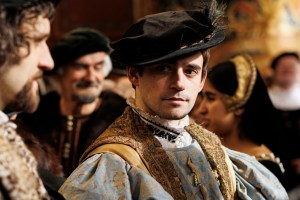
Gregory Cromwell in The Mirror and the Light. Playground Entertainment/Nick Briggs
Gregory Cromwell (c. 1520–1551) was probably the antithesis of his intelligent, well-travelled and fervent father. The character certainly got a glow-up of sorts in The Mirror and the Light.
Born around 1520, Gregory was the eldest of the Cromwell children, with Anne born c.1523 and Grace c.1527. The Cromwells lived in the heart of the Italian quarter of London on Fenchurch Street, before the family moved a few blocks north into Austin Friars in early 1523. It was a big household – Gregory’s grandmother Mercy Prior lived there, along with his paternal aunt and uncle Elizabeth and William Wellyfed and their three children Christopher, William, and Alice, and his maternal aunt and uncle Joan and John Williamson, and their daughter Joan. Also in the household were the Williams children Richard, Gregory and Walter with their father Morgan Williams, though they also had their own household as well until 1528. Added to that was Thomas Cromwell’s ward Ralph Sadler and his younger brother Nicholas. Gregory got to grow up in a large and wealthy family environment, and was away in Cambridge when sweating sickness struck London, killing his mother, and also away one year later when his sisters died. For Gregory, like his father, being away from home likely saved his life.
At age 7, Gregory, with his cousins Christopher Wellyfed and Nicholas Sadler, being similar in age were grouped together for their formal education, starting at home with John Palgrave, then moving to live with Prioress Vernon and being taught by John Chekying in Cambridge. Gregory’s years in education were largely unremarkable (except when Christopher Wellyfed was setting thigs on fire, costing his uncle a small fortune). By the time that Cromwell had got Anne Boleyn on the throne, it was obvious Gregory needed a different life away from formal education at Cambridge. Gregory began an annual routine of spending months away from home at a time, travelling the country and staying with friends of his father, visiting the countryside all around England and the Welsh marshes, a lifestyle similar to the king’s illegitimate son Henry Fitzroy. He even stayed with the Duke of Norfolk for a summer when the duke and Cromwell were briefly attempting to get along in 1536.
One of the most significant events in Gregory’s life was his marriage to Elizabeth Seymour in 1537. Elizabeth was the sister of Jane Seymour, Henry VIII’s third wife, making Gregory the king’s brother-in-law by marriage. He had his own household set up and paid for by his father, and it included Gregory’s half-sister Jane Cromwell, who had been born in 1530 to an unknown mother. Jane had grown up in the large Cromwell household at Austin Friars, but from 1537 onwards, lived with Gregory, alongside his new wife Elizabeth.
In late 1538, Thomas Cromwell had to deal with Gregory being punished by the church for sexual crimes. The event wasn’t hushed up, rather handled by clergymen who had no interest in embarrassing Elizabeth, the king’s sister-in-law. Gregory and Elizabeth were living at Lewes Priory, where Cromwell had set up them up with lands and manors that were large enough to host the king on progress, and his reputation was destroyed. Pregnant Elizabeth Cromwell and her infant son Henry were brought close to Cromwell at Mortlake, while Gregory lived separately from his wife, though they reconciled before Edward Cromwell was born in early 1539. They could not return to Sussex.
Gregory spent no time at court or worked for his father. Cromwell kept his adoptive sons Ralph Sadler and Richard Cromwell close, yet Gregory had no part in his father’s business. The only role Gregory had was to attend Queen Jane Seymour’s funeral, ride ahead of Cromwell’s mustered troops in 1539, and later welcome Queen Anna of Cleves to England, but these roles were also minor. When Cromwell was arrested in 1540, Gregory and Elizabeth Cromwell were at Leeds Castle, where Cromwell had set up a new life for them in 1539, where baby Thomas Cromwell was born in 1540.
King Henry was not in the habit of punishing the families of traitors (the Pole family excluded obviously). Gregory’s marriage to Elizabeth secured his social standing and protected him when his father fell from grace. Elizabeth wrote to her former brother-in-law the king, denouncing Thomas Cromwell after his downfall, and she and Gregory were allowed Launde Abbey, bought by Thomas Cromwell several years earlier. Gregory was also made 1st Baron Cromwell, making him appear worthy of the position of Prince Edward’s uncle, as he could not inherit any of his father’s titles or money.
Gregory and Elizabeth stayed quietly at Launde, having two more children, Katherine in 1541, and Frances in 1542. Gregory diligently attended parliament each year but achieved nothing, though did amass a large amount of lands, enough to make a tidy living. If anything, Gregory was one of those peers Cromwell never liked; those who were rewarded for their status rather than their effort. Gregory was also given permission to not fight in France when hostilities broke out, claiming his health was poor. Gregory has no political or religious beliefs or affiliations that linked to any cause.
In the late 1540s, Gregory’s fortunes continued to improve under the reign of Edward VI, who was influenced by Protestant reformers. He maintained his position as a member of the gentry, though he did not seek high office. Gregory was made a Knight of the Bath in 1547 by his nephew King Edward, but he spent no time at court. But the disease that claimed his mother and sisters, sweating sickness, remerged in 1551, killing Gregory at age thirty, and also his son Edward, not yet a teenager.
Elizabeth quickly remarried, and young Henry Cromwell married his stepsister Mary Paulet, a granddaughter of one of the Grey sisters Cromwell once served, and produced a line of Irish Cromwells who lived with mixed success. Thomas Cromwell the younger went into English politics with Ralph Sadler and a friend, Seymour servant William Cecil, and served Queen Elizabeth with the level of skill, respect and intelligence shown by his grandfather. Thomas became a parliamentary historian, creating papers still useful in studying the Elizabethan era today. Of the Cromwellian grand-daughters, Katherine married John Strode of Devon and had six children. Frances Cromwell married a cousin of her sister’s husband, Robert Strode, but she sadly died after giving birth to her son, aged only 20.
After what happened in the mighty rise and fall of Thomas Cromwell, it is not surprising his sons and grandchildren were not so prepared to stick out their neck.
Final page of Cromwell’s letter, held by Robert Gascoyne-Cecil, 7th Marquess of Salisbury, at Hatfield House.
Watching Wolf Hall 2, The Mirror and the Light, you would be forgiven for wondering why Cromwell wrote to King Henry and begged for mercy. Being cruel was in Henry’s nature. When Cromwell’s letter arrived to the king, he had his secretary Ralph Sadler read it aloud three times. Henry was feeling the weight of his mistake in arresting Cromwell by 9 July when work was piling up and Cromwell was no longer there as an intermediary between the king and all those who needed something. Cromwell had been attainted and the writ had gone through parliament. Henry couldn’t set a legal precedent and overrule an attainder. But contrary to belief, Henry did grant Cromwell mercy, by having him beheaded as an earl, not hanged or burned like a commoner.
The letter written by Cromwell to King Henry on 30 June 1540 served primarily to recall the finer points of Henry’s marriage to Anne of Cleves (note: Cromwell was not speaking the full truth, rather the agreed set of lies needed to create the Henry-Anna annulment). Cromwell had been interrogated the day prior by Norfolk, Audley and Fitzwilliam, with Wriothesley writing out a series of questions and answers to be signed by Cromwell and sent to Henry directly. Also on 29 June, the House of Lords passed the final draft of Cromwell’s Act of Attainder, meaning he had been declared guilty of treason on the false evidence provided primarily by Norfolk, Gardiner, Fitzwilliam and Wriothesley. The initial draft had gone through parliament ten days earlier, passing unanimously, likewise the final draft on 29 June (not that anyone actually had any choice but to vote in favour). Cromwell would have received this information at his interrogation, and being the man who wrote the Treasons Act 1534, knew that the punishment was hanging, drawing and quartering (though even Henry commuted it beheading much of the time).
This long letter survives in two forms, as a heavily mutilated draft (British Museum Oth. C. x f.247), and a finished copy (Hatfield House, Cecil Papers, 124-7) , both written on the same date. Below is a modern copy (using modern punctuation, as Cromwell loved extremely long sentences) from my book of Cromwell correspondence. I have added footnotes for the names mentioned, in case you get people mixed up. On The Mirror and the Light, Cromwell is called Lord Chancellor, which is not true, he was Vicegerent and Lord Privy Seal.
A very good replica of the letter from The Mirror and the Light
To the king, my most gracious Sovereign lord, his Royal Majesty.
Most merciful king and most gracious sovereign lord, may it please the same to be advertised that the last time it pleased your benign goodness, to send unto me the right honourable Lord Chancellor,[1] the Right Honourable Duke of Norfolk,[2] and the Lord Admiral[3] to examine, and also to declare to me, diverse things from your Majesty, amongst the which, one special thing they moved and thereupon charged me as I would answer, before God at the dreadful day of Judgement and also upon the extreme danger and damnation of my soul and conscience, to say what I knew in the marriage and concerning the marriage between your highness and the queen, to the which I answered as I knew, declaring to them the particulars as nigh as I then could call to remembrance, which when they had heard, they, in your Majesty’s name, and upon like charge as they had given me, before commanded me to write to your highness the truth as much as I knew in that matter, which now I do, and the very truth as God shall save me, to the uttermost of my knowledge.
First, after your Majesty heard of the lady Anne of Cleves’ arrival at Dover and that her journeys were appointed towards Greenwich, and that she should be at Rochester on New Year’s Eve at night, your highness declared to me that you would privily visit her at Rochester upon New Year’s Day, adding these words “to nourish love,” which accordingly your Grace did upon New Year’s Day as is abovesaid. And the next day being Friday, your Grace returned to Greenwich where I spoke with your Grace and demanded of your Majesty how you liked the lady Anne. Your highness answered, as I thought heavily and not pleasantly, “nothing so well as she was spoken of.” Saying further that if your highness had known as much before as you then knew, she should not have come within this realm, saying as by way of lamentation what remedy, unto the which I answered and said I knew none but was very sorry. Therefore, and so God knows, I thought it a hard beginning, the next day after the receipt of the said lady and her entry made into Greenwich and after your highness had brought her to her chamber, I then waited upon your highness in your privy chamber, and being there, your Grace called me to you, saying to me these words, or the like, “my lord, is it not as I told you, say what they will, she is nothing so fair as she has been reported, howbeit, she is well and seemly.” Whereunto I answered, saying, “by my faith, Sir, you say truth,” adding thereunto that yet I thought she had a queenly manner, and nevertheless was sorry that your Grace was no better content, and thereupon your Grace commanded me to call together your Council, which were these by name: the Archbishop of Canterbury,[4] the Dukes of Norfolk and Suffolk,[5] my lord Admiral, my lord of Durham[6] and myself, to common of those matters, and to know what commission the Agents of Cleves had brought as well, touching the performance of the covenants sent before from hence to Doctor Wootton[7] to have been concluded in Cleves, as also in the declaration how the matters stood for the covenants of marriage between the Duke of Lorraine’s son[8] and the said lady Anne. Whereupon, Olisleger[9] and Hoghestein[10] were called and the matters purposed, whereby it plainly appeared that they were much astounded and abashed and desired that they might make answer in the next morning, which was Sunday. Upon Sunday in the morning, your said Councillors and they met early, and there again it was proposed unto them, as well touching the omission for the performance of the treaty and articles sent to Master Wootton, and also touching the contracts and covenants of marriage between the Duke of Lorraine’s son and the lady Anne, and what terms they stood in. To the which things so proposed, they answered as men much perplexed that as touching the commission they had none to treat concerning the articles sent to Mr. Wootton, and as to the contract and covenant of marriage they could say nothing but that a revocation was made, and that they were but spouseless, and finally after much reasoning they offered themselves to remain prisoners until such time as they should have sent unto them from Cleves, the first articles ratified under the Duke,[11] their Master’s, signature and seal, and also the copy of the revocation made between the Duke of Lorraine’s son and the lady Anne. Upon the which answers, I was sent to your highness by my lords of your said Council to declare to your highness what answer they had made, and came to your highness by the privy way into your privy chamber and declared to the same all the circumstances, where your Grace was very much displeased, saying I am not well handled, insomuch that I might well perceive that your highness was fully determined not to have gone through with the marriage at that time, saying unto me these word or the like, in effect that, “if it were not that she is come so far into my realm, and the great preparations that my states and people have made for her, and for fear of making of a ruffle in the world, that is to mean to drive her brother into the hands of the Emperor and French king’s hands, being now together, I would never have nor marry her,” so that I might well perceive your Grace was neither content with the person nor yet content with the preceding of the Agents. And after dinner, the said Sunday, your Grace sent for all your said Councillors, and in repeating how your highness was handled as well as touching the said articles and also the said matter of the Duke of Lorraine’s son, it might, and I doubt not, did appear to them how loathe your highness was to have married at that time. And thereupon and upon the considerations aforesaid, your Grace thought that it should be well done that she should make a protestation before your said Councillors, and notaries to be present, that she was free from all contracts which was done accordingly. Thereupon, I repairing to your highness, declaring how that she had made her protestation, whereunto your Grace answered in effect the words, or much like, “there is none other remedy but that I must need against my will, put my neck in the yoke,” and so I departed, leaving your highness in a study or pensiveness. And yet your Grace determined the next morning to go through, and in the morning which was Monday, your Majesty, preparing yourself towards the ceremony, there was some question who should lead here to church and it was appointed that the Earl of Essex[12] desist, and an earl that came with her should lead her to church, and thereupon one came to your highness and said unto you that the Earl of Essex was not yet come, whereupon your Grace appointed me to be the one that should lead here. And so I went unto her chamber to the intent to have done your commandment, and shortly after I came into the chamber, the Earl of Essex had come, whereupon I repaired back again in to your Grace’s privy chamber and showed your highness how he had come, and thereupon your Majesty advanced towards the gallery out of your privy chamber, and your Grace, being in and about the middle of your chamber of presence, called me unto you, saying the words or the like in sentence, “my lord, if it were not to satisfy the world and my realm, I would not do that I must do this day for no earthly thing.” And there, with one brought your Grace’s word that she was coming, and thereupon your Grace repaired into the gallery towards the closet and there paused her coming, being nothing content that she so long tarried as I judged then, and so consequently she came, and your Grace afterwards proceeded to the ceremony, and then being finished travelled the day, as appertained, and the night after the custom. And in the morning on Tuesday, I repairing to your Majesty in to your privy chamber, finding your Grace not so pleasant as I trusted to have done, I was so bold to ask your Grace how you liked the queen, whereunto your Grace soberly answered, saying that I was not all men, surely my lord as you know I liked her before not well but now I like her much worse. For to quote your highness; “I have felt her belly and her breasts and thereby as I can judge she should be not a maid, which struck me so to the heart when I felt them that I had neither will nor courage to proceed any further in other matters,” saying, “I have left her as good a maid as I found her,” which me thought then you spoke displeasantly, which I was very sorry to hear. Your highness also, after Candlemas, and before Shrovetide, once or twice said that you were in the same case with her as you were before and that your heart could never consent to meddle with her carnally. Notwithstanding, your highness alleged that you, for the most part, used to lie with her nightly or every second night, and yet your Majesty ever said that she was as good a maid for you as ever her mother bore her, for anything that you had ministered to her. Your highness showed me also in Lent last passed, at such time as your Grace had some communication with her of my lady Mary how that she began to wax stubborn and wilful, ever lamenting your fate and ever verifying that you had never any carnal knowledge with her, and also after Easter your Grace likewise at diverse times. In the Whitsun week. in your Grace’s privy chamber at Greenwich, exceedingly lamented your fate and that your greatest grief was that you should surely never have any more children for the comfort of this realm if you should so continue, assuring me that before God you thought she was never your lawfully wife, at which time your Grace knows what answer I made, which was that I would for my part do my uttermost to comfort and deliver your Grace of your affliction, and how sorry I was, both to see and hear your Grace. God knows your Grace diverse times since Whitsuntide declared the like to me, ever alleging one thing, and also saying that you had as much done to much the consent of your heart and mind as ever did man, and that you took God to witness, but ever you said the obstacle could never out of your mind, and gracious prince, after that you had first seen her at Rochester, I never thought in my heart that you were or would be contented with that marriage, and Sir, I know now in what case I stand in, which is only in the mercy of God and your Grace, if I have not to the uttermost of my remembrance said the truth and the whole truth in this matter, God never help me. I am sure as I think there is no man living in this your realm that knew more in this then I did, your highness only except, and I am sure my lord Admiral, calling to his remembrance, can show your highness and be my witness to what I said unto him after your Grace came from Rochester, and also after your Grace’s marriage, and also now of late since Whitsuntide, and I doubt not but many and diverse of my lords of your Council, both before your manage and since, have right well perceived that your Majesty has not been well pleased with your marriage, and as I shall answer to God I never thought your Grace content after you had once seen her at Rochester, and this is all that I know.
Most gracious and most merciful sovereign lord, beseeching almighty God, whoever in all your causes has ever counselled perceived, opened, maintained, relieved and defended your highness so he now will save to counsel you, preserve you, maintain you, remedy you, relieve and defend you as may be most to your honour, wealth prosperity, health and comfort of your heart’s desires. For the which, and for the long life and prosperous reign of your most royal Majesty, I shall, during my life and while I am here, pray to almighty God that He of his most abundant goodness, will help aid and comfort you, and after your continuance of Nestor’s[13] years, that that most noble Imp, the prince’s grace, your most dear son, may succeed you to reign long, prosperously and felicitously to God’s pleasure, beseeching most humbly, your Grace to pardon this, my rude writing, and to consider that I am a most woeful prisoner, ready to take the death when it shall please God and your Majesty. Yet the frail flesh incites me continually to call to your Grace for mercy and pardon for my offences and in this, Christ save, preserve, and keep you. Written the Tower, this Wednesday the last of June, with the heavy heart and trembling hand of your highness’ most heavy and most miserable prisoner and poor slave.
Most gracious prince, I cry for mercye, mercye, mercye
By now, you will have seen the final episode of The Mirror and the Light, when Thomas Cromwell was beheaded at Tower Hill, though if you haven’t seen it yet, and feel a bit squeamish, don’t fear. Cromwell’s execution has long been written about and portrayed (including by myself in fiction) as a bloody and botched execution. Fortunately, for those of us who love Cromwell, reality isn’t so awful. Here is a passage from my book on Cromwell’s letters, explaining the real execution –
While primary sources writing about 28 July 1540 offer sketchy detail, the works of Foxe, Hume, Cox, Galter, Herbert, and Hall all offer insights to the execution of a man completely dominate only two months prior. Cromwell may have only learned of his style of execution on the morning of 28 July from William Laxton and Martin Bowes, two sheriffs at the Tower, who came to him after breakfast, which he had just after dawn on a sunny summer’s day. Hume wrote that one thousand halberdiers were there to flank Cromwell’s short walk from the Tower to the scaffold on the hill, because of an unfounded fear that Cromwellians would mount an escape bid among the immense crowd.
At Tower Hill, Cromwell met Walter Lord Hungerford, also destined to die, but for crimes of incest, buggery, and wife-beating, and had possibly lost his mind by the time of his death. A theory suggests that someone scheduled Hungerford’s death on the same day to bring shame to Cromwell, by dying beside such a horrid man, though Hungerford is a footnote in the tale. The men knew one another through their work for the king, and Foxe wrote that Cromwell tried to comfort the distraught Hungerford, saying, ‘there is no cause for you to fear. If you repent and be heartily sorry for what you have done, there is, for you, mercy enough from the Lord, who for Christ’s sake, will forgive you. Therefore, be not dismayed and though the breakfast which we are going to be sharp, trusting in the mercy of the Lord, we shall have a joyful dinner.’
Cromwell had to deliver a speech to cement his legacy and save his son Gregory, daughter-in-law Elizabeth and their three sons, Henry, Edward, and infant Thomas. Also foremost on his mind would be his nephew Richard, now in King Henry’s privy chamber, and Richard’s wife Frances, and their sons Henry and Francis. Also, Sir Ralph and Lady Ellen Sadler and their children Thomas, Edward, Henry, Anne, and Mary. On top of them were also Cromwell’s wide extended family, the Williams’, the Wellyfeds, and the Williamsons, Cromwell’s mother-in-law, Mercy Prior, and young Jane Cromwell.
Despite appearances, King Henry had granted the mercy Cromwell begged for; while a pardon could set a precedent and undermining the law of attainder, but rather than being burned as a heretic, or hanged, drawn, and quartered as a traitor, they would behead Cromwell at Tower Hill. The King would not afford a commoner such a death; Henry saw Cromwell as the earl he was, not the man he was born. In another act of mercy, Cromwell did not have to die alone; Henry allowed Sir Thomas Wyatt to walk up onto the scaffold behind Cromwell, Wyatt devastated to lose his friend. John Foxe chronicled Cromwell’s last words, in a similar vein to Edward Hall:
‘I am come hither to die, and not to purge myself, as some think peradventure that I will. For if I should so do, I were a very wretch and a Miser. I am by the Law condemned to die, and thank my Lord God, that hath appointed me this death for mine Offence. For since the time that I have had years of discretion, I have lived a sinner, and offended my Lord God, for the which I ask him heartily forgiveness. And it is not unknown to many of you, that I have been a great Traveller in this World, and being but of a base degree, was called to high estate, and since the time I came thereunto I have offended my Prince, for the which I ask him heartily forgiveness, and beseech you all to pray to God with me, that he will forgive me. And now I pray you that be here, to bear me record, I die in the Catholic Faith, not doubting in any Article of my Faith, no nor doubting in any Sacrament of the Church. Many have slandered me and reported that I have been a bearer of such as have maintained evil Opinions, which is untrue. But I confess, that like as God by his holy Spirit doth instruct us in the Truth, so the Devil is ready to seduce us, and I have been seduced; but bear me witness that I die in the Catholic Faith of the holy Church; and I heartily desire you to pray for the King’s Grace, that he may long live with you in health and prosperity; and that after him his Son Prince Edward that goodly Imp may long Reign over you. And once again I desire you to pray for me, that so long as life remains in this flesh, I waver nothing in my Faith.
Cromwell then went on to pray:
‘O Lord Jesus, which are the only health of all men living, and the everlasting life of them which die in thee; I wretched sinner do submit myself wholly unto thy most blessed will, and being sure that the thing cannot Perish which is committed unto thy mercy, willingly now I leave this frail and wicked flesh, in sure hope that thou wilt in better wise restore it to me again at the last day in the resurrection of the just. I beseech thee most merciful Lord Jesus Christ, that thou wilt by thy grace make strong my Soul against all temptations and defend me with the Buckler of thy mercy against all the assaults of the Devil. I see and knowledge that there is in myself no hope of Salvation, but all my confidence, hope and trust is in thy most merciful goodness. I have no merits nor good works which I may allege before thee. Of sins and evil works, alas, I see a great heap; but yet through thy mercy I trust to be in the number of them to whom thou wilt not impute their sins; but wilt take and accept me for righteous and just, and to be the inheritor of everlasting life. Thou merciful Lord wert born for my sake, thou didst suffer both hunger and thirst for my sake; thou didst teach, pray, and fast for my sake; all thy holy Actions and Works thou wrought for my sake; thou suffered most grievous Pains and Torments for my sake; finally, thou gavest thy most precious Body and thy Blood to be shed on the Cross for my sake. Now, most merciful Saviour, let all these things profit me, which hast given thy self also for me. Let thy Blood cleanse and wash away the spots and fulness of my sins. Let thy righteousness hide and cover my unrighteousness. Let the merit of thy Passion and blood shedding be satisfaction for my sins. Give me, Lord, thy grace, that the Faith of my salvation in thy Blood waver not in me but may ever be firm and constant. That the hope of thy mercy and life everlasting never decay in me, that love wax not cold in me. Finally, that the weakness of my flesh be not overcome with the fear of death. Grant me, merciful Saviour, that when death hath shut up the eyes of my Body, yet the eyes of my Soul may still behold and look upon thee, and when death hath taken away the use of my Tongue, yet my heart may cry and say unto thee, Lord into thy hands I commend my Soul, Lord Jesus receive my spirit, Amen.’
Cox wrote that Cromwell then turned to Wyatt and said, ‘fare you well, Wyatt,’ his friend deeply upset at this stage, and Cromwell added, ‘gentle Wyatt, pray for me.’ Cromwell removed his gown, gave forgiveness to his executioner, and prayed him to take his head with a single blow. Conflicting reports exist of what came next.
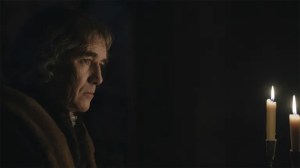
Thomas Cromwell on the chopping block in The Mirror and the Light
The news of the execution travelled Europe, changing with every letter. Hume wrote Cromwell’s head came off with a single blow. But Galton wrote that the axeman was a ‘ragged and butcherly wretch’ and that the first blow instead hit Cromwell’s skull, and that it took half an hour to cut through Cromwell’s neck, an impossible reality. But that story was what Cromwell’s enemies wanted to hear, of a horrid death, and the story has stuck, despite no eyewitness accounts stating there was anything except a straightforward beheading.
French Ambassador Marillac wrote at once after Cromwell’s death, telling Constable Montmorency, ‘Mr. Thomas Cromwell, heretofore condemned by Parliament, this morning was executed in the usual place for such executions,’ without any mention of a horrid execution.
From Madrid, Francisco de los Cobos, High Commander of Leon, wrote to Pedro Fernández Manrique, Marquess de Aguilar in Rome, that ‘the king of England beheaded Cromwell, who was his favourite. The cause was, they say, because he urged him to be a Lutheran. Please God, it may be a beginning of the King’s coming to a knowledge of his duty.’
On 16 August, Philip Melanchthon was woefully ill-informed in Germany, writing to two separate people that Cromwell had been hanged, quartered and burned by ‘the English tyrant, the English Nero.’
On 11 September, Cromwell’s long-time enemy Reginald Pole wrote to his secretary Ludovico Beccadelli, claiming, ‘I fear I was wrong in writing of Cromwell coming to his senses, for his last words as printed do not give the same impression as the narrative of those who told of his end and last words. The judgement of men belongs to Christ, who knows the hidden things of the heart.’
On 3 March 1541, Ambassador Marillac wrote to Paris, saying he and Ambassador Chapuys worried for King Henry, whose leg caused him anguish, that he ate and drank continually, leading to immense weight gain, and his mood had become ‘contrary even to itself’. Men fell foul for seeing through the king’s instructions, as instructions could change within the same day. The king blamed his ministers for all his troubles, and on occasions even, ‘reproaches with Crumwell’s death, saying that, upon light pretexts, by false accusations, they made him put to death the most faithful servant he ever had’.
Welcome back to Wolf Hall 2: The Mirror and the Light true details about scenes in the latest episode, where Cromwell is arrested as a traitor to England.
In reality, in May 1540, King Henry was up to his usual tricks; hating on his own wife, romancing another lady (well, child) at court, and messing with religion just enough to upset literally everyone at home and abroad. In an inopportune turn of events, just as Cromwell’s chance to turn on the Catholic bishops had arrived, the king called Cromwell to court on 6 June, where Henry confessed his impotency with Queen Anna. Henry confessed this only to Cromwell and friend-turned-foe William Fitzwilliam. Cromwell had listened to Henry complain of his marriage to Anna multiple times over Easter, and again through Whitsun week in mid-May, but confirmation of the lack of consummation and Henry’s suggestion of annulment could not wait any longer, no matter Cromwell’s opinion. The alliance between England and Germany was non-existent, and the Emperor and France were not looking to go against England. Henry had no reason to hold on to a woman he did not like, no matter how much Anna was liked by others, or how suitable and well-chosen she was for England. King Henry had also been sneaking out of court to spend time with Lady Kathryn Howard at Stephen Gardiner’s Winchester Palace.
Cromwell travelled home to Austin Friars, where Thomas Wriothesley met him; Cromwell appeared exhausted and worn out by events. In Wriothesley’s own words, he asked Cromwell, ‘what one thing rested in his head which troubled him’. Cromwell, believing his home would afford him privacy, told Wriothesley the king’s marriage remained unconsummated. Wriothesley pushed the belief they could solve Henry’s issue, or ‘they should all smart for it’, but Cromwell replied it was a ‘great matter’. Wriothesley kept pushing his master, and Cromwell replied again it was a great matter, but stopped himself from revealing impotence. Still, the damage was done.
While Cromwell was at home feeling despondent and disillusioned, Stephen Gardiner prepared his attack. Since returning to England, he had reconnected with Thomas Wriothesley. Wriothesley claimed to be utterly loyal to Cromwell since late 1535 but was no such thing. Given how many people openly detested Wriothesley, it came as no surprise he would easily swap to old allegiances. Another Cromwell man, Edmund Bonner, who had bonded with Gardiner over their shared disastrous times as French ambassadors, turned against Cromwell, though, like Wriothesley, there appears to be no incident which caused a shift. Bonner’s position was likely his religious beliefs; Wriothesley was likely greedy. Wriothesley knew who else was close to the king and was happy to turn against Cromwell; William Fitzwilliam and his brother Anthony Browne, Master of the Horse. Both men were on the Privy Council and the king would readily listen to their opinions. With Wriothesley fresh appointed co-secretary to the king, and Fitzwilliam the only other person aware of the impotence besides Cromwell, Gardiner could easily collude with these men to destroy the new Earl of Essex.
Thomas Wriothesley, who had been just another man in Wolsey’s household, plucked to work alongside Stephen Gardiner, and then taken into the Cromwell household as one of his own, was only too eager to betray his noble master. Thomas Cromwell had overseen the grandest changes of Henry VIII’s reign. He destroyed the Catholic hold over England and ended the monasteries in favour of reformist colleges. He found the way to bring down Queen Katherine of Aragon. He beheaded Anne Boleyn so Henry could bat his eyelashes at Jane Seymour. Cromwell created the Church of England and made King Henry the supreme leader, ended paying taxes to Rome, and saw off threats from the Pope and Emperor Charles. Cromwell had engineered the execution of countless men, clergy and laity, when they did not agree with the king’s current mood, regardless of their innocence or guilt. He ensured the beheadings of noblemen who died for the king’s ever-grasping power and enriched Henry in a way not thought possible. Cromwell spent years in the background, learning, studying, and working with his legal skills while other courtiers fluttered around the king and whatever woman had Henry’s fancy. The English Bible was a reality because of all the endless work by Cromwell and Cranmer, two great men of learning trying to help the people of England, Wales, and Ireland. Cromwell endured years of taunts as a man walking around like Wolsey’s ghost behind the king, suspected of being a heretic for his learning, and was openly called a traitor for trying to advance the king’s desires. King Henry heard all these taunts, and defended Cromwell, even when 40,000 rebels called for Cromwell’s head. For over half of Cromwell’s time at court, he gained almost no personal advantage to himself, despite the enormous upheavals he created.
Yet one whisper of almost-impotence to Wriothesley at Austin Friars was enough for King Henry to forget every single one of Cromwell’s good deeds in His Highness’ name and sign an arrest warrant. Only Ambassador Marillac’s letters remain on the detail of the arrest of Thomas Lord Crumwell. On 10 June, it was recorded Cromwell arrived late to a Privy Council meeting after a morning in parliament. There was no reason for Cromwell to be late, it is more likely the Council was summoned slightly early without his knowledge. Among those in the Council were those close to Cromwell’s heart; Ralph Sadler, Thomas Cranmer, Thomas Audley, John Gage and John Russell. There were men there who had made Cromwell godfather to their children, the Duke of Suffolk, Edward Seymour, and Robert Radcliffe. Many enemies were present; Stephen Gardiner, the Duke of Norfolk, William Fitzwilliam, and traitor Wriothesley. Men who were like brothers or sons to Cromwell could only sit and watch as the nightmare unfolded. Sir William Kingston from the Tower was there with four guards to arrest Cromwell on arrival. Still dressed formally for parliament, wearing his Garter ribbons, collar of St George and his sable fur robes, Cromwell never got to say a word, nor realised anything was untoward before Kingston announced the arrest.
Shocked, Cromwell ripped his black cap from his head and threw it on the table and cried, ‘I am no traitor! Is this the reward for good service done unto His Majesty the King? I put it to your consciences; am I a traitor as your accusations imply? Well, no matter, for I renounce all pardons or grace needed, for I never offended the King, and it matters only if the King himself thinks me a traitor, and he would never have me linger long!’ The words were not dissimilar to Wolsey’s eleven years earlier.
Fitzwilliam untied Cromwell’s garter from his leg while Norfolk took Cromwell’s golden collar. The intention was clear; an attainted man could not be a member of the Garter. This was not a spur-of-the-moment plan; Norfolk had spoken to King Francis in Paris of the plan to destroy Cromwell back in February. Cromwell was taken from a water gate at Whitehall to the Tower with relative anonymity and housed in the Queen’s apartments, just as Anne Boleyn had been four years earlier.
Wriothesley began the Council’s letters for around England and Europe, sharing the news before anyone at court or parliament even knew the arrest occurred. In London, news of the arrest spread when Sir Thomas Cheyney (uncle of wife Jane Wriothesley) arrived at Austin Friars to confiscate the entire property. Cheyney had two dozen archers at his back for the occasion, despite the fact there would be no resistance at the surprise invasion. At the time, Mercy Prior still lived at the property, as did John and Joan Williamson and their children. The Williams and Wellyfed siblings likely had rooms at the house, as did loyal personal servants like Thomas Thacker. All would now be homeless, unable to access any of their belongings. All the servants, falconers, gardeners, dog handlers, stable hands for Cromwell’s 100 horses, would be left in limbo. The private items belonging to Gregory, his lost mother and sisters, and Cardinal Wolsey would be taken for their value. Cromwell’s daughter, Jane Cromwell, was hopefully away at Leeds Castle at the time of the arrest, though poor Gregory would have been in London for parliament and was likely staying at Austin Friars. Cheyney’s men knew what they wanted, and what they needed to find. Cromwell had 7,000l (almost £3,000,000 today) in coin on the property, plus silver plate and jewels all through the house. Rooms were decimated, from the linens, to bejewelled church relics in storage, to the vast armoury, whose inventory boasted 400 pikes, 272 handguns, 459 hooked halberds, 759 bows and armour for at least 600 men. Cromwell had shown Ambassador Castillion the armoury and boasted of his power; now it could look like a plan to destroy Henry.
Thomas Wriothesley was the King’s new secretary, and only because Cromwell had given him the role. Without Cromwell, Wriothesley had nothing, and yet had chosen to slither back to Gardiner and topple Cromwell for his own ends. Stephen Gardiner and Thomas Howard Duke of Norfolk had been dripping poison in the king’s ears for years about Cromwell, but one inferred comment about the king’s penis was enough for Henry to arrest his finest minister.
Wriothesley is portrayed as a quiet attendant with a hideous spotted fur over his shoulder in The Mirror and the Light, but in reality was a middling man of no special talent, who happened to fail upwards at the right moment, like so many around him. He went on to achieve little other than be the man to torture Anne Askew at the Tower, be sidelined by Edward IV, and then died alone, away from court. He lied about his allegiances and religious views at every turn, and yet history tends of forget all his bad deeds.
All sources come from The Private Life of Thomas Cromwell. My publisher might come for you if you plagiarise.
In episode 5 of The Mirror and the Light, it is all coming part for Thomas Cromwell. After finally finding a woman willing to marry King Henry, Anne of Cleves is delayed as she gets to England, and is not stunned into undying love when she sees her sub-par new husband. Henry’s ego is hurt, and the year is off to a bad start.
In reality, Henry not liking Anna of Cleves was borne out of fear, not Anna’s appearance. Her brother was Wilhelm of Cleves, who had just declared war against Emperor Charles over the German duchy of Guelders. By marrying Anna, Henry was essentially making himself an ally against the Emperor in war. Trade with the Low Countries had already been halted, and Cromwell had traded Eustace Chapuys for Thomas Wriothesley, Stephen Vaughan and Edward Kerne, who were held hostage by the Emperor’s sister, Queen Mary of the Netherlands. Marrying and sleeping with Anna meant preparing to go to war against Emperor Charles, and after Anna had not been particularly chatty or enamoured with Henry, he was livid at having married the beautiful, young duchess. Henry was trying to make the best of it, Anna was well-liked by everyone but her husband, and Cromwell was busy infuriating the Duke of Norfolk by closing Thetford Priory, where the Howard ancestors were all buried.
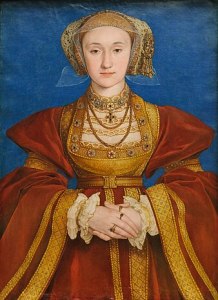
Anna of Cleves, 16th century hottie. Hans Holbein, Louvre INV 1348
The English bible was out and it was the law to preach the reformed religion in England. Henry, Cromwell and Cranmer all graced the cover of the new bible. But getting everyone to obey the reforms was near impossible. In March 1540, Bishop Stephen Gardiner had been preaching the old doctrine at St Paul’s. Days later, Cromwell’s old friend Robert Barnes did the same, preaching the reformed doctrine. King Henry heard of these outbursts and ordered Gardiner and Barnes to appear before him to explain themselves. It was not simply two men forced to explain themselves, as the king was ‘scandalised’ by their words. It was Gardiner’s words against Cromwell’s words, Barnes simply the mouthpiece. Henry, unhappy with his German marriage, could turn his anger against the Reformation instead of its real target, bringing Cromwell and Gardiner’s long-running feud to its bitter end. Everyone needed to be silent to appease the king’s current mood, so Barnes recanted his words in late March, and Cromwell made a concession; he invited Stephen Gardiner to dinner at Austin Friars.
If the Lambeth Palace banquet with the Duke of Norfolk was a flashpoint in Cromwell’s fortune, the Austin Friars dinner party would go one step further. What should have been two men finding a truce, instead turned into a bitter dispute, free of the civility of court. Rumours were already flying; people believed Cromwell would lose the Vice-Gerent and Lord Privy Seal positions. With Henry turning from the Reformation due to his marital bed problems with Queen Anna, Cromwell needed to defend all he had done, just as Gardiner felt he needed to defend the papacy.
A withering and acrimonious shouting match ensued at Austin Friars, with Cromwell screaming at Gardiner, ‘if the King would turn (from the Reformation), yet I would not turn! And if the King did turn, and all his people, I would fight in the field in my person, with my sword in my hand, against him and all others’. Cromwell, holding a knife (claimed Gardiner), added, ‘if this dagger was not thrust into my heart in battle, and if I would not die in that quarrel against them all, and I live one year or two, it shall not be in the King’s power to resist me’.
Cromwell had made a huge mistake, not unlike several inappropriate outbursts over recent months. A man who could have his enemies cornered before they realised the hunt had begun, suddenly began making missteps for no apparent reason. Cromwell was discussing a theological battle, not an actual war, and if he had a knife, it would have been no more than a dinner knife. The lack of actual danger to Henry must have been apparent, as Gardiner kept this treasonous argument quiet, and Cromwell needed to get ahead of him. Cromwell surrendered the position of Secretary of State to the king, a job he held in an official capacity for six years. Secretary Cromwell was no more. The position that gave so much power beside the throne slipped away, but only just. The position would be divided between two people, a plan used regularly in the future, separating the immense power of the position. Ralph Sadler and Thomas Wriothesley were both given the job.
For a moment, things seemed to calm again but French Ambassador Marillac thought Cromwell was in trouble; Gardiner had not said anything, but Marillac, either listening to bad sources or simply sharing lies, wrote to King Francis, ‘Cromwell is tottering’. Marillac could not have been more wrong. On 17 April, King Henry astounded Cromwell and his friends and foes, telling him that he would become the 16th Earl of Essex (1st Earl, sixth creation), accompanied with a list of lands and manors five pages long. Henry Bouchier, whose family had held the Essex titles for eighty years, broke his neck after coming off his horse a month earlier, a sudden opportunity for Cromwell to be elevated. One day after this shock announcement, Cromwell was again bestowed with glory: the title of Lord Great Chamberlain, head of the royal household. The Earls of Oxford had held the role for the past 400 years, but John De Vere had died at home just a week after Henry Bouchier, leaving a vacancy at court.
But Gardiner had these words, spoken in anger at Austin Friars, coupled with the Duke of Norfolk’s French plan to remove Cromwell, were lying in wait, as the final traitor was about to reveal himself.





 CAROLINE ANGUS