OTD with Thomas Cromwell – 27 October 1537: Queen Jane dead three days; time for a new bride

Portrait of Mary of Guise. c. 1537, later Queen of Scotland. by Corneille de Lyon. National Galleries Scotland, PG 1558

Cromwell informed Gardiner and Howard that Queen Jane had died, and that already they need to seek Princess Margaret of France (aged only 14), and Mary de Guise as possible new brides. Cromwell then rants to Gardiner about how giving Esher Palace to the king is not a suitable gift and then argues that Gardiner annoyed him by telling lies behind his back. Cromwell was still at Westminster, and this letter is a draft in Wriothesley’s hand.

LORD CROMWELL TO LORD EDMUND HOWARD AND BISHOP STEPHEN GARDINER, 27 October 1537 (SP viii, 368)

My very good lords, after most hearty commendations, howsoever, our affections would bear things that be adverse and contrary to our desires. Yet because (illegible) know that your wisdoms (illegible) preface reason and (illegible) that which every man to whom God has (illegible) will thankfully embrace that is his will and pleasure. I shall in few words comprehend that God has sent to us, that is with our joy, a notable displeasure and sorrow, if it may be called sorrow or displeasure, that he will permit and suffer. Our prince, our lord, be thanked is in good health and sucks like a child of his puissance, which you, my lord William can declare. Our masters, through the fault of them, that were about her, which suffered her to take great cold and to eat things that her fantasies in sickness called for, is departed to God. The king’s Majesty’s pleasure is that you shall advertise the French king of this, her Grace’s departure. Whom we be all bound to remember and pray for, having left to so goodly a pledge, as is our young master.

And forasmuch as though his Majesty is not anything disposed to marry again, albeit his highness, God be thanked, takes this chance as a man, that by reason with forte overcomes his affection, may take such an extreme adventure. Yet, as sundry of his Grace’s council here have thought it mete for us to be most humble suiters to his Majesty to consider the state of his realm, and to enter eftsoones (again) into another matrimony in place for his highness’ satisfaction convenient. So his tender zeal to us, his subjects, has already so much overcome his Grace’s disposition and framed his mind both to be indifferent to the thing, and to the election of any person from any part, that with deliberation shall be thought mete for him, that as we live in hope that his Grace will again couple himself to our comforts, so considering what parsonages in Christendom be mete for him.

Among the rest there be two in France that may be thought on, the one is the French king’s daughter, which as it is said is not the meetest. The other is Madame de Longueville (Mary de Guise), whom they say the king of Scots does desire, of whose conditions and qualities in every point his Majesty desires you both, with all your dexterity and good means, to enquire and likewise in what point and terms the said king of Scots stands towards either of them, which his highness is so desirous to know.

His Grace’s desire therein, to be nevertheless in any ways kept secret to yourselves, that his pleasure is that you, my lord William, shall not return until you may learn both how the king of Scots stands in his suit, and what the conditions and qualities of both persons be, which known as you may, by any possible means, attain to the knowledge of it, so as at the return of you, my lord William, you may well declare it and his Grace’s will that you, my lord William, shall return according to your instructions. In the searching out of which matter, his Majesty desires you both to exhibit that circumspection and diligence that may answer to his Grace’s expectation conceived of you.

Now, my lord of Winchester, yesternight arrived here your letters sent to the king’s Majesty by your servant Massey, and with the same your letters also to me, both which letters the king’s Majesty has thoroughly perused. And first, for your vigilance declared in the same, touching the investigation of the occurrences there, and specially in what terms the Emperor and the French king stand towards the peace his Grace gives to you hearty thanks, and the semblable for your gift to him of Esher, albeit the same be given with nothing but sorrow. For the assurance whereof, his highness will shortly send to you such deed or deeds to be signed with your hand, as by his learned Council shall be devised for that purpose.

Nevertheless, my lord, in your letters touching that matter of Esher, you do both me and others wrong to be angry with us without cause, and both to impute lack of memory where there was in that thing no such fault, and to think that things have been otherwise set forth towards you than indeed they have been. I am sorry, my lord to see you so contentious and to have so little care of your friends. Of what sort I have been towards you, I do refer myself to the king’s Majesty and to sundry others of his council that have known the proceedings here. And yet to be plain with you, when I wrote that the king’s Majesty took pleasure in your house and would make a chase about it, which should make it no house for your store, me thought it required at least such an answer as might have declared that you had been glad of it, in which case you should not have needed to have called to remembrance the lesson of Poseidon’s pain of doing nothing, for that is a place where there is grief.

As touching the promises you speak of, the one you say was not absolute because in the same deeds concurred not with the words, and the other is not performed for that your shamefastness let you to ask a horse before promised. Whereupon, you conclude that for a horse or anything else, wherein I may do you pleasure, you will thank me for the deed when it is done, and not for the promise or goodwill in the mean, which you do of likelihood esteem as you did my advice that is so gently returned to me, to be kept for my own store. First, I promised you no more than was in me, that was all that I could do in your suit for you, with a declaration of the hope I had to have obtained, and yet I think this alone ought neither to be so much despised that you should so earnestly refuse it hereafter, nor to be wrested to that which is not in me, that is that I should be able to do what I would. Whatsoever your opinion be of me, I marvel that you, knowing the wisdom of our Master, can think any man able to obtain things so at his hand.

Second, touching the horse, if I promised you one, I gave you one, and if I gave you one as I did according to my promise, I marvel your good memory will forget it. But to make an end of this matter, I will not be so contentious as to enter any new matters with you howsoever you use me or repute me. I shall be sorry that you can make no more of friendship, and in all things do towards you without respect as becomes me to do towards that person whom my Master puts in trust.

As concerning the abbot of Arbroath, being his master, the king’s highness’ nephew and in league with him, his Grace you should use him indifferently, like a friend as reason requires. And as for the instructions which you desire to have sent you for answer to be made to the French king. The king’s highness thinks that until his Majesty may know the covenants, he cannot grow to any resolution touching the same. And therefore, his pleasure is that, in such order as your wisdom shall think expedient, you shall practice to know the certain articles agreed on or to be agreed on if there be any such, and to certify his Majesty of the same, in the meantime sticking upon the point of his promise and bond to win his Majesty with him as a principal contrahent.

Finally I shall with speed take order for money to be delivered to your servant Peter Lark as in my former letters I wrote I would, and as for the rest of your suits the king’s Majesty will make you answer by his next letters

OTD with Thomas Cromwell – 5 July 1529: Cromwell writes to his son’s tutor, John Chekyng

Gregory Cromwell by Hans Holbein, c.1537

John Chekyng, who had custody and care of Gregory Cromwell, Christopher Wellyfed and Nicholas Sadler, had written to Cromwell complaining that he got the impression Cromwell was upset with the lack of progress on the boys’ education.[1] Given that Cromwell had been a widower only about six months and was clearly in a low state may have contributed to this demeanour. But the same day that Cromwell received the letter from Chekyng, he drafted his letter in his own hand, offering to send his niece Alice Wellyfed to the Chekyng household, to work alongside Chekyng’s wife. This letter has suffered mutilation and is only a partial record.

CROMWELL TO JOHN CHEKYNG, 5 July 1529 (LP iv no. 5757 ii)

… as heartily as I can, I commend me to you and marvel greatly that you have made no better speed for your chaplain, in whose favour I have written to Mr. Chancellor of Winchester (Stephen Gardiner), trusting that he will be good master to him. For my sake, I would be very loathed that you should miss your purpose.

Sir, I pray you be so good to me as to let me send my sister’s daughter to the Gentlewoman your wife, and that you will, on my behalf, convince her to take her and to bring her up, for her goodness, if she will be content so to do. I should reckon myself most bound both to you, and here (I shall) besides the payment for her board. I will so content your wife, as I trust she shall be well pleased. That I may know your answer herein, I heartily pray you, and thus heartily I fare you well. At London, the 5th day of July.


[1] LP iv no. 5757i, 5 Jul 1529

OTD with Thomas Cromwell – 10 June 1540: The full story of Cromwell’s arrest

A surprising thing happened on the afternoon of 10 June 1540 – Thomas Cromwell was running late. Sure, he had been at Parliament in the morning, and had a Privy Council meeting at 3pm, but Cromwell didn’t need to go far between his two important tasks for the day. Cromwell was never late for anything, and no record exists explaining why Cromwell had to rush into a Privy Council meeting already attended by all members – and William Kingston, Constable of the Tower.

What was not a surprise was the arrest of Thomas Cromwell. Many were stunned by the news that the Lord Privy Seal, the King’s Chief Minister, the most powerful man in England, was suddenly arrested on vague charges, sent to the Tower on the King’s command. But in truth, the clues had been spread out of the course of the previous year, and Cromwell’s chief enemies, Thomas Howard, Duke of Norfolk, and Stephen Gardiner, Bishop of Winchester, had slowly tightened the net around their common nemesis.

Parliament had been dissolved in July 1536 and did not sit again until Henry summoned his ministers in March 1539. Cromwell had ensured Parliament sat regularly from 1529, running yearly reformation parliaments, changing the nature of politics under King Henry. But the Pilgrimage of Grace, the death of Jane Seymour, and Henry’s increasing illness and paranoia had got in the way of Cromwell’s changes. Cromwell’s political to-do list was huge by 1539, although his religious reforms had continued without parliament and despite the rebellion of 1536-37.

Thomas Howard, 3rd Duke of Norfolk

Cromwell gets unlucky

Just prior to parliament’s opening on 28 April 1539, Cromwell fell ill, which he described by letter to Henry as an ague or tertian fever (possibly malaria).[1] Cromwell suffered a number of near-fatal illnesses throughout his time at court, usually always in spring, managing to beat them every time. Cromwell’s 1539 illness was a brutal one, rendering the Lord Privy Seal bedridden at Austin Friars and then at St James’ Palace, which was kept for his use, through most of April and May. Cromwell was seen outside St James’ when a muster of Henry’s troops, led by Ralph Sadler and included Richard and Gregory Cromwell, marched past the Palace, but the amount of work he completed almost ground to a halt.

While Cromwell lay in his sickbed, Norfolk was ready to pounce. He summoned the Convocation of Canterbury, and invited Convocation of York members as well, and pushed reform through the House of Lords, where Cromwell was too ill to attend. Norfolk was the face of The Six Articles,[2] which rolled back Cromwell’s reformist changes. The Six Articles, mostly dealing with matters of the Eucharist, clerical celibacy, vows of chastity, transubstantiation, private masses and confessions, brought King Henry and England way back to Catholic practises. By the time the first session of parliament closed in June, Cromwell still had not appeared before the House of Lords or House of Commons, and the damage to the Reformation had been done.

Cromwell loses his cool

King Henry wanted religious unity in England before he went on progress, and set up a banquet at Cranmer’s place, Lambeth Palace, but refused to attend himself. Cranmer was already in a poor mood, as he had just sent his wife and daughter from England,[3] as his marriage was deemed illegal by the Six Articles. All sides of religious debate attended the banquet, Cromwell included, on 2 July 1539. After years of backstabbing, rumours and snide comments, Cromwell and Norfolk had the public fight that had long been brewing. Norfolk gleefully slandered Wolsey before the banquet and Cromwell snapped, accusing Norfolk of supporting Rome over England. Norfolk had begged to go to Rome with Wolsey when the cardinal expected to be made Pope in 1523, remembering every detail, down to the money Norfolk made during the negotiations to have Wolsey elected, acting as the ‘protector of the future Pope’ and sailed the Mary Rose, to accompany Emperor Charles’ ship from England.[4] These details enraged Norfolk, essentially being accusing as a traitor to his king and his country.

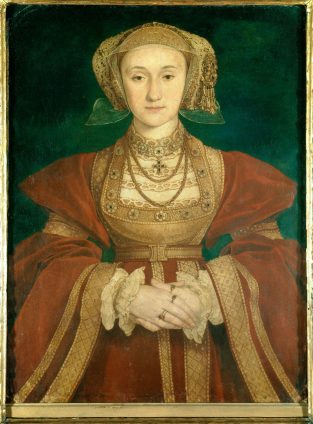
Duchess Anna, Daughter of Cleves

Cromwell accidentally picks the wrong queen

Cromwell wanted to push harder than ever to secure the Reformation in England. The monasteries were almost dissolved, and the delegation went to the German States to secure a royal bride and alliance with the Schmalkaldic League, with its powerful Lutheran army. Holbein brought home portraits of Anna and Amalia, Duchesses of Cleves in October 1539, and Henry decided to marry Anna in a rush.[5] There are no reports Cromwell ever bragged of Anna’s qualities, nor that Holbein’s over-exaggerated Anna’s beauty. Anna had a powerful Lutheran brother, Wilhelm, Duke of Jülich-Cleves-Berg, and her sister, Sybilla, Electress of Saxony, wife to the head of Schmalkaldic League. Duchess Anna was perfect for England; young, beautiful, clever and well-connected. The duchess of a Lutheran state, which was still part of the Holy Roman Empire. She was strongly supported by her Lutheran family but was Catholic like her mother.[6] Cleves was the perfect ‘middle-way’ of religion, needed to secure alliances and peace.

By the time that Anna had finally reached England to marry King Henry in January 1540, international movements had ruined everything Cromwell had crafted. Henry was listening to the whispers of Norfolk and Gardiner, turning back to Catholicism. Anna’s brother Wilhelm had all-but declared war against Emperor Charles over the German state of Guelders. Once Henry married Anna, England would be in alliance and could have to fight against Emperor Charles. France swayed back and forth, helping to undo all negotiations of alliances between these formidable powers of Europe. Cromwell couldn’t undo the marriage contract; he had helped to create it, and it was water-tight.

The long-held rumours of Henry calling Anna ugly, “a Flanders mare,” have dogged the tale through the centuries, despite documents telling a very different story. Jousts were held in Anna’s honour; the people spoke of her beauty and kindness.[7] England quickly warmed to Anna, but Henry wanted out of any alliance that could mean war. Emperor Charles was furious that England would align with the reformers, but the Germans were also unhappy with the marriage, with Henry not backing them on matters of war, and not undoing the infuriating Six Articles. Cromwell had promised the German ambassadors he would crush Norfolk and the Six Articles, but had lost the power in parliament and convocations to do so.

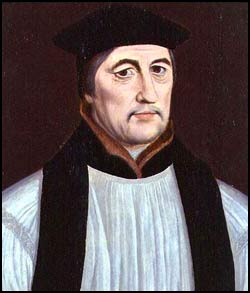
Stephen Gardiner, Bishop of Winchester

Cromwell makes a mistake

Despite all the troubles with Anna, Henry still believed in Cromwell, confiding in him about his impotence with Anna, and making Cromwell the Earl of Essex and Lord Great Chamberlain in April 1540. While the marriage was still sound, Cromwell had completed the Dissolution of the Monasteries and made Henry rich. Cromwell’s enemies, such as Norfolk and Gardiner, were stunned, as were Ambassador Chapuys and Ambassador Marillac. Gardiner and Cromwell had been together at dinner at Austin Friars only weeks before, where Cromwell made a mistake. Cromwell told Gardiner “if the king did turn from the Reformation, I would not turn from it; and if the king turned, and all his people too, I would fight them in the field, with my sword in my hand, against the king and all others.” [8] Cromwell had already lost many allies in parliament and at court as religious changes slowly peeled apart, and this comment would come back to haunt him.

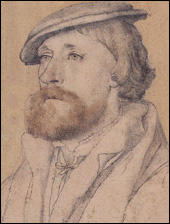
Thomas Wriothesley

Cromwell has a slip of the tongue

In May, Cromwell again made a mistake. He had almost secured an annulment for Henry and Anna, based on a flimsy pre-contract from Anna’s childhood, and was in initial stages of an alliance with France, seen running around the May Day jousts like a crazed man, trying to juggle national and international diplomacy. But he made a rare misstep soon after, admitting aloud of Henry’s impotence to Thomas Wriothesley one tired evening.[9] So many little moments were beginning to add up against Cromwell, just as it had for so many others.

For a long time so many men had sneered at Cromwell’s power. Norfolk had Henry’s ear, as did Gardiner, Bishop Bonner of London, Sir Anthony Browne, and Bishop Cuthbert Tunstall, all on the Privy Council. Cromwell’s life was still looking up in June 1540 – he had unlimited power in England, his son Gregory was happily married to Elizabeth Seymour and they had three healthy sons, Henry, Edward, and Thomas, at Leeds Castle. Richard Cromwell had just been knighted and called ‘the king’s diamond’ by Henry as he was given a diamond off his own hand. Ralph Sadler, a man so close to Cromwell he was practically a son, was now Principal Secretary to the king, shared with Thomas Wriothesley, one of Cromwell’s most loyal men, in a role Cromwell relinquished to them. Queen Anna’s marriage could be undone, giving Cromwell a chance to secure religious reform alongside Archbishop Cranmer.

Yet, for some unknown reason, Cromwell was late to the Privy Council meeting, where he was quickly called a traitor by most, if not all, of the councillors (though among them was his nephew Richard Cromwell, and close friends Thomas Cranmer and Thomas Audley, who never spoke against him). Even Richard Rich, a long-time colleague, did not defend his master. Sir John Russell, Sir Edward Seymour, Sir William Fitzwilliam and Sir Robert Radcliffe, while not on record as calling for Cromwell’s head, also did not defend the Lord Privy Seal. Charles Brandon, Duke of Suffolk and head of the Privy Council, likewise did not speak against Cromwell (Cromwell was godfather to Suffolk’s son Henry[10] and probable godfather to Suffolk’s granddaughter Jane Grey). But Suffolk allowed Kingston to arrest Cromwell, who threw his cap on the table before the Council and cried, “I am no traitor! Your Grace, members of the Council, is this reward for good service done unto His Majesty the king? I put it to your consciences, am I a traitor as your accusations imply? Well, no matter, for I renounce all pardons or grace needed, for I never offended the king, and it matters only if the king himself thinks me a traitor, and he would never have me linger long!”[11]

Norfolk pulled Cromwell’s golden collar from his shoulders, while Fitzwilliam pulled the garter from Cromwell’s leg,[12] as he was still wearing his parliamentary robes, no time to change between meetings. Cromwell was arrested as a traitor, almost eleven years after Reginald Pole had expected to see Cromwell rowed to the Tower alongside Cardinal Wolsey. Cromwell’s work on securing a Schmalkaldic alliance showed he was in league with Lutherans and Calvinists across Europe, that he had contacted a marriage that Henry couldn’t remain in, and he had uttered treasonous words to Gardiner over dinner.[13] The Six Articles had got in the way of so many of Cromwell’s reforms, making him appear ineffectual, and Henry knew of Cromwell’s slip-up to Wriothesley about impotence. Cromwell had been betrayed by people close to him, and he left Westminster in a boat to the Tower, where he was housed in the Queen’s rooms – the same rooms Anne Boleyn had stayed in only four years earlier.

Wriothesley himself drafted letters that day to John Wallop, Nicolas Wootton and Christopher Pate in France that very day, talking of Cromwell’s arrest,[14] though letters from Wallop arrived to Cromwell in the following days, having not received the news right away. French Ambassador Charles Marillac wrote to King Francis that very day, writing, “I have just heard that Thomas Cramuel, keeper of the Privy Seal and Vicar-General of the Spirituality, who, since the Cardinal’s death, had the principal management of the affairs of this kingdom, and had been newly made Grand Chamberlain, was an hour ago led prisoner to the Tower and all his goods attached. Although this might be thought a private matter and of little importance, inasmuch as they have only reduced thus a personage to the state from which they raised him and treated him as hitherto everyone said he deserved, yet, considering that public affairs thereby entirely change their course, especially as regards the innovations in religion of which Cramuel was principal author, the news seems of such importance that it ought to be written forthwith. I can add nothing but that no articles of religion are yet concluded, and that the bishops are daily assembled to resolve them, and meanwhile Parliament continues. They were on the point of closing this when a gentleman of this court came to say from the King that I should not be astonished because Cramuel was sent to the Tower, and that, as the common, ignorant people spoke of it variously, the King wished me to know the truth. The substance was that the King, wishing by all possible means to lead back religion to the way of truth, Cramuel was attached to the German Lutherans, had always favoured the doctors who preached such erroneous opinions and hindered those who preached the contrary, and that recently, warned by some of his principal servants to reflect that he was working against the intention of the King and of the Acts of Parliament, he had betrayed himself and said he hoped to suppress the old preachers and have only the new, adding that the affair would soon be brought to such a pass that the King with all his power could not prevent it, but rather his own party would be so strong that Cramuel would make the King descend to the new doctrines even if he had to take arms against him. These plots were told the King by those who heard them and who esteemed their fealty more than the favour of their master. The King also sent word that when he spoke with me that he would tell things which would show how great was the guilt of said Cramuel and that said lord has so long been able to conceal it and the right opportunity now came to give orders.”[15]

Marillac also wrote to Anne Montmorency, Constable of France, saying, “what I wrote last is now verified touching the division among this King’s ministers, who are trying to destroy each other. Cramuel’s party seemed the strongest lately by the taking of the dean of the Chapel, Bishop of Chichester, but it seems quite overthrown by the taking of the said lord Cramuel, who was chief of his group, and there remain only on his side the Archbishop of Canterbury, who dare not open his mouth, and the lord Admiral, who has long learnt to bend to all winds, and they have for open enemies the Duke of Norfolk and the others. The thing is the more marvellous as it was unexpected by everyone.”[16]

Tomorrow – 11 June: Cranmer begs for Cromwell’s life. 

~~~

[1] TNA xiv no. 783, SP 7/I f.53, 16 April 1539

[2] McEntegart, Henry VIII, 152

[3] SP I/152 f. 118, July 1539

[4] Ibid 142-44, SP I/142 f. 105

[5] Foxe 1570, 1399.

[6] See Anna, Duchess of Cleves by Heather Darsie for full information

[7] See Anna, Duchess of Cleves by Heather Darsie for full information

[8] TNA xv no. 486, 10 April 1540

[9] BL MS Cotton Titus B/I f.273, 12 June 1540

[10] TNA ix no. 386, 18 September 1535

[11] TNA xv no. 804, 23 June 1540

[12] TNA xv no. 804, 23 June 1540

[13] Foxe 1570, 1399.

[14] TNA xv no. 765, St. P. viii.349, 10 June 1540

[15] TNA xv no. 766, Kaulek, 189, 10 June 1540

[16] TNA xv no. 767, Kaulek, 190, 10 June 1540

OTD with Thomas Cromwell,14 May 1536: Cromwell tells Gardiner about Anne Boleyn’s crimes

Had Bishop Stephen Gardiner, ambassador to King Francis in Paris, not kept this letter, there would be no mention from Thomas Cromwell about the case against Anne Boleyn and her co-conspirators in 1536. Cromwell writes to tell Gardiner and his secretary Sir John Wallop about Anne’s crimes and a threat against the King’s life, leaving out all details. Cromwell also promises money to Gardiner, which came from the money collected from the men owed to the king.. Europe needed to know that Anne Boleyn had sinned against the king so much that serious action was taken for the king’s protection. Neither Cromwell nor anyone else believed in the case,  and no one else in Europe ever seemed to take the case seriously either, but happily accepted Jane Seymour as queen a few weeks later. 

Nothing about the case against Anne survives, none of Cromwell’s handwriting appears anywhere on the topic, except for his signature at the bottom of this letter. Cromwell did not take part in any of the trials or attend anything to do with the king’s new marriage. See Planning the Murder of Anne Boleyn for all the details.

Bishop Stephen Gardiner c.1523, Liechtenstein Museum GE92

THOMAS CROMWELL TO STEPHEN GARDINER AND JOHN WALLOP, 14 May 1536

(Add. MSS. 25,114, f. 160)

To myn Assured Loving friends my lord of Winchestre and S John Wallop knight the King Ambassadors in Fraunce in hast post

After my right hearty commendations, albeit you shall at this time receive no answer to your letters sent by Salisbury, being the same deferred till the arrival of the bailiff of Troyes, yet the king’s highness thought convenient that I should advertise you of a chance, as most detestably and abominably devised, contrived, imagined done and continued, so most happily and graciously by the ordinance of God revelled, manifested, and notoriously known to all men.

Whereof, though you have heard, I doubt not, the rumour, yet I shall express to you some pain of the coming out, and of the king preceding in the same. The queen’s abomination both in incontinent living, and other offences towards the king’s highness was so rank and common, that her ladies of her privy chamber and her chambers could not contain it within their breasts. But detesting the same had so often continuations and conference of it, that at the last it came so plainly to the cares of some of his grace’s council that, with their duty to his Majesty, they could not conceal it from him, but with great fear, as the case enforced declared what they heard to his highness.

Whereupon, in most secret sort, certain persons of the privy chamber and others of her side were examined, in which examinations the matter appeared so evident, that beside that crime, with the accidents, there broke out a certain conspiracy of the king’s death, which extended so far that all we that had the examination of it quaked at the danger his Grace was in, and on our knees gave Him laude and praise that He had preserved him so long from it, and now manifested the most wretched and detestable determination of the same.

Thus, were certain men committed to the Tower for this cause, that is Mark (Smeaton) and (Henry) Norris, and her brother (George). Then was she apprehended, and conveyed to the same place, after her was sent thither for the crimes specified, Sir Francis Weston and William Brereton. And Norris, Weston, Brereton, and Mark be already condemned to death, upon arraignment in Westminster Hall on Friday last. She and her brother shall be arraigned tomorrow and will undoubtedly go the same way.

I write no particularities, the things be so abominable, that I think the like was never heard, and therefore I doubt not but this shall be sufficient for your instruction to declare the truth if you have occasion so to do. Your lordship shall get in 200 pounds (around £120,000 today) of the 300 pounds that were out amongst these men, notwithstanding great suit has been made for the whole, which though the king’s highness might give in this case, yet his Majesty does not forget your service. And the third 100 pounds is bestowed of the vicar of hell (Francis Bryan), upon whom though it be some charge to you, his highness trusts you will think it well bestowed. And thus, fare you most heartily well from the (Chancery of the) Rolls in haste, this 14th of May

Your loving assured friend

THOMAS CRUMWELL

And you, Master Wallop, shall not at this time be forgotten, but the certainty of that you shall have I cannot tell, but in the next letters you shall know it, and I assure you the king’s highness takes both your services in as thankful part as yourself could wish or devise.

Wolf Hall 2: The Mirror and the Light – Thomas ‘Call-me Risley’ Wriothesley, the True Traitor of Thomas Cromwell


Playground Entertainment/Nick Briggs

Welcome back to Wolf Hall 2: The Mirror and the Light true details about scenes in the latest episode, where Cromwell is arrested as a traitor to England.

In reality, in May 1540, King Henry was up to his usual tricks; hating on his own wife, romancing another lady (well, child) at court, and messing with religion just enough to upset literally everyone at home and abroad. In an inopportune turn of events, just as Cromwell’s chance to turn on the Catholic bishops had arrived, the king called Cromwell to court on 6 June, where Henry confessed his impotency with Queen Anna. Henry confessed this only to Cromwell and friend-turned-foe William Fitzwilliam. Cromwell had listened to Henry complain of his marriage to Anna multiple times over Easter, and again through Whitsun week in mid-May, but confirmation of the lack of consummation and Henry’s suggestion of annulment could not wait any longer, no matter Cromwell’s opinion. The alliance between England and Germany was non-existent, and the Emperor and France were not looking to go against England. Henry had no reason to hold on to a woman he did not like, no matter how much Anna was liked by others, or how suitable and well-chosen she was for England. King Henry had also been sneaking out of court to spend time with Lady Kathryn Howard at Stephen Gardiner’s Winchester Palace.

Cromwell travelled home to Austin Friars, where Thomas Wriothesley met him; Cromwell appeared exhausted and worn out by events. In Wriothesley’s own words, he asked Cromwell, ‘what one thing rested in his head which troubled him’. Cromwell, believing his home would afford him privacy, told Wriothesley the king’s marriage remained unconsummated. Wriothesley pushed the belief they could solve Henry’s issue, or ‘they should all smart for it’, but Cromwell replied it was a ‘great matter’. Wriothesley kept pushing his master, and Cromwell replied again it was a great matter, but stopped himself from revealing impotence. Still, the damage was done.

While Cromwell was at home feeling despondent and disillusioned, Stephen Gardiner prepared his attack. Since returning to England, he had reconnected with Thomas Wriothesley. Wriothesley claimed to be utterly loyal to Cromwell since late 1535 but was no such thing. Given how many people openly detested Wriothesley, it came as no surprise he would easily swap to old allegiances. Another Cromwell man, Edmund Bonner, who had bonded with Gardiner over their shared disastrous times as French ambassadors, turned against Cromwell, though, like Wriothesley, there appears to be no incident which caused a shift. Bonner’s position was likely his religious beliefs; Wriothesley was likely greedy. Wriothesley knew who else was close to the king and was happy to turn against Cromwell; William Fitzwilliam and his brother Anthony Browne, Master of the Horse. Both men were on the Privy Council and the king would readily listen to their opinions. With Wriothesley fresh appointed co-secretary to the king, and Fitzwilliam the only other person aware of the impotence besides Cromwell, Gardiner could easily collude with these men to destroy the new Earl of Essex.

Thomas Wriothesley, who had been just another man in Wolsey’s household, plucked to work alongside Stephen Gardiner, and then taken into the Cromwell household as one of his own, was only too eager to betray his noble master. Thomas Cromwell had overseen the grandest changes of Henry VIII’s reign. He destroyed the Catholic hold over England and ended the monasteries in favour of reformist colleges. He found the way to bring down Queen Katherine of Aragon. He beheaded Anne Boleyn so Henry could bat his eyelashes at Jane Seymour. Cromwell created the Church of England and made King Henry the supreme leader, ended paying taxes to Rome, and saw off threats from the Pope and Emperor Charles. Cromwell had engineered the execution of countless men, clergy and laity, when they did not agree with the king’s current mood, regardless of their innocence or guilt. He ensured the beheadings of noblemen who died for the king’s ever-grasping power and enriched Henry in a way not thought possible. Cromwell spent years in the background, learning, studying, and working with his legal skills while other courtiers fluttered around the king and whatever woman had Henry’s fancy. The English Bible was a reality because of all the endless work by Cromwell and Cranmer, two great men of learning trying to help the people of England, Wales, and Ireland. Cromwell endured years of taunts as a man walking around like Wolsey’s ghost behind the king, suspected of being a heretic for his learning, and was openly called a traitor for trying to advance the king’s desires. King Henry heard all these taunts, and defended Cromwell, even when 40,000 rebels called for Cromwell’s head. For over half of Cromwell’s time at court, he gained almost no personal advantage to himself, despite the enormous upheavals he created.

Yet one whisper of almost-impotence to Wriothesley at Austin Friars was enough for King Henry to forget every single one of Cromwell’s good deeds in His Highness’ name and sign an arrest warrant. Only Ambassador Marillac’s letters remain on the detail of the arrest of Thomas Lord Crumwell. On 10 June, it was recorded Cromwell arrived late to a Privy Council meeting after a morning in parliament. There was no reason for Cromwell to be late, it is more likely the Council was summoned slightly early without his knowledge. Among those in the Council were those close to Cromwell’s heart; Ralph Sadler, Thomas Cranmer, Thomas Audley, John Gage and John Russell. There were men there who had made Cromwell godfather to their children, the Duke of Suffolk, Edward Seymour, and Robert Radcliffe. Many enemies were present; Stephen Gardiner, the Duke of Norfolk, William Fitzwilliam, and traitor Wriothesley. Men who were like brothers or sons to Cromwell could only sit and watch as the nightmare unfolded. Sir William Kingston from the Tower was there with four guards to arrest Cromwell on arrival. Still dressed formally for parliament, wearing his Garter ribbons, collar of St George and his sable fur robes, Cromwell never got to say a word, nor realised anything was untoward before Kingston announced the arrest.

Shocked, Cromwell ripped his black cap from his head and threw it on the table and cried, ‘I am no traitor! Is this the reward for good service done unto His Majesty the King? I put it to your consciences; am I a traitor as your accusations imply? Well, no matter, for I renounce all pardons or grace needed, for I never offended the King, and it matters only if   the King himself thinks me a traitor, and he would never have me linger long!’ The words were not dissimilar to Wolsey’s eleven years earlier.

Fitzwilliam untied Cromwell’s garter from his leg while Norfolk took Cromwell’s golden collar. The intention was clear; an attainted man could not be a member of the Garter. This was not a spur-of-the-moment plan; Norfolk had spoken to King Francis in Paris of the plan to destroy Cromwell back in February. Cromwell was taken from a water gate at Whitehall to the Tower with relative anonymity and housed in the Queen’s apartments, just as Anne Boleyn had been four years earlier.

Wriothesley began the Council’s letters for around England and Europe, sharing the news before anyone at court or parliament even knew the arrest occurred.  In London, news of the arrest spread when Sir Thomas Cheyney (uncle of wife Jane Wriothesley) arrived at Austin Friars to confiscate the entire property. Cheyney had two dozen archers at his back for the occasion, despite the fact there would be no resistance at the surprise invasion. At the time, Mercy Prior still lived at the property, as did John and Joan Williamson and their children. The Williams and Wellyfed siblings likely had rooms at the house, as did loyal personal servants like Thomas Thacker. All would now be homeless, unable to access any of their belongings. All the servants, falconers, gardeners, dog handlers, stable hands for Cromwell’s 100 horses, would be left in limbo. The private items belonging to Gregory, his lost mother and sisters, and Cardinal Wolsey would be taken for their value. Cromwell’s daughter, Jane Cromwell, was hopefully away at Leeds Castle at the time of the arrest, though poor Gregory would have been in London for parliament and was likely staying at Austin Friars. Cheyney’s men knew what they wanted, and what they needed to find. Cromwell had 7,000l (almost £3,000,000 today) in coin on the property, plus silver plate and jewels all through the house. Rooms were decimated, from the linens, to bejewelled church relics in storage, to the vast armoury, whose inventory boasted 400 pikes, 272 handguns, 459 hooked halberds, 759 bows and armour for at least 600 men. Cromwell had shown Ambassador Castillion the armoury and boasted of his power; now it could look like a plan to destroy Henry.

Thomas Wriothesley was the King’s new secretary, and only because Cromwell had given him the role. Without Cromwell, Wriothesley had nothing, and yet had chosen to slither back to Gardiner and topple Cromwell for his own ends. Stephen Gardiner and Thomas Howard Duke of Norfolk had been dripping poison in the king’s ears for years about Cromwell, but one inferred comment about the king’s penis was enough for Henry to arrest his finest minister.

Wriothesley is portrayed as a quiet attendant with a hideous spotted fur over his shoulder in The Mirror and the Light, but in reality was a middling man of no special talent, who happened to fail upwards at the right moment, like so many around him. He went on to achieve little other than be the man to torture Anne Askew at the Tower, be sidelined by Edward IV, and then died alone, away from court. He lied about his allegiances and religious views at every turn, and yet history tends of forget all his bad deeds.

All sources come from The Private Life of Thomas CromwellMy publisher might come for you if you plagiarise.