

Hello! I’m back from my two weeks in Spain. If you were following my public twitter account, you probably got an idea of what I’ve been up to these last sixteen days. It was my first time in Spain as a tourist, I have only ever been to Spain while living there in the past. I have plenty to share, including-
The top ten things I rediscovered about Valencia
The civil war history of Barcelona with Nick Lloyd
On the road with Blood in the Valencian Soil
Tapas and History Tour with James Blick
Bullfighting – Valencia vs. Madrid
Valle de los Caídos: Spain’s most terrifying location
Learning to be a tourist in Spain
Teruel: Spain’s hidden interior
Ávila, Segovia, Cuenca and Toledo: Small towns, big charms
But first, here is a quick round-up of Spain for me in 2013 (in no particular order) –
Highlight of the trip was walking through Valencia’s Turia. I did this every day, but the night before I left, I wandered the park from the Arts and Sciences complex to the Torre de Serranos and it was magical in the late afternoon sunshine. Every city needs a space like the Turia.

BITVS goes to the Turia
Worst moment of the trip was getting caught in the tour group bustle of Toledo. The place was filled with mindless drones, all walking along, looking at the same few things, one after another. They don’t even go to the Alcazar. Sure, it’s rebuilt, but anyone with half an interest in Spain will know of the bloody war battle that occurred there. It’s a must-see spot.
Biggest surprise in Spain was the level of English spoken. Okay, I’ve been gone nearly six years, but the way people speak has really changed. I also discovered that my Spanish isn’t as bad as I thought.

English pamphlet in Xativa
Most exceeding of expectations was definitely Madrid. I put this down to the people, despite their reserved nature. I have been to Madrid before, but I saw the city in a new light. I will elaborate in Madrid’s dedicated blog post. Madrid gave me a new sense of confidence, and was the only city to keep me partying to dawn.
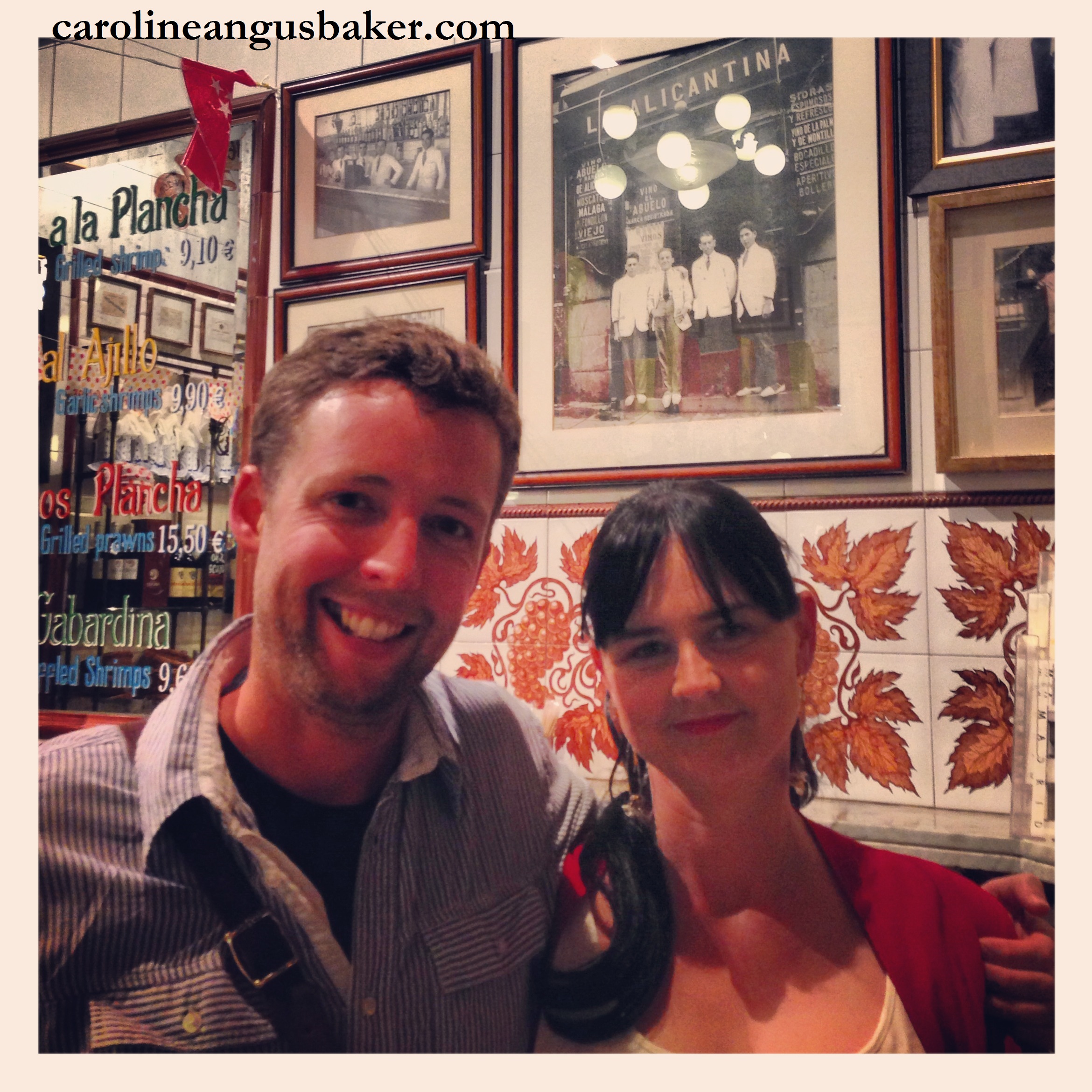
Me and James in Madrid
Lowest point in the trip was when I arrived in Cuenca. The views looked exactly like the photos and that should have been great; but it wasn’t. I got there and had a sense of being trapped far from the whole world. The town got better as I wandered the place, and the bolt-hole bar we spent the evening in made everything okay again.

Cuenca’s gorge bridge where you can leave a message of undying love – so I did
Unexpected fun came when I met two men on the trip to Segovia. They were celebrating their engagement by visiting Spain. Combined with a lovely English woman, the trip held more excitement that we expected. The wild asparagus at lunch was divine.
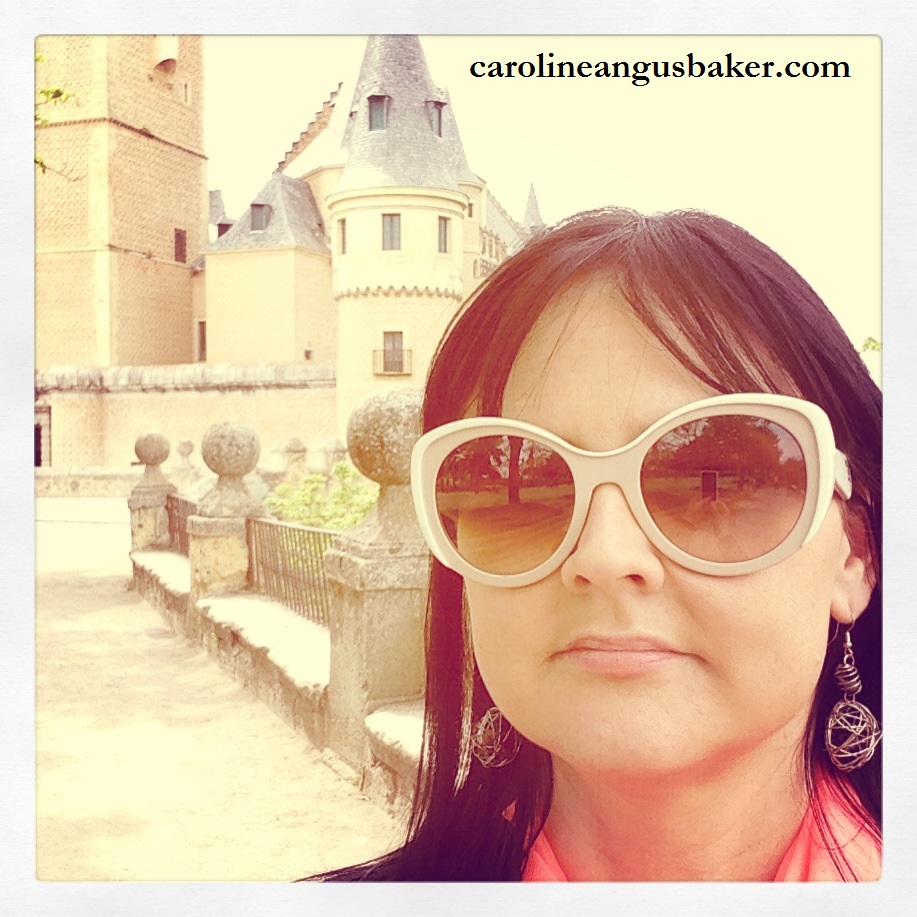
Segovia’s Sleeping Beauty castle
The least surprising thing was the noise level in Valencia. I got more peace on Barcelona’s La Rambla than I did in any location in Valencia. They may have changed the laws on late night noise, but somehow that makes no difference. That doesn’t even count the fiesta going on; regular life is at full volume.
Mixed feelings award went to all the protests going on. I have literally lost count on the number of protests I walked into in Barcelona, Valencia and Madrid. While I admire the Spanish people and their willingness to stand up for their rights, it’s heartbreaking to see what the country is going through.

Protesting outside banks in Valencia
Saddest moment came when I was taking the bus in Valencia. I saw something out the window and thought, ‘I must remember to tell Dad about that’. My father died horrifically last July. I cried alone on a public bus. Not a great moment.
Happiest moment was again in Valencia, when I first arrived in the city. I hadn’t enjoyed the train trip too much and was feeling a bit low. But after finding the rented apartment, I set off in search of the new Mercadona and it occurred to me how well I know the city and instantly welcome I felt. My six-year absence may as well have not existed. I could have partied all night long had I not collapsed of exhaustion at 1am.

Iconic horchata in Central Valencia
Most shocking moment is without doubt visiting Valle de los Caídos (Valley of the Fallen) outside Madrid. It is dictator Francisco Franco’s scary tomb, built by slaves and has the largest Christian cross in the world on top (150 metres). No photo can show the expanse or the horror of this place. Not only is a fascist dictator honoured here, but built into the place is 30,000 unnamed Republicans who were murdered, then dug back up and stuffed into the basilica like padding, without consent of their families. There, a man akin to Hitler or Mussolini, is honoured with flowers, fascist salutes and singing children. I’ll do a separate post, but if there was a God, he wouldn’t go near that place.

WTF!?!
Spontaneous enjoyment award goes to driving back to Valencia from Teruel. We jumped off the main road and took the CV310 through the Sierra Calderona. This, of course, is the main spot in the Blood in the Valencian Soil. We climbed a dirt road to listen to the silence of ‘Escondrijo’, Luna Montgomery’s country home, meandered through the hillside towns featured in the book, and stopped for coffee at the Blanquet, the cafe in Náquera, which is central for many readers of In The Hands of Love. It was a full and rewarding day.

‘Escondrijo’ in the Valencian mountains!
I was unprepared for the cold in Madrid. When I first arrived there, it was warm and cheerful. But the final two days spent in the great city were freezing. It made an Auckland winter look like a tropical paradise. I have only ever visited Madrid in summer (the three months of hell), but its ‘nine months of winter’ really crept back to give me a taste of its power. However, it stopped none of the fun. I stopped at Desigual and bought this coat which a dozen people have already complimented me on.
A really disappointing point came when I visited Montjuïc castle in Barcelona. It is a central point in Spain’s history, both during the civil war and the brutality that proceeded under Franco (plus if you have read Carlos Ruiz Zafon’s The Angel’s Game, it’s a must-see). Many famous names were imprisoned, tortured and murdered within those walls. I walked into this location, and people were sipping coke and having lunch on the same cobbles where violated souls perished. Okay, you could probably say this about lots of places in Europe, but it really struck a cord with me. I took the bus back to the city feeling disappointed.

Outside Montjuïc castle
Unexpected neutrality hit during bullfighting. I am not a bullfight hater. I have respect for toreros. Hell, I write about them. I have never endorsed or enjoyed the murder aspect, but when I went to a fight in Valencia, I felt underwhelmed. I’m glad I went, but sitting high above it, you are disconnected with its reality. When sitting against the barrier at Las Ventas in Madrid, it was a whole other story. Let’s say I got everything I ever needed to know about bullfighting. The constant swirl of cigar smoke did not help the ambiance. I can say with confidence that while I will continue to write about toreros, but I have no need to visit again.

Las Ventas in Madrid
The most weirded out moment came when I visited Valencia’s port area. The darsena, built to house the 2007 America’s Cup, now lies empty. It looks exactly the same, down to the buildings still branded with sailing teams’ names. The old Prada building, once the jewel of the area, has its sail-fabric walls breaking down at record speed. The walls were made of sails built for the 2003 America’s Cup, and were popular and prized. Now, they are peeling away and left to decay. The whole area looks like a time capsule of my former Spanish life, lying discarded like a stripped corpse. Auckland held the Cup before Valencia, and now we have the Viaduct area filled with parks, playgrounds, cafes, bars and hotels. Valencia could have used their space likewise, but haven’t. No wonder the expensive event was so unpopular with the locals.
What I learned was that I don’t like to travel alone. I don’t mind it, but fun hit more often when other people were around. I spent many days with my friend Sabine Kern on the trip, and with the involvement of people like Graham Hunt in Valencia, Nick Lloyd in Barcelona and James Blick in Madrid, the trip was greatly enhanced.

Drinking from the porrón in Barcelona. Check out how good I am!
I underestimated how many people read what I have written about Spain. I constantly ran into people who had read my work and wanted to talk about Spain. People held what I had to say in high regard. I consider myself to be an invisible person; I live my life and no one knows what I write. However, in Spain, people have taken notice.
I felt pleased to know that all the details I have put into my Secrets of Spain series are correct. As I wandered the locations in the last book, and the locales of the next novel, everything is exactly as I expected/wrote/needed. There is no need to rush home and make changes.
It felt disheartening at times when confronted with some Spanish people. It was little things – they don’t hold doors for one another, they push into queues like it’s life or death instead of a coffee order, and walk around like they are oblivious to one another’s needs or feelings. I can only put this down to big city living. I risk sounding like a real country bumpkin here, but those first few days, as I based myself in Madrid while doing day trips, I got back to my hotel and shook my head in disbelief. I wondered if everyone had frayed nerves at the end of each day. I live in a large congested city, but it feels like luxury island living in comparison to the push and shove of Europe. In fact, I despaired until I hit Valencia and all its good vibes calmed me down.
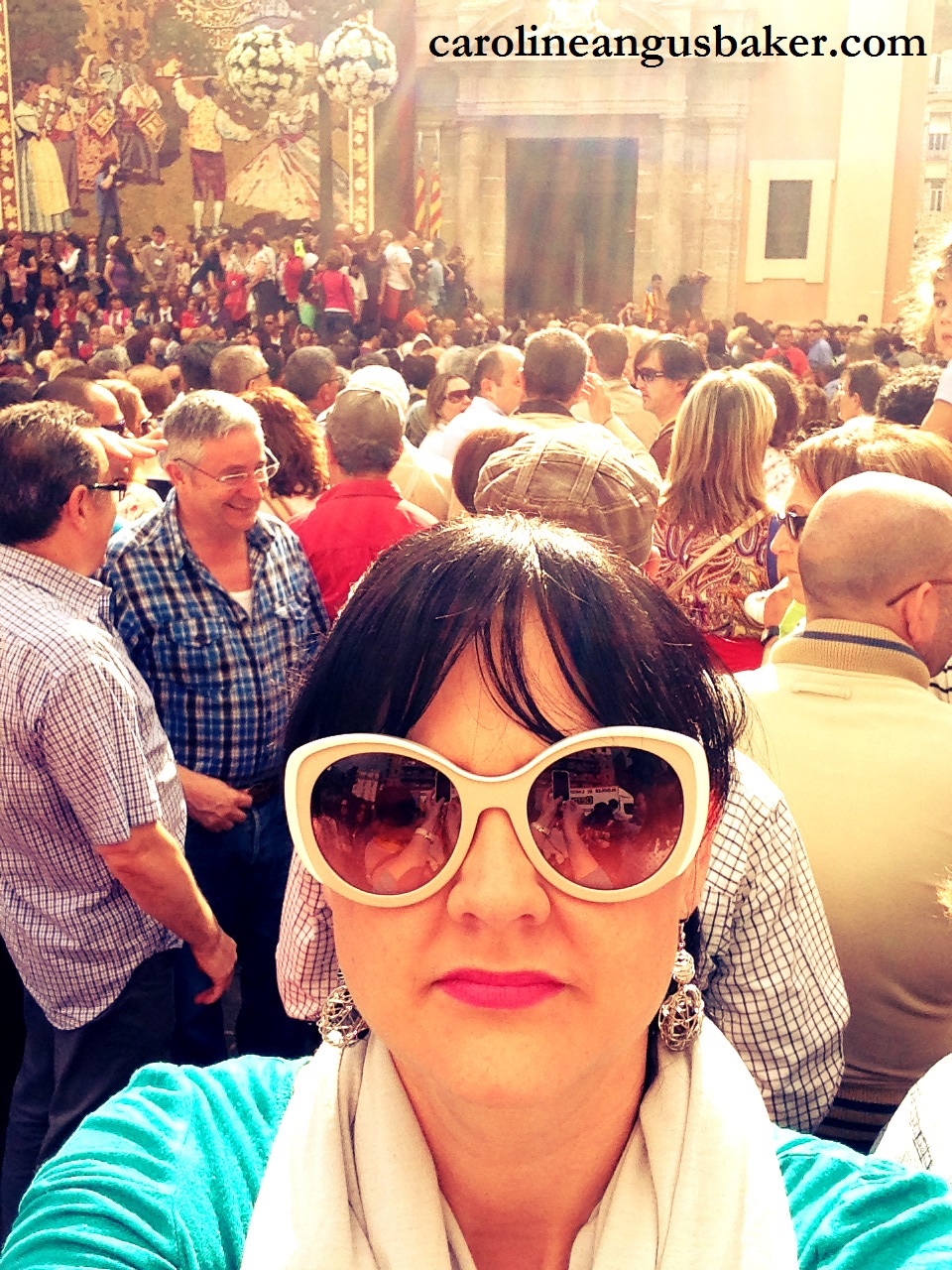
The procession of la Virgen de los Desamparados outside Valencia’s basilica. My face says it all
Number of plane miles travelled: 40,000 kms (yep, I checked that figure) – 50 hours
Number of times I got asked out on a date: 27
Number of nights where I got decent sleep: zero
Number of alcoholic beverages consumed: too many
Number of mornings I had enthusiasm to get up: zero
Number of times I got accosted by someone trying to lure me into a restaurant: 564151* (*not scientifically proven)
Number of new books purchased and stuffed in carry-on luggage: 18
Number of times lost in a city: zero! That includes walking and in the car
Number of Skype calls home: 10 (internet connection didn’t allow for every day)
Number of times I wished I hadn’t done the trip: 4 (2 of them were in-flight)
Number of kisses given/received: approx 100
Number of shameless selfies taken: 71
Number of times caught singing in public: 9 (including doing a “Locked Out of Heaven” duet with the airport shuttle driver)
BEST MOMENT OF THE TRIP WAS something that made my heart flutter more than it has in some time. I can’t tell you what that was because what happens in Spain, stays in Spain.

Gratuitous breakfast photo to finish the post
Next post – The top ten things I rediscovered about Valencia
Click here for the other parts of this series – Spain 2013 in Review

 CAROLINE ANGUS