SPAIN BOOK REVIEW: ‘Defence of Madrid’ by Geoffrey Cox

COX

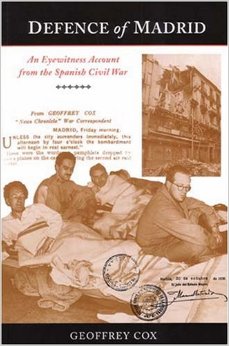
Goodies and baddies take some sorting out in this tale of the siege of Madrid by Franco’s right-wing forces supported by the Nazis and the fascist regime of Mussolini (the ‘rebels’), against the civilian population and its government representatives, just elected, who happened to be left-wing. Once sorted, Cox’s account of the city under attack, in one of the twentieth century’s first urban wars, has all too many echoes today. This new edition, with an introduction and selection of historical photographs, as well as samples of Cox’s journalism from the front, will confirm its position as one of the classics of twentieth-century reportage. Foreword  by Paul Preston, introduction by Michael O’Shaugnessy.

Cover and blurb for 70th anniversary edition from Amazon

~~

Geoffrey Cox’s Defence of Madrid (1937, republished in 2006) is the New Zealander’s eyewitness account of his time in Madrid from October to December 1936, during the siege of the city. In this brief six-week stint, Cox managed to see the fighting in Casa del Campo, the battles at the university and the bombing of everyday civilians.

Born in New Zealand’s South Island in 1910, Cox moved to study at Oxford in 1932 after a tour through Europe. With Europe under dramatic change in this time, he studied the political state of the continent, including spending time in a Nazi youth camp. Soon, journalism took over his desire for an academic life. In 1936, the News Chronicle had their Madrid-based correspondent taken hostage by Franco’s rebels, and a replacement was needed – Geoffrey Cox had the opportunity no one else wanted.

Defence of Madrid is a stark and honest account of Madrid during those early months of the war as Franco’s forces marched unabated through Spain. Cox landed in Madrid prepared for the rebel’s onslaught, only to land in a city in wait, a city far more complex than imagined, given the social and political state. Cox started writing down his account as soon as he arrived, every sight and sound recorded. Almost immediately, his account was being broadcast, as one of just two British correspondents holed up in the city. Cox soon became immersed in the air of Madrid and was the first writer of explain to the world what it felt like to be part of the war, and what everyday people were feeling and experiencing. The combination of the turmoil and collective desires to defend Madrid were published by Cox, who quickly became recognised as a good judge of character. While in Spain for just six weeks, Cox managed to cover major events before any other – covering the assault on the university and Casa del Campo as the Republicans fought back Franco’s army, honest accounts of the aerial bombings and covered the arrival of foreign volunteers in Spain to help the cause.

Defence of Madrid is the first in a long line of books by Cox, who went on to cover World War II and much more. The book is written with total honesty, a lack of bias, seen through eyes destined to tell the truth. Any author would be proud to be able to produce such work. New Zealanders participated in all aspects of the Spanish Civil War, most totally unrecognised. Geoffrey Cox should not ever be one of these.

13 September 1974: The Bombing of Cafetería Rolando

2014 is the 40th anniversary of the bombing of Cafetería Rolando in Madrid. The attack was a significant event in the fight against Francoism and a defining moment in the ETA’s struggle for independence. I first learned about Cafetería Rolando several years ago, and it forms part of my upcoming book, Death in Valencian Dust. In posting this, I do not endorse either side of the ETA struggle, merely recognise the struggle Spain suffered in the 1970’s.

In 1974, to say Spain was at a crossroads would be an understatement. In December 1973, Admiral Luis Carrero Blanco, Spain’s Government President was assassinated by ETA (Basque – Euskadi Ta Askatasuna, Spanish – País Vasco y Libertad, English – Basque Homeland and Freedom), the Basque Country separatist group. For years, ETA had been carrying out attacks and killings around Spain, while other groups started to rise up against the government. In 1974, new Government President Carlos Arias Navarro set up new rules during the spirit of 12 February, keeping in line with Franco’s harsh regime of times past, covering everything from stopping freedom of the press, restriction to the judicial systems, harsh penalties for strikers and protesters, and generally restricting the lives of everyone in the country, everyone outside the búnker, the group of extreme right-wing people surrounding Franco.

The state of the nation deteriorated throughout the year – the church increasingly voiced their opposition to Franco and the regime, the execution of anarchist Catalan Salvador Puig Antich brought people to the streets in protest, the economy slumped, the Communist party mobilised in defense of their sympathisers, workers continued to strike, and universities protested the new draconian laws. Franco himself was seriously ill, and Juan Carlos, his protegé, was taking over all tasks on his behalf. The Portuguese dictatorship collapsed, giving Spaniards more ideas of what they could achieve for themselves. On September 11, 1974, Arias Navarro re-endorsed his changes and announced efforts would double to enforce new laws over the rising tide of anger.

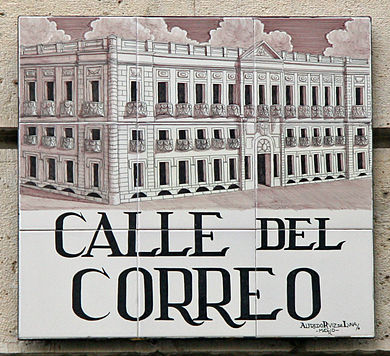
Cafetería Rolando, at 4 Calle del Correos (known as E street), was located in the heart of Madrid, directly off Puerta de Sol. Cafetería Rolando was a large and popular cafe, the local spot for police to visit during their lunch breaks, conveniently located beside the headquarters of the Dirección General de Seguridad (General Directorate of Security) in the famous Real Casa de Correos building. The Dirección General de Seguridad was considered an impenetrable target by ETA and other organisations keen to bring down the regime. Because nearby Cafetería Rolando was so popular with police working nearby, the place became destined for disaster.

 Real Casa de Correos (Cafetería Rolando was to the right of this shot) – Source

On September 13, 1974, at 2.35pm, during a busy lunchtime, a bomb exploded at the entrance to the cafe. The bomb, thirty kilos of dynamite filled with nuts for shrapnel, went off as many enjoyed their lunch, and was large enough to cause serious structural damage to the five-storey building. The ceiling of the café collapsed, resulting in several of the hostel guests upstairs falling into the café. The blast was big enough to shatter the windows of the Real Casa de Correos across the tiny street and several cars were obliterated. Another restaurant, a large place with 300 seated guests next door, was also seriously damaged.

Because of the proximity to the security building, police were on the scene immediately, and the process of saving Cafetería Rolando diners began. An attack of this magnitude, on a place frequented by everyday people, hadn’t been undertaken since the Civil War, catching all by surprise. Seventy-one people were pulled alive from the rubble, several children. Most victims made a full recovery, though several were left with scarring and mutilation. In total, twelve people were killed, aged from 20 to 78 years old, including a just-married couple. Several café workers were killed, including one who was pulled alive from the rubble but died before surgery. While the attack was allegedly against the police, and several wounded were police and from Franco’s elite special forces, the rest killed were all civilians. A thirteenth victim, a police officer, died two years later from the attack, unable to survive the injuries he sustained.

Source

The list of the dead only fueled speculation of the bombing. As no police officers were listed among the dead, a theory sprang up that a division of the extreme right themselves planted the bomb. Police earlier that day had been told to avoid the café, but these rumours were never directly admitted. Franco was keen to catch whomever had committed the act, while others, both for and against the government, took the opportunity to criticise the regime, plus Arias Navarro himself, and the búnker, the powerful political families. Everyone had an agenda for establishing blame. The Communist party became a popular target for criticism, initially blamed for the events.

Soon, blame fell on ETA from the Basque Country. They had been killing policemen and guards sporadically since 1968, one just days before the bombing. ETA denied any knowledge of the Cafetería Rolando attack, though throughout Spain, the denial wasn’t taken seriously. Because of the high number of killed and wounded were merely civilians at lunch, both sides of the political fence wanted to see justice done. The assassination of Carrero Blanco less than a year earlier didn’t raise tempers, but the attack on the café brought ETA’s organisation more into the spotlight than ever before.

Famous Basque activist, writer, women rights campaigner and ETA supporter Eva Forest was arrested along with her husband, though her husband was soon released. Forest refused to co-operate and accused the police of ill-treatment during her detainment. It was alleged two Basques, a man and a woman, planted the bomb in Cafetería Rolando, sticking the bomb to the underside of a table, and set off the timer. The identity of those two Basques were never established. It could have been Forest and her husband, playwright Alfonso Sastre, but there was no proof. While many detained in connection to Cafetería Rolando and the Carrero Blanco assassination were released, Forest was kept in prison until 1977, when all political prisoners accused under the Franco regime were given amnesty, to smooth the way for democracy under the new King Juan Carlos. It was rumoured that Forest suffered terribly being in jail, being tortured for all her acts over the years. While Forest admitted to passing on ETA messages and helping with safe houses, she never admitted her part in the Rolando bombing, despite admissions from others in the plot. 

Because of the 1977 amnesty, no one was ever held accountable for the Cafetería Rolando bombing, and no one can never be convicted of any crime relating to the incident.

Calle del Correo today – Source

Victims of Cafetería Rolando 13 September 1974

Antonio Alonso Palacín, mechanic, and his new wife, María Jesús Arcos Tirado, telephone operator aged 28

Francisca Baeza Alarcón, teacher aged 45

Baldomero Barral Fernández, baker aged 24, and his wife María Josefina Pérez Martínez, mother of two aged 21

Antonio Lobo Aguado, railway worker aged 55

Luis Martínez Marín, businessman aged 78

Concepción Pérez Paino, Dirección General de Seguridad admin worker aged 65

María Ángeles Rey Martínez, student aged 20

Gerardo García Pérez, married father of three

Francisco Gómez Vaquero, Cafetería Rolando chef aged 31 

Manuel Llanos Gancedo, waiter at Cafetería Rolando aged 26

Félix Ayuso Pinel, police inspector aged 46. Pinel didn’t die until 1977.

CalledelCorreo(Madrid)

Source

 Here is a link to the news footage of the bombing in 1974 – Atentado etarra en la calle madrileña del Correo (1974)

SPAIN BOOK REVIEW: ‘Hotel Florida: Truth, Love, and Death in the Spanish Civil War’ by Amanda Vaill

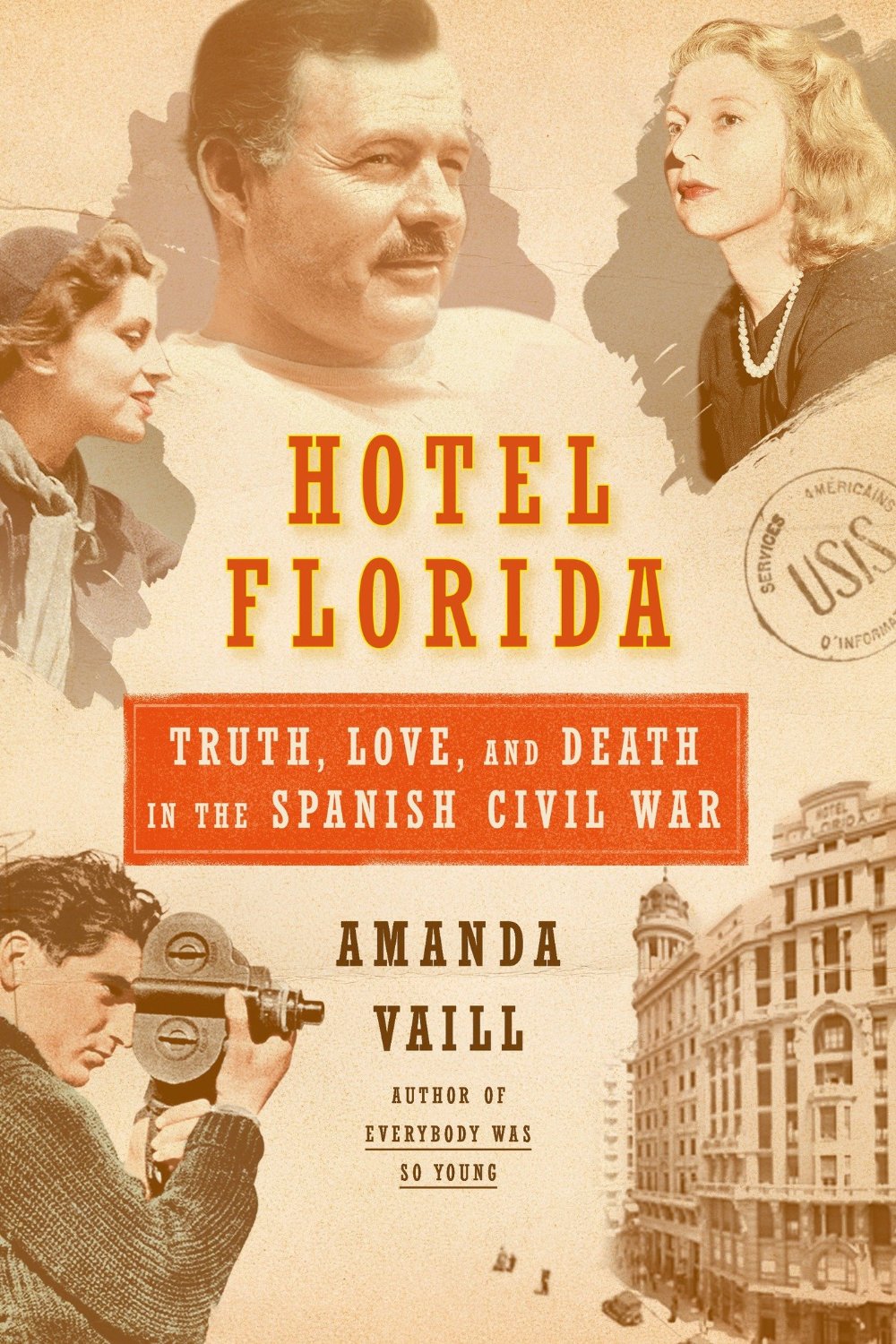
Hotel Florida

Madrid, 1936. In a city blasted by a civil war that many fear will cross borders and engulf Europe—a conflict one writer will call “the decisive thing of the century”—six people meet and find their lives changed forever. Ernest Hemingway, his career stalled, his marriage sour, hopes that this war will give him fresh material and new romance; Martha Gellhorn, an ambitious novice journalist hungry for love and experience, thinks she will find both with Hemingway in Spain. Robert Capa and Gerda Taro, idealistic young photographers based in Paris, want to capture history in the making and are inventing modern photojournalism in the process. And Arturo Barea, chief of Madrid’s loyalist foreign press office, and Ilsa Kulcsar, his Austrian deputy, are struggling to balance truth-telling with loyalty to their sometimes compromised cause—a struggle that places both of them in peril.
     Hotel Florida traces the tangled wartime destinies of these three couples against the backdrop of a critical moment in history. As Hemingway put it, “You could learn as much at the Hotel Florida in those years as you could anywhere in the world.” From the raw material of unpublished letters and diaries, official documents, and recovered reels of film, Amanda Vaill has created a narrative of love and reinvention that is, finally, a story about truth: finding it out, telling it, and living it—whatever the cost.

~~

I rarely read reviews before I start reading a book, so they don’t influence my opinion while reading. However, Hotel Florida seemed to pop up everywhere just prior to its release, with reviews written by those with advance copies and the like. Once I received my own copy of the book, I already had the opinions of others going around in my head. For once, it’s not a big deal, and the word that seems to be thrown at this book is ‘compelling’. With characters like Hemingway, Capa, Taro and Gellhorn, how could it be anything but compelling? Given that these characters are not new to anyone, how can pre-conceived stereotypes of characters not interfere with reading? There was only one way to find out.

For those without knowledge of the Spanish Civil War, the book starts out with timelines and facts of the who/what/ where/why’s of the conflict. I must confess I skimmed over these since I already knew the details, but this would prove invaluable to those who need to be shown the way through the civil war. They immediately show a reader that the author has gone to a great deal of effort to produce a quality read.

The book has a stellar cast – Ernest Hemingway, (the man who needs no introduction, booze, girls, writing and fighting), Martha Gellhorn (the hardest character to like, known for being lazy and lying), Robert Capa (brilliant but also fluid with the truth), Gerda Taro (young, intelligent, easy to root for, killed in her prime), Arturo Barea (a budding Spanish writer, a character who could have a whole book to himself) and Ilsa Kulcsar (a brave and intelligent Austrian leftist assisting Barea in his pursuits).

These three couples don’t have a large deal of interaction in the books, and the reader gets to jump from the mind of each character chapter by chapter, in a book which moves at a quick pace. The danger faced in Spain as intensely real and would leave a mark on each of these people forever. Hemingway folds into the role he is known for – brash, loud, writing well enough to tell the world what was happening in Spain, but also jealous and petty around other people. Gellhorn wiggles her way into Hemingway’s life, and his marriage, always possessing the air of someone who can’t be trusted, but could be a good writer with more effort. No one could ever suggest going to Spain during the war was an easy task, and these two were changed by their experiences, but at times seemed to be enjoying the war. It was a grand adventure, of front line reporting and loud Madrid parties. Fans of Gellhorn may enjoy her role in this book, though to the less informed reader, she seems like a privileged girl who lives on her whims. Only after her time in Spain did Gellhorn really come into her own, which only served to crush her marriage to Hemingway.

Capa and Taro are an infamous pair, escaping unsafe homelands in Germany and Hungary, changing their names, and setting out to make a massive impact on how the world saw the Spanish Civil War. The iconic moment when Capa (may or not may not – the book doesn’t say) faked the shot of the falling soldier weaves its way into the narrative as the pair photograph the war. It’s been said that Taro was the genius of the pair, but her death was cruel and left a deep wound in Capa, who had found a soul-mate in Taro in more than a romantic sense. The pair makes for reading that would interest even those who don’t know their exploits and photographs.

Arturo Barea is the best character in the book. The Madrileño, who opens the book contemplating how he doesn’t love his wife or mistress, has a quality different to the others. Barea has more faith in the telling the truth and doesn’t enjoy twisting the facts to make reports sound more favourable for the ever losing Republicans. While Hemingway, Gellhorn, Capa and Taro are not fixated on the truth, rather getting published, Barea is left at odds with them all. Barea finds Hemingway and is ilk to be ‘posturing intellectuals’, and Barea better understands what is stake during the conflict. The Spaniard can see the fate of the Republicans as the war unfolds and realises all Spaniards are going to pay and suffer as a result of the fighting. While others can flee, it is Barea’s home that has to live with the realities of war. He engages in an affair with Ilsa Kulcsar, who had come to Spain from Austria in an attempt to aid the Republicans, and Barea divorced his wife to be with Ilsa, which meant he never saw his children again. By the end of the war, Barea and his disdain for the war and those around him made him an outcast, and he and Ilsa had to flee to Paris with little more than the clothes on their backs. They made lives in Britain with their knowledge of Spain, war and languages in what appeared as a life long love affair.

I wasn’t sure what to expect when reading Hotel Florida – fitting all these larger-than-life characters into one book can’t be easy. It is described as ‘a narrative rather than an academic analysis’, which gives the possibility for rich, engaging characters. All the reviews I have read rave about the work, no doubt because of the level of effort Vaill has exuded while writing. While reading, I couldn’t be sure how I felt about the book – the pace made me feel as if I had fact after fact tossed to me, with so many details to absorb as the characters sped along. The book has an ode to Hemingway with some  long sentences – I counted one at 76 words, just as in the style of the big man himself. Being a narrative, I expected to be shown the story rather than to be told the tale, but this did not happen. The story of Hotel Florida is told to the reader; it does not unfold in any way, rather all the details are laid out and presented. Readers do not need to imagine anything, nor put the pieces together, rather everything is laid on the table with sharp sentences. While you cannot doubt the level of devotion Vaill has for her characters, they don’t have personalities, and readers need to rely on the details given out when engaging with these well-known people. Anyone who has edited a book knows the irritation of having to reduce adverbs or fix sentences ending in a preposition, and these basics haven’t been done in this book, but it makes the story more relaxed as a result.

The book ends with forty pages of notes (around 25% of the book on my Kindle), which shows how much effort the author put into this book. The attention to detail is meticulous, and much credit should go to Vaill for her hard work and commitment to perfection. If you are looking for a sweeping tale of wartime Spain this may not be the book for you, but if are looking for a tell-all of famous faces, then you have come to the right place. An added bonus is the cameo roles of powerhouses such as George Orwell, Kim Philby and others who also made their names in Spain in this era. Whether you want war, idealism (foolish or otherwise), love, lust and sex, or celebrity jealousy and pettiness, Vaill has rolled them together in Madrid’s Hotel Florida.

SPAIN BOOK REVIEW: ‘Adventures of a Doctor’ by E. Martínez Alonso

Martínez

Adventures of a Doctor by Eduardo Martínez Alonso seems to be so rare, I can’t find any cover art or a blurb about this book. I managed to purchase a damaged copy from the New Zealand parliamentary library, and when they tossed this book to me for a mere $6 (about €3.60), they obviously didn’t know what a treasure they had. Eduardo Martínez is quite an extraordinary man with a story that seems to have been largely lost. With the market flooded with 1001 Spanish civil war books, it comes as a great surprise that this book doesn’t get more recognition.

The story starts with the author born in Vigo, Galicia in 1903. His father was from Uruguay, and was the consul in Vigo. As a young boy, Martínez travelled to his father’s homeland, along with his family (he was one of eleven children, and talks of his mother constantly having to nurse his siblings). The story tells of life in northern Spain in the era, and exploits with his brothers and attending a boarding school with mixed success. In 1912, Martínez’s father received a post to Glasgow, and the whole family moved north for a new life. Martínez dreamed of working in hotels or on ships, able to meet people and travel far and wide. He became bilingual at a young age, seeing the benefit of speaking Spanish, English, French and more. But it was his father who said he would be a doctor, not a sailor. As each of the eight boys grew and carved out professions (sisters, of course, were to be wives and caregivers), the prophecy of the hard-working consul came true. The family and Martínez recalls the first world war, his school years and an eventual trip back to Uruguay.

As a trained doctor, Martinez moved to Madrid with his grandmother, and speaks of seeing Anna Pavlova dance at Teatro Real, with the King and Queen in attendance.  He quickly took up a post at Red Cross Hospital, and met Queen Ena, British wife of King Alfonso XIII, and the Duchess of Lecera, who were delighted to have an English-speaking doctor. News travelled of an English-speaking doctor in favour with the queen, and Martínez was in hot demand. Just eighteen months later, Martinez graduated from San Carlos Medical Facility and while meeting the King and Queen socially and professionally, was appointed the medical adviser to the royal family. This proved to be an amazing and dangerous post.

When the Second Spanish Republic was founded in 1931, Martínez was in the palace in Madrid with the royal family as they were deposed. He tells of sitting casually with Queen and princesses as the monarchy fell. As the family were forced into exile and as Spain underwent revolution, Martínez’s position as a monarchist him an easy target. As civil war came five years later, things changed dramatically. Martínez got his family out of Spain in July 1936, or off to the safety of Vigo, and knew he would be in danger as a former royal family aide. Through his work for the Red Cross, he was ordered by a Communist faction to work as a doctor for the Republican side of the war.

On Saturday morning the shooting started. We sat in a bar and heard the crackling of machine guns, the burst of hand grenades, and I saw smoke arising from many quarters of Madrid. By Monday morning a general strike had been called. Everything was paralysed except murder, arson, and rape. The Spanish civil war had commenced – Pg 70

Martínez talks of watching a church burning as priceless works of art were set alight along with the riches of the churches of Madrid. He saw a priest thrown on the flames but was unable to save his life when he pulled the screaming body from the blaze. Most priests were taken out to Casa del Campo to be shot. Men were burning priests but trying to revive pigeons which fell from bell towers, overcome by smoke. Martínez had an apartment in Madrid, and he hid as many people  as he could throughout the war. Nuns and priest were hidden, and forced to serve meals to men who sat and spoke of vicious murders they had committed against the clergy.

Martínez was posted to a town outside Badajoz, Cabeza del Buey,  in the south-west, working for the Communists. While running the hospital, a young nurse, Guadalupe, suggested they flee and work for Franco’s troops instead, but Martínez seemed convinced that he would be killed at some stage, regardless of where he was posted, and claimed no political alliances. In Cabeza del Buey, he was forced to attend mass executions of seemingly innocent men, and despair at violent speeches about revolution and vengeance. He performed many surgeries and saved lives in the  most atrocious conditions. But with no warning, Martínez was shipped off, with Guadalupe, and sent to Ocaña, just outside Aranjuez, to work in the prison there, and be a prisoner himself. As he had in Cabeza del Buey, Martinez managed to get some nuns freed from prison to work as nurses, and treated patients while living in a cell himself. Between dire conditions and deadly activities, a patient told Martínez that his turn to be executed was near. An in understated manner, Martínez talked of his prison escape to Valencia in March 1937, were he managed to procure a fake passport and get aboard the Maine, a ship bound for Marseilles. 

Martínez quickly got himself back in Spain, despite the dangers. He chose to cross the lines and work for the ‘white’ side of Spain, Franco’s rebel army. Red Spain (the Republicans), he felt, thought nothing of him, his work, and long suspected their cause would lose the war, one they never had a chance to win. Posted to Burgos, Valladolid and then San Sebastien, Martínez  then found himself working on the front lines as Franco’s army continued to advance into enemy territory. Towns fell one by one as Martínez fought to save lives, but writes in such a  humble, unassuming manner. Once in Zaragoza, Martínez worked hard to care for patients at the hospitals, and pioneered the use of closed casts on wounds, a procedure first tried with less success twenty years earlier. Despite the smell offending wealthy female volunteers, Martínez’s experiment helped the lives of many patients otherwise in agony as they recovered. He was then moved on to his own mobile surgical unit in Teruel in 1938.

Martínez was there on the ground when troops stopped in Sarrión, 100kms north-west of Valencia, as the war finally came to its brutal end. On April 1st, 1939, the war was over and declared won by Franco in this small town, and after helping a man and his son to Valencia, Martínez sought out all those who had helped him during the war, and moved back to Madrid. No sooner than Martínez had helped his friends and former nurses, and begged for clemency for some condemned to death by the new regime, the second world war broke out. With some family in Vigo and some Britain, travelling on multiple passports, danger was again faced. As Hitler plowed through Europe, Madrid suffered greatly after the civil war and Martínez went to work at Miranda de Ebro, near Burgos, to help war refugees from all nations. With such a humble attitude, he glossed over his feat to aid refugees out of Spain, saving their lives, until in 1942, when his ferrying of innocents was discovered and he was forced to flee Spain. His time working with British Naval Attaché, Captain Alan Hillgarth is barely touched upon, but should surely serve as an incredible tale of a man saving lives at great risk to his own. This two-year period alone could serve as a story all of its own. Just his dramatic escape would serve as its own story, but the author covers it in a few sentences, and neglects to mention he fled with a new wife. He also failed to mention his first marriage which produced two children, but was annulled after Franco took power in 1939 (His wife was a British woman who went home without him). I only found about either marriage after studying the doctor further myself. There are no clues to whom these women are at any point in the book. His personal life is never touched upon.

Again, Martínez talks little of his involvement with the rest of the world war, after being detained when first arriving in Britain (no idea if his Spanish wife was also detained), but worked as a spy for Britain throughout and barely talks about it. He worked at Queen Mary Hospital after the war and oversaw great new procedural advances, meeting some of Europe’s finest surgeons, but then returned home to Madrid. Life was hard in the beleaguered nation, and he again went to work at Red Cross Hospital, specialising in chest surgery. He then moved on to working as the doctor for the Castellana Hilton, newly opened in 1953. He recounts stories of wealthy Americans, and famous movies stars (unnamed) alike, who came to Madrid for all sorts of reasons. He spoke with frustration at his patients demanding penicillin shots, not wanting to discuss why they need this medication. Many guests, male and female, had a penchant for sleeping around and wanting medicine to atone their sins, either before or just after the liaisons which bore infections. One guest talks of being raped and demanding penicillin, though the story is far from convincing to the doctor. Sexual liberation had come to the foreign guests at the Hilton, and expected Martínez’s penicillin to cover it up. He makes his disdain clear for these patients and the abuse of this groundbreaking medication, and of the myriad of alcoholics he was forced to attend to, when little could really be done for them.

The book is written in the manner of a doctor – no-nonsense, no fussing with detail, just the raw facts given out without prejudice. Martínez is a man with the story worthy of a Hollywood blockbuster, but it wouldn’t be his style. This book was written in 1961, and Martinez lived until 1972. It shows what really stood out to the doctor in his life, because details are excluded, and there are many secret operations he simply never wanted to discuss. He is free and easy with dates – because I know the civil war, I could piece together the timelines of the book, but needed to look up world war details and the opening of the Madrid Hilton, just to give myself an idea of how much time passed between chapters.

Martinez’s daughter, Patricia Martínez De Vicente, has written several books in Spanish about her father, notably La Clave Embassy: La Increíble Historia De Un Médico Español Que Salvó a Miles De Perseguidos Por El Nazismo. The stories not told by her father in his memoir are a whole other side to this man who worked tirelessly for others, and had a strong ability to do good, without any need to be recognised.  To read his book is a gift, and I will be also reading his daughter’s books.

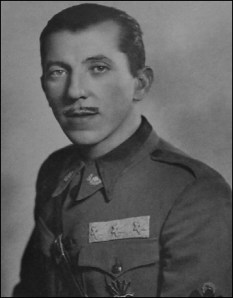
*above photo taken just prior to release from the Spanish army, 1939. Photo supplied in the book (page 112)

SPAIN BOOK REVIEW: ‘Winter in Madrid’ by C J Sansom

Winter in Madrid

1940: The Spanish Civil War is over, and Madrid lies ruined, its people starving, while the Germans continue their relentless march through Europe. Britain now stands alone while General Franco considers whether to abandon neutrality and enter the war.

Into this uncertain world comes Harry Brett: a traumatised veteran of Dunkirk turned reluctant spy for the British Secret Service. Sent to gain the confidence of old schoolfriend Sandy Forsyth, now a shady Madrid businessman, Harry finds himself involved in a dangerous game – and surrounded by memories.

Meanwhile Sandy’s girlfriend, ex-Red Cross nurse Barbara Clare, is engaged on a secret mission of her own – to find her former lover Bernie Piper, a passionate Communist in the International Brigades, who vanished on the bloody battlefields of the Jarama.

A vivid and haunting depiction of wartime Spain, Winter in Madrid is an intimate and compelling tale which offers a remarkable sense of history unfolding, and the profound impact of impossible choices.

~~

I must confess that Winter in Madrid is ‘that’ book for me – the one everyone seems to rave about, but I never ended up reading. I got this book five years ago, but after the first two chapters, put it aside, finding its ‘rich British toff’ language to be tiring. Then my father ‘borrowed’ the book, and I only got it back 18 months ago when he passed away. Still, only now could I push on and finally read.

The first forty or so pages set up the story of Harry Brett, a British war veteran invalided out after Dunkirk. Harry is recruited to be a spy in Madrid, thanks to his Spanish fluency and his connections within a public school upbringing (often called private school in most countries. Rich bratty kids). With all of the snobbish upper class language of Downton Abbey, but with none of the poise, Harry is convinced to fly to Madrid in 1940 and spy on an old school mate, who is claiming to have found gold deposits outside Madrid. If Franco has gold, he will rely less on the frugal aid Britain provides, and will be compelled to ditch their neutrality in the Second World War. Hitler is winning, England is looking weary, and newly fascist Spain could be a threat.

That is where we meet the star of the show – Madrid, 1940. The only word to be used is stark in its portrayal, and rightly so. The author has done an unquestionable job in his research of the time. The lives of those in Madrid are intolerable, and the spirits of the proud people are well and truly starving and crushed by the fascist regime. Slightly annoyingly, the book jumps between time periods, of Harry’s days in his snobby school, 1931 where he and friend Bernie first go to Madrid, and the city is down-trodden but on the verge of change, and 1936, when the war starts, and the souls of the working class are surging with hope. I suppose the schoolyard sections are there to show the life of Harry, his interaction with best buddy Bernie, and that of Sandy Forsyth, the rich brat who had gone to bigger things under Franco. The jumps in time period fill in all the blanks, but it means the book leaps about more often than most stories.

Along the way, we meet Barbara Clare, former lover of Communist Bernie, who spurned his upper-crust lifestyle for new ideals, and was listed as missing presumed killed in Jarama 1937. Barbara fell head over heels but Bernie left her in Madrid to fight on the front lines. Three years on, Barbara has moved on to Sandy, who ‘made her’, as he says in the most rapist-like way when he’s angry. Barbara is difficult to love – she had the courage to be in Spain during the war with the Red Cross, but has been reduced to being a borderline alcoholic, chain-smoking rich housewife (without the ring). She sighs her way through concerts with Franco while wearing fur, while most are freezing. She laments on her misery while living in almost paradise-like surroundings while Madrid languishes with hunger. She can’t get over poor  Bernie, who was never a smart guy but had plenty of good intentions. I rather hoped lung cancer would kick in through all Barbara’s cigarettes and waif-like point-of-view.

Harry pushes on, spying on Sandy and Barbara, meeting many nasty characters under the Franco regime. He attends lavish parties hosted by wartime murderers, but walks the streets of the poor as he remembers Bernie. As the web begins to twist around the characters, Harry meets Sofia in the most unusual circumstances. Sofia has had a tough working class life and is the epitome of the locals in the area. Harry spends more time with her, and finally realises he is sleep-walking through life thanks to his rich, snobbish school education. As the push to uncover Sandy’s gold mine continues, Harry and Barbara each keep a variety of secrets which unthreads their fragile minds and pits their survival against evil characters.

Bernie’s point of view tells the story of a British communist stuck in a concentration camp outside the town of Cuenca, and the harsh conditions imposed. Many people fail to realise the existence of Spanish concentration camps under Franco, never photographed and dismantled completely after use. All these characters conspire against each other and those around them, resulting in a massive twist ending where not everyone survives and all the characters are left with blood on their hands.

I know Madrid well and know Cuenca like the back of my hand, and reading about the places in this time period genuinely interests me. If you know little about the Spanish civil war or the Franco regime, this book will give you a realistic insight. The locations and descriptions are exquisite, and the author’s work on detail and political alliances of the time is stunning. But the conversation, the wealthy British language can be hard to take, leaving the conversations feeling stiff and unfulfilled over endless glasses of whiskey. The book lets down its female characters – Barbara is a flake (maybe weighed down by too many bad Madrid coffees?) and Sofia doesn’t get the prime position she deserves. Harry, the main character of the story, is a nice enough guy, though his fate never concerned me. Sandy is a terrific passive aggressive scumbag and Bernie left me so furious that I threw the book down in anger at the end. Not many books have that effect on me!  But rest assured, you will find yourself reading all the way to the end to see what happens to Harry, Bernie, Barbara, Sofia and Sandy. Whether you hope they live, or die in a fire-ball, is up to you.

My rating – 4/5 stars. Madrid is a scene-stealer and a study of eternal struggle, but those inhabiting her are too weak to challenge her dominance.