In episode 5 of The Mirror and the Light, it is all coming part for Thomas Cromwell. After finally finding a woman willing to marry King Henry, Anne of Cleves is delayed as she gets to England, and is not stunned into undying love when she sees her sub-par new husband. Henry’s ego is hurt, and the year is off to a bad start.
In reality, Henry not liking Anna of Cleves was borne out of fear, not Anna’s appearance. Her brother was Wilhelm of Cleves, who had just declared war against Emperor Charles over the German duchy of Guelders. By marrying Anna, Henry was essentially making himself an ally against the Emperor in war. Trade with the Low Countries had already been halted, and Cromwell had traded Eustace Chapuys for Thomas Wriothesley, Stephen Vaughan and Edward Kerne, who were held hostage by the Emperor’s sister, Queen Mary of the Netherlands. Marrying and sleeping with Anna meant preparing to go to war against Emperor Charles, and after Anna had not been particularly chatty or enamoured with Henry, he was livid at having married the beautiful, young duchess. Henry was trying to make the best of it, Anna was well-liked by everyone but her husband, and Cromwell was busy infuriating the Duke of Norfolk by closing Thetford Priory, where the Howard ancestors were all buried.
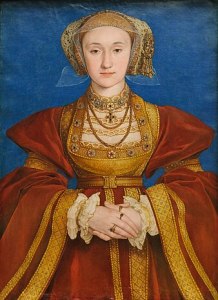
Anna of Cleves, 16th century hottie. Hans Holbein, Louvre INV 1348
The English bible was out and it was the law to preach the reformed religion in England. Henry, Cromwell and Cranmer all graced the cover of the new bible. But getting everyone to obey the reforms was near impossible. In March 1540, Bishop Stephen Gardiner had been preaching the old doctrine at St Paul’s. Days later, Cromwell’s old friend Robert Barnes did the same, preaching the reformed doctrine. King Henry heard of these outbursts and ordered Gardiner and Barnes to appear before him to explain themselves. It was not simply two men forced to explain themselves, as the king was ‘scandalised’ by their words. It was Gardiner’s words against Cromwell’s words, Barnes simply the mouthpiece. Henry, unhappy with his German marriage, could turn his anger against the Reformation instead of its real target, bringing Cromwell and Gardiner’s long-running feud to its bitter end. Everyone needed to be silent to appease the king’s current mood, so Barnes recanted his words in late March, and Cromwell made a concession; he invited Stephen Gardiner to dinner at Austin Friars.
If the Lambeth Palace banquet with the Duke of Norfolk was a flashpoint in Cromwell’s fortune, the Austin Friars dinner party would go one step further. What should have been two men finding a truce, instead turned into a bitter dispute, free of the civility of court. Rumours were already flying; people believed Cromwell would lose the Vice-Gerent and Lord Privy Seal positions. With Henry turning from the Reformation due to his marital bed problems with Queen Anna, Cromwell needed to defend all he had done, just as Gardiner felt he needed to defend the papacy.
A withering and acrimonious shouting match ensued at Austin Friars, with Cromwell screaming at Gardiner, ‘if the King would turn (from the Reformation), yet I would not turn! And if the King did turn, and all his people, I would fight in the field in my person, with my sword in my hand, against him and all others’. Cromwell, holding a knife (claimed Gardiner), added, ‘if this dagger was not thrust into my heart in battle, and if I would not die in that quarrel against them all, and I live one year or two, it shall not be in the King’s power to resist me’.
Cromwell had made a huge mistake, not unlike several inappropriate outbursts over recent months. A man who could have his enemies cornered before they realised the hunt had begun, suddenly began making missteps for no apparent reason. Cromwell was discussing a theological battle, not an actual war, and if he had a knife, it would have been no more than a dinner knife. The lack of actual danger to Henry must have been apparent, as Gardiner kept this treasonous argument quiet, and Cromwell needed to get ahead of him. Cromwell surrendered the position of Secretary of State to the king, a job he held in an official capacity for six years. Secretary Cromwell was no more. The position that gave so much power beside the throne slipped away, but only just. The position would be divided between two people, a plan used regularly in the future, separating the immense power of the position. Ralph Sadler and Thomas Wriothesley were both given the job.
For a moment, things seemed to calm again but French Ambassador Marillac thought Cromwell was in trouble; Gardiner had not said anything, but Marillac, either listening to bad sources or simply sharing lies, wrote to King Francis, ‘Cromwell is tottering’. Marillac could not have been more wrong. On 17 April, King Henry astounded Cromwell and his friends and foes, telling him that he would become the 16th Earl of Essex (1st Earl, sixth creation), accompanied with a list of lands and manors five pages long. Henry Bouchier, whose family had held the Essex titles for eighty years, broke his neck after coming off his horse a month earlier, a sudden opportunity for Cromwell to be elevated. One day after this shock announcement, Cromwell was again bestowed with glory: the title of Lord Great Chamberlain, head of the royal household. The Earls of Oxford had held the role for the past 400 years, but John De Vere had died at home just a week after Henry Bouchier, leaving a vacancy at court.
But Gardiner had these words, spoken in anger at Austin Friars, coupled with the Duke of Norfolk’s French plan to remove Cromwell, were lying in wait, as the final traitor was about to reveal himself.
Welcome to a new series about the fact and fiction of the newest series of Wolf Hall, The Mirror and the Light. Here is the real story of the marriage of Elizabeth Seymour and Gregory Cromwell.
By now you will have seen (as in the picture above) of the marriage of of Queen Jane’s sister Elizabeth Seymour to Gregory Cromwell. In the show, the character’s name is Bess Oughtred, and given the number of Elizabeths in the period, giving her a common nickname is helpful if you don’t know one Elizabeth from another.
Elizabeth Seymour had a hard early life. The eighth of the ten Seymour children, Elizabeth was married at just 12 years of age to Sir Anthony Ughtred, then aged 52. Why her father John Seymour thought this a good idea remains a mystery. By 1530, John and Margery Seymour had lost two of their children to illness, but their three surviving sons, Edward, Thomas and Henry, had been sent to court. The younger two were put in backroom middling roles, while Edward Seymour was already circling the higher privy chambers as an attendant. But Edward’s wife Catherine had given him two sons whose parentage was dubious to say the least, so marriage prospects may have been a concern for the unmarried Seymour girls. Jane Seymour was already at court too, a lady for Queen Katharine of Aragon. Elizabeth and Dorothy Seymour were only children in 1530. Dorothy Seymour was married off at 13 in 1533, fortunately to someone only a few years older than herself, and began a state of regular pregnancy. Jane Seymour remained unmarried at court. Middle sister Elizabeth was the most unlucky of all.
The marriage of Elizabeth Seymour and Sir Anthony Ughtred surely raised eyebrows, given the bride was 40 years her husband’s junior. Even King Henry wasn’t that lecherous. Anthony Ughtred had a similar military background to Elizabeth’s father, so they were likely friends or at least court acquaintances of similar rank. After losing his first wife without children, Anthony Ughtred acquired Elizabeth Seymour, and she was styled as Lady Ughtred, and joined Anne Boleyn’s court around the same time Jane Seymour was transferred there in 1533. In late 1533, aged 14, Elizabeth gave birth to her son, Henry Ughtred (given the two-year gap between marriage and pregnancy, Ughtred may have not touched his child bride for a couple of years. We can only hope). Anthony Ughtred was the Captain and Governor of Jersey, and Elizabeth and baby Henry lived with him at Mont Orgueil Castle in Jersey, instead of returning to the royal court.
By early 1534, Elizabeth was already pregnant again, but illness came to Jersey, and Sir Anthony Ughtred died in October 1534, aged approximately 56. Elizabeth left her baby son Henry in Jersey and returned to mainland England to serve at court until she needed to retire to give birth to Margery in early 1535, at one of her late husband’s estates in Hexby, Yorkshire, 150 miles north of London. Her son Henry was moved north, and Elizabeth went back to court, leaving the children as head of the household.
Given that by age 16, Elizabeth was a widow with two children, and her sister Jane had been at the royal court without such misery, whether they were close can’t really be measured. But both sisters had to endure the fall of Anne Boleyn, and the rise of their own family, after their father died in late 1535 (his death is mislabelled 1536), and Jane Seymour caught the king’s eye. Elizabeth became one of her sister’s ladies at court, but life was not suddenly simple. In 1537, Elizabeth was 19, had two children to feed, and no money of her own. Hexby Manor, her late husband’s Yorkshire estate, was no glorious money-maker. No official grant of the lands had passed the estate from father to son after Anthony Ughtred’s death. Elizabeth needed to make a bold move. She was young, rumoured beautiful, and the pregnant queen’s sister, but that wasn’t enough to raise children.
Portrait probably of Elizabeth Seymour, c1542 by Hans Holbein
Lady Elizabeth Ughtred sent a letter from York on 18 March 1537 to Lord Cromwell. She explained that her husband had left her with next to nothing, leaving her as a ‘poor woman alone’ and begged to be granted an abbey once it was dissolved, somewhere to live with her children. It’s wild to think that despite being the queen’s sister, Elizabeth had nothing. Given that her late husband had been in service to King Henry and Cromwell, she wrote:
‘I am the bolder to sue herein, and will sue to no other. When I was last at Court you promised me your favour. In Master Ughtred’s days I was in a poor house of my own, but since then I have been driven to be a sojourner, for my living is not sufficient to entertain my friends.’
Elizabeth was resorting to moving between friends’ homes with her children to keep them alive. It is not surprising Cromwell promised to help her at court, he always helped widows and orphans, and paying favour to the queen’s sister would be an obvious courtesy at court. Cromwell likely went to speak with her brother Edward Seymour, Lord Beauchamp. The pair regularly gambled together and Cromwell had lost 45l (£19,000 today) to him just weeks before the letter arrived. Elizabeth soon returned to the London area, likely without her children. Baby Margery goes completely unmentioned in records, except for a note about her marriage up in Yorkshire. Henry Ughtred doesn’t feature anywhere until the 1560s either, so he was likely also north in Yorkshire.
A deal was struck between Thomas Cromwell and Edward Seymour, that Elizabeth would marry Gregory Cromwell, who was approximately 17 at the time. By 1 June, preparations for the wedding were underway as Cromwell ordered a wedding cape and dagger for his son, worth £4,000 today. There was no mistaking who the groom would be at the wedding. Cromwell held a glorious party at Mortlake Manor, the grand castle-like on the Thames usually reserved for the Archbishop of Canterbury (confiscated from Cranmer in 1536 for supporting Anne Boleyn, and given to Cromwell as a gift), Mortlake was to be Gregory and Elizabeth’s home for the time being, lavish, fully staffed, great location, and safe from passing illnesses. Cromwell order a porpoise for the dinner, minstrels to entertain, new uniforms for the staff, and various costs for both Lady Elizabeth and her brother, Sir Edward Seymour, who brought along artichokes, and even Princess Mary sent a gift of quinces. The wine alone at Mortlake for this one party would cost £170,000 today. It may have even been the wedding itself, given Mortlake had a chapel, though the news of the marriage wasn’t made public until 3 August, so that is the generally accepted date of the occasion.
If this June 1537 event was only an engagement party to seal the betrothal, Elizabeth must have felt very pleased with her position, as by the 3 August date, she was already pregnant. Henry Cromwell was born in March 1538, likely at Cromwell’s home Great Place in Stepney, and Princess Mary was his godmother. Cromwell held enormous parties at Hampton Court though February and March 1538 with the king, spent the equivalent of £20,000 today to make sure Elizabeth gave birth in comfort, for her son was the first cousin of baby Prince Edward. Cromwell spent twice as much on outfits, choreographers, horses and and performers at Hampton Court to celebrate in style with the king.
Cromwell soon took on Lewes Priory in Sussex to have it rebuilt as a manor home for his son and daughter-in-law, who got pregnant again almost immediately after giving birth. But by mid-June 1538, Gregory Cromwell was sent to be punished by Bishop Richard Sampson of nearby Chichester for a sexual crime. The Bishop wrote to Richard Cromwell about Gregory’s punishment and told him:
‘the young man has been with me this morning and scornfully refused this penance. Wherefore, I advertise you of it, praying you to weigh it as a matter that touches much the honesty of your friend. For surely if there be any business for it, I will advertise the King’s Majesty of the whole. And I doubt not but when my Lord Privy Seal shall hear the truth, he will assist me in it’.
Sampson was amid having his Chichester cathedral dissolved and its relics stripped, including the shrine of St Richard. Given Sampson needed to give out punishment to Gregory Cromwell, and Richard knew of the situation by the time this letter was written, suggests only two crimes; heresy or sexual assault. Eighteen-year-old Gregory had been
left to enjoy the high life since childhood, given everything without having to earn it, so it is not reasonable to think he may have made an off-hand comment that could have been insulting or even sound heretical to the Catholic bishop. But Gregory was no scholar, no politician like his father, and never showed any interest in religion. Also, that a heretical comment could receive a small punishment but provoke his father in such a wild manner is at odds with reality, leaving only sexual crimes. The church tended to turn a blind eye to (men’s) adultery, equally seduction or coercion without consent. Whatever Gregory did, Sampson said it would affect Gregory’s ‘honesty’, which in turn would harm the ‘reputation’ of Elizabeth, sister to late Queen Jane. Whatever sexual assault Gregory committed (and it cannot have been against Elizabeth), it was enough to potentially make a scandal of the Cromwell family. Given that sexual crimes are rarely punished even today, particularly by the Catholic church, Gregory must have done something especially heinous.
Cromwell had nurtured his only son, given him the world, gained him a noble bride, and had just finished spending countless thousands on Lewes Priory. Suddenly, the young Cromwell household needed to be broken up, Gregory whisked out of Sussex entirely. Sir John Gage nearby offered to lease the Lewes lands so Cromwell could get out at once, and now Cromwell was the largest landowner in Kent, he had somewhere to hide his useless son. Gregory was shipped up to Mortlake Manor, probably at Edward’s Seymour’s nearby home, and a letter from Elizabeth Cromwell arrived, stating she would stay half a mile from Mortlake Manor. Elizabeth wrote, ‘this letter from you is more pleasure to me than any earthly good, for my trust is now only in you … your humble daughter-in-law’. Cromwell needed to pay for Gregory at Mortlake for Christmas and pay servants to attend Elizabeth, who was six months pregnant while she cared for ten-month-old Henry.
The young couple had reconciled by May 1539 when Edward Cromwell was born at their new home at Leeds Castle, and Thomas Cromwell was born around May 1540, Katherine Cromwell a year later, and then Frances Cromwell in 1542, named after Richard Cromwell’s wife who had recently passed away.
So while The Mirror and Light shows Bess Oughtred looking to marry a man close to the king, it was probably lucky she didn’t, though the early years as Lady Cromwell were not happy ones either. She continued to sign her name Elizabeth Ughtred until 1540 when Gregory was made a baron, but she was safe from her brother-in-law King Henry after writing him a groveling letter, disavowing her father-in-law when he was executed. When Gregory Cromwell died in 1551, Elizabeth married Sir William Paulet, Earl of Wiltshire, and after her death in 1568, Her eldest son, Henry Ughtred, married his stepsister Elizabeth Paulet.
The eldest son of the couple , Henry Cromwell, carried on the family name as part of a string of quiet Cromwell MPs who eventually gained power in Ireland. Edward Cromwell died of illness around the same time his father Gregory died. The third son of Gregory and Elizabeth Cromwell, Thomas Cromwell, went on to be an archivist in parliament and created the first ever English-Italian dictionary, continuing his grandfather’s love of the country and language, and remained close to Ralph Sadler, while Katherine and Frances Cromwell married politicians and lived quiet lives. None of these children are ancestors of genocidal maniac Oliver Cromwell; he was the great-great-grandson of their cousin, Richard Cromwell.
All sources come from The Private Life of Thomas Cromwell. My publisher might come for you if you plagiarise.
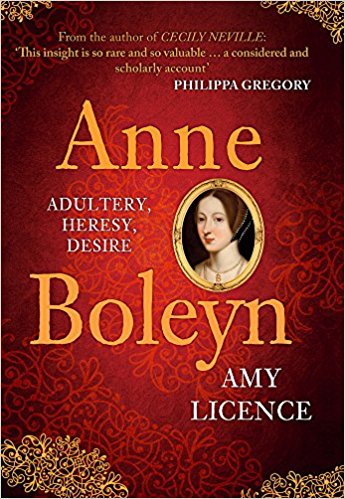
Anne Boleyn’s unconventional beauty inspired poets ‒ and she so entranced Henry VIII with her wit, allure and style that he was prepared to set aside his wife of over twenty years and risk his immortal soul. Her sister had already been the king’s mistress, but the other Boleyn girl followed a different path. For years the lovers waited; did they really remain chaste? Did Anne love Henry, or was she a calculating femme fatale?
Eventually replacing the long-suffering Catherine of Aragon, Anne enjoyed a magnificent coronation and gave birth to the future Queen Elizabeth, but her triumph was short-lived. Why did she go from beloved consort to adulteress and traitor within a matter of weeks? What role did Thomas Cromwell and Jane Seymour of Wolf Hall play in Anne’s demise? Was her fall one of the biggest sex scandals of her era, or the result of a political coup?
With her usual eye for the telling detail, Amy Licence explores the nuances of this explosive and ultimately deadly relationship to answer an often neglected question: what choice did Anne really have? When she writes to Henry during their protracted courtship, is she addressing a suitor, or her divinely ordained king? This book follows Anne from cradle to grave and beyond. Anne is vividly brought to life amid the colour, drama and unforgiving politics of the Tudor court.
Are you thinking, oh God, another biography of Anne Boleyn? Is there anything else to know? I can tell you that, yes, there is more to know and you should be thrilled to get this one. Amy Licence has practically handed a perfect account of Anne’s life to readers on a silver plate. Come bask in its glory.
Regardless whether you think Anne stole the throne, was a home-wrecking schemer, or she was the king’s love, this book covers all angles, all details and all possibilities. Licence starts with Anne’s family and background, to see how a woman could be so loathed for her background compared to more noble beginnings, despite the fact Anne had a wonderful education abroad, enough for any noble man. The time period of Anne’s life was one where, as a young girl, the royal family of England was relatively stable; Henry married to Katherine, the odd mistress thrown in for good times (his at least). But when Katherine hit menopause and religious opinion was suddenly flexible, Anne’s life could never be the same.
The realities of the time are not romanticised by the author – being a woman was not all gowns and chilling with your lady friends. These people, with their lives dictated by custom, ceremony and family loyalties, were still real people. They loved, they loathed, they hurt like anyone else. The Boleyn family, while not as noble as others (only Anne’s mother was noble born), had their own plans in this world.
Anne served the archduchess of Austria, and Henry’s sister Mary when she was Queen of France. She also then served mighty Katherine, Queen of England. Anne was no fool, no commoner, yet not quite ever noble enough. Her family wanted better, and could you blame them? But the portrayal as the Boleyns as scheming, as pushing daughters forward as whores under the king’s nose has done Anne no favours, and this book can make Anne lovers feel safe she is not portrayed as some witch.
Women routinely became mistresses, as the social order gave this is an avenue, yet was frowned upon (um, who was sleeping with these girls, gentlemen?), and a route Anne’s sister Mary took with Henry, and we shall never know for sure if Mary really wanted the job. But Anne knew, regardless, that she would not do the same thing. She loved Henry Percy, and wanted to have a real marriage, real love, only to have it dashed away thanks to that same social order.
The book delves into Anne’s rise to power as Henry’s paramour, and discusses whether she played him as part of a strategy or whether she was forced into a ridiculous game with no option but to play along. No woman can say so no to a King; Anne had to be his love, his mistress-without-benefits (or did they share a bed? The book discusses), and Henry’s selfish nature sent him down a path Anne couldn’t have imagined. She wanted to be a man’s wife, not whore. Henry, in turn, got Thomas Cromwell to destroy the social order and religious boundaries. Even the most scheming woman couldn’t have predicted that.
Licence uses excellent sources for her biography, and as a person hungry for minor details on certain periods of Anne’s life, I fell upon these pages with great excitement. Anne was smart, she had morals, she had a temper and a strong will, so much so that king chased her long enough to create divorce from the Catholic Church and make her a queen. No one does that for any mistress.
Anne married Henry, and received a coronation with the crown only meant for ordained kings, and gave Henry the Princess Elizabeth. Anne should have had full control of her life by then, only to find she was more helpless than ever. Having given up her virginity but given Henry no son, she fell from favour, and when Henry asked Cromwell to remove Anne to make way for another virgin with a womb, poor Anne was destroyed in a way everyone knows, never learning what a glorious queen her daughter would become. What people didn’t know was the truth over the whole debacle that brought Anne to the executioner’s sword.
As a woman, a spurned one at that, Anne’s history became sullied with lies and cruelty – that she was a femme-fatale who turned into a whore and witch, that she gave birth to a monster child, that she had disfigurements. History was not ready to tell the truth about a smart, powerful woman. Thank God we live in a time where historians like Amy Licence are able to guide readers through Anne’s real history without forcing conclusions on readers.




 CAROLINE ANGUS