OTD with Thomas Cromwell – 27 October 1537: Queen Jane dead three days; time for a new bride

Portrait of Mary of Guise. c. 1537, later Queen of Scotland. by Corneille de Lyon. National Galleries Scotland, PG 1558

Cromwell informed Gardiner and Howard that Queen Jane had died, and that already they need to seek Princess Margaret of France (aged only 14), and Mary de Guise as possible new brides. Cromwell then rants to Gardiner about how giving Esher Palace to the king is not a suitable gift and then argues that Gardiner annoyed him by telling lies behind his back. Cromwell was still at Westminster, and this letter is a draft in Wriothesley’s hand.

LORD CROMWELL TO LORD EDMUND HOWARD AND BISHOP STEPHEN GARDINER, 27 October 1537 (SP viii, 368)

My very good lords, after most hearty commendations, howsoever, our affections would bear things that be adverse and contrary to our desires. Yet because (illegible) know that your wisdoms (illegible) preface reason and (illegible) that which every man to whom God has (illegible) will thankfully embrace that is his will and pleasure. I shall in few words comprehend that God has sent to us, that is with our joy, a notable displeasure and sorrow, if it may be called sorrow or displeasure, that he will permit and suffer. Our prince, our lord, be thanked is in good health and sucks like a child of his puissance, which you, my lord William can declare. Our masters, through the fault of them, that were about her, which suffered her to take great cold and to eat things that her fantasies in sickness called for, is departed to God. The king’s Majesty’s pleasure is that you shall advertise the French king of this, her Grace’s departure. Whom we be all bound to remember and pray for, having left to so goodly a pledge, as is our young master.

And forasmuch as though his Majesty is not anything disposed to marry again, albeit his highness, God be thanked, takes this chance as a man, that by reason with forte overcomes his affection, may take such an extreme adventure. Yet, as sundry of his Grace’s council here have thought it mete for us to be most humble suiters to his Majesty to consider the state of his realm, and to enter eftsoones (again) into another matrimony in place for his highness’ satisfaction convenient. So his tender zeal to us, his subjects, has already so much overcome his Grace’s disposition and framed his mind both to be indifferent to the thing, and to the election of any person from any part, that with deliberation shall be thought mete for him, that as we live in hope that his Grace will again couple himself to our comforts, so considering what parsonages in Christendom be mete for him.

Among the rest there be two in France that may be thought on, the one is the French king’s daughter, which as it is said is not the meetest. The other is Madame de Longueville (Mary de Guise), whom they say the king of Scots does desire, of whose conditions and qualities in every point his Majesty desires you both, with all your dexterity and good means, to enquire and likewise in what point and terms the said king of Scots stands towards either of them, which his highness is so desirous to know.

His Grace’s desire therein, to be nevertheless in any ways kept secret to yourselves, that his pleasure is that you, my lord William, shall not return until you may learn both how the king of Scots stands in his suit, and what the conditions and qualities of both persons be, which known as you may, by any possible means, attain to the knowledge of it, so as at the return of you, my lord William, you may well declare it and his Grace’s will that you, my lord William, shall return according to your instructions. In the searching out of which matter, his Majesty desires you both to exhibit that circumspection and diligence that may answer to his Grace’s expectation conceived of you.

Now, my lord of Winchester, yesternight arrived here your letters sent to the king’s Majesty by your servant Massey, and with the same your letters also to me, both which letters the king’s Majesty has thoroughly perused. And first, for your vigilance declared in the same, touching the investigation of the occurrences there, and specially in what terms the Emperor and the French king stand towards the peace his Grace gives to you hearty thanks, and the semblable for your gift to him of Esher, albeit the same be given with nothing but sorrow. For the assurance whereof, his highness will shortly send to you such deed or deeds to be signed with your hand, as by his learned Council shall be devised for that purpose.

Nevertheless, my lord, in your letters touching that matter of Esher, you do both me and others wrong to be angry with us without cause, and both to impute lack of memory where there was in that thing no such fault, and to think that things have been otherwise set forth towards you than indeed they have been. I am sorry, my lord to see you so contentious and to have so little care of your friends. Of what sort I have been towards you, I do refer myself to the king’s Majesty and to sundry others of his council that have known the proceedings here. And yet to be plain with you, when I wrote that the king’s Majesty took pleasure in your house and would make a chase about it, which should make it no house for your store, me thought it required at least such an answer as might have declared that you had been glad of it, in which case you should not have needed to have called to remembrance the lesson of Poseidon’s pain of doing nothing, for that is a place where there is grief.

As touching the promises you speak of, the one you say was not absolute because in the same deeds concurred not with the words, and the other is not performed for that your shamefastness let you to ask a horse before promised. Whereupon, you conclude that for a horse or anything else, wherein I may do you pleasure, you will thank me for the deed when it is done, and not for the promise or goodwill in the mean, which you do of likelihood esteem as you did my advice that is so gently returned to me, to be kept for my own store. First, I promised you no more than was in me, that was all that I could do in your suit for you, with a declaration of the hope I had to have obtained, and yet I think this alone ought neither to be so much despised that you should so earnestly refuse it hereafter, nor to be wrested to that which is not in me, that is that I should be able to do what I would. Whatsoever your opinion be of me, I marvel that you, knowing the wisdom of our Master, can think any man able to obtain things so at his hand.

Second, touching the horse, if I promised you one, I gave you one, and if I gave you one as I did according to my promise, I marvel your good memory will forget it. But to make an end of this matter, I will not be so contentious as to enter any new matters with you howsoever you use me or repute me. I shall be sorry that you can make no more of friendship, and in all things do towards you without respect as becomes me to do towards that person whom my Master puts in trust.

As concerning the abbot of Arbroath, being his master, the king’s highness’ nephew and in league with him, his Grace you should use him indifferently, like a friend as reason requires. And as for the instructions which you desire to have sent you for answer to be made to the French king. The king’s highness thinks that until his Majesty may know the covenants, he cannot grow to any resolution touching the same. And therefore, his pleasure is that, in such order as your wisdom shall think expedient, you shall practice to know the certain articles agreed on or to be agreed on if there be any such, and to certify his Majesty of the same, in the meantime sticking upon the point of his promise and bond to win his Majesty with him as a principal contrahent.

Finally I shall with speed take order for money to be delivered to your servant Peter Lark as in my former letters I wrote I would, and as for the rest of your suits the king’s Majesty will make you answer by his next letters

OTD with Thomas Cromwell – 12 October 1537: Cromwell tells Thomas Wyatt of baby Prince Edward

The Death of Jane Seymour by Eugène Devéria, 1847, Valence Museum

The same morning as the birth of Prince Edward at Hampton Court Palace, Cromwell’s hastily wrote to Wyatt to tell him of the good news, addressing the letter in French. Cromwell would have been thrilled with the news; a son and heir was finally secure for the king and his realm, and it would make his own son Gregory an uncle to the future king of England.

LORD CROMWELL TO SIR THOMAS WYATT, 12 October 1537 (Harl. MSS. 282, f. 211)

A mon tresbon et asseure amy Monsieur Wyat onseille et ambassade du Roye Dangleterre esidet en La Court Lemper.

To my very good and assured friend, Monsieur Wyatt, advisor and ambassador of the King of England, resident in the court of the Emperor. After my right hearty commendations, this shall be to advertise you that since the departure of Rougecroix, who was dispatched to you in post on Wednesday last here, be no news occurring but very good news which for surety I have received this morning, that it has pleased almighty God of his goodness to send to the Queen’s Grace deliverance of a goodly prince to the great comfort, rejoice and consolation of the King’s Majesty and of all us his most humble loving and obedient subjects. Whereof, we have very great cause to thank our most benign and gracious creator, who after so long expectation has exalted our prayers and desires. I have written this letter having the opportunity of this present courier to the intent that you shall advertise the Emperor thereof. I think that with convenient diligence the King’s highness will write to him and to other prince of the same to make them participant of his great, joy and comfort. Whereof, I shall move him tomorrow at my next being with his Grace. Thus, fare you heartily well From Saint James beside Westminster this 12th of October the 28th of his most prosperous reign.

Your loving assured friend

THOMAS CRUMWELL

OTD with Thomas Cromwell,14 May 1536: Cromwell tells Gardiner about Anne Boleyn’s crimes

Had Bishop Stephen Gardiner, ambassador to King Francis in Paris, not kept this letter, there would be no mention from Thomas Cromwell about the case against Anne Boleyn and her co-conspirators in 1536. Cromwell writes to tell Gardiner and his secretary Sir John Wallop about Anne’s crimes and a threat against the King’s life, leaving out all details. Cromwell also promises money to Gardiner, which came from the money collected from the men owed to the king.. Europe needed to know that Anne Boleyn had sinned against the king so much that serious action was taken for the king’s protection. Neither Cromwell nor anyone else believed in the case,  and no one else in Europe ever seemed to take the case seriously either, but happily accepted Jane Seymour as queen a few weeks later. 

Nothing about the case against Anne survives, none of Cromwell’s handwriting appears anywhere on the topic, except for his signature at the bottom of this letter. Cromwell did not take part in any of the trials or attend anything to do with the king’s new marriage. See Planning the Murder of Anne Boleyn for all the details.

Bishop Stephen Gardiner c.1523, Liechtenstein Museum GE92

THOMAS CROMWELL TO STEPHEN GARDINER AND JOHN WALLOP, 14 May 1536

(Add. MSS. 25,114, f. 160)

To myn Assured Loving friends my lord of Winchestre and S John Wallop knight the King Ambassadors in Fraunce in hast post

After my right hearty commendations, albeit you shall at this time receive no answer to your letters sent by Salisbury, being the same deferred till the arrival of the bailiff of Troyes, yet the king’s highness thought convenient that I should advertise you of a chance, as most detestably and abominably devised, contrived, imagined done and continued, so most happily and graciously by the ordinance of God revelled, manifested, and notoriously known to all men.

Whereof, though you have heard, I doubt not, the rumour, yet I shall express to you some pain of the coming out, and of the king preceding in the same. The queen’s abomination both in incontinent living, and other offences towards the king’s highness was so rank and common, that her ladies of her privy chamber and her chambers could not contain it within their breasts. But detesting the same had so often continuations and conference of it, that at the last it came so plainly to the cares of some of his grace’s council that, with their duty to his Majesty, they could not conceal it from him, but with great fear, as the case enforced declared what they heard to his highness.

Whereupon, in most secret sort, certain persons of the privy chamber and others of her side were examined, in which examinations the matter appeared so evident, that beside that crime, with the accidents, there broke out a certain conspiracy of the king’s death, which extended so far that all we that had the examination of it quaked at the danger his Grace was in, and on our knees gave Him laude and praise that He had preserved him so long from it, and now manifested the most wretched and detestable determination of the same.

Thus, were certain men committed to the Tower for this cause, that is Mark (Smeaton) and (Henry) Norris, and her brother (George). Then was she apprehended, and conveyed to the same place, after her was sent thither for the crimes specified, Sir Francis Weston and William Brereton. And Norris, Weston, Brereton, and Mark be already condemned to death, upon arraignment in Westminster Hall on Friday last. She and her brother shall be arraigned tomorrow and will undoubtedly go the same way.

I write no particularities, the things be so abominable, that I think the like was never heard, and therefore I doubt not but this shall be sufficient for your instruction to declare the truth if you have occasion so to do. Your lordship shall get in 200 pounds (around £120,000 today) of the 300 pounds that were out amongst these men, notwithstanding great suit has been made for the whole, which though the king’s highness might give in this case, yet his Majesty does not forget your service. And the third 100 pounds is bestowed of the vicar of hell (Francis Bryan), upon whom though it be some charge to you, his highness trusts you will think it well bestowed. And thus, fare you most heartily well from the (Chancery of the) Rolls in haste, this 14th of May

Your loving assured friend

THOMAS CRUMWELL

And you, Master Wallop, shall not at this time be forgotten, but the certainty of that you shall have I cannot tell, but in the next letters you shall know it, and I assure you the king’s highness takes both your services in as thankful part as yourself could wish or devise.

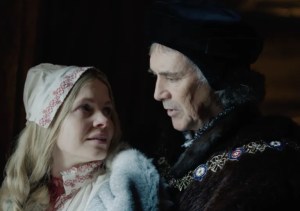
Wolf Hall 2: The Mirror and the Light – Did Thomas Cromwell have feelings for Jane Seymour?

Screenshot from The Mirror and Light episode 4

Welcome to part 3 of Wolf Hall 2: The Mirror and the Light recap of the facts around Thomas Cromwell and the events in season 2, where Jane has given birth to Prince Edward.

Did Thomas Cromwell have feelings for Jane Seymour? This is a question that is impossible to answer. There is absolutely no evidence of any link between Thomas Cromwell and Jane Seymour, and (in my opinion) is a delightful fictional addition to Cromwell’s life story to add drama to a book/show. Those of us who work in Cromwell fiction need to add romantic details, because simply, Cromwell had none in his own life. I’m working on another Cromwell fiction myself at the moment, and there is again zero source evidence to work with. Nothing in Italy, nothing in the Low Countries, and then a marriage to Elizabeth Wyckes which was simply a convenience when she became a widow and they met through Morgan Williams (Richard Cromwell’s father). By all accounts, Cromwell and his wife were happy enough, but after she died, (apart from the quick grief rebound he had with ‘Elizabeth Gregory’), Cromwell never looked to any woman again. He was not a man into women at all.

At no stage was Cromwell ever rumoured to be in negotiations for a wife at any stage, and there were never any mistresses whispered about either. The lies about him being interested in Princess Mary and Margaret Douglas (I will do a sperate post on those rumours) bore no evidence, and if Cromwell ever muttered anything about Jane Seymour or anyone else, we simply don’t know. It does make for convenient fiction, though.

As for Jane Seymour, she was very limited in her options as well. Only one mention of a match comes up in Cromwell’s records, as a possible match for her, when Cromwell wrote (italics mine), ‘To speak with the King for Mr. Seymour’s daughter (Jane?) for (Sir Richard?) Elderton’ on 16 November 1532. Sir Richard Elrington, (often misspelled Elderton, and sometimes listed as Ralph) was the brother Edward Elrington, who had married one of the distant Seymour cousins, Grace (surname unknown), the illegitimate wealthy heiress of London Lord Mayor Thomas Seymour. Sir Richard/Ralph was twenty years older than Jane Seymour, which tracks with the astonishingly bad marriage made for Jane’s sister Elizabeth. Luckily for Jane, the marriage was never mentioned again.

Rumours of a marriage negotiations between Jane and Sir William Dormer came up in 1534, which the Dormer family quickly quashed. Sir William Dormer worked for Cromwell and went on work in royal service and parliament, and was married to Lady Mary Sidney in 1534, putting an end to overtures made by the Seymour family. Sir William’s sister Lady Jane Dormer recounted the negotiations in her autobiography that the Dormers did not wish to be linked to a scandalous family like the Seymours (meaning the scandal of Edward Seymour’s first wife cuckolding her husband twice with sons of unknown parentage).

Jane came to King Henry’s attention in late 1535 after the death of her father, who Henry had visited only months earlier on progress to Wolf Hall (his death is mistakenly listed as 1536). Edward Seymour was in the royal privy chambers by this stage, and the single Seymour sister was suddenly thrust into the royal marriage spotlight when Anne Boleyn lost her third child in January 1536.

Much like Thomas Cromwell, Jane Seymour’s romantic interests, or lack thereof, were never recorded. Marriages were rarely made in the interests of attraction to one another, making the king rare in his rash choices of some of his wives. Any kind of romantic overtures, those from men towards certain women were mentioned in letters from time to time, but women’s feelings generally go unnoticed. The people of the Tudor court were human, they would have had feelings of romance, lust, romance, affection like everyone else. But many didn’t have the financial security of being able to act on their feelings, and women’s feelings, to the men of court, didn’t seem to exist or matter at all.

As for whether Jane Seymour discussed having to handle sex with King Henry with Cromwell is entirely conjecture (but Cromwell did have an uncomfortable conversation with Anne of Cleves, so it’s not impossible). Jane’s sex life was unfortunately a public topic, as an heir meant everything to the court. Jane didn’t get pregnant until January 1537, a long time to wait with a king who was desperate for a son but no good in bed. Poor Jane indeed.

Cromwell was writing to discuss new brides for King Henry on 27 October, three days after her death. For all Henry’s kind words for Jane, and admiration for Prince Edward, there were mere days between Jane’s death and handling the security of the realm. By Christmas 1537, Cromwell had a suitable lists of brides from French princess to Dutch and German duchesses, and ready to discuss negotiations. King Henry did not need to be cajoled into these negotiations, he initiated them at every stage.

All sources from The Private life of Thomas Cromwell, The Letters and Remembrances of Thomas Cromwell, and Planning the Murder of Anne Boleyn

Wolf Hall 2: The Mirror and the Light – Did ‘Bess Oughtred’ really hope to marry Thomas Cromwell?

Photo: BBC/Playground Entertainment/Nick Briggs

Welcome to a new series about the fact and fiction of the newest series of Wolf Hall, The Mirror and the Light. Here is the real story of the marriage of Elizabeth Seymour and Gregory Cromwell.

By now you will have seen (as in the picture above) of the marriage of of Queen Jane’s sister Elizabeth Seymour to Gregory Cromwell. In the show, the character’s name is Bess Oughtred, and given the number of Elizabeths in the period, giving her a common nickname is helpful if you don’t know one Elizabeth from another.

Elizabeth Seymour had a hard early life. The eighth of the ten Seymour  children, Elizabeth was married at just 12 years of age to Sir Anthony Ughtred, then aged 52. Why her father John Seymour thought this a good idea remains a mystery. By 1530, John and Margery Seymour had lost two of their children to illness, but their three surviving sons, Edward, Thomas and Henry, had been sent to court. The younger two were put in backroom middling roles, while Edward Seymour was already circling the higher privy chambers as an attendant. But Edward’s wife Catherine had given him two sons whose parentage was dubious to say the least, so marriage prospects may have been a concern for the unmarried Seymour girls. Jane Seymour was already at court too, a lady for Queen Katharine of Aragon. Elizabeth and Dorothy Seymour were only children in 1530. Dorothy Seymour was married off at 13 in 1533, fortunately to someone only a few years older than herself, and began a state of regular pregnancy. Jane Seymour remained unmarried at court. Middle sister Elizabeth was the most unlucky of all.

The marriage of Elizabeth Seymour and Sir Anthony Ughtred surely raised eyebrows, given the bride was 40 years her husband’s junior. Even King Henry wasn’t that lecherous. Anthony Ughtred had a similar military background to Elizabeth’s father, so they were likely friends or at least court acquaintances of similar rank. After losing his first wife without children, Anthony Ughtred acquired Elizabeth Seymour, and she was styled as Lady Ughtred, and joined Anne Boleyn’s court around the same time Jane Seymour was transferred there in 1533. In late 1533, aged 14, Elizabeth gave birth to her son, Henry Ughtred (given the two-year gap between marriage and pregnancy, Ughtred may have not touched his child bride for a couple of years. We can only hope). Anthony Ughtred was the Captain and Governor of Jersey, and Elizabeth and baby Henry lived with him at Mont Orgueil Castle in Jersey, instead of returning to the royal court.

By early 1534, Elizabeth was already pregnant again, but illness came to Jersey, and Sir Anthony Ughtred died in October 1534, aged approximately 56. Elizabeth left her baby son Henry in Jersey and returned to mainland England to serve at court until she needed to retire to give birth to Margery in early 1535, at one of her late husband’s estates in Hexby, Yorkshire, 150 miles north of London. Her son Henry was moved north, and Elizabeth went back to court, leaving the children as head of the household.

Given that by age 16, Elizabeth was a widow with two children, and her sister Jane had been at the royal court without such misery, whether they were close can’t really be measured. But both sisters had to endure the fall of Anne Boleyn, and the rise of their own family, after their father died in late 1535 (his death is mislabelled 1536), and Jane Seymour caught the king’s eye. Elizabeth became one of her sister’s ladies at court, but life was not suddenly simple. In 1537, Elizabeth was 19, had two children to feed, and no money of her own. Hexby Manor, her late husband’s Yorkshire estate, was no glorious money-maker. No official grant of the lands had passed the estate from father to son after Anthony Ughtred’s death. Elizabeth needed to make a bold move. She was young, rumoured beautiful, and the pregnant queen’s sister, but that wasn’t enough to raise children.

Portrait probably of Elizabeth Seymour, c1542 by Hans Holbein

Lady Elizabeth Ughtred sent a letter from York on 18 March 1537 to Lord Cromwell. She explained that her husband had left her with next to nothing, leaving her as a ‘poor woman alone’ and begged to be granted an abbey once it was dissolved, somewhere to live with her children. It’s wild to think that despite being the queen’s sister, Elizabeth had nothing. Given that her late husband had been in service to King Henry and Cromwell, she wrote:

‘I am the bolder to sue herein, and will sue to no other. When I was last at Court you promised me your favour. In Master Ughtred’s days I was in a poor house of my own, but since then I have been driven to be a sojourner, for my living is not sufficient to entertain my friends.’

Elizabeth was resorting to moving between friends’ homes with her children to keep them alive. It is not surprising Cromwell promised to help her at court, he always helped widows and orphans, and paying favour to the queen’s sister would be an obvious courtesy at court. Cromwell likely went to speak with her brother Edward Seymour, Lord Beauchamp. The pair regularly gambled together and Cromwell had lost 45l (£19,000 today) to him just weeks before the letter arrived. Elizabeth soon returned to the London area, likely without her children. Baby Margery goes completely unmentioned in records, except for a note about her marriage up in Yorkshire. Henry Ughtred doesn’t feature anywhere until the 1560s either, so he was likely also north in Yorkshire.

A deal was struck between Thomas Cromwell and Edward Seymour, that Elizabeth would marry Gregory Cromwell, who was approximately 17 at the time. By 1 June, preparations for the wedding were underway as Cromwell ordered a wedding cape and dagger for his son, worth £4,000 today. There was no mistaking who the groom would be at the wedding. Cromwell held a glorious party at Mortlake Manor, the grand castle-like on the Thames usually reserved for the Archbishop of Canterbury (confiscated from Cranmer in 1536 for supporting Anne Boleyn, and given to Cromwell as a gift), Mortlake was to be Gregory and Elizabeth’s home for the time being, lavish, fully staffed, great location, and safe from passing illnesses. Cromwell order a porpoise for the dinner, minstrels to entertain, new uniforms for the staff, and various costs for both Lady Elizabeth and her brother, Sir Edward Seymour, who brought along artichokes, and even Princess Mary sent a gift of quinces. The wine alone at Mortlake for this one party would cost £170,000 today. It may have even been the wedding itself, given Mortlake had a chapel, though the news of the marriage wasn’t made public until 3 August, so that is the generally accepted date of the occasion.

If this June 1537 event was only an engagement party to seal the betrothal, Elizabeth must have felt very pleased with her position, as by the 3 August date, she was already pregnant. Henry Cromwell was born in March 1538, likely at Cromwell’s home Great Place in Stepney, and Princess Mary was his godmother. Cromwell held enormous parties at Hampton Court though February and March 1538 with the king, spent the equivalent of £20,000 today to make sure Elizabeth gave birth in comfort, for her son was the first cousin of baby Prince Edward. Cromwell spent twice as much on outfits, choreographers, horses and and performers at Hampton Court to celebrate in style with the king.

Cromwell soon took on Lewes Priory in Sussex to have it rebuilt as a manor home for his son and daughter-in-law, who got pregnant again almost immediately after giving birth. But by mid-June 1538, Gregory Cromwell was sent to be punished by Bishop Richard Sampson of nearby Chichester for a sexual crime. The Bishop wrote to Richard Cromwell about Gregory’s punishment and told him:

‘the young man has been with me this morning and scornfully refused this penance. Wherefore, I advertise you of it, praying you to weigh it as a matter that touches much the honesty of your friend. For surely if there be any business for it, I will advertise the King’s Majesty of the whole. And I doubt not but when my Lord Privy Seal shall hear the truth, he will assist me in it’.

Sampson was amid having his Chichester cathedral dissolved and its relics stripped, including the shrine of St Richard. Given Sampson needed to give out punishment to Gregory Cromwell, and Richard knew of the situation by the time this letter was written, suggests only two crimes; heresy or sexual assault. Eighteen-year-old Gregory had been
left to enjoy the high life since childhood, given everything without having to earn it, so it is not reasonable to think he may have made an off-hand comment that could have been insulting or even sound heretical to the Catholic bishop. But Gregory was no scholar, no politician like his father, and never showed any interest in religion. Also, that a heretical comment could receive a small punishment but provoke his father in such a wild manner is at odds with reality, leaving only sexual crimes. The church tended to turn a blind eye to (men’s) adultery, equally seduction or coercion without consent. Whatever Gregory did, Sampson said it would affect Gregory’s ‘honesty’, which in turn would harm the ‘reputation’ of Elizabeth, sister to late Queen Jane. Whatever sexual assault Gregory committed (and it cannot have been against Elizabeth), it was enough to potentially make a scandal of the Cromwell family. Given that sexual crimes are rarely punished even today, particularly by the Catholic church, Gregory must have done something especially heinous.

Cromwell had nurtured his only son, given him the world, gained him a noble bride, and had just finished spending countless thousands on Lewes Priory. Suddenly, the young Cromwell household needed to be broken up, Gregory whisked out of Sussex entirely. Sir John Gage nearby offered to lease the Lewes lands so Cromwell could get out at once, and now Cromwell was the largest landowner in Kent, he had somewhere to hide his useless son. Gregory was shipped up to Mortlake Manor, probably at Edward’s Seymour’s nearby home, and a letter from Elizabeth Cromwell arrived, stating she would stay half a mile from Mortlake Manor. Elizabeth wrote, ‘this letter from you is more pleasure to me than any earthly good, for my trust is now only in you …  your humble daughter-in-law’. Cromwell needed to pay for Gregory at Mortlake for Christmas and pay servants to attend Elizabeth, who was six months pregnant while she cared for ten-month-old Henry.

The young couple had reconciled by May 1539 when Edward Cromwell was born at their new home at Leeds Castle, and Thomas Cromwell was born around May 1540, Katherine Cromwell a year later, and then Frances Cromwell in 1542, named after Richard Cromwell’s wife who had recently passed away.

So while The Mirror and Light shows Bess Oughtred looking to marry a man close to the king, it was probably lucky she didn’t, though the early years as Lady Cromwell were not happy ones either. She continued to sign her name Elizabeth Ughtred until 1540 when Gregory was made a baron, but she was safe from her brother-in-law King Henry after writing him a groveling letter, disavowing her father-in-law when he was executed.  When Gregory Cromwell died in 1551, Elizabeth married Sir William Paulet, Earl of Wiltshire, and after her death in 1568, Her eldest son, Henry Ughtred, married his stepsister Elizabeth Paulet.

The eldest son of the couple , Henry Cromwell, carried on the family name as part of a string of quiet Cromwell MPs who eventually gained power in Ireland. Edward Cromwell died of illness around the same time his father Gregory died. The third son of Gregory and Elizabeth Cromwell, Thomas Cromwell, went on to be an archivist in parliament and created the first ever English-Italian dictionary, continuing his grandfather’s love of the country and language, and remained close to Ralph Sadler, while Katherine and Frances Cromwell married politicians and lived quiet lives. None of these children are ancestors of genocidal maniac Oliver Cromwell; he was the great-great-grandson of their cousin, Richard Cromwell.

All sources come from The Private Life of Thomas CromwellMy publisher might come for you if you plagiarise.