BOOK REVIEW: ‘The Son of Prophecy’ by Nathen Amin

As England’s most celebrated royal dynasty, it’s often overlooked that the Tudors have their origins in rural Wales, far from the urban centres of English power where they dared to become great. When Henry Tudor won the English crown by defeating Richard III in battle, he was a stranger to the people he now ruled, an ‘unknown Welshman’ in the words of his defeated foe. In his native Wales, however, Henry had long been championed as the Son of Prophecy, a foretold national messiah who would free his oppressed people from their lengthy misery. How had this remarkable situation come about? In this lucid and riveting account, Nathen Amin deftly explores how one redoubtable Welsh family thrived during lean years of political chaos, national instability, and intergenerational bloodshed to leave behind a complex legacy that changed the face of England and Wales forever. It is a passionately told tale of treachery, cunning, love, and heartbreak. From Penmynydd to Bosworth, this is the enthralling, action-packed story of the Tudors, but not as you know it.

¬¬

The Tudors have long been seen as the powerful family of the English court, but their origins cast a much wider story. Nathen Amin’s Son of Prophecy: Henry Tudor’s Road to Bosworth brings to life the story of how this remarkable dynasty began in the rural landscapes of Wales, far removed from the heart of English politics. Amin’s book is a masterful exploration of the journey that transformed Henry Tudor from a quiet figure into a monarch capable of reshaping English history.

Amin begins by illuminating the humble origins of the Tudor family, rooted in the remote Welsh countryside. The book paints a vivid picture of how this family, despite being on the fringes of English power, navigated the treacherous waters of politics, turmoil and decades of war. The Tudors’ survival and eventual rise were not mere accidents of history but the result of strategic alliances, sheer determination, and an unyielding belief in their destiny. Amin deftly explores how these factors created the conditions that allowed Henry Tudor to emerge as a contender for the English throne.

One of the most compelling aspects of Son of Prophecy is Amin’s exploration of the Welsh cultural and prophetic traditions that framed Henry’s rise. In Wales, Henry was not just a claimant to the English throne, but someone destined to rescue his people. This deeply rooted belief in Henry as a national saviour added a layer of significance to his quest for the crown that extended beyond mere political ambition. Amin effectively captures the sense of hope and desperation that accompanied Henry’s rise, making it clear that his victory at Bosworth was not just a military triumph but a fulfilment of a long-held national dream.

Amin’s account of the Battle of Bosworth, where Henry defeated Richard III, is particularly riveting. He skillfully details the strategy, key players, and the high stakes involved, all while keeping the reader engaged with the human elements of the story. The battle is portrayed not just as a clash of armies but as the culmination of a complex and perilous journey that had its roots in the rugged hills of Wales.

What sets Son of Prophecy apart from other Tudor biographies is its focus on the personal perspective and the emphasis on the Tudors’ cultural identity before they became synonymous with English royalty. Amin’s passion for the subject shines through in his writing, making this not just a history book but a story rich with emotion and drama. His portrayal of the Tudors as a family that thrived against all odds, in a time of great uncertainty, adds depth to our understanding of their legacy.

 

HISTORICAL BOOK REVIEW: ‘Henry VII and the Tudor Pretenders’ by Nathen Amin

On 22 August 1485, Henry Tudor emerged from the Battle of Bosworth victorious, his disparate army vanquishing the forces of Richard III. Yet, all was not well early in the Tudor reign. Despite later attempts to portray Henry VII as single-handedly uniting a war-torn England after three decades of conflict, the kingdom was anything but settled. Nor could it be after a tumultuous two-year period that had witnessed the untimely death of one king, the mysterious disappearance of another, and the brutal slaughter of a third on the battlefield. For the first time in one compelling and comprehensive account, Nathen Amin looks at the myriad of shadowy conspiracies and murky plots which sought to depose the Tudor usurper early in his reign, with particular emphasis on the three pretenders whose causes were fervently advanced by Yorkist dissidents—Lambert Simnel, Perkin Warbeck, and Edward, Earl of Warwick.

Purchase on Amazon here

~~

Henry VII gets grossly overlooked in favour of his son Henry VIII, which is surprising given how dramatic his role and life truly was. Henry’s life and rise to power are largely known through the well-worn stories of the War of the Roses and the tragic reign of poor Richard III, culminating in the Battle of Bosworth. Henry Tudor became king and the wars ended, or so many tales go.

There are a few good biographies of Henry VII out there, but Amin gives a new look and refreshing enthusiasm for a king who desperately deserves the attention. The 1480s and 1490s did not give Henry a moment’s peace, punctuated by the belief he was not a true king, and several other men deserved the crown. Henry should have been able to concentrate on putting England back together – he won the crown legitimately, married the daughter of Edward IV, followed quickly birth of a son born of a dual royal line. England should have been grateful for the level of peace Henry could provide.

Instead, the Battle of Stoke and the rise of Lambert Simnel, posing as either the ‘dead’ Edward V or Edward, Earl of Warwick came in 1487, a murky battle and claim to the throne, which Amin gives in full detail. No sooner than Simnel was subdued came the murmurings of Perkin Warbeck, claiming to be Richard, the ‘dead’ Duke of York. Children and young men posing as Henry’s beloved wife’s dead brothers would have placed significant strain on Henry and Elizabeth, who were doing their best to rule England. Throughout the constant rumours of planned coups, betrayals, even relatives and close confidants changing sides, Henry had to hold his country together, and the author shows him not to be the old miser commonly portrayed, but a man of kindness, loyalty, generosity and wisdom, all while seeing off years of undermining and instability.

The final main pretender is Edward, Earl of Warwick, who had been kept alive, like all pretenders, the sad son of the Duke of Clarence, who through no fault of his own needed to be kept under guard. Henry tried for years to be merciful, but if his Tudor dynasty was ever going to thrive, Henry needed to end the claims to his throne. Even after Henry’s grand coup of bringing Katherine of Aragon to England, the wannabes did not stop, and Henry worked harder than ever to secure England for his second son. The cobwebs of the old tales of Henry being a penny-pincher, a tax-collecting tyrant and generally miserable old man can be blown away by this book, showing the true Henry VII. Without spilling details that will create spoilers, Amin has gone to great lengths to find Henry’s true nature among the endless barrage of difficulties he faced. How Henry’s wife-collecting son gets more attention, I’ve never really understood.

This book is truly wonderful, well-planned and constructed, a real labour of love and determination that is a gift to readers.

no free book or money changed hands in return for this review

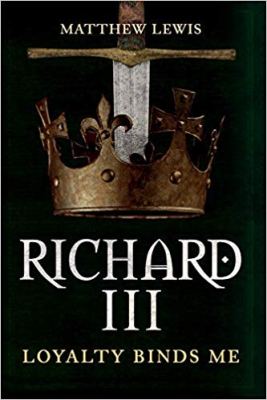
HISTORICAL BOOK REVIEW SERIES: ‘Richard III: Loyalty Binds Me” by Matthew Lewis

King Richard III remains one of the most controversial figures in British history. Matthew Lewis’s new biography aims to become a definitive account by exploring what is known of his childhood and the impacts it had on his personality and view of the world. He would be cast into insecurity and exile only to become a royal prince before his tenth birthday.

As Richard spends his teenage years under the watchful gaze of his older brother, Edward IV, he is eventually placed in the household of their cousin, the Earl of Warwick, remembered as the Kingmaker; but as the relationship between a king and his most influential magnate breaks down, Richard is compelled to make a choice when the House of York fractures. After another period in exile, Richard returns to become the most powerful nobleman in England. The work he involves himself in during the years that follow demonstrates a drive and commitment but also a dangerous naïveté. 

When crisis hits in 1483, it is to Richard that his older brother turns on his death-bed. The events of 1483 remain contentious and hotly debated, but by understanding the Richard who began that year, it will become clearer what drove some of his actions and decisions. Returning to primary sources and considering the evidence available, this new life undoes the myths and presents a real man living in tumultuous times.

cover and blurb via Amberley Publishing

~~

I have to be honest, I am very much Ricardian. I can’t tell you how many times I’ve watched Richard III get vilified by Shakespeare (well, by 21st century actors, anyway) and barely contain my rage.  I don’t think Richard is perfect, a completely impeachable hero (no one is), but I also don’t think him a child-killing villain. There are few like Richard, a man who had suffered a great deal in a short time before his fateful battle at Bosworth. And it takes an author as fine as Lewis to dig into the details of Richard’s life. Most books either love or hate Richard, whereas this writer doesn’t go down either road, and instead gives us an insight into the mind of a man who became king, lost his own family, and then was overthrown by a man with a flimsy claim. Richard was a king, now a legend, but he was also just a man, and here is a book where we finally get to meet Richard. I moved books around on my Richard shelves to make room for this biography before it even came out.

While many books write about 1483 onwards, so much happened in Richard’s life leading up to the crown. The first half of the book digs deep into Richard, those in his life, the battles he fought, his ideals in life and religion, all as he grew into the king people focus on now. Much happened to Richard in his short life – overcoming a spinal deformity would have shaped his thoughts. He grew up around powerful people, like the Nevilles, who would do anything for power. Richard was prepared to lay down his life for his brother Edward, and yet his brother George betrayed them both, harm which would cause a wound that could never truly heal. Edward was king on the back of Richard’s hard work, and Richard ran the north in England and kept an eye on Scotland for his sovereign, all before the age of thirty.

But when King Edward died in April 1483, all the moments in Richard’s life which shaped him would come in play. The next three months have been debated since the moment they happened, but this book gives a reader a more detailed insight into why Richard acted as he did, thought as he did. It seems Richard was neither a murderous villain desperate for power, or an innocent caught up in a disaster. The illegitimacy of the Princes in the Tower is well discussed too, whether Richard was fooled, or did he simply miss important details, or was he the master? I can’t tell you, because spoilers, but the murky situation and Richard’s handling is a reflection of many events long before the mess with the Princes. Another important detail in the events of 1483 is the death of Hastings, a particular favourite subject of mine. Again, in the interest of spoilers (as in the excellent research on Lewis’ part) I won’t share all that is written, but the whole situation felt fresh to me, a tough feat after 500 years and a whole lot of writing on the subject.

Richard’s life went from a powerful ruler in the north after years of fighting, to having brother George executed, to his brother Edward dead before his time, to being thrust onto the throne, to his nephews disappeared, to his precious wife and son dead from illness, to betrayal by men he trusted… how much can one man take in only a few years? By the time Richard faced Henry Tudor at Bosworth, Richard’s life was circling the drain, yet he remained confident of victory. This book talks of Richard in a positive way, without soundly like it is gushing with adoration; rather, it shows the whole life of an extraordinary man. England could have had a fine king, had Richard been given the chance.

This book is worthy of five stars. Matthew Lewis wrote The Survival of the Princes in the Tower not to long ago, one of the best books I’ve ever read. Loyalty Binds Me is an excellent addition to any library. Imagine saying you like Richard III but don’t have Lewis in your collection?

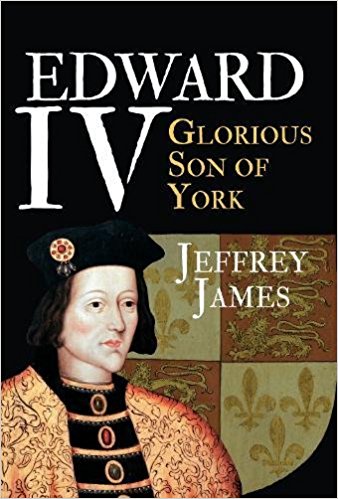
HISTORICAL BOOK REVIEW SERIES: ‘Edward IV: Glorious Son of York’ by Jeffrey James

Few English monarchs had to fight harder for the right to rule than King Edward IV – Shakespeare’s glorious son of York. Cast in the true Plantagenet mould, over six feet tall, he was a naturally charismatic leader. Edward had the knack of seizing the initiative and winning battles and is free from the unflattering characterisations that plagued his brother, Richard III, having been portrayed as a good-looking and formidable military tactician. Described sometimes as reckless and profligate, all sources remark on his personal bravery. In the eleven years between 1460 and 1471 he fought five major battles in the Wars of the Roses. Three of them – Towton, Barnet and Tewkesbury – rank among the most decisive of the medieval period. This book covers Edward’s family background, the Yorkist takeover and the drift to war. It charts the tensions created by the controversial Woodville marriage and Edward’s deposition by the Earl of Warwick and subsequent exile. The return of the king brought with it battles anew and Edward’s decisive campaigns against Warwick and Margaret of Anjou. Finally, Edward’s sudden death heralded the demise of the House of York and the triumph of the Tudors against Richard III. This is a history of Edward IV’s struggle to gain and retain the kingship of England during a period of sustained dynastic turmoil during the Wars of the Roses.

cover and blurb via amazon

~~

Edward IV had a great claim to be England’s king, sadly, he was not the only one. The author starts easily, giving us the background of Edward’s family claim to the throne. A monster of man in those days, at 6′ 4″, Edward took the throne in 1461, and reigned over nearly a decade which had some of the most bloody battles of the War of the Roses.

While Edward was in line to claim the throne, overthrowing a sitting monarch, betraying his greatest ally and marrying for love (lust?) instead of gain did Edward no favours. For a man with battlefield experience, and political knowledge, he made errors during these dangerous years, racking up local enemies like no one else.

Edward had no trouble winning battles; Towton, then Barnet and Tewkesbury are just some of the battles he needed to fight in order to hold the throne, and this book tells the tale more like a story rather than a military strategy. Included are illustrations of the locations pivotal in Edward’s life.

One of Edward’s largest mistakes was the marriage to Elizabeth Woodville. However, had Edward married as his allies wanted, things could have still fallen apart, but without the Woodville family, doubtless lives may have been saved.

The book flies though these troublesome years until Edward’s overthrow in 1470, only to win his crown back again in six months, shortly before the death of Henry VI in prison. While the second half of Edward’s reign was far quieter, having killed the vast majority of his enemies and relations, Edward still fought in France, killed one of his brothers and grew chubby and lazy. His death in 1483 was still a great loss; while the War of the Roses saw much blood under his rule, at least some peace had begun to settle in. It would be only two years before all Edward fought for would be erased, his two sons killed and his precious brother Richard deposed by the last remaining Lancastrian enemy, Henry Tudor. But not all was lost; Edward’s daughter Elizabeth became queen, there as peace reigned in England (mostly), and their children became king of England, queen of Scotland, and (briefly) queen of France.

What I like about this book is that, while accurate, it doesn’t flow like a non-fiction biography, rather more of a story of a man who thought he was the rightful king. Trouble was, everyone thought themselves the rightful king.

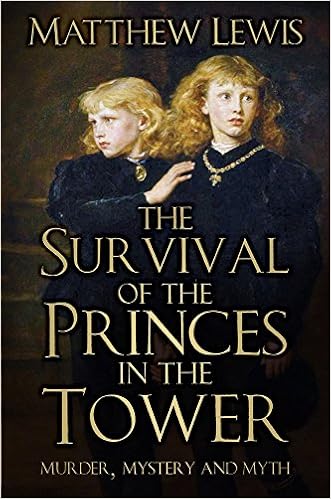
HISTORICAL BOOK REVIEW SERIES: ‘The Survival of the Princes of the Tower’ by Matthew Lewis

The murder of the Princes in the Tower is the most famous cold case in British history. Traditionally considered victims of a ruthless uncle, there are other suspects too often and too easily discounted. There may be no definitive answer, but by delving into the context of their disappearance and the characters of the suspects Matthew Lewis examines the motives and opportunities afresh as well as asking a crucial but often overlooked question: what if there was no murder? What if Edward V and his brother Richard, Duke of York survived their uncle’s reign and even that of their brother-in-law Henry VII? There are glimpses of their possible survival and compelling evidence to give weight to those glimpses, which is considered alongside the possibility of their deaths to provide a rounded and complete assessment of the most fascinating mystery in history.

cover and blurb via amazon

~~

Everyone knows the story of the Princes of the Tower, two royal brothers, one ready to be crowned, his brother the ‘spare heir,’ locked in the Tower of London by their uncle, who would instead crown himself King Richard III. The boys would then disappear from the planet completely soon after.

There is a list of suspects of who murdered Edward, aged 12, and Richard aged 9, at the time of their imprisonment. There is no proof the boys were even murdered, but their total disappearance, and Richard III’s short-lived reign a result of that disappearance, leaves little doubt.

King Richard III is the prime suspect – his brother Edward’s sons were to inherit the throne before him. But King Richard and deceased Edward had a brother – George (also deceased). George himself had a son and daughter, and the departed Edward had a slew of daughters with a claim to the crown. If Richard wanted to kill the boys in the Tower to take the throne, he would have had to eliminate all the children – and he harmed none.

Henry Tudor was in France, ready to invade and marry one of Edward’s daughters and claim the throne. This made the royal sisters of the Princes (and George’s children) threats. Yet King Richard never declared that young Edward and Richard had died in the Tower. They disappeared but were never announced as deceased. The fact they were not known as dead meant they remained a threat. They could have fallen ill; they could have been killed by another.

Henry Stafford, the Duke of Buckingham made himself a suspect in the murder by his behaviour. He rebelled against King Richard, with a view to his own as claim, making him a candidate for needing the boys murdered. Buckingham was quashed by Richard’s forces and executed, and making him the ‘murderer’ would have been so easy. But King Richard never publicly blamed Buckingham for the deaths, when he easily could have used him as a scapegoat. It suggests neither killed the princes.

Some claim Margaret Beaufort, Henry Tudor’s mother, had the boys killed so her son could inherit the throne. There is not a shred of evidence to suggest this but the theory persists through fiction and Lewis’ book does discuss the possibility. Henry Tudor married the Princes’ oldest sister, so the odds of him murdering her brothers is slim.

King Richard III’s guilt seems to easy to accept, and the author brings up many details to help clear Richard’s name. The rumours of the Princes’ death are as strong as the survival of the boys. The Princes’ own mother never blamed Richard for the deaths. The books tell of Elizabeth Woodville and her son Thomas Grey under suspicion, a detail I didn’t know until reading this version of the affair. And then there is Perkin Warbeck, the Prince Richard pretender who haunted Henry VII.

Could Edward and Richard have survived? Was there ever a murder of the Princes in the Tower? Or is there are far more interesting version to be told? This book is fantastic and I would recommend it to Tudor fans and newbies alike. As an A+ fan of Richard III, I welcome any book looking to clear his darkened name. Thank you, Matthew Lewis.