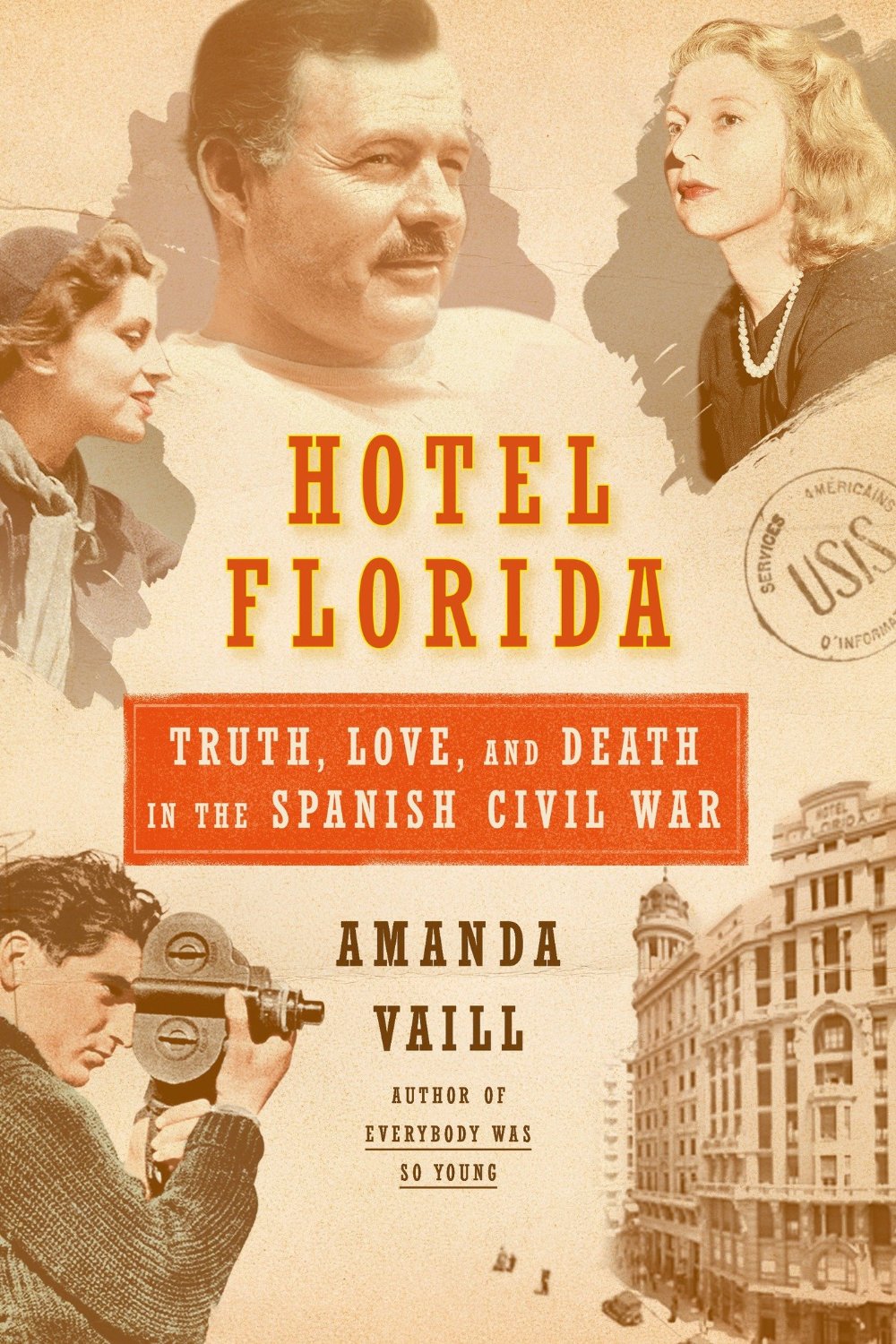
SPAIN BOOK REVIEW: ‘Hotel Florida: Truth, Love, and Death in the Spanish Civil War’ by Amanda Vaill

Hotel Florida

Madrid, 1936. In a city blasted by a civil war that many fear will cross borders and engulf Europe—a conflict one writer will call “the decisive thing of the century”—six people meet and find their lives changed forever. Ernest Hemingway, his career stalled, his marriage sour, hopes that this war will give him fresh material and new romance; Martha Gellhorn, an ambitious novice journalist hungry for love and experience, thinks she will find both with Hemingway in Spain. Robert Capa and Gerda Taro, idealistic young photographers based in Paris, want to capture history in the making and are inventing modern photojournalism in the process. And Arturo Barea, chief of Madrid’s loyalist foreign press office, and Ilsa Kulcsar, his Austrian deputy, are struggling to balance truth-telling with loyalty to their sometimes compromised cause—a struggle that places both of them in peril.
     Hotel Florida traces the tangled wartime destinies of these three couples against the backdrop of a critical moment in history. As Hemingway put it, “You could learn as much at the Hotel Florida in those years as you could anywhere in the world.” From the raw material of unpublished letters and diaries, official documents, and recovered reels of film, Amanda Vaill has created a narrative of love and reinvention that is, finally, a story about truth: finding it out, telling it, and living it—whatever the cost.

~~

I rarely read reviews before I start reading a book, so they don’t influence my opinion while reading. However, Hotel Florida seemed to pop up everywhere just prior to its release, with reviews written by those with advance copies and the like. Once I received my own copy of the book, I already had the opinions of others going around in my head. For once, it’s not a big deal, and the word that seems to be thrown at this book is ‘compelling’. With characters like Hemingway, Capa, Taro and Gellhorn, how could it be anything but compelling? Given that these characters are not new to anyone, how can pre-conceived stereotypes of characters not interfere with reading? There was only one way to find out.

For those without knowledge of the Spanish Civil War, the book starts out with timelines and facts of the who/what/ where/why’s of the conflict. I must confess I skimmed over these since I already knew the details, but this would prove invaluable to those who need to be shown the way through the civil war. They immediately show a reader that the author has gone to a great deal of effort to produce a quality read.

The book has a stellar cast – Ernest Hemingway, (the man who needs no introduction, booze, girls, writing and fighting), Martha Gellhorn (the hardest character to like, known for being lazy and lying), Robert Capa (brilliant but also fluid with the truth), Gerda Taro (young, intelligent, easy to root for, killed in her prime), Arturo Barea (a budding Spanish writer, a character who could have a whole book to himself) and Ilsa Kulcsar (a brave and intelligent Austrian leftist assisting Barea in his pursuits).

These three couples don’t have a large deal of interaction in the books, and the reader gets to jump from the mind of each character chapter by chapter, in a book which moves at a quick pace. The danger faced in Spain as intensely real and would leave a mark on each of these people forever. Hemingway folds into the role he is known for – brash, loud, writing well enough to tell the world what was happening in Spain, but also jealous and petty around other people. Gellhorn wiggles her way into Hemingway’s life, and his marriage, always possessing the air of someone who can’t be trusted, but could be a good writer with more effort. No one could ever suggest going to Spain during the war was an easy task, and these two were changed by their experiences, but at times seemed to be enjoying the war. It was a grand adventure, of front line reporting and loud Madrid parties. Fans of Gellhorn may enjoy her role in this book, though to the less informed reader, she seems like a privileged girl who lives on her whims. Only after her time in Spain did Gellhorn really come into her own, which only served to crush her marriage to Hemingway.

Capa and Taro are an infamous pair, escaping unsafe homelands in Germany and Hungary, changing their names, and setting out to make a massive impact on how the world saw the Spanish Civil War. The iconic moment when Capa (may or not may not – the book doesn’t say) faked the shot of the falling soldier weaves its way into the narrative as the pair photograph the war. It’s been said that Taro was the genius of the pair, but her death was cruel and left a deep wound in Capa, who had found a soul-mate in Taro in more than a romantic sense. The pair makes for reading that would interest even those who don’t know their exploits and photographs.

Arturo Barea is the best character in the book. The Madrileño, who opens the book contemplating how he doesn’t love his wife or mistress, has a quality different to the others. Barea has more faith in the telling the truth and doesn’t enjoy twisting the facts to make reports sound more favourable for the ever losing Republicans. While Hemingway, Gellhorn, Capa and Taro are not fixated on the truth, rather getting published, Barea is left at odds with them all. Barea finds Hemingway and is ilk to be ‘posturing intellectuals’, and Barea better understands what is stake during the conflict. The Spaniard can see the fate of the Republicans as the war unfolds and realises all Spaniards are going to pay and suffer as a result of the fighting. While others can flee, it is Barea’s home that has to live with the realities of war. He engages in an affair with Ilsa Kulcsar, who had come to Spain from Austria in an attempt to aid the Republicans, and Barea divorced his wife to be with Ilsa, which meant he never saw his children again. By the end of the war, Barea and his disdain for the war and those around him made him an outcast, and he and Ilsa had to flee to Paris with little more than the clothes on their backs. They made lives in Britain with their knowledge of Spain, war and languages in what appeared as a life long love affair.

I wasn’t sure what to expect when reading Hotel Florida – fitting all these larger-than-life characters into one book can’t be easy. It is described as ‘a narrative rather than an academic analysis’, which gives the possibility for rich, engaging characters. All the reviews I have read rave about the work, no doubt because of the level of effort Vaill has exuded while writing. While reading, I couldn’t be sure how I felt about the book – the pace made me feel as if I had fact after fact tossed to me, with so many details to absorb as the characters sped along. The book has an ode to Hemingway with some  long sentences – I counted one at 76 words, just as in the style of the big man himself. Being a narrative, I expected to be shown the story rather than to be told the tale, but this did not happen. The story of Hotel Florida is told to the reader; it does not unfold in any way, rather all the details are laid out and presented. Readers do not need to imagine anything, nor put the pieces together, rather everything is laid on the table with sharp sentences. While you cannot doubt the level of devotion Vaill has for her characters, they don’t have personalities, and readers need to rely on the details given out when engaging with these well-known people. Anyone who has edited a book knows the irritation of having to reduce adverbs or fix sentences ending in a preposition, and these basics haven’t been done in this book, but it makes the story more relaxed as a result.

The book ends with forty pages of notes (around 25% of the book on my Kindle), which shows how much effort the author put into this book. The attention to detail is meticulous, and much credit should go to Vaill for her hard work and commitment to perfection. If you are looking for a sweeping tale of wartime Spain this may not be the book for you, but if are looking for a tell-all of famous faces, then you have come to the right place. An added bonus is the cameo roles of powerhouses such as George Orwell, Kim Philby and others who also made their names in Spain in this era. Whether you want war, idealism (foolish or otherwise), love, lust and sex, or celebrity jealousy and pettiness, Vaill has rolled them together in Madrid’s Hotel Florida.

SPAIN BOOK REVIEW: ‘For Whom The Bell Tolls’ by Ernest Hemingway

First edition cover 1940

Synopsis –

In 1937 Ernest Hemingway traveled to Spain to cover the civil war there for the North American Newspaper Alliance. Three years later he completed the greatest novel to emerge from “the good fight,” For Whom the Bell Tolls. The story of Robert Jordan, a young American in the International Brigades attached to an antifascist guerilla unit in the mountains of Spain, it tells of loyalty and courage, love and defeat, and the tragic death of an ideal. In his portrayal of Jordan’s love for the beautiful Maria and his superb account of El Sordo’s last stand, in his brilliant travesty of La Pasionaria and his unwillingness to believe in blind faith, Hemingway surpasses his achievement in The Sun Also Rises and A Farewell to Arms to create a work at once rare and beautiful, strong and brutal, compassionate, moving and wise. “If the function of a writer is to reveal reality,” Maxwell Perkins wrote to Hemingway after reading the manuscript, “no one ever so completely performed it.” Greater in power, broader in scope, and more intensely emotional than any of the author’s previous works, it stands as one of the best war novels of all time.

“There are many who do not know they are fascists but will find it out when the time comes.”
― Ernest Hemingway, For Whom the Bell Tolls

Many foreign writers went to Spain to cover the civil war in the 30’s, and fine selection of them told the situation in different ways, all coming together to tell a truthful account of war. Among these writers was Ernest Hemingway, who went on to write one of the greatest novels of all time, For Whom The Bell Tolls. There are only a tiny amount of tales written that capture the bitterness, the desperation, and the tragic outpouring of war. Hemingway succeeded in captivating readers and opening up the reality of Spain’s front lines, through real life situations and experiences that cannot be imagined.

The book tells the story of Robert Jordan, a journalist who travels to Spain as part of the volunteer International Brigade. Jordan, who is experienced with dynamite, is ordered to destroy a bridge outside the town of Segovia, just north-west of Madrid. Jordan and a group of Republican fighters, including Pablo and his wife Pilar, and a young woman named Maria, are all aware that their mission will almost certainly kill them. As the group go ahead with their operation, Jordan finds himself falling in love with Maria, who has suffered the worst atrocities of the Falange (fascist group following Franco’s rebel forces), which only complicates Jordan’s quarrel with death. When a fellow Republican group is caught by the rebels, Jordan’s team falls into disarray and betrayal as the reality of being against a far-stronger enemy begins to become clear. While the band all have honest intentions, fear and misery overcome the group. In a final stand, Jordan is forced to ambush the enemy, just as the world around the idealism of the Republican causes hits the darkness.

One thing readers need to come to grips with is Hemingway’s use of thou/thee, which is a translation of the Spanish tu, meaning you. Once readers have got the hang of using the old adage, it becomes enjoyable to read. The novel is written in the  third person limited omniscient narrative, in my opinion the best of its kind for this book. By giving the protagonist an all-knowing all-seeing narrative, as well as thoughts of other characters, the whole picture become more realistic and heartfelt.

Many themes are considered in the book, the main being death. Each character needs to come to terms with the fact escape while under enemy attack is unlikely. Suicide is also on the minds of each character, as it is their only alternative to an evil death in enemy hands. True to form with the civil war, politics is explored, and the ideal that men and women are equal (touted by the Republicans, hated by the Fascists) is given a real chance through the character of Pilar, who threatens to be the star of the entire story.

Due to Hemingway’s real experiences in the field during the civil war, the opportunity to have scenes well described has been used superbly. Readers have no need to have a good knowledge of Spain or the civil war because Hemingway brings it to life for all. The author had been trying to use internal dialogue correctly for years, and this is the book that cracked it with aplomb. The book was also the birth of the famous line “Did you feel the earth move? (or in Hemingway’s case, Did thee feel the earth move?). With the use of fictional characters, those based on real life figures Hemingway met, and also famous figures of the war, the book comes to life with a richly uplifting and painful novel that is a must-read for everyone.

No need to be a Spain or civil war lover, because you haven’t read until you have finished For Whom The Bell Tolls. The book should be rated 15/10. Life and death, ideology versus reality, Robert Jordan is a character that comes along once in a generation. Even if you have read it before, read it again, because books change as people change. This novel just gets better and better.

Next week – The Sun Also Rises

A LITTLE JAUNT TO SPAIN – REVIEW PART 5: Madrid Food Tour with James Blick

IMG_3527

Never complain to a kiwi about flying. Anything less than 12 hours is practically short haul. It takes 30 hours to fly Auckland to Madrid (via Brisbane and Dubai), 25 hours of that in the air. I didn’t sleep the entire trip to Madrid yet again, but I did enjoy watching the scenery of flying over places like Iraq and Turkey. I hit the ground in Madrid, a city I hadn’t visited in seven years. It had all the familiarity of being Spanish, but still, the place felt a bit like a maze.

walk

Madrid is beautiful place to get lost

Little did I know. After one of those awful half-hour naps, I found myself outside the coffin-shaped Teatro Real on a mild  Saturday evening. It was time to get well and truly lost in Madrid by night. A while back I discovered Madrid Food Tour through founder Lauren Aloise, who put me through to James Blick. In true style, you can’t travel anywhere without running into another New Zealander, so to find I would be tripping around Madrid with another kiwi came as no surprise. I had never been on a tour of any kind before; I’m not a fan in any respect. If anyone can change my mind about something, it’s James Blick.

tabernareal

Taberna Real

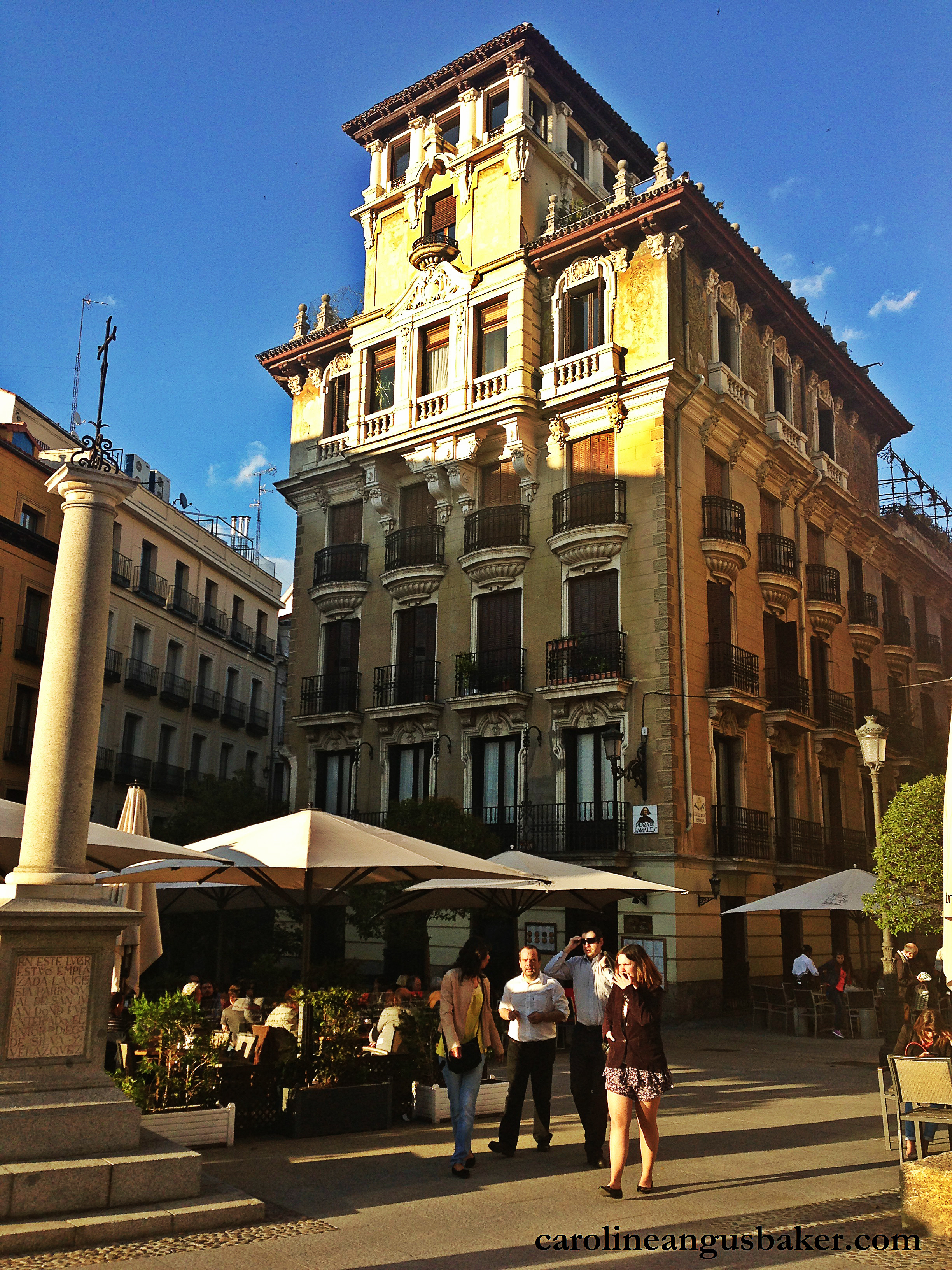
I can only try to convey the fun to be had on the Tapas and History tour. It’s a sights, sounds, smells and tastes experience that needs to be grabbed with both hands. James’ enthusiasm for his city is irresistible, and matched with several engaging couples from the around the world, I started the evening with vermouth at Taberna Real, followed by a warm evening stroll. Plaza de Oriente was filled with families enjoying the last of the sun, along with musicians and locals enjoying a drink in the fading light. It is a part of Madrid I haven’t really wandered much, so by the time we  left Plaza Ramales, the burial place (or not-so burial place in the case of the missing skeleton) of the famous Diego Velázquez besides San Juan Bautista church, I was already lost in Madrid. Not that I really noticed, given the charming company and keen wit of our tour leader.

ramales

Plaza Ramales

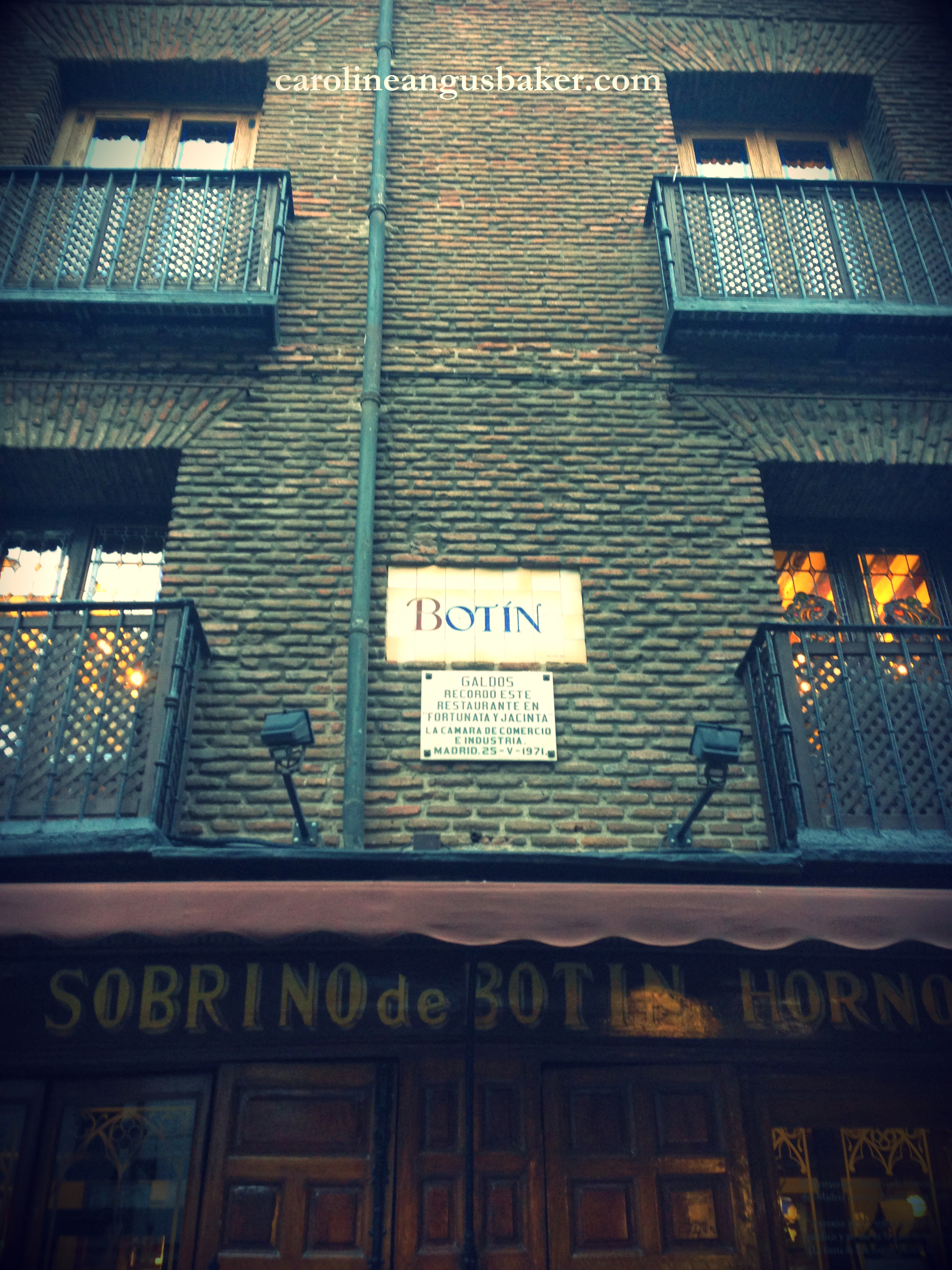
 A quick walk through Plaza del Villa and down past Restaurante Botín, the world’s oldest restaurant, the next bar we stopped at was the kind I love – a tiny place, standing room only to sip wine and eat Spanish deliciousness.

botin 1

botin 2

Restaurante Botín

I admitted my dislike for red wine, which set James a challenge to change my mind. Between the chorizo, blue cheese, anchovies and other such snacks, the red selected for me was excellent. Having the chance to visit places with someone who knows the history of the place greatly enhances the atmosphere.

cuchilleros

IMG_3830

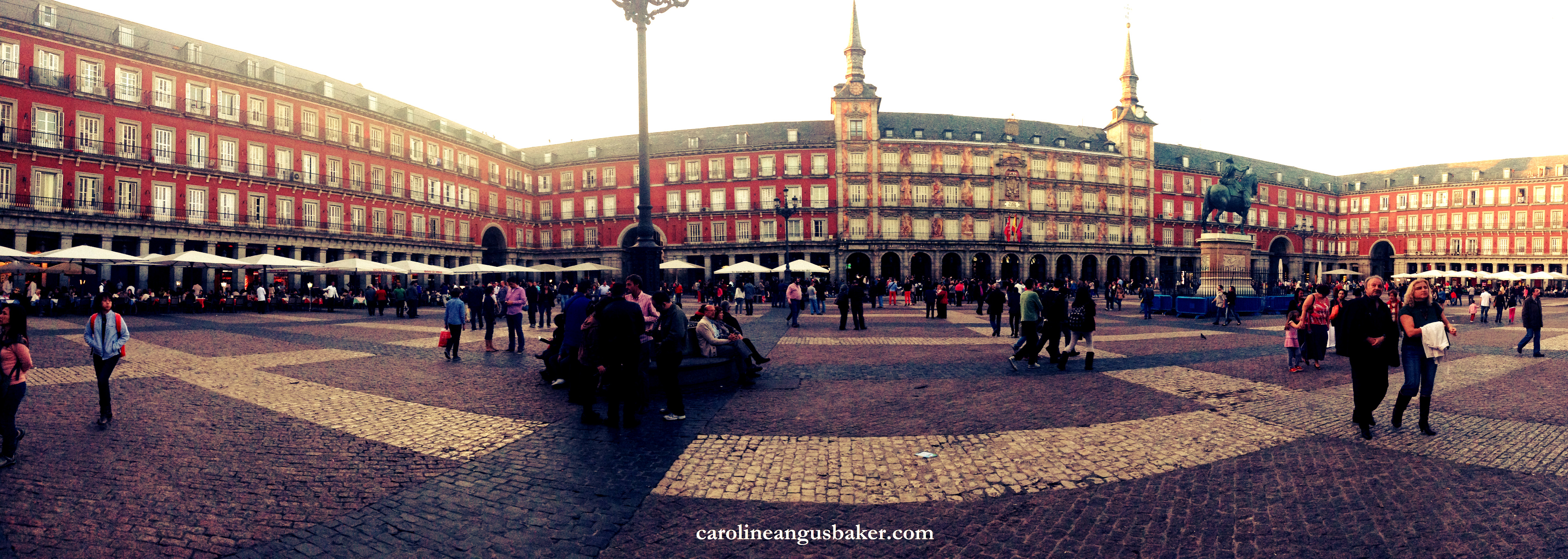
As the sun began to set, we headed back up Calle de los Cuchilleros and through the archway into Plaza Mayor. I must admit I had never been there, as I’m no fan of crowds of tourists. However, as the sun set the place was rather quiet. We wandered and talked about the Spanish Inquisition and various other activities to have taken place in the square, before heading out in search of better restaurants than the ones on offer in the plaza.

mayor

Plaza Mayor

sunset

Wandering Madrid during sunset

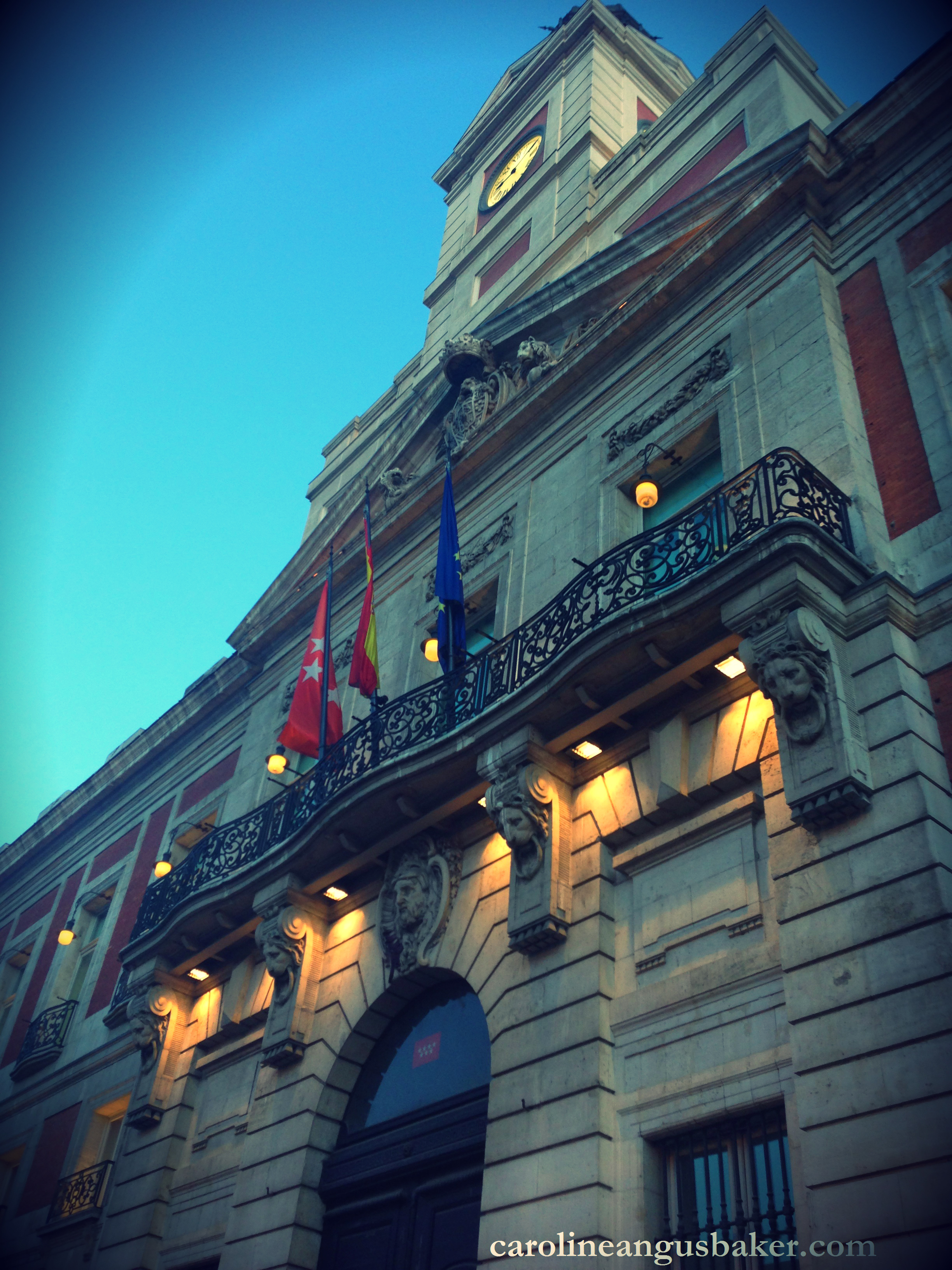
We stopped in Puerta del Sol, to discuss the more of Madrid’s history for those new the place, before we carried on to somewhere the nerd inside of me was excited to visit. (By this time, everyone knew I was a Spanish history nerd, no need to hide it.)

sol

All quiet in Puerta del Sol

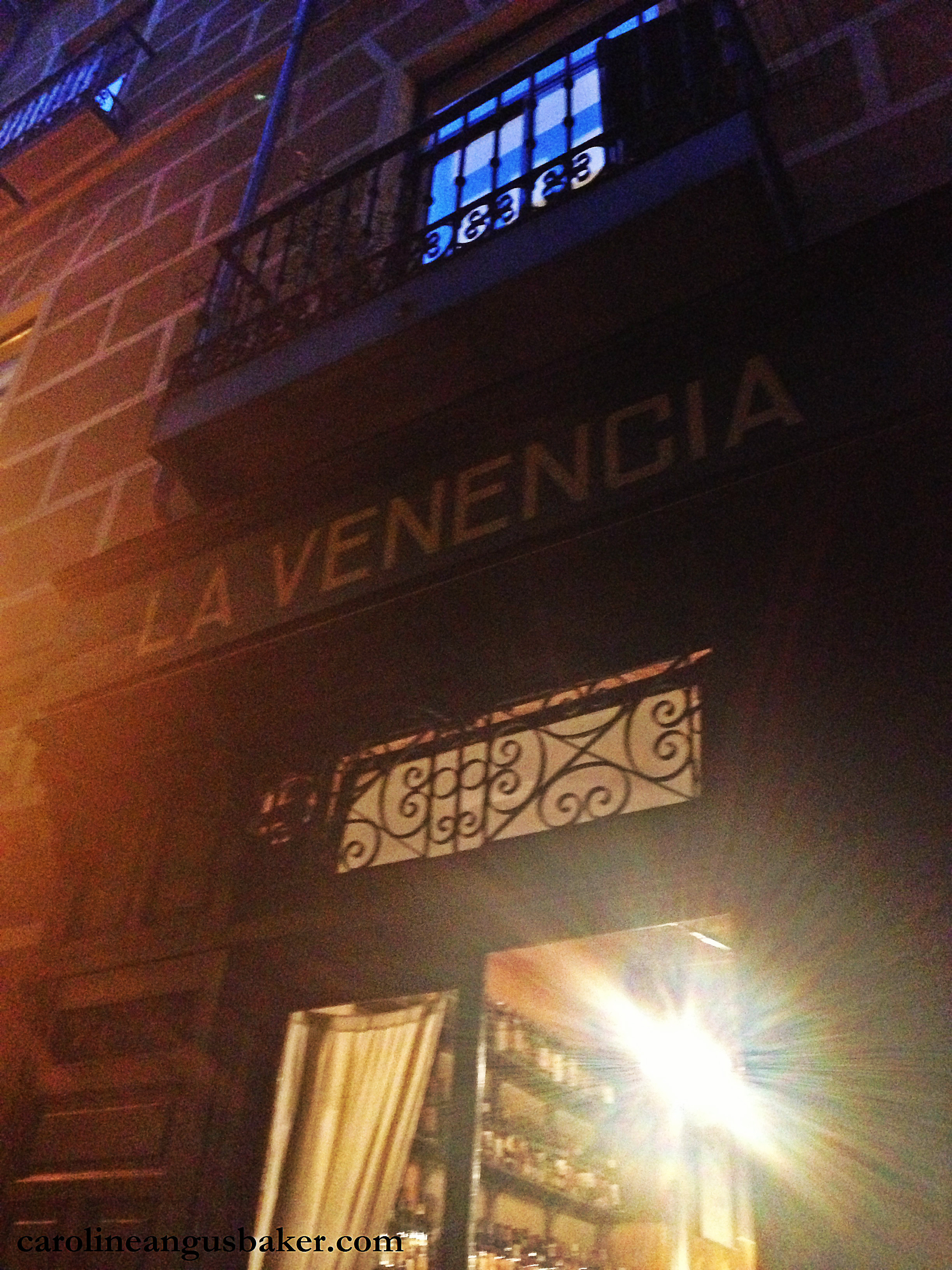
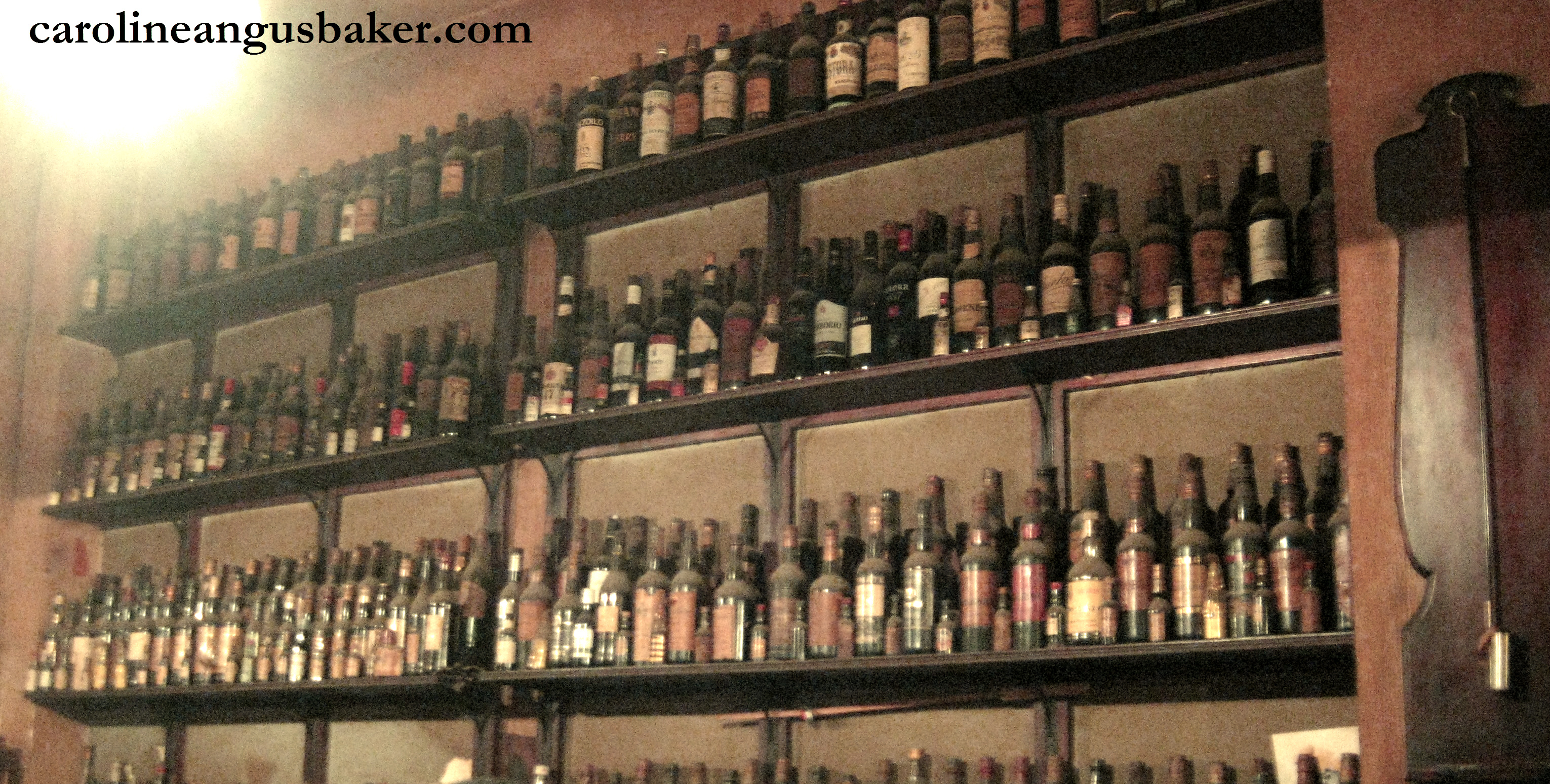
We took in sherries at La Venencia, which I can only assume is named after the tool you use to take a sample of wine from the barrel. It is none other than the sherry haunt of Ernest Hemingway, a man who was still fresh in my mind after re-reading most of his work in the lead-up to my re-visit to Spain. The place looks like it stepped out of the 20’s, and rightfully so. James pointed out that it’s not cool to take photos inside the bar, but I may have accidentally slipped with my iphone and taken one of the dusty sherry bottles (don’t worry, the barman saw me and gave the nod of acceptance).

venencia

sherry

Hanging out at La Venencia

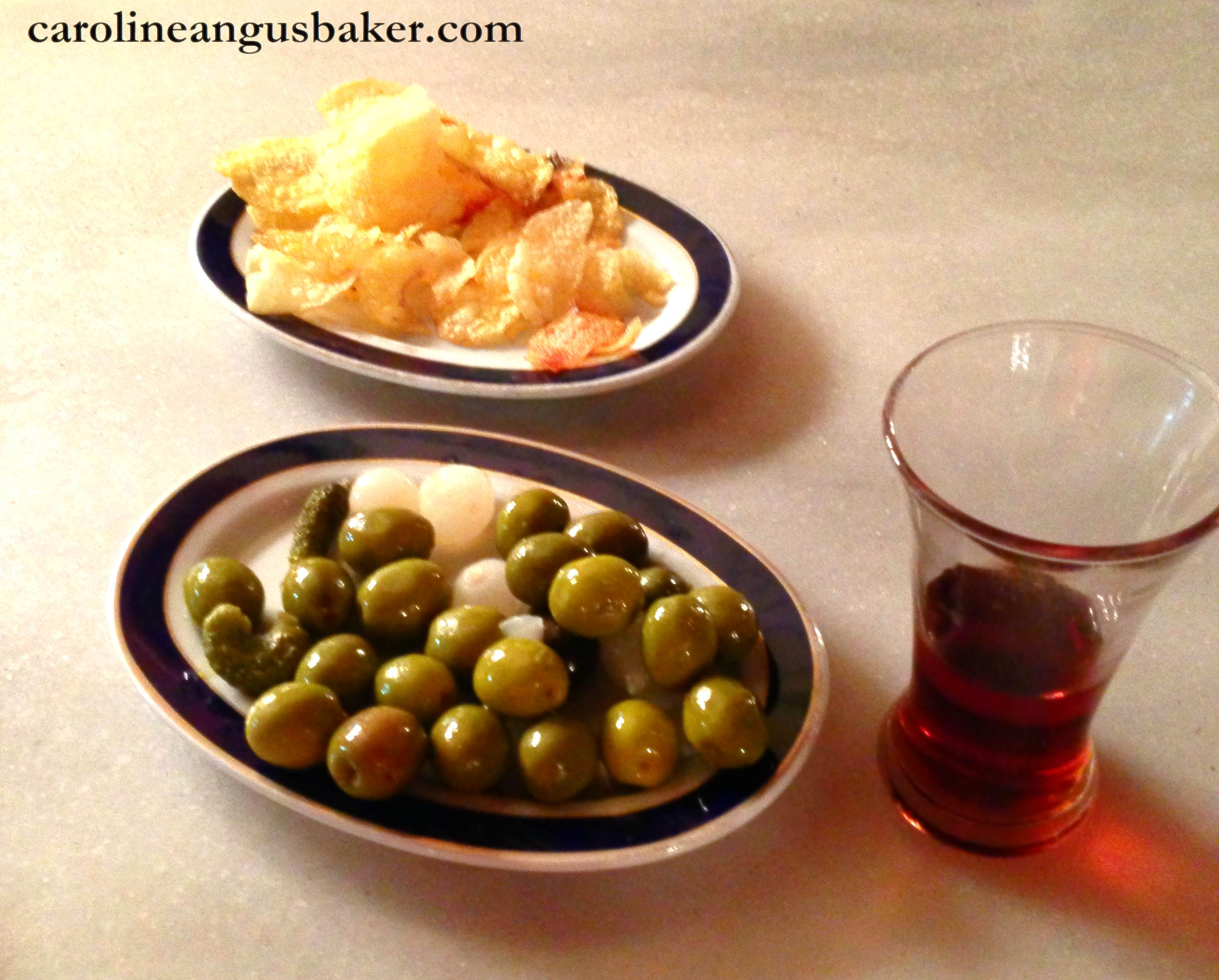
The sherries James selected on our behalf were great and very different to each other, as was the conversation between our spirited bunch. It was well and truly dark by the time were spilled back out on the street in search of another restaurant close by.

IMG_3800

ME Madrid Reina Victoria hotel

The final spot of our evening delivered us more delicious fare and more too-easy-to-drink red wine. By now, a combination of alcohol and jetlag allowed for fun and informative conversation, even if the  nearby guests looked at me strange every time I said ‘Franco’. Hey, I was hating on the guy, no big deal! The opportunity to sit in a restaurant in Madrid, early into the morning and talk about Spain, its history, its culture, its economic collapse was exactly what I had come to Spain for.

lorca 2

Hanging with Federico García Lorca in Plaza Santa Ana

By the time we had wandered back in the direction of Puerta del Sol, the streets had started to empty out and I was more lost than I have ever been in my life! James was kind enough to walk this afraid-of-the-dark woman back to her hotel, and along the way gave out plenty of helpful tips for my solo stay in Madrid.

IMG_1596

Cape shopping, anyone?

Without a doubt, the Tapas and History Tour of Madrid with James Blick is a 10/10 must-see activity. I know my fair share about Spain, but I wasn’t left feeling like I was hearing basic info for first-time visitors. Our group of was a mix of Spain aficionados and newbies, and everyone came away feeling happy and fulfilled.

IMG_1603

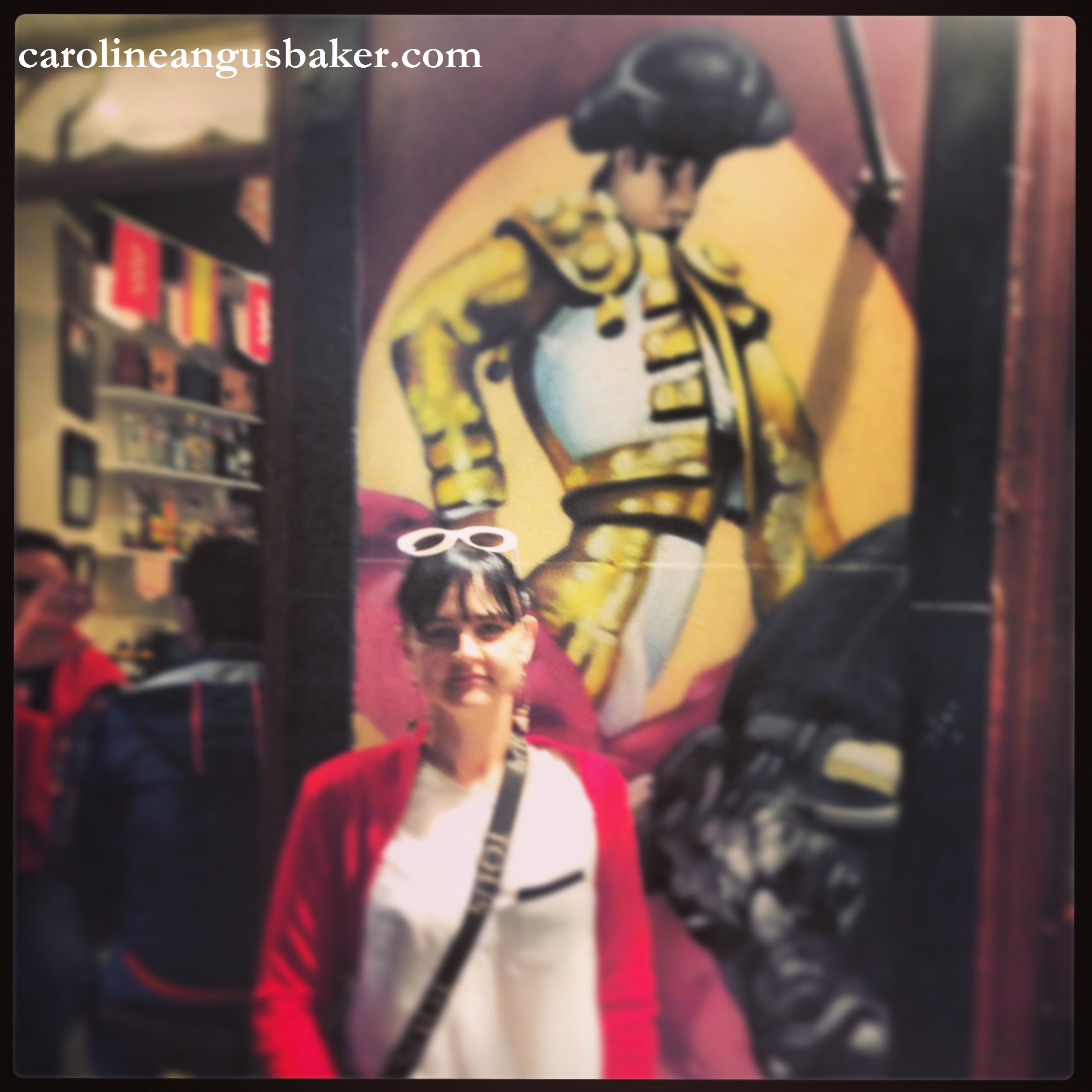
I came to Madrid for the bullfights, so I had to get this snapped

I spent a few more nights in Madrid, dominated by friends and beverages before heading on to my more familiar locations around Spain. However, my final two nights were based back in Madrid to take in some bullfighting at Las Ventas.  so I decided catch up with James again for another tour.

I met James in central old-town Madrid and set off on an all different tour of the city. San Isidro was in full swing throughout Madrid, and was the reason I chose Spain in May (and not for the weather, because Madrid, you were FREEEEEEZING that night!). We stopped and took in a view of Casa del Campo as the sun began to set. I wasn’t able to visit the place where two New Zealanders died during the battle of Madrid in 1936, but at least the opportunity to talk about the history of the place with people who were genuinely interested almost made up for it.

vermouth

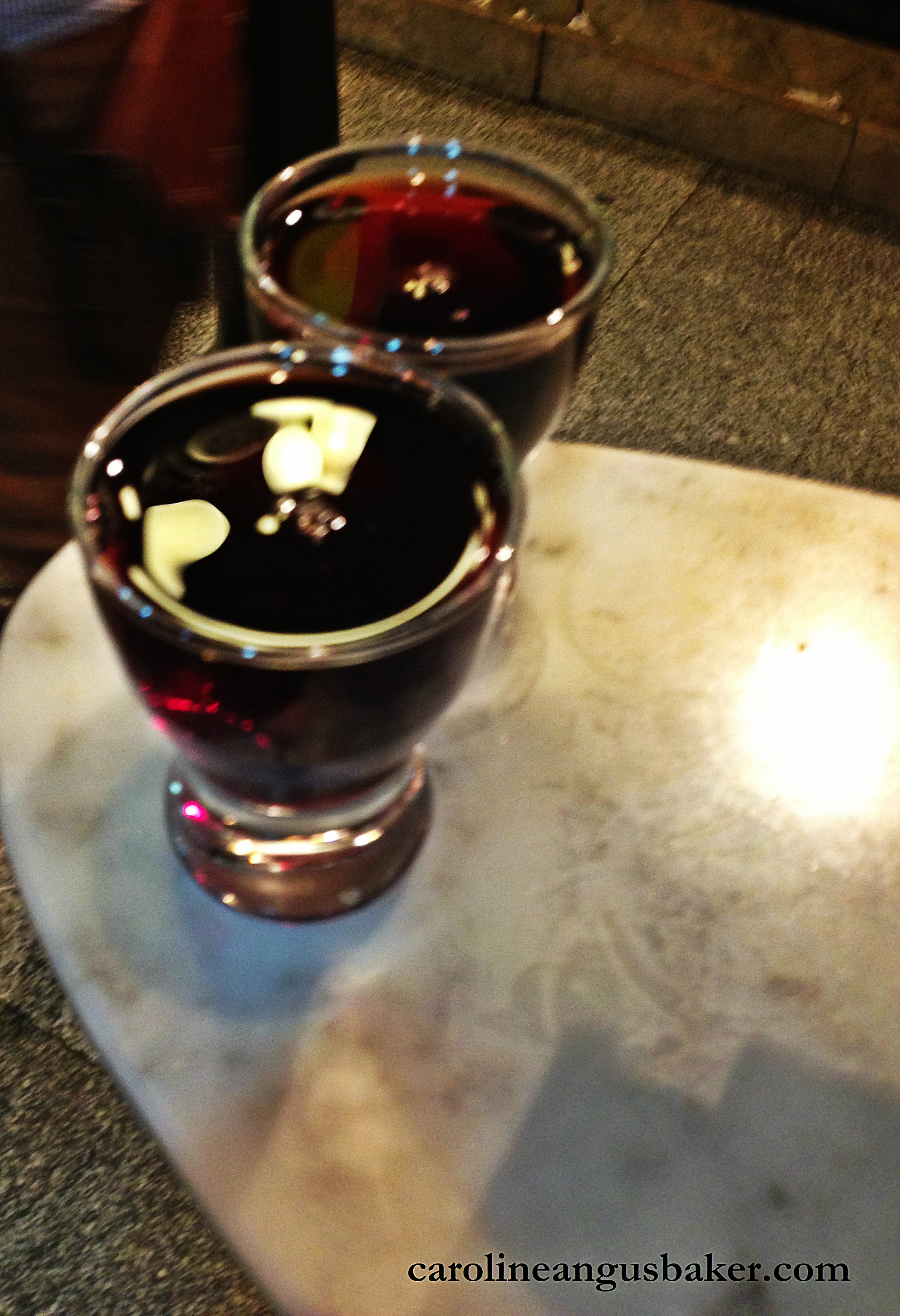
Vermouth dominated the beverages

The streets were full with locals out despite the cold, and after a visit to a church and a helpful San Isidro lesson, in true Spanish style the bar still wasn’t open, even though we were running late. We settled in another bar for a pre-dinner drink- drink (that’s a thing!) to discuss the civil war. (James is well aware of my nerdiness and chatted accordingly. I appreciate his patience.)

Once we couldn’t cope with the cold any longer, we went into Bar Sanlúcar, a small and fantastic place in La Latina. Between the wine, vermouth, bullfighting memorabilia, Andalusian music and salmorejo,  it is a perfect place to visit. It was full of locals enjoying a drink, and we talked about the food, the bar, and the ambiance of the area.

tickets

Bullfighting tickets… why not?

On the three of us went in the cold, discussing Spain’s current economic situation, before we stopped at a great Basque bar. I say great, because it was standing room only, and even then, it was standing against each other kind of popular. We had the chance to partake in Txakoli (chacolí in Spanish), which is poured at a great height, enough to let the white wine fizz nicely. As a white wine lover (no apologies!) I really enjoyed it. The pintxo to accompany the drinks was rabo de toro – oxtail sandwich – which was a weird flashback moment for me. I was fed a lot of that as a child in New Zealand, and didn’t expect that familiar flavour to come rushing back in Basque bar in Madrid. I digress. Whilst you can’t exactly feel the salty air of the Atlantic blowing on you in Madrid, you can  understand why so many people flock to the Basque country for the food and wine. If you haven’t… why not?

oxtail

Oxtail sandwiches, baby

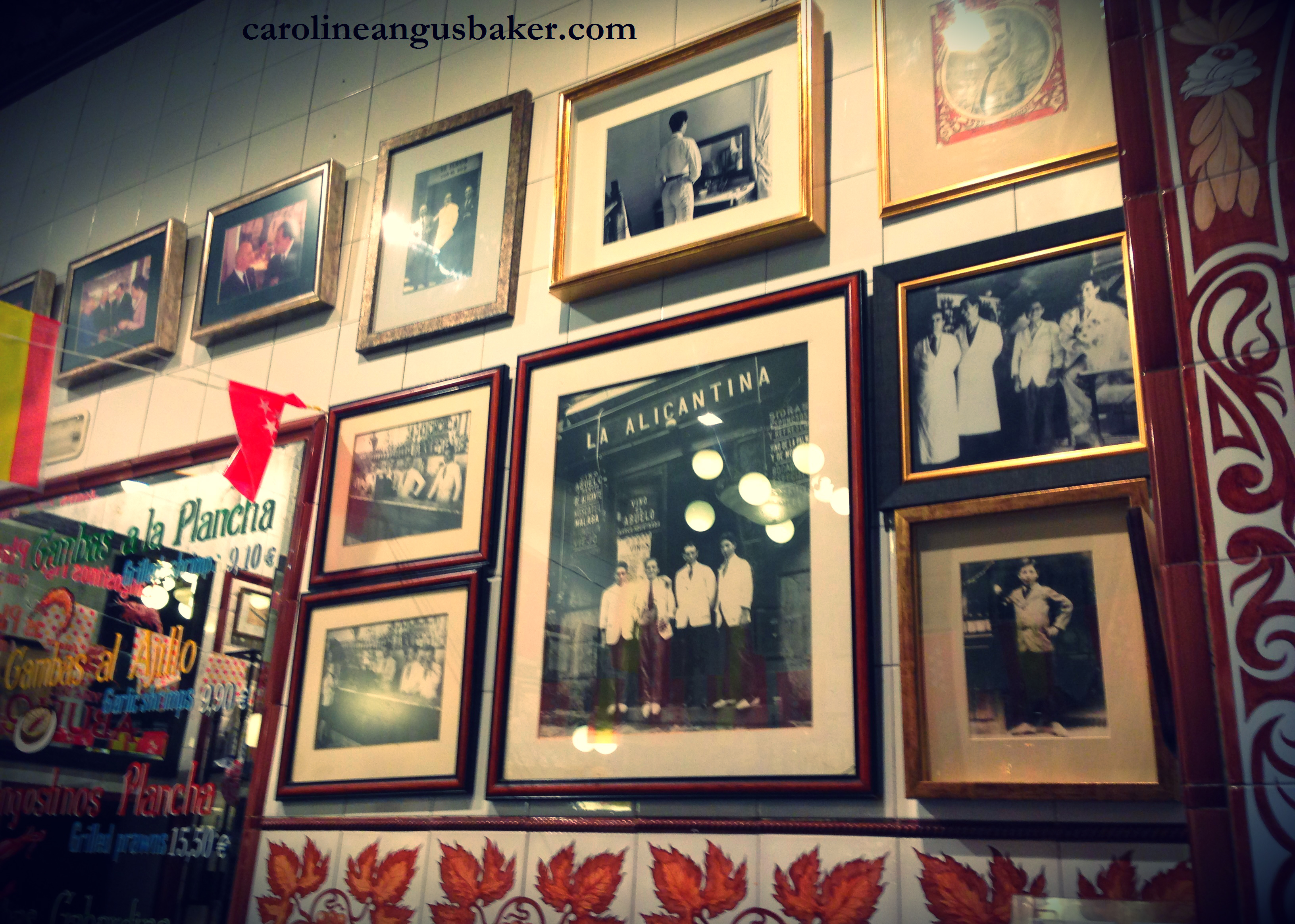
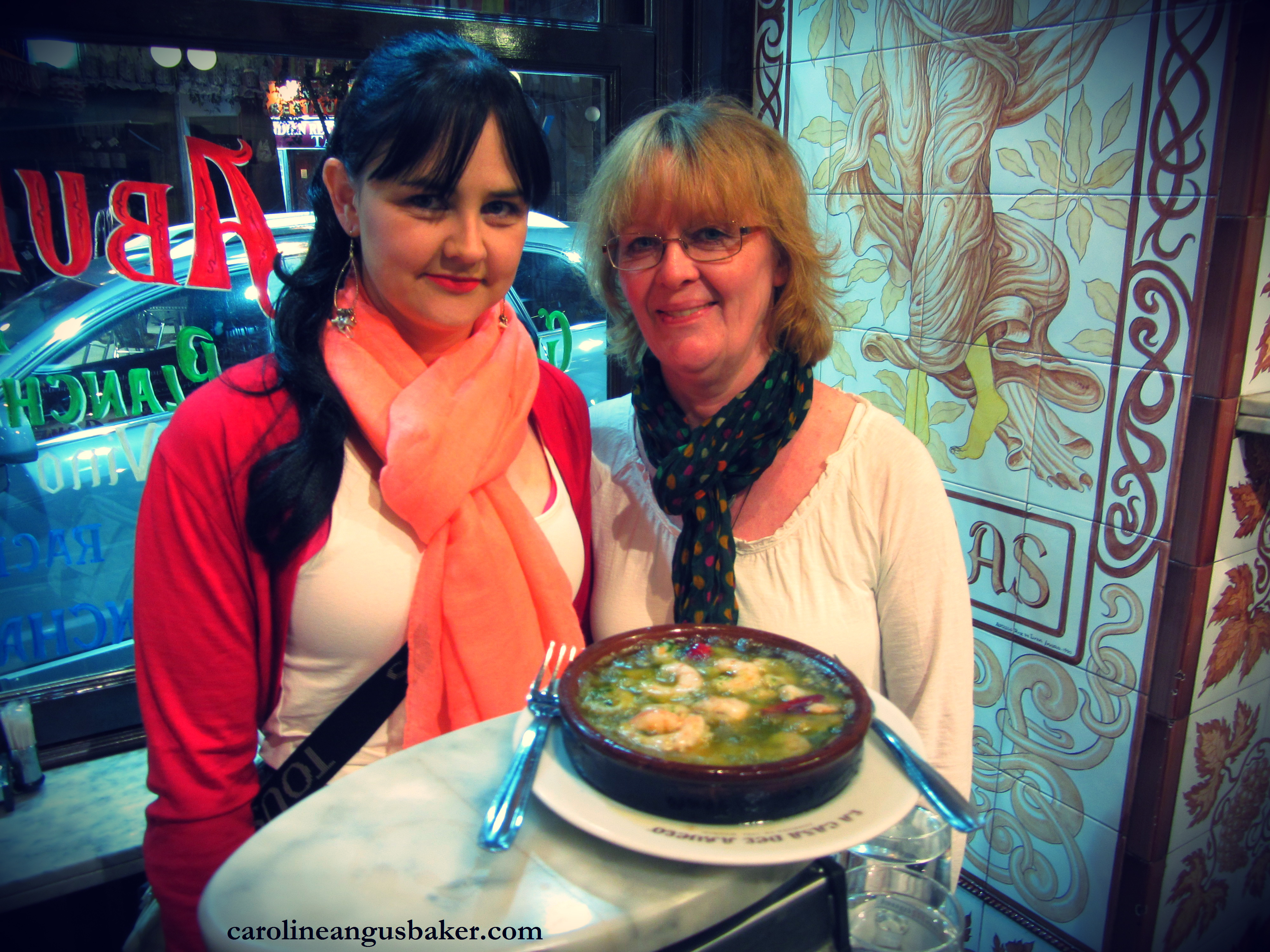
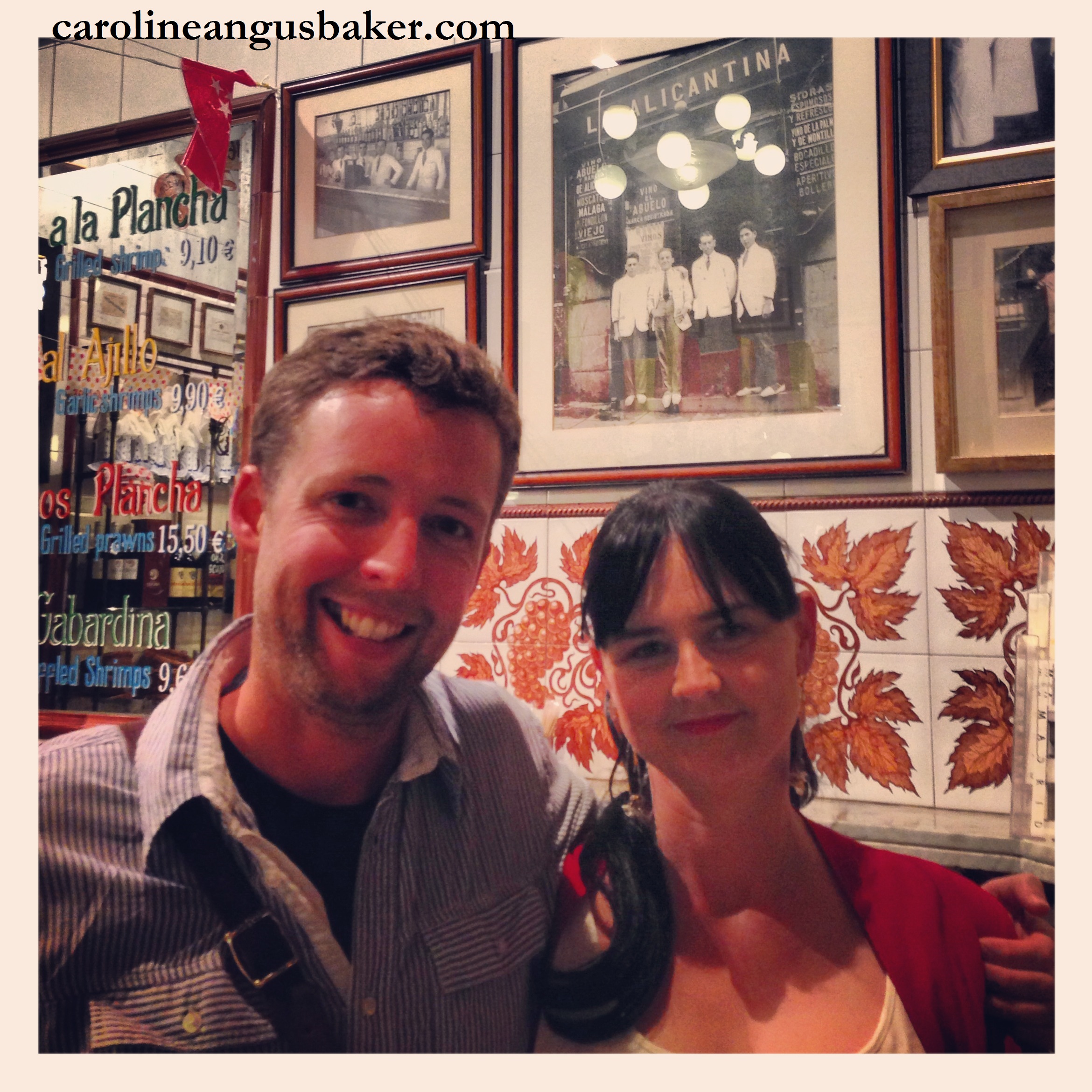
On we marched, discussing tips to get the best from El Rastro (I won’t lie, I’ve been once – not my thing) before we stopped at the 100-year-old shrimp institution La Casa del Abuelo on Calle Victoria. It was already late by the time we jumped in from the cold and the floor was littered with napkins and shrimp bits – a Madrileño homage to the greatness of the place. (As a kiwi, throwing my rubbish on the floor in appreciation is something I still feel weird about, even now.) You don’t need to be crazy for shrimp or prawn to eat here, everything is cooked on the plancha (flat grill, for lack of better translation term) and served in garlic deliciousness.

wall1

I didn’t just take the decor pic to snap Manolete’s butt (top centre), I promise

abuelo

Me (left) with great shrimps

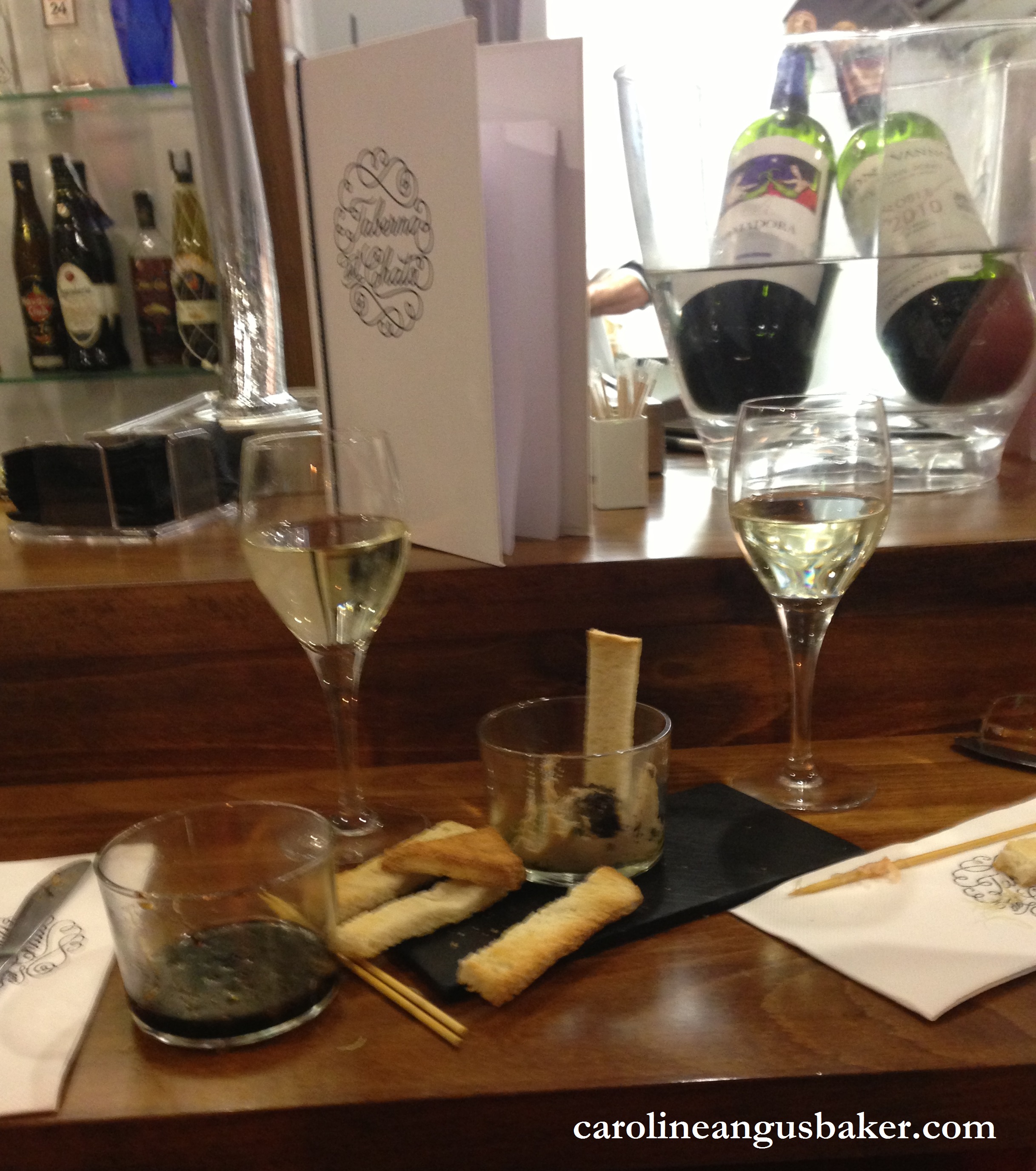
Our last stop was a more modern style of restaurant, Taberna del Chato. With more white wine and a chat with the guy behind the bar, I can barely recall what we had on the toast. If James could fill in me, that would be great!  The restaurant was a complete contrast to the very traditional shrimp place before; James gave us an excellent mix of what is available in Madrid.

IMG_3449

White wine and… something

Despite it only being about 1am, we stopped at Chocolateria San Ginés, the place where everyone knows their churros. More suited to those stumbling out of bars at 5am for the past 120 years, the place was quiet as we laughed, chatted and looked at the photos of celebs who have needed churros to soak up alcohol for them over the years.

sangines

Churros. It had to be eaten

It was 2am before we were finished and Madrid was cold enough even to chase two kiwis indoors.

Sure, you could probably find these bars and restaurants on your own, and stumble your way through the menus, but you wouldn’t get an experience half as good without James Blick on board. The Tapas and History Tour constantly gets rave reviews and it’s easy to see why. Whether you already know Spain or are brand new, James’ unique, committed and sincere passion for Madrid provides a tasty, eye-opening night out. Whilst daytime Madrid left me wanting, night-time Madrid is a great place to get lost, as long as you have James Blick to navigate your taste buds. Of course, some people couldn’t think of anything more boring than discussing the Spanish civil war all night, but the beauty is that the night can take whatever path you like. Your tour, private or as a group, is tailored to what you enjoy.

drink

To book a tour with James Blick, or one of the other tours available – Madrid Food Tour

To read reviews about James, Lauren, Alejandro and Kay and their Madrid Food Tours – Madrid Food Tour – Trip Advisor (currently ranked #1 activity in Madrid!)

Like food blogs? – Madrid Food Tour Blog

James Blick’s Blog – Madrid Chow

Lauren Aloise’s Blog – Spanish Sabores

Up next… Part 6 – Bullfighting: Madrid vs Valencia

Click here for the Spain 2013 in Review series – Spain 2013 in Review