SPAIN BOOK REVIEW: ‘Into the Arena’ by Alexander Fiske-Harrison

IntoTheArena

Alexander Fiske-Harrison spent a season studying and travelling with the matadors and breeders of famous “fighting bulls” of Spain (and France and Portugal. ) He ran with the bulls in Pamplona and found himself invited to join his new friends in the ring with 500lb training cows. This developed into a personal quest to understand the bullfight at its deepest levels, and he entered into months of damaging and dangerous training with one of the greatest matadors of all, Eduardo Dávila Miura, to prepare himself to experience the bullfight in its true essence: that of man against bull in a life or death struggle from which only one can emerge alive.

cover and blurb via amazon

~~

Every time I write something regarding bullfighting, I get plenty of hate mail, regardless of the content. Just the mere word ‘bullfighting’ sends people into a spin. There are those who constantly come on here and say I deserve to endure genital mutilation for my writing (which only makes you as grotesque as how you view bullfighting, so STFU). I find it interesting that no one who comes to my site to hound me has ever actually asked my personal view on bullfighting, and logic of abusers seems so ridiculous. When I wrote about rape or spousal abuse, no one asked me if I endorsed those subjects, so for that reason, I have decided to leave comments closed on this new post. Putting up with harassment is not a sign of strength. I shall not be passive, and I shall not be attacked either.

Into the Arena by Alexander Fiske-Harrison is a book I read a few years ago, but never reviewed. I decided to read it again recently, while doing some bullfighting research. I have been reminded how much I enjoyed this account on the subject.

It is argued that bullfighting, when done well, is a work of art, and a sin when done poorly. These two differences are a beautiful reflection of the arguments for and against the battle of death. The author shows how, after first seeing fights in 2000, until his full-fledged love affair with the art form years later, the only way to truly understand bullfighting is to be emerged in the world of the toreros. Bullfighting in the 21st century has triple the number of fights of the so-called golden-age of fighting in the 1930’s. Bullfighters earn enormous sums like football stars, marry beautiful girls and appear on magazine covers. Between the fights, the endorsements, and the celebrity caper, there is an industry worth over €2 billion a year. It would be easy to be swept away by the glamour aspect.

Fiske-Harrison is staunch defender of bullfighting. Some could say it could be a case of being caught in the bright lights of the toreros. Instead, the author turns to some of the greatest names of the current era – Cayetano Rivera Ordóñez, a celebrity wherever he goes, and who speaks of the death in his life as part of a weekly routine.  José Tomás, ‘The Phenomenon’, some say the greatest performer of the age – who performs with great skill and nearly dies in the process. A horrific goring in Mexico shows the lengths the man will go to for what he believes is greatness. Then there is Juan José Padilla, known famously for being the torero who had his eye gored from his face. One famous fight shows Padilla fighting in the same event as Tomás, and nearly gets gravely injured due to vanity, wishing to be the most beloved of the night. Padilla is the epitome of those who live for the skill and thrill.

But this book doesn’t seek to raise the profiles or talk up the participants. This book also addresses the moral conundrum of the event. The hate of bullfighting can be as strong as the love, and the book does its best to counter some of the arguments – that the bulls are treated more humanely than your standard animal raised to become a steak (which I would agree with). Many who argue against bullfighting think little of the grotesque nature of the death of their dinner (or, like me, find steak-eating appalling). The book also discusses the economic and ecological benefits of bullfighting. While these arguments do have their merit, those opposed to the spectacle would no doubt be able to dismiss the claims.

Bullfighting is Spain’s ‘feast of art and danger’. That is mostly certainly true. The book takes a turn as Fiske-Harrison attempts to get into the ring himself, to learn the moves and nature of the animals. You can hate bullfighting all you like, but rarely does anyone have the courage to face one of these strong and aggressive animals. The animals are bred specifically for their speed and aggressive behaviour, and are fast learners. There will also be bulls who do not show the enthusiasm for death that the crowd would want (I’ve seen scared and disinterested bulls in the ring myself). The toreros have a great affinity for the graceful animals, but they must be killed. In the end, the audience is the beast while the man and animal square off for entertainment.

The world of bullfighting is a mixture of death and machismo – two things that can seem extremely unappealing. The author manages to sneak in and out of the world with great fluidity, makes up his own mind based on research and personal effort, and doesn’t waver from his personal opinion. While some see bullfighting as men with inflated egos killing animals to show off for a crowd, where the death of animals is both cruel and pointless, Fiske-Harrison attempts to portray the world of culture, tradition, respect and of bullfighting’s essence – the struggle of life and death. This is a great book told through one man’s perspective, but whether you enjoy the read may depend on your position on the subject.

Because the subject is so decisive, I will continue to both read and write about it, from both sides of the argument.  However, I’m not sure there is any piece of work that will ever sway a reader from their opinion. Some may get caught up the glamour and popularity, and many can respect the animals, but can readers endorse the kill? Who knows. You need to look past the kill to see the men and culture behind it, an action not everyone wants to try.

SPAIN BOOK REVIEW: ‘Nada’ by Carmen Laforet

nada

One of the most important literary works of post-Civil War Spain, Nada is the semi-autobiographical story of an orphaned young woman who leaves her small town to attend university in war-ravaged Barcelona. Edith Grossman’s vital new translation captures Carmen Laforet’s feverish energy, powerful imagery, and subtle humor. Nada, which includes an illuminating Introduction by Mario Vargas Llosa, is one of the great novels of twentieth-century Europe

~~

Nada is one of those books which sat in my to-read pile for far too long. Classics sit waiting while newer releases get sent to me for reviewing. Now, after reading this book in one day, I feel the need to facepalm for sidelining such a novel for so long. I find it difficult to connect with fiction (yes, I know…) but this book is an instant hit.

Nada is the story of 18-year-old Andrea, an orphan who moves to Barcelona from the country, to live with maternal relatives while starting university. Andrea had visited her grandparents’ home before the civil war as a very young child, and was filled with loving memories of city life. But life on Calle de Aribau has become a nightmare.

Gone is the lavish apartment of her family; now they in one half of the house, a dark, scary place filled with odd objects like a grand piano, huge mirrors, big heavy unused furniture and a candelabra, a hint of the former life of the family. As time passes, each of these expensive once-loved items gets sold off to pay for food and hope of survival. The opening chapter where Andrea meets her family is dark enough – they are like skeletons, ghosts in the night, in a home where a cold shower is relief from company, but the damp stains on the wall look like evil clutching hands. Andrea’s grandmother is a starving, frail old woman, surrounded by her adult children – Román, a vile man with hidden depths, tortured by the Republicans for being a Francoist spy. His brother, Juan, an artist who hates his life, beats his wife without remorse, with a demeanor of a broken man who has deeply suffered during the war. Gloria, Juan’s wife, a beautiful but simple-minded woman, who feeds everyone by leaving her baby son at home and winning card games in Barrio Chino. Andrea’s grandfather has died, like her own parents, and are unexplained, by it’s easy to imagine what may have happened to them.

The creepiest character lies in Angustias, the aunt from hell. She is a religious fanatic, who, in standing with her high and mighty attitude, sees Andrea as her charge, who needs to be broken and obedient. Angustias is hell-bent on making sure Andrea has no life, sees nothing, hears nothing, experiences nothing. As Angustias fails and hates Andrea, who has done nothing wrong, she tells her that she should have been beaten to death as a child. Angustias has been hiding a hypocritical lifestyle for so long that she has become almost insane. Even the crazy maid, Antonia, is a horrid and bewildering.

Andrea is a saint for coping with these vicious and hateful people in a dark, freezing cobwebbed environment. While the past hurts and torments her family, Andrea tries to break out – she makes friends, hangs out with artists, meets boys she doesn’t really like much, but reality  is still in the way. Andrea’s close friend Ena is wealthy, which puts a gap between the pair. Ena has the attitude of a child who has wanted for nothing, and has the luxury of wanting and experimenting. Andrea is starving, resorting to drinking water the family’s vegetables have been boiled in. Old pieces are bread are treats.

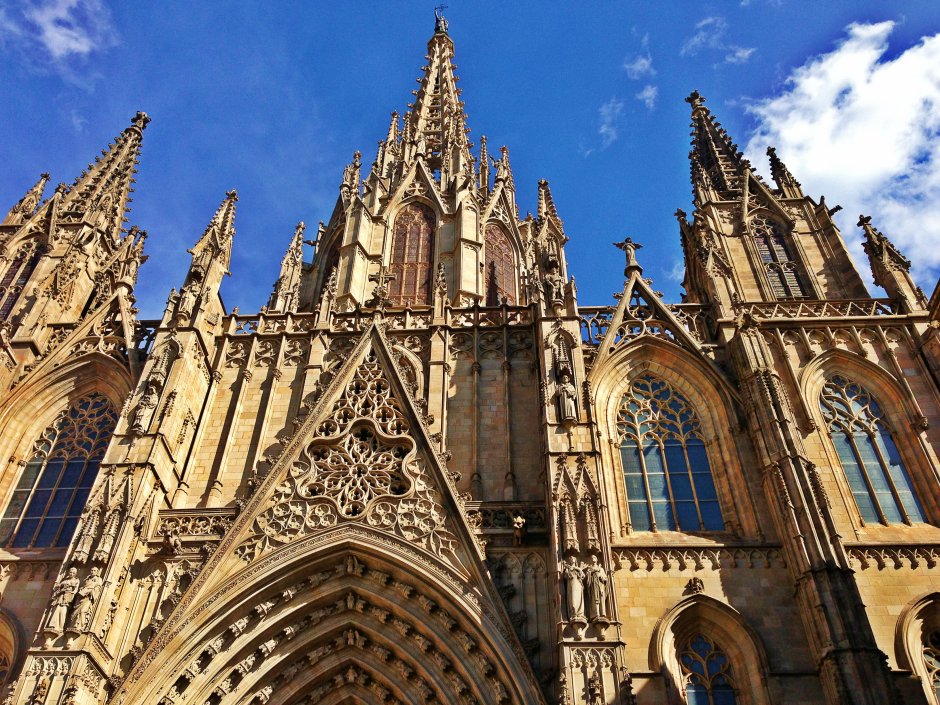
The book shows the pain of Barcelona post-war in human terms. With its will crushed by Francoism, some have flourished and the losers have been ground down to nothing. Being sniffed out by police for being a ‘red’ is still a threat. Work is hard to find, and money is only for some. The cathedral, in its religious beauty, shines like a beacon while people starve in the alleys nearby. There is little hope for people like Andrea. As the stories of all the characters come together, the haves and have-nots have history that provides both a big twist, and ultimately, a vicious death.

While the Barcelona that Andrea lives in no longer exists, the book gives a perfect feeling to post-war reality. The book was autobiographical, written after Carmen Laforet went to study in Barcelona, before moving on to Madrid. This book will leave you wondering about the long-term fates of all the characters (and their real-life counterparts), if indeed they had one at all.

Nada was published in 1945, the first of LaForet’s novels. If you prefer English, it was excellently translated by Edith Grossman in 2007. Don’t wait to read another week to read Nada.

SPAIN BOOK REVIEW: ‘Sketches of Spain (Impresiones y Paisajes)’ by Federico García Lorca

Lorca cover

At age 17, Federico García Lorca travelled around Spain with his university professor and accompanying students. This trip proved a turning point for Lorca, who, at 19, published Impresiones y Paisajes (Impressions and Landscapes 1918), an account of how he saw his homeland.  Lorca wrote this book while in Granada, before he moved to Madrid in 1919 to produce many of his well-known works. Sketches of Spain is a fine chance to read Impressions and Landscapes in English, and hear him find his own voice as an artist.

From the prologue, you can hear and understand Lorca’s prose – ‘Friend and reader: if you read the whole of this book, you will recognise a rather vague melancholy. You will see things that fade and pass on, and things portrayed always bitter, if not sadly”. Clearly, Lorca finds beauty in all things, even in the less-than pristine places that he visits. It feels like less of a story, and more of a poem, or of reading out the words to a song. Lorca finds feeling in everything he discovers on his journeys.

In each chapter as Lorca drifts from town to town, the physical is described, along with the depth of feeling and symbolism he finds in the everyday. Each description is poetic, and delivers on the promises of melancholy, along with flashes of solitude and wanting. Each place is explained until the reader can ‘feel’ them, understand them, and have moments in their own minds triggered by sounds, smells and ideas.  Lorca visits places of religion – monasteries, churches and convents, and sees the beauty in the buildings, but not the nature of them. Lorca seems to feel as if these structures are burdens on towns and people. He clearly finds no solace in religion, nor the people he meets on his visits. He feels that prayers are never answered, and that penitence has no purpose, that instead charity would be a more suitable aspiration.

The poverty of Spain during this time (1916/17) is highlighted, along with the cruelty it inflicts on the populace, yet Lorca finds moments of light within it, showing how this poor lifestyle means people can easily appreciate simple pleasures, such as the smell of their food, or the sunshine on their skin. Galicia is filled with rain, poor children and social injustice; Granada with flamenco and austerity; Castile is a wide open existence of fine scenery but harsh reality. He reflects on death in Burgos when looking through empty tombs. It’s as if Lorca travelled through Spain with his eyes sometimes closed, but the rest of his senses dramatically heightened.

Of Castile, Lorca writes – ‘Eternal death will lock you into the gentle, honeyed sound of your rivers, and hues of tawny gold will always kiss you when the fiery sun beats down… You grant the sweetest consolation to romantic souls that our century scorns, you are so romantic, so bygone, and they find tranquillity and blissful exhaustion beneath your curved ceilings…’

Given Lorca’s young age when he made this trip, it is easy to feel a soul which is still learning of who it will one day become. While you get a real insight into Lorca’s style, he himself is hidden behind the words. The book has been translated into English by Peter Bush, and it rare to find a translation that comes out feeling so smooth and comfortable. The illustrations for the book are done by Julian Bell, and easily reflect the desperate sights where Lorca once tread.

This book would go well with a chair in the sunshine, and a glass of wine in hand. (Sadly, I had access to neither of these things, so have a sip for me!) This book is perfect for escaping reality and to discover how a genius once saw the world.

SPAIN BOOK REVIEW: ‘The Angel’s Game’ (El juego del ángel) by Carlos Ruiz Zafón

In an abandoned mansion at the heart of Barcelona, a young man, David MartÌn, makes his living by writing sensationalist novels under a pseudonym. The survivor of a troubled childhood, he has taken refuge in the world of books, and spends his nights spinning baroque tales about the city’s underworld. But perhaps his dark imaginings are not as strange as they seem, for in a locked room deep within the house lie photographs and letters hinting at the mysterious death of the previous owner. 

Like a slow poison, the history of the place seeps into his bones as he struggles with an impossible love. Close to despair, David receives a letter from a reclusive French editor, Andreas Corelli, who makes him the offer of a lifetime. He is to write a book unlike anything that has existed – a book with the power to change hearts and minds. In return, he will receive a fortune, perhaps more. But as David begins the work, he realises that there is a connection between this haunting book and the shadows that surround his home. 

~~

The first installment of this series, The Shadow of the Wind, was a triumph and to follow-up such a tale would have been a huge undertaking. But this book, The Angel’s Game not only continues the story, it also becomes a whole tale on its own and makes Barcelona come to life in a dark, gloomy way.

The story starts with David Martín as a young boy of a murdered father, working as a writer for The Voice of Industry. He manages to get himself work writing fiction, dramatic over-the-top murder mysteries for the newspaper, which doesn’t turn out to be as fun as he thinks it will be. Thanks to having a wealthy friend, Pedro Vidal, a failed writer to lean on, Martín is lucky to eek out a living in gloomy and depressing Barcelona.

Martín’s fortune changes when he gets a new publisher, two greedy men who aren’t worth his time, and Martín is able to lease the tower house of his dreams, an ancient and dismal place where he quickly falls into a habit of writing and neglecting his life and self. Writing as Ignatius B. Sansom, Martín pumps out dark murderous novel after novel, barely eating or sleeping. He soon finds that his 20’s are just rolling by as he sits at the top of his poisonous tower house and bleeds onto his typewriter.

Gothic is the best way to describe the scenes as Martín goes through many changes in 1920’s Barcelona. The scenes are rich and easy to understand, and the characters, while all dark and troubled, are all equally entertaining. Enter Andreas Corelli, a French publisher with an offer too good to be true. With love-life trouble of the highest order, Martín has little else to do but work on the most dreary and thought-provoking novel, one never quite accurately described. A fable, a religious work, a family story – but what ends up on the pages turns out to be pure evil.

As Martín deals with increasingly terrifying meetings with Corelli, ‘the boss’, the history of the tower house and the last writer who lived there and attempted to write a great tale takes ever murderous and scary turns. From basements filled with dummies, evil dogs lurking in the shadows, doves stabbed through the heart, an ageless boss who smiles like a wolf, fires and disasters all over the city, and even a spiderweb-like tumour, Martín’s life descends into madness.

As this book is the prequel of the first in the series, Martín has one bright spot in his life, the Sempere and Sons bookstore. The characters are the grandfather and father of Daniel Sempere, protagonist of the first book, and give more insight into the lives of the Sempere family. Another bright spark is Isabella, a young aspiring writer who latches herself onto Martín and is his saviour multiple times over. Isabella is the only person who can cope with Martín and his bleak attitude, and it’s great to have a strong female character in a book that isn’t there to be some kind of love interest, but a fully fledged character with thoughts and actions that contribute to the story.

The first half of this book is immense; the detail and the writing is superb. Through the latter half of the book, hints fall from all over to give the full picture of what is happening to Martín as he fights to stay alive and try to protect those he loves. Both his friend Pedro Vidal and his wife Cristina, the love of Martín’s life, get in the way of Martín’s spiralling determination to discover the fate of the last owners of the tower house, and the whole picture becomes very desolate. In the end, the body count is high, prices are well and truly paid and Martín’s fate is disturbing indeed.

I rarely read reviews by others before I review, so it doesn’t influence my own opinion, but I couldn’t resist reading a few between reading and reviewing. Yes, this book is very complex, and it seems that this book divides people. There are people who relish the florid prose and detailed vision of the author, and some seemed disappointed. Some felt the book was too complicated at the end. Personally, there are so many hints to the fate of Martín and of Andreas Corelli. Yes, there is a huge cache of characters to follow, but with such vivid descriptions, I felt it easy to keep up and the outcome, to me, was sad but simple. This book is far removed from the first in the series, it’s a dark prequel which only has a slim connection to the first book. Readers should be prepared for that fact. There is a third book in the series, which I will review next week, and that ties together The Shadow of  the Wind and The Angel’s Game  beautifully, for all to see. If you do find The Angel’s Game complex, you should read the third book, as it gives you a clearer picture of the characters and how they bind together.

The first book is a dream; no question. The Angel’s Game feels like the author let go and wrote everything he had ever dreamed of, and was given all the rope he needed to produce the work he loved. If I was asked to pick which book is best in the series, I would say The Angel’s Game is the narrow winner, because it’s dark, complex, sophisticated and you can feel the dampness of the tower house, the pain in Martín’s head, the warmth of Sempere and Sons bookstore and the ice underneath Cristina’s bloodied feet. I did a little Carlos Ruiz Zafón wander last May on my last visit to Barcelona, and he makes the city seems so alive in all new ways. This book is for everyone who wants characters who hold nothing back. Just don’t sit alone in the dark while you read.