BOOK REVIEW: ‘Thorns, Lust, and Glory’ by Estelle Paranque

A queen on the edge.

Anne Boleyn has mesmerised the English public for centuries. Her tragic execution, orchestrated by her own husband, never ceases to intrigue. How did this courtier’s daughter become the queen of England, and what was it that really tore apart this illustrious marriage, making her the whore of England, an abandoned woman executed on the scaffold? While many stories of Anne Boleyn’s downfall have been told, few have truly traced the origins of her tragic fate.

In Thorns, Lust and Glory, Estelle Paranque takes us back to where it all started- to France, where Anne learned the lessons that would set her on the path to becoming one of England’s most infamous queens. At the court of the French king as a resourceful teenage girl, Anne’s journey to infamy began, and this landmark biography explores the world that shaped her, and how these loyalties would leave her vulnerable, leading to her ruin at the court of Henry VIII.

A fascinating new perspective on Tudor history’s most enduring story, Thorns, Lust and Glory is an unmissable account of a queen on the edge.

¬¬

Thorns, Lust and Glory: The Story of Anne Boleyn offers a fresh and captivating perspective on one of Tudor England’s most enigmatic figures. Anne Boleyn, whose life and tragic death have fascinated historians and the public alike for centuries, is brought to life in this compelling biography that traces her journey from a courtier’s daughter to the queen of England, and ultimately, to the scaffold. Paranque skillfully examines Anne’s early life, particularly her formative years in France, to explore how these experiences shaped the woman who would become Henry VIII’s most controversial wife.

One of the most impressive aspects of Thorns, Lust and Glory is Paranque’s focus on Anne’s time in the French court. This period of Anne’s life is often glossed over in other biographies, but Paranque brings it to the forefront, arguing that it was in France that Anne developed the skills, charm, and political acumen that would later captivate Henry VIII. At the French court, Anne was exposed to a sophisticated culture of courtly love, intellectual debate, and political strategy, all of which she would later use to her advantage in England. Paranque vividly depicts the French court as a place of both opportunity and danger, where Anne honed her abilities but also where she learned the harsh realities of court life—lessons that would both elevate and then doom her.

Paranque’s portrayal of Anne is nuanced and empathetic. Rather than depicting her simply as a victim of Henry VIII’s whims or as a scheming temptress, Paranque presents Anne as a complex and resourceful woman who was deeply influenced by her upbringing and experiences. Anne’s time in France, Paranque suggests, not only gave her the tools to rise to power but also left her with vulnerabilities that would later be exploited by her enemies at the English court. This duality is central to Paranque’s interpretation of Anne’s life, making this biography both a study of her strengths and a poignant exploration of her tragic flaws.

The book also provides a compelling analysis of the forces that led to Anne’s downfall. While many accounts focus on the immediate events leading to her execution—her inability to produce a male heir, the rise of Jane Seymour, and the political machinations of her enemies—Paranque traces the origins of Anne’s fate back to her early alliances and the lessons she learned in France. This approach offers a broader and more complex understanding of why Anne ultimately became the “whore of England” in the eyes of her detractors and why Henry, who had once moved heaven and earth to marry her, so ruthlessly discarded her.

BOOK REVIEW: ‘The Waiting Game’ by Nicola Clark

Every Tudor Queen had ladies-in-waiting. They were her confidantes and her chaperones. Only the Queen’s ladies had the right to enter her most private chambers, spending hours helping her to get dressed and undressed, caring for her clothes and jewels, listening to her secrets. But they also held a unique power. A quiet word behind the scenes, an appropriately timed gift, a well-negotiated marriage alliance were all forms of political agency wielded expertly by women.

The Waiting Game explores the daily lives of ladies-in-waiting, revealing the secrets of recruitment, costume, what they ate, where (and with whom) they slept. We meet Maria de Salinas, who travelled to England with Catherine of Aragon when just a teenager and spied for her during the divorce from Henry VIII. Anne Boleyn’s lady-in-waiting Jane Parker was instrumental in the execution of not one, but two queens. And maid-of-honour Anne Basset kept her place through the last four consorts, negotiating the conflicting loyalties of her birth family, her mistress the Queen, and even the desires of the King himself. As Henry changed wives, and changed the very fabric of the country’s structure besides, these women had to make choices about loyalty that simply didn’t exist before. The Waiting Game is the first time their vital story has been told.

¬¬

Nicola Clark’s The Waiting Game: Ladies-in-Waiting at the Tudor Court delves into the fascinating world of the women who served the queens of Tudor England, offering readers a unique perspective on the courtly life that is often overlooked. While much has been written about the kings and queens who shaped this era, Clark shines a spotlight on the ladies-in-waiting who played a critical, though largely behind-the-scenes, role in the political and personal dramas of the Tudor court.

Clark begins by exploring the multifaceted roles these women played in the lives of the Tudor queens. Far more than mere attendants, ladies-in-waiting were companions, friends, and even political operatives. They were the only individuals granted access to the queen’s most private chambers, assisting with everything from dressing and bathing, to listening to her innermost thoughts. In this intimate setting, these women wielded a subtle but significant power, capable of influencing royal decisions through a private conversation, a thoughtful bribe, or a strategically arranged marriage.

One of the strengths of The Waiting Game is how Clark brings to life the daily existence of these women, revealing the intricate details of their backgrounds, selections and how they lived at court day-to-day. The book offers a vivid portrayal of what it was like to live at the Tudor court in both public and private.  Clark’s research is thorough, drawing on a wide range of sources to provide an authentic and immersive experience for the reader.

The Waiting Game stands out as the first comprehensive account of the vital role these women played in the Tudor court. Clark’s writing is both engaging and insightful, making this book accessible to both scholars and general readers interested in Tudor history. By focusing on the ladies-in-waiting, Clark provides a fresh perspective on the era, one that underscores the importance of women’s roles in shaping the course of history, even if they did so from the shadows.

BOOK REVIEW: ‘The Son of Prophecy’ by Nathen Amin

As England’s most celebrated royal dynasty, it’s often overlooked that the Tudors have their origins in rural Wales, far from the urban centres of English power where they dared to become great. When Henry Tudor won the English crown by defeating Richard III in battle, he was a stranger to the people he now ruled, an ‘unknown Welshman’ in the words of his defeated foe. In his native Wales, however, Henry had long been championed as the Son of Prophecy, a foretold national messiah who would free his oppressed people from their lengthy misery. How had this remarkable situation come about? In this lucid and riveting account, Nathen Amin deftly explores how one redoubtable Welsh family thrived during lean years of political chaos, national instability, and intergenerational bloodshed to leave behind a complex legacy that changed the face of England and Wales forever. It is a passionately told tale of treachery, cunning, love, and heartbreak. From Penmynydd to Bosworth, this is the enthralling, action-packed story of the Tudors, but not as you know it.

¬¬

The Tudors have long been seen as the powerful family of the English court, but their origins cast a much wider story. Nathen Amin’s Son of Prophecy: Henry Tudor’s Road to Bosworth brings to life the story of how this remarkable dynasty began in the rural landscapes of Wales, far removed from the heart of English politics. Amin’s book is a masterful exploration of the journey that transformed Henry Tudor from a quiet figure into a monarch capable of reshaping English history.

Amin begins by illuminating the humble origins of the Tudor family, rooted in the remote Welsh countryside. The book paints a vivid picture of how this family, despite being on the fringes of English power, navigated the treacherous waters of politics, turmoil and decades of war. The Tudors’ survival and eventual rise were not mere accidents of history but the result of strategic alliances, sheer determination, and an unyielding belief in their destiny. Amin deftly explores how these factors created the conditions that allowed Henry Tudor to emerge as a contender for the English throne.

One of the most compelling aspects of Son of Prophecy is Amin’s exploration of the Welsh cultural and prophetic traditions that framed Henry’s rise. In Wales, Henry was not just a claimant to the English throne, but someone destined to rescue his people. This deeply rooted belief in Henry as a national saviour added a layer of significance to his quest for the crown that extended beyond mere political ambition. Amin effectively captures the sense of hope and desperation that accompanied Henry’s rise, making it clear that his victory at Bosworth was not just a military triumph but a fulfilment of a long-held national dream.

Amin’s account of the Battle of Bosworth, where Henry defeated Richard III, is particularly riveting. He skillfully details the strategy, key players, and the high stakes involved, all while keeping the reader engaged with the human elements of the story. The battle is portrayed not just as a clash of armies but as the culmination of a complex and perilous journey that had its roots in the rugged hills of Wales.

What sets Son of Prophecy apart from other Tudor biographies is its focus on the personal perspective and the emphasis on the Tudors’ cultural identity before they became synonymous with English royalty. Amin’s passion for the subject shines through in his writing, making this not just a history book but a story rich with emotion and drama. His portrayal of the Tudors as a family that thrived against all odds, in a time of great uncertainty, adds depth to our understanding of their legacy.


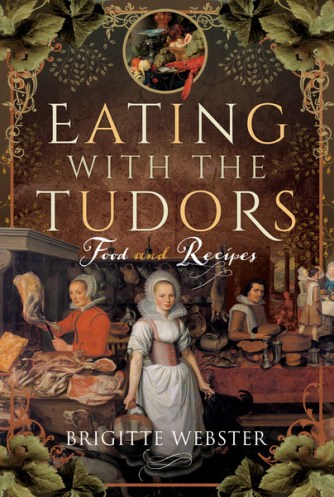
BOOK REVIEW: Eating with the Tudors by Bridgette Webster

Eating with the Tudors is an extensive collection of authentic Tudor recipes that tell the story of a dramatically changing world in sixteenth-century England. This book highlights how religion, reformation and politics influenced what was served on a Tudor’s dining table from the very beginning of Henry VII’s reign to the final days of Elizabeth I’s rule.

Discover interesting little food snippets from Tudor society, carefully researched from household account books, manuscripts, letters, wills, diaries and varied works by Tudor physicians, herbalists and chronologists. Find out about the Tudor’s obsession with food and uncover which key ingredients were the most popular choice. Rediscover old Tudor favourites that once again are being celebrated in trendy restaurants and learn about the new, exotic food that excited and those foods that failed to meet the Elizabethan expectations.

Eating with the Tudors explains the whole concept of what a healthy balanced meal meant to the people of Tudor England and the significance and symbology of certain food and its availability throughout the year. Gain an insight into the world of Tudor food, its role to establish class, belonging and status and be tempted to re-create some iconic Tudor flavours and experience for yourself the many varied and delicious seasonal tastes that Tudor dishes have to offer. Spice up your culinary habits and step back in time to recreate a true Tudor feast by impressing your guests the Tudor way or prepare a New Year’s culinary gift fit for a Tudor monarch.

While I am late to the reviewing party, I can assure you I read this book as soon as I could get hold of a copy, just like many others. Brigitte Webster has created a true gem with Eating with the Tudors, a journey into the culinary world of Tudor England, presenting a rich tapestry of recipes and rituals that defined dining in the 16th century. This book not only provides readers with a fascinating glimpse into the flavours and ingredients of the era but also allows a reader to understand the social, cultural, and historical context in which Tudor food was enjoyed.

Eating with the Tudors begins by setting the scene, a picture of Tudor life and society. With meticulous attention to detail, the author describes the sights, sounds, and smells of the Tudor kitchen, as well as the social hierarchies that governed dining etiquette. Through engaging storytelling and historical anecdotes, the book immerses readers in the vibrant world of Tudor gastronomy. Central to the book are the recipes themselves, and Webster presents a wide array of dishes, from hearty stews and pies to delicate desserts and confections. Each recipe is accompanied by detailed instructions, as well as historical notes that provide insights into the origins and significance of the dish. You too can make sweetmeats like Elizabeth gave to Robert Dudley, if you so fancy.

One of the book’s most intriguing aspects is its exploration of Tudor dining customs and rituals. Webster delves into the elaborate feasts and banquets that were a hallmark of Tudor court life, as well as the rituals surrounding everyday meals in noble and common households alike. Through descriptions of table settings, serving practices, and entertainment, the author paints a vivid picture of the social significance of dining in Tudor England. But the book is no boring academic list of info, you get all you need and nothing you don’t, insight and tasty ideas all in one. The book is accompanied by a banquet of photos to give you a visual insight into the tastiness of the era.

Eating with the Tudors is already a much-loved feast for the senses and the intellect. Bridgette Webster’s blend of historical scholarship and culinary expertise makes this book a must-read for anyone interested in Tudor history, gastronomy, or the intersection of food and culture. Whether you’re a food enthusiast looking for new recipes to try or a history buff eager to learn more about life in the 16th century, this book is sure to satisfy your appetite.

(excuse my lazy food puns)

Eating with the Tudors is available from Pen & Sword

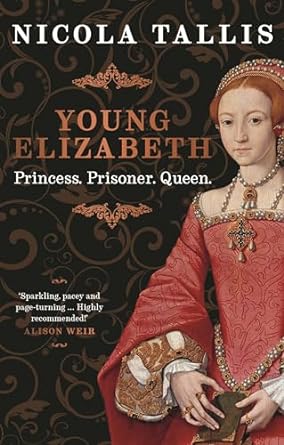
BOOK REVIEW: Young Elizabeth: Princess. Prisoner. Queen by Nicola Tallis

Elizabeth I is one of England’s most famous monarchs, whose story as the ‘Virgin Queen’ is well known. But queenship was by no means a certain path for Henry VIII’s younger daughter, who spent the majority of her early years as a girl with an uncertain future.

Before she was three years old Elizabeth had been both a princess and then a bastard following the brutal execution of her mother, Anne Boleyn. After losing several stepmothers and then her father, the teenage Elizabeth was confronted with the predatory attentions of Sir Thomas Seymour. The result was devastating, causing a heartbreaking rift with her beloved stepmother Katherine Parr.

Elizabeth was placed in further jeopardy when she was implicated in the Wyatt Rebellion of 1554 – a plot to topple her half-sister, Mary, from her throne. Imprisoned in the Tower of London where her mother had lost her life, under intense pressure and interrogation Elizabeth adamantly protested her innocence. Though she was eventually liberated, she spent the remainder of Mary’s reign under a dark cloud. On 17 November 1558, however, the uncertainty of Elizabeth’s future came to an end when she succeeded to the throne at the age of twenty-five.

When Elizabeth became queen, she had already endured more tumult than many monarchs experienced in a lifetime. This colourful and immensely detailed biography charts Elizabeth’s turbulent and unstable upbringing, exploring the dangers and tragedies that plagued her early life. Nicola Tallis draws on primary sources written by Elizabeth herself and her contemporaries, providing an extensive and thorough study of an exceptionally resilient youngster whose early life would shape the queen she later became. The heart racing story of Elizabeth’s youth as she steered her way through perilous waters towards England’s throne is one of the most sensational of its time.

Young Elizabeth is another excellent book by Nicola Tallis, which provides a compelling and detailed account of the formative period in the life of one of England’s most remarkable monarchs. The author offers a captivating exploration of Elizabeth’s upbringing, education, and startling early experiences, shedding light on the scandalous events and influences that shaped her into the iconic queen she would become.

The book begins by immersing readers in the world of Tudor England, setting the stage for understanding the complexities of Elizabeth’s early life. With meticulous attention to historical detail, the author paints a picture of the political, religious, and social dynamics of the time, providing essential context for understanding Elizabeth’s place within the Tudor dynasty.

Central to the book is the examination of Elizabeth’s childhood and adolescence. Tallis delves into her family background, her relationships with her parents, Henry VIII and Anne Boleyn, and the challenges she faced as a young princess navigating the uncertainties of the Tudor court without the guidance of a parent. Through careful analysis of contemporary sources and historical records, the author offers valuable insights into Elizabeth’s character, temperament, and early ambitions. I have always wondered about Catherine Parr’s decision-making in 1548; did she turn against Elizabeth, or did she look to save the girl? I won’t spoil anything, but the book helps a reader reach their own conclusions.

One of the most intriguing aspects of the book is its exploration of Elizabeth’s education and intellectual development. Young Elizabeth discusses the tutors and mentors who shaped Elizabeth’s mind, including scholars like Roger Ascham, who recognised her exceptional intelligence and thirst for knowledge. By examining Elizabeth’s studies in languages, history, and philosophy, the author reveals how her early education prepared her for the demands of leadership. But surely nothing could prepare Elizabeth for the betrays she suffered during her brother’s reign, and the mark of traitor placed upon her under her sister’s reign. By the time Elizabeth was crowned, she had already lived several lifetimes of difficulty.

Young Elizabeth provides a fascinating glimpse into the political and religious turmoil of Elizabeth’s youth. As always Nicola Tallis gives us a masterful and illuminating tale of the formative period in the life of one of England’s most legendary monarchs. The author’s engaging prose, combined with meticulous research and scholarly rigor, make this book an essential read for anyone interested in Tudor history, remarkable women, and the dynamics of power and politics in early modern Europe. It would be unwise to miss out on a book by Nicola Tallis.

Young Elizabeth is available everywhere, including Amazon