SPAIN BOOK REVIEW: ‘Nada’ by Carmen Laforet

nada

One of the most important literary works of post-Civil War Spain, Nada is the semi-autobiographical story of an orphaned young woman who leaves her small town to attend university in war-ravaged Barcelona. Edith Grossman’s vital new translation captures Carmen Laforet’s feverish energy, powerful imagery, and subtle humor. Nada, which includes an illuminating Introduction by Mario Vargas Llosa, is one of the great novels of twentieth-century Europe

~~

Nada is one of those books which sat in my to-read pile for far too long. Classics sit waiting while newer releases get sent to me for reviewing. Now, after reading this book in one day, I feel the need to facepalm for sidelining such a novel for so long. I find it difficult to connect with fiction (yes, I know…) but this book is an instant hit.

Nada is the story of 18-year-old Andrea, an orphan who moves to Barcelona from the country, to live with maternal relatives while starting university. Andrea had visited her grandparents’ home before the civil war as a very young child, and was filled with loving memories of city life. But life on Calle de Aribau has become a nightmare.

Gone is the lavish apartment of her family; now they in one half of the house, a dark, scary place filled with odd objects like a grand piano, huge mirrors, big heavy unused furniture and a candelabra, a hint of the former life of the family. As time passes, each of these expensive once-loved items gets sold off to pay for food and hope of survival. The opening chapter where Andrea meets her family is dark enough – they are like skeletons, ghosts in the night, in a home where a cold shower is relief from company, but the damp stains on the wall look like evil clutching hands. Andrea’s grandmother is a starving, frail old woman, surrounded by her adult children – Román, a vile man with hidden depths, tortured by the Republicans for being a Francoist spy. His brother, Juan, an artist who hates his life, beats his wife without remorse, with a demeanor of a broken man who has deeply suffered during the war. Gloria, Juan’s wife, a beautiful but simple-minded woman, who feeds everyone by leaving her baby son at home and winning card games in Barrio Chino. Andrea’s grandfather has died, like her own parents, and are unexplained, by it’s easy to imagine what may have happened to them.

The creepiest character lies in Angustias, the aunt from hell. She is a religious fanatic, who, in standing with her high and mighty attitude, sees Andrea as her charge, who needs to be broken and obedient. Angustias is hell-bent on making sure Andrea has no life, sees nothing, hears nothing, experiences nothing. As Angustias fails and hates Andrea, who has done nothing wrong, she tells her that she should have been beaten to death as a child. Angustias has been hiding a hypocritical lifestyle for so long that she has become almost insane. Even the crazy maid, Antonia, is a horrid and bewildering.

Andrea is a saint for coping with these vicious and hateful people in a dark, freezing cobwebbed environment. While the past hurts and torments her family, Andrea tries to break out – she makes friends, hangs out with artists, meets boys she doesn’t really like much, but reality  is still in the way. Andrea’s close friend Ena is wealthy, which puts a gap between the pair. Ena has the attitude of a child who has wanted for nothing, and has the luxury of wanting and experimenting. Andrea is starving, resorting to drinking water the family’s vegetables have been boiled in. Old pieces are bread are treats.

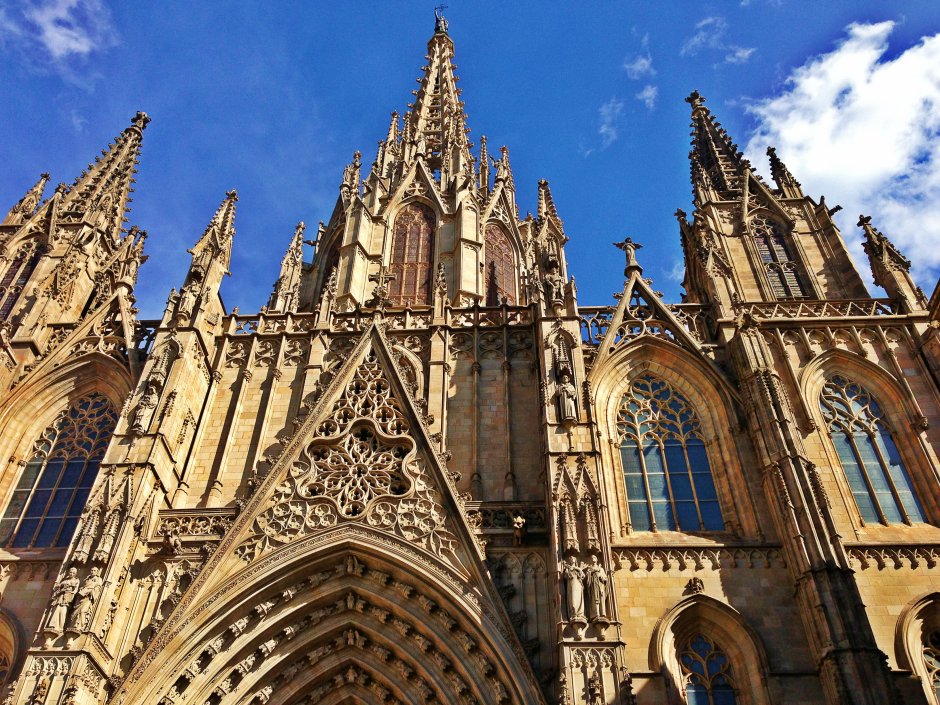
The book shows the pain of Barcelona post-war in human terms. With its will crushed by Francoism, some have flourished and the losers have been ground down to nothing. Being sniffed out by police for being a ‘red’ is still a threat. Work is hard to find, and money is only for some. The cathedral, in its religious beauty, shines like a beacon while people starve in the alleys nearby. There is little hope for people like Andrea. As the stories of all the characters come together, the haves and have-nots have history that provides both a big twist, and ultimately, a vicious death.

While the Barcelona that Andrea lives in no longer exists, the book gives a perfect feeling to post-war reality. The book was autobiographical, written after Carmen Laforet went to study in Barcelona, before moving on to Madrid. This book will leave you wondering about the long-term fates of all the characters (and their real-life counterparts), if indeed they had one at all.

Nada was published in 1945, the first of LaForet’s novels. If you prefer English, it was excellently translated by Edith Grossman in 2007. Don’t wait to read another week to read Nada.

SPAIN BOOK REVIEW: ‘The Angel’s Game’ (El juego del ángel) by Carlos Ruiz Zafón

In an abandoned mansion at the heart of Barcelona, a young man, David MartÌn, makes his living by writing sensationalist novels under a pseudonym. The survivor of a troubled childhood, he has taken refuge in the world of books, and spends his nights spinning baroque tales about the city’s underworld. But perhaps his dark imaginings are not as strange as they seem, for in a locked room deep within the house lie photographs and letters hinting at the mysterious death of the previous owner. 

Like a slow poison, the history of the place seeps into his bones as he struggles with an impossible love. Close to despair, David receives a letter from a reclusive French editor, Andreas Corelli, who makes him the offer of a lifetime. He is to write a book unlike anything that has existed – a book with the power to change hearts and minds. In return, he will receive a fortune, perhaps more. But as David begins the work, he realises that there is a connection between this haunting book and the shadows that surround his home. 

~~

The first installment of this series, The Shadow of the Wind, was a triumph and to follow-up such a tale would have been a huge undertaking. But this book, The Angel’s Game not only continues the story, it also becomes a whole tale on its own and makes Barcelona come to life in a dark, gloomy way.

The story starts with David Martín as a young boy of a murdered father, working as a writer for The Voice of Industry. He manages to get himself work writing fiction, dramatic over-the-top murder mysteries for the newspaper, which doesn’t turn out to be as fun as he thinks it will be. Thanks to having a wealthy friend, Pedro Vidal, a failed writer to lean on, Martín is lucky to eek out a living in gloomy and depressing Barcelona.

Martín’s fortune changes when he gets a new publisher, two greedy men who aren’t worth his time, and Martín is able to lease the tower house of his dreams, an ancient and dismal place where he quickly falls into a habit of writing and neglecting his life and self. Writing as Ignatius B. Sansom, Martín pumps out dark murderous novel after novel, barely eating or sleeping. He soon finds that his 20’s are just rolling by as he sits at the top of his poisonous tower house and bleeds onto his typewriter.

Gothic is the best way to describe the scenes as Martín goes through many changes in 1920’s Barcelona. The scenes are rich and easy to understand, and the characters, while all dark and troubled, are all equally entertaining. Enter Andreas Corelli, a French publisher with an offer too good to be true. With love-life trouble of the highest order, Martín has little else to do but work on the most dreary and thought-provoking novel, one never quite accurately described. A fable, a religious work, a family story – but what ends up on the pages turns out to be pure evil.

As Martín deals with increasingly terrifying meetings with Corelli, ‘the boss’, the history of the tower house and the last writer who lived there and attempted to write a great tale takes ever murderous and scary turns. From basements filled with dummies, evil dogs lurking in the shadows, doves stabbed through the heart, an ageless boss who smiles like a wolf, fires and disasters all over the city, and even a spiderweb-like tumour, Martín’s life descends into madness.

As this book is the prequel of the first in the series, Martín has one bright spot in his life, the Sempere and Sons bookstore. The characters are the grandfather and father of Daniel Sempere, protagonist of the first book, and give more insight into the lives of the Sempere family. Another bright spark is Isabella, a young aspiring writer who latches herself onto Martín and is his saviour multiple times over. Isabella is the only person who can cope with Martín and his bleak attitude, and it’s great to have a strong female character in a book that isn’t there to be some kind of love interest, but a fully fledged character with thoughts and actions that contribute to the story.

The first half of this book is immense; the detail and the writing is superb. Through the latter half of the book, hints fall from all over to give the full picture of what is happening to Martín as he fights to stay alive and try to protect those he loves. Both his friend Pedro Vidal and his wife Cristina, the love of Martín’s life, get in the way of Martín’s spiralling determination to discover the fate of the last owners of the tower house, and the whole picture becomes very desolate. In the end, the body count is high, prices are well and truly paid and Martín’s fate is disturbing indeed.

I rarely read reviews by others before I review, so it doesn’t influence my own opinion, but I couldn’t resist reading a few between reading and reviewing. Yes, this book is very complex, and it seems that this book divides people. There are people who relish the florid prose and detailed vision of the author, and some seemed disappointed. Some felt the book was too complicated at the end. Personally, there are so many hints to the fate of Martín and of Andreas Corelli. Yes, there is a huge cache of characters to follow, but with such vivid descriptions, I felt it easy to keep up and the outcome, to me, was sad but simple. This book is far removed from the first in the series, it’s a dark prequel which only has a slim connection to the first book. Readers should be prepared for that fact. There is a third book in the series, which I will review next week, and that ties together The Shadow of  the Wind and The Angel’s Game  beautifully, for all to see. If you do find The Angel’s Game complex, you should read the third book, as it gives you a clearer picture of the characters and how they bind together.

The first book is a dream; no question. The Angel’s Game feels like the author let go and wrote everything he had ever dreamed of, and was given all the rope he needed to produce the work he loved. If I was asked to pick which book is best in the series, I would say The Angel’s Game is the narrow winner, because it’s dark, complex, sophisticated and you can feel the dampness of the tower house, the pain in Martín’s head, the warmth of Sempere and Sons bookstore and the ice underneath Cristina’s bloodied feet. I did a little Carlos Ruiz Zafón wander last May on my last visit to Barcelona, and he makes the city seems so alive in all new ways. This book is for everyone who wants characters who hold nothing back. Just don’t sit alone in the dark while you read.

A LITTLE JAUNT TO SPAIN – REVIEW PART 8: I Don’t Trust Anyone in Spain… or their Sangria

Blogging has been tough lately. I read about Spain and the posts are mostly about food experiences, or “oh, Spain is so pretty and shiny”, or “Spain is going down faster than a $2 hooker”. What does someone like me, who stands in the middle, post about without sounding like a whiner? It’s impossible.
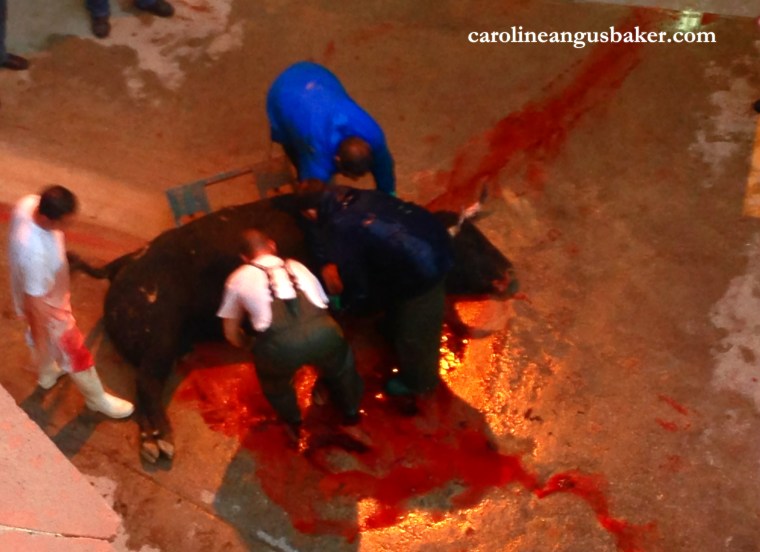
bulls1

A not-so typical holiday snap

I’ve made mistakes in the past, and I’m the first to admit that. Fortunately, Spain is a place that allows people to make mistakes and move on. I once had the opportunity to spend a few years living in Spain, and get to experience being an expat in a country where few of my countrymen and women go to live life abroad. So, when I found myself with the opportunity to have the chance to go back to Spain purely as a tourist, I thought that would be a piece of cake. Turns out I was very wrong.

I first went to Spain in 2005, and landed in Valencia on a hot summer day. After the tidiness of the airport in Auckland, the ruthless chaos of San Francisco, the soulless efficiency of Munich, (the then) basic and dilapidated airport was a real sight. I joked to my husband that it was the kind of the place you expected to see live chickens in cages moving along on the luggage carousel. Imagine the laughter when we heard the call of a rooster only moments later – it turned out to be the ringtone on the phone of our friend who had come to pick us up. With suitcases, prams, portable cots and many other baby items, myself, hubby, and our one-year-old and newborn sons got to see Spain for the first time. Lucky I was 24 and had the exuberance of youth on my side; because after Spanair broke my $1000 double pram, my mood wasn’t terrific. I met another friend at the hotel, who said I could get straight into flamenco classes. Bless him, he had only been in Spain a few months himself, and still full of the joys of expat life in Spain. Of course, Spain wasn’t full of flamenco and sangria – it was real life instead.

63

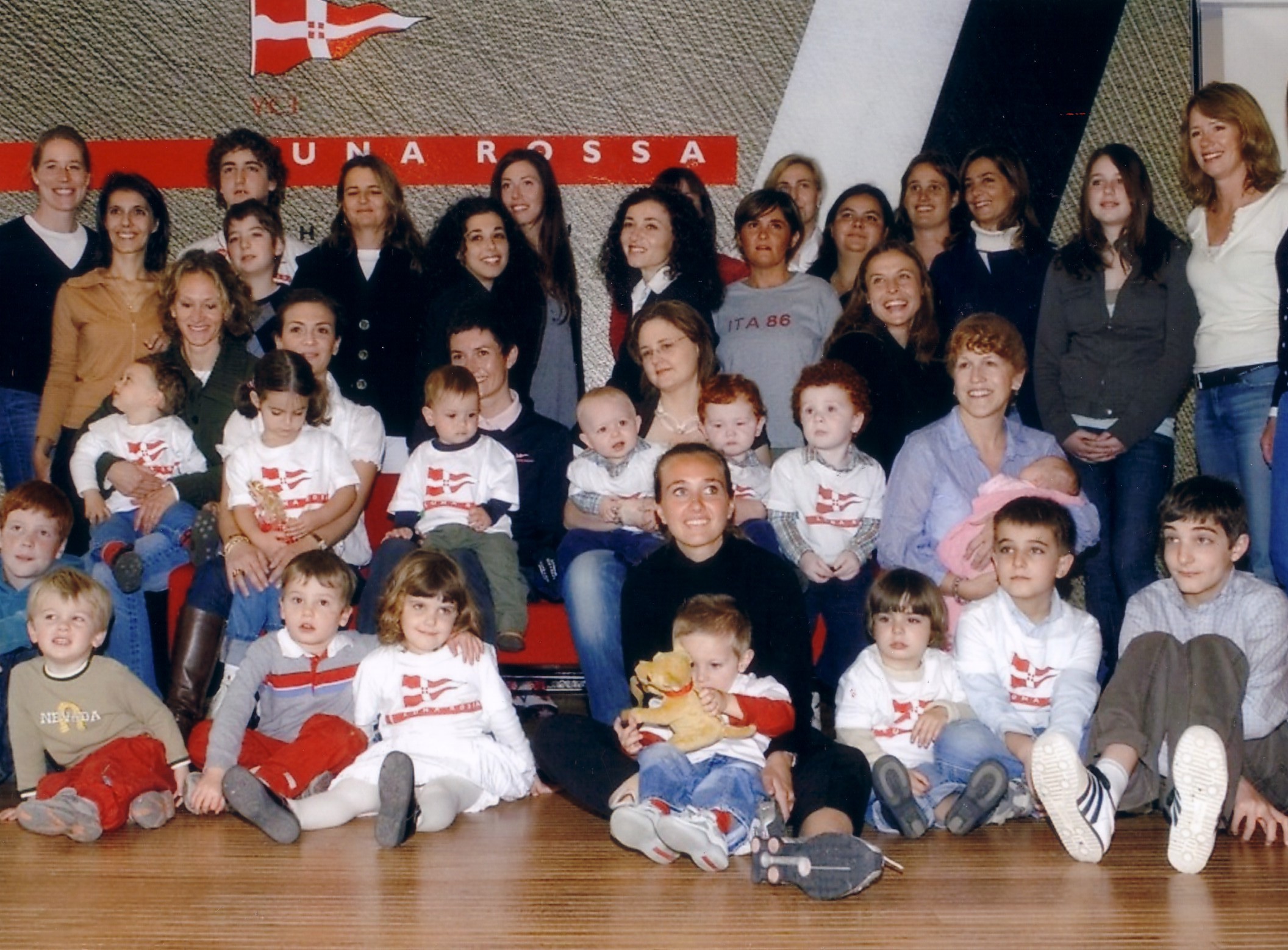
How many friends can fit in one photo for a magazine shoot? Which magazine? Gente in Italy, I think. Don’t quote me

After my complicated permit to live in Spain was revoked in late 2007, I had only just got the hang of Spanish life. There is a beauty of living abroad; you get the reality of living there, combined with only having to take on the customs you choose. You can understand the place, but not be weighed down with a lifetime of expectations or stereotypes. Expats can really live it up; life is filled to the brim with experiences, trips are taken, foods are tasted, wines flow freely, friends are made, and rose-tinted glasses can get you a long way. You also have reality to pull your head from the expat clouds – your health insurance is a constant drama, your language skills always need work, if your gas stops working you know you will wait two weeks for the repair guy to show up, and visiting the bank is an exercise in endurance. Don’t get me started on the hassle of registering a birth of a baby that has foreign parents, and was born in the Alacant region, not the Valencia region, so you need to blah, blah, blah.
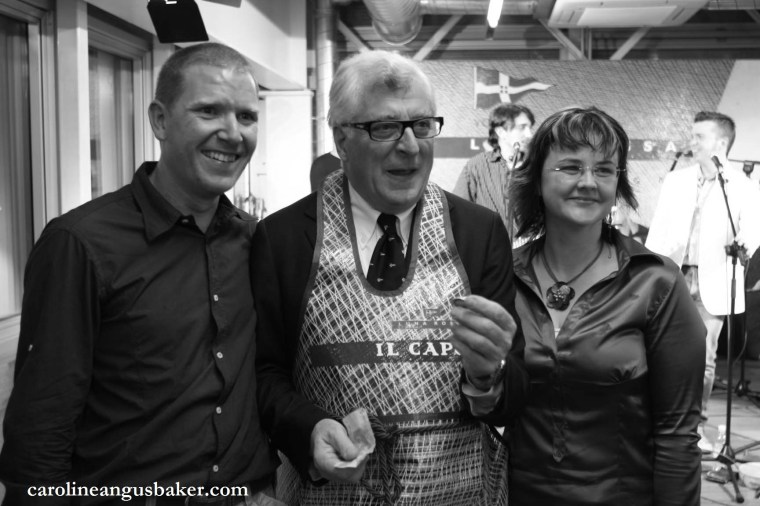
xmas2006a

Expat odd moment – because everyone has given money to a billionaire while he wears your homemade apron, that happens all the time

What I learned is that I couldn’t trust anyone in Spain, because as with living there or being a tourist, no two people experienced the country in the same way. One week after I arrived in Valencia, I shared a lift ride with an American woman. Turned out we were going to visit the same friend. Her husband and my husband had come to Spain for the same jobs, and she had been in Spain for several months. She asked me how long I had been in Valencia, and I said one week. Her reply – “give it two weeks before you decide you hate Spain. Everyone hates it, but give it at least two weeks”. (SERIOUSLY – to this day, we still laugh about that). How does that advice help me learn about Spain? It doesn’t. I suspect the reason her husband was a cheat was because he got sick of her complaining. I lived in a community that left me surrounded by expats from many different nations, due to the reason I went to Spain (it was the America’s Cup, that may mean something, it may not. Your call). I had the best of everything in Spain and felt no need to apologise for that. I loved my life there. However, the bubble I existed in was not Spain, it was a lie. It got to the point where many people had no idea about the place, hated so many things and formed a comfort zone around themselves, until we could leave again (note – that’s a generalisation, some people are amazing friends with open minds and hearts). One guy took years to go into Valencia’s old town and then went to the Mercado Central, and had to panic call a friend to rescue him. The notion of Spaniards, speaking Spanish and buying fresh food freaked him out because it wasn’t like home. True story.

n824058539_740802_3060

I’ll pass, thanks

About a year into my adventure, two friends were talking. One said “should we go to  (insert generic closed down bar here)”, and the other said, “no way, it’s always full of whining Aussies and Kiwis.” Ouch. I felt relieved to have never gone there. It burst the expat bubble with spectacular success. When I left Spain, I thought I had built up a realistic opinion of the country. To understand the nation and the culture, I studied the history. I grew to understand the politics and the origins of customs (alas, the freedom of time!). I left Spain with double the number of children I started with, and that in itself opens the eyes. An expert on the place? Hell no, it takes far longer to fully understand Spain. It was never my intention to stay away from Spain, but more important things came my way.

Fast forward six years, far more study, novels written and passionate debates abound, I decided to go to Spain for a few weeks just to help me out with writing, to see friends and soak up the ambiance, which I knew had changed remarkably in my absence. So, would it be easier to be a tourist, after knowing so much about the country? This time, would it be all sangria and sunburn? Nope. I fear knowing Spain well only made it harder.
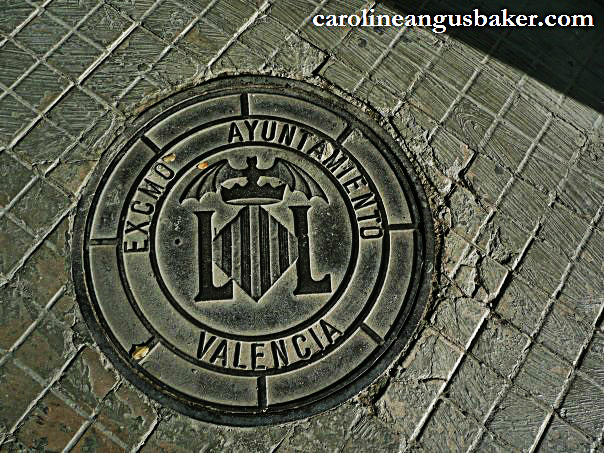
vlc

Valencian manhole cover – as you do

This is why I can’t trust anyone in Spain, because no two people see Spain in quite the same way. If you’re from the UK or Europe, a trip to Spain sounds like nothing much. Everyone does it, all the time. Most go to the same few places, like the Brit and German invasion of the beaches (I hate the beach). I couldn’t read guide books before my trip because a) they suck, and b) I wouldn’t learn anything. After booking my trip, my enthusiasm plummeted. Had I shot my own holiday in the foot faster than King Juan Carlos can take aim at an elephant or family member? But, as I did when I lived in Spain, I decided to grab the opportunity and shake it until its balls hurt. No time-wasting for me!

Talk about mixed feelings. One morning was spent on a tour to El Escorial (yes, a organised tour group – don’t hate me, I’ve done enough self-loathing for us both) and those on the trip seemed to have a good time. They felt like they were educated and saw all the sights. I felt rushed and given info I already knew.

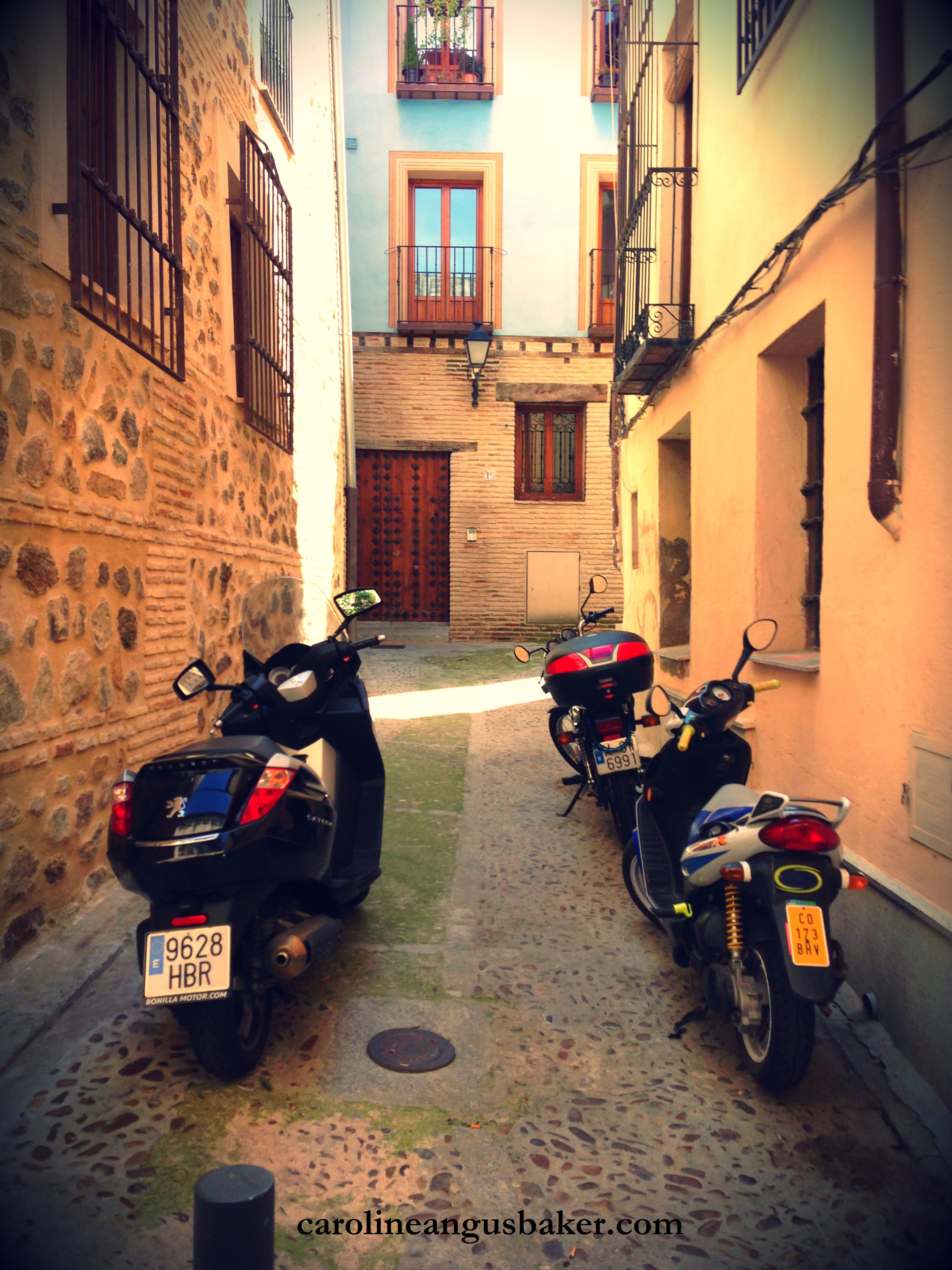
Toledo – you will have to hold a gun to my head to make me visit again. I imagined the battle for the Alcazar during the civil war, but all you will find there are tour groups led around by disinterested chain-smoking guides who don’t take you to the best sights. But who decided which are the best sights? That’s the trouble, the Spain I know and want to see and that of others are totally different. I remembered that piece of my own advice and carried on alone.

toledo

All I could hear was the sound the customs officer would make as he had a heart attack upon my return home

Avíla and Segovia – two places I don’t know well. I met up with a gay couple and a lovely English woman, all on a getaway from work and we had a good day out. Was it Spain, or the people I met? The people and the upbeat attitude.

Barcelona – I felt conflicted the entire time. I went out one evening and had laughs with friends and had a good time. Was trying cheese the highlight? No, it was getting an evil glare of a balaclava covered riot policeman outside the town hall building during a protest. Some people don’t put that in their holiday scrapbook, but I thought it was awesome (until the batons appeared). I was relating to the angry mob who are upset at the state of Catalonia. I got to tour civil war Barcelona and feel like I had received a meaningful connection to a city, but got plunged straight back into Americans complaining outside Starbucks  that the coffee doesn’t taste like it does at home. (Tip – YOU’RE NOT AT HOME) But then, many don’t give a toss about the history of Barcelona, so who is right and who is wrong? No one.

toledo2

Romantic postcard image meets reality of living here

Madrid – I wanted to see a bit of civil war-ness and the weather thwarted me. There is still the park, the art museums and the hell that is Gran Via to see, but I didn’t want any of them, though I wandered briefly for specific paintings. I popped into the Dalí exhibit at the Reina Sofia and got crushed by tourists, but then went to their civil war exhibit and had the place to myself (happy dance time). Many other people did enjoy the Prado et al, though. But, the city redeemed itself, in the people I met there. You gain more Spain-ness in a ten minute chat at a bullfight with a guy named Emilio than you can standing in the Prado (Disclaimer, I have ‘done’ the Prado in the past, so whip me with the tourist cane again). I see the Prado paintings and think of them being smuggled to safety during the war and how half a million refugees in France were left to freeze and die while paintings were covered and warm. Does anyone else care? Maybe, maybe not.

Valencia – finally a place where I could breathe! Familiarity with the world’s greatest little city makes a holiday. But do you gain anything out of sangria in a cheap restaurant with English-speaking waiters? So people might, but I didn’t. People flock to the Arts and Sciences, and it’s great, but I feel like I’ve only seen the city when I see a couple kissing in the park (wow, that sounds pervy). Showing a Valencia tourist around the city makes me want to cut my eyes out, but standing at the baseball field watching a portable cricket pitch being set up feels like a good way to spend an afternoon. If I recommend that as a sight to see, people would think me mad.

cuenca

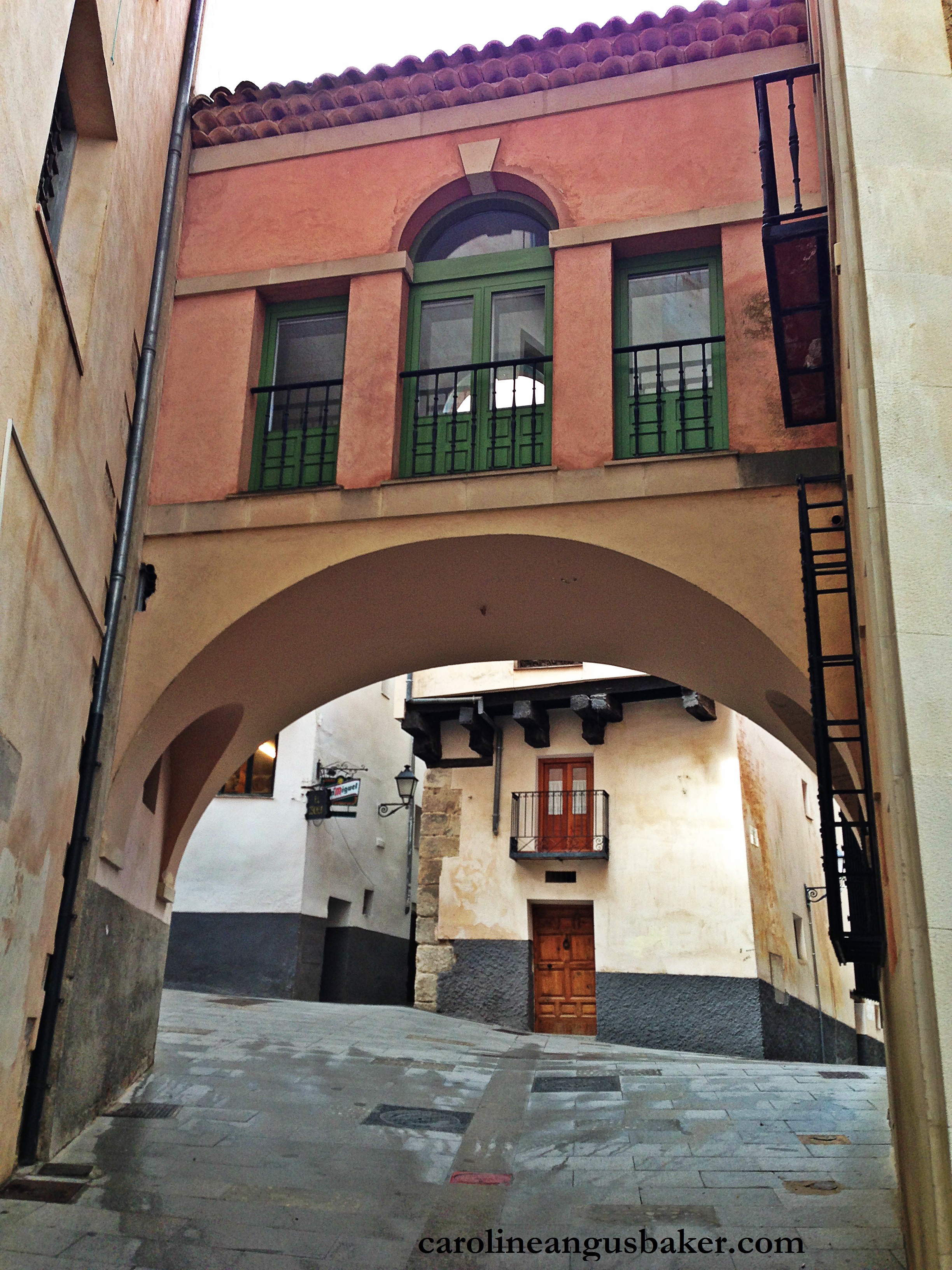
Easy little streets to navigate. And by easy, I mean you will never get anything delivered – ever

Cuenca and Teruel – I didn’t give either of these places enough credit. I just didn’t want to visit (is that awful?) I might try Teruel again (with the right people) while meandering out in Awesome Aragon, but Cuenca? No way.

See what I’m saying? You can’t trust anyone in Spain. No two people can see it the same. I went there with no expectation, and found it hard to dig through the shiny veneer of tourism to find what I felt would make a successful holiday. Every time I sipped a sangria, I felt like I had let myself down (because I don’t like it much, a bit meh. Don’t worry, I tried plenty of other drinks too. No glass went undiscovered).

beers

See? I visited the craft beers, like any good tourist

I Spain I loved –

Buying hairspray at the Mercadona where I used to go food shopping

Sipping wine in Cuenca

Imagining fascist troops in Teruel

Standing the summit sign at L’Oronet

Getting evil looks for talking about Franco in Madrid

Laughing with a maid because we couldn’t get a door open

Taking the No. 19 bus in Valencia

Paying for an umbrella in a Madrid junk shop

The young guy named Carlos at the Cuenca tourist office. He got to try his English, I got five minutes company in an otherwise dull excursion

The Spain I hated –

People who ignore the ‘no photos’ rule! It’s not there to ruin your holiday, they have a reason!

How much Valencia has changed (total foreigner nostalgia moan right here!)

Barcelona – I failed to have anything in common with the place (and I tried!) Though, El Raval was nice

Driving anywhere (and I was only the passenger! Should have gone by train)

Walking around Madrid (the place seems so down on itself these days) Wander Lavapies to wipe out this feeling

Cigarette smoke

Not finding the right mix of alone time and time with friends (yes, my own fault)

The fact my old Valencian neighbourhood is not only devoid of my family and friends, but devoid of all life and soul (thought I was on the scene of a zombie movie!)

English menus (who orders the ironed sepia?)

Complaints from others about Spain (yep, I’m complaining about complaining)

fallera

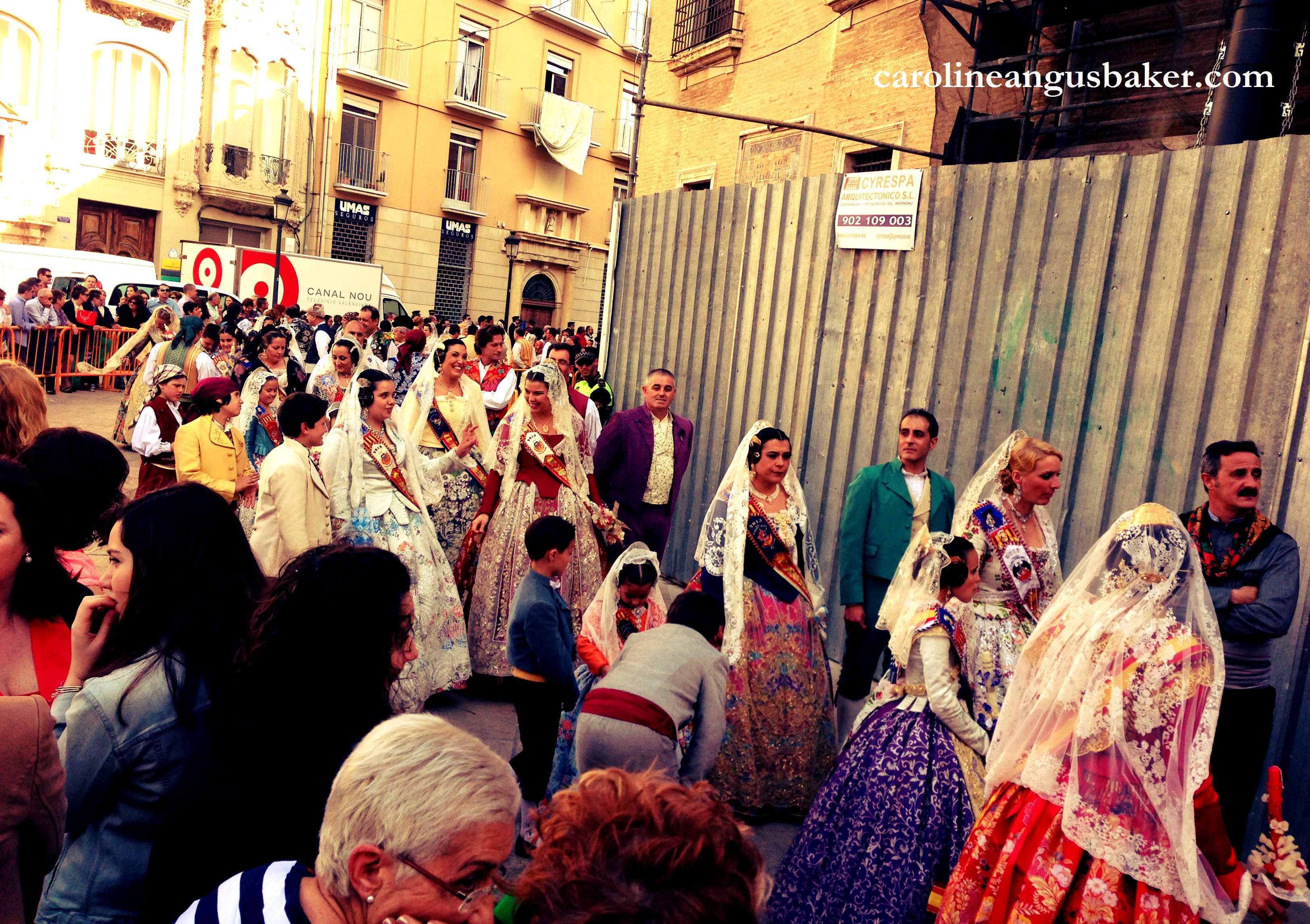
Oh, it’s that time yet again

I can’t trust anyone in Spain, because they won’t see the place like I do. By that theory, no one can trust my opinion either! You will just have to go and experience it for yourself! Will I go again? Hell yeah, I have no doubt about that. The beauty is, I have the power improve my Spain experience every time I visit, because the country gives so much choice. However you enjoy Spain, all power to you. Pick your holiday companions carefully, because if they see it totally different, you could find frustration under every tapa. A civil war researcher and heavy on the political and economic conversationalist like me can’t enjoy Spain with tea-sipping, bullfight and flamenco inquisitor with the dream of Spanish romance in the orange groves.  Lucky Spain is big enough for all of us!

vlc2

When the everyday places are this beautiful, who cares who is right and wrong?

Up next… back to serious posts… Teruel and the back roads of Valencia and Aragon

Click here to see previous posts in the series – Spain 2013 in Review

A LITTLE JAUNT TO SPAIN – REVIEW PART 3: Barcelona and the civil war history tour with Nick Lloyd

Barcelona. The locals are fanatical about their hometown, and tourists flock there like teenage boys to a wet t-shirt competition. I spent three hours on a high-speed train from Madrid, screaming through the Aragon region at 300km/h, imagining what the Spanish civil war fronts in the area would have looked like. The landscape between Spain’s capital and its Catalonian equal changes remarkably, and from each hill, mountain range and abandoned farmhouse, I sat with my face glued to the window (and not the Twilight movie playing inside the cabin….. why, Renfe, why?)

I got to Barcelona and experienced warmth! Yay! Madrid and the other locales of my trip had been mild at best. I got one of those taxi drivers who assumes you are a guiri who doesn’t know they are being taken the long way around to La Rambla. My hotel, Hotel Montecarlo, which is situated metres from a scene written by George Orwell made me feel better. My cheap single room was massive and offered a spa bath that I would never have time to use.

I read George Orwell’s Homage to Catalonia eons ago, when my knowledge of Spain was next to nil. I re-read the book a week before I landed on the Iberian peninsular, to re-acquaint myself with the man and the Barcelona he knew. Orwell’s frustration, and the overwhelming feeling that the Republican factions were all doomed to fail in the war, rang in my ears as I set off around the city on my own.

gotic

Carrer de Bisbe in the Barri Gótic

My goal for the afternoon was to visit Montjuïc Castle and do the self-guided Shadow of The Wind walk. Montjuïc Castle has amazing views of the sea and the city, second to none, and the cable car was good fun. There was an exhibition on Manuel Carrasco i Formiguera in one of the old prison cells. I was pleased to take a look through and the Catalan language didn’t get the better of me. In the middle of a pleasant afternoon, I was the only soul in there. That was the thing that struck me about Montjuïc – the level of tourists put me off. I was tourist too, so I couldn’t point the finger, but as I wandered the courtyard where famous figures of Catalonia and the civil war were imprisoned and killed, it was filled with people visiting the built-in cafes and gift shops. I got the impression that the soul of the place has been wiped. However, if you’re looking for a nice place to visit, by all means, see Montjuïc Castle and the sight-laden Montjuïc area, as some of it is excellent. But I didn’t find what I was looking for.

montjuic

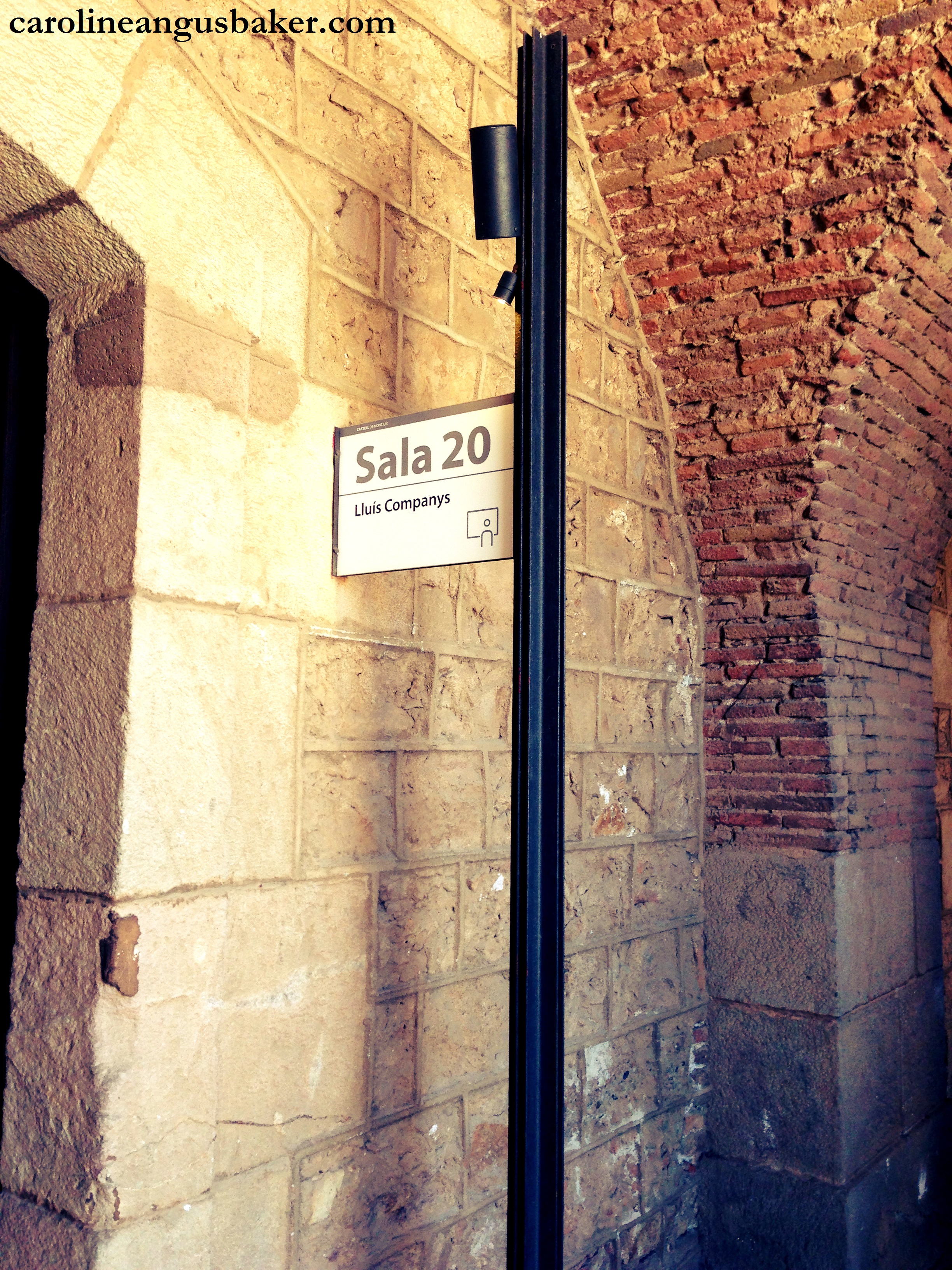
The former cell of Lluís Companys, once-leader of Catalonia, before he was taken out and shot, probably near where you can now buy a ‘I ❤ Barcelona’ shirt

I wandered the Barri Gòtic quarter, my Shadow of the Wind tour map etched into my memory. I wasn’t keen to take many photos (I have ‘done’ Barcelona before), but the swathes of people once again put me off. An evening out with a group for dinner and drinks was fun (great fun with The Barcelona Taste), but I still hadn’t found the Barcelona I was looking for.

anna

The approximate fictional location of the Sempere & Sons bookstore and upstairs apartment in Shadow of the Wind

The next morning, I waited inside Café Zurich in Plaça Catalunya and watched holiday-makers using hand gestures to order breakfast. It was only 10am, yet the city heaved with tourists, many lined up to take the generic bus tour of the city (it could be an easy way of getting around the city if you needed to go to multiple places, however the commentary and delays could be annoying, I would imagine). But I knew my luck was about to change. Enter Nick Lloyd, who arrived right on time. Besides myself, another ten people, couples from all over the world, emerged from the crowds in search of a different Barcelona. A handful of years ago, I didn’t know the first thing about anarchism. It doesn’t sound pretty. However, I now subscribe to their way of thinking and, it seems, so do many others. We didn’t have to wait long before we could have our eyes opened to a whole different Barcelona.

Nick Lloyd is no foreigner in Spain. He may be English but has lived in Spain well over 20 years and you wouldn’t be able to find someone as well-versed on the history of Barcelona, and I am confident there isn’t another person as enthusiastic about its colourful past, either. A quick introduction to one another, and then we stood on the corner of Plaça Catalunya in the shade of the Catalunya a Francesc Macià monument. Despite the frenetic location, Barcelona was allowed to come to life. The nerd in me jumped right in; Nick pointed out a few landmarks which had me happily squealing ‘I know all this’ in my mind (it was too early for me to go showing my nerdiness to the public). As Nick described the hot summer day of 18 July 1936, we could feel it, despite it being an unusually cool May day. Nick’s commentary allows you to feel the excitement that would have buzzed in the Catalonian air as 30,000 CNT works stormed the barracks in search of weapons, ready to rise and defend their city against 12,000 rebel soldiers. However, Barcelona has a civil war history unlike other Spanish locations. They didn’t simply rise up to fight the coup and onslaught of Franco’s rebel army, but they also decided to rise up and fight among themselves – rich versus poor, ideal versus ideal. A great class divide existed in the city and the poor were done with the inequality. With the front line of the war so far from Barcelona throughout the majority of the war, there was still plenty to fight for.

There was no problem imagining the once Hotel Colon (now the Banco Espanol de Credito) occupied and covered in Communist  propaganda and posters of Marx and Stalin, or the people sleeping in the square, some being part of the 6,000 athletes in the city to participate in the Popular Olympics. With the Olympics in Hitler Germany, many athletes boycotted and chose instead to go to Barcelona. But with a war bearing down just one day before the start of the event, instead many foreigners (around 300) became the first International soldiers to take part in the Spanish Civil War. By the looks of the other group members, this is a largely unknown fact, regardless of the nation that my group companions hailed from.

We moved down La Rambla, which as usual heaved with tourists and souvenir stands. We paused outside Hotel Continental, a pivotal spot for George Orwell. With Homage to Catalonia very fresh in my mind, I was able to stand and listen to Nick (who can recite Orwell by heart and with great fervour) recount the tale of Orwell, returning to see his wife and having to be rushed out, as the police were ready to arrest him for being a POUMPartit Obrer d’Unificació Marxista, member (he fought for them but was not Trotskyist, he wanted to be an International Brigader). It was easy to imagine the Barcelona that Orwell saw while sleeping on the street. Out came Nick’s iPad, which is a gold mine of civil war history. With a popular Republican chant playing for us, he asked us to look to the throngs of tourists and instead see the hopeful look of the workers, weapons in hand, walking up La Rambla, with the confidence that their time had come. That change was upon them. At last they would be equals. At last they would have the freedoms they wished to enjoy. We all know that come 29 January, 1939, those ideals were long crushed and the fight was over, among each other and against Franco, but for that brief moment, you could feel the faith and loyalty that came over the people of Barcelona.

la rambla

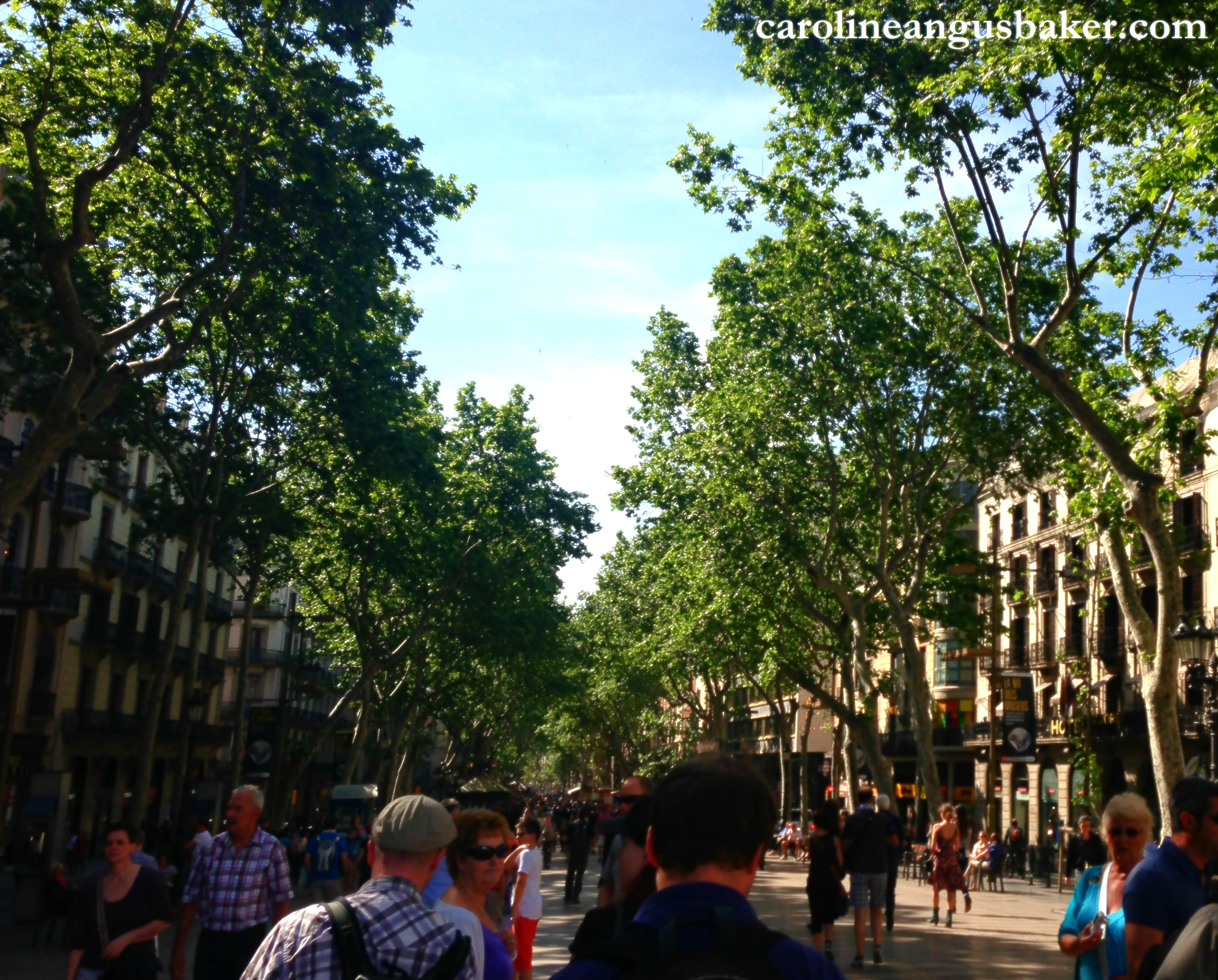
The one quiet spot on La Rambla

hotel c

Orwell’s Hotel Continental

We wandered the narrow streets of the Barri Gòtic and as the tourists began to fall away, and I had the chance to talk with Nick, mostly about the CNT (Confederación Nacional del Trabajo) for my Barcelona based-novel due next year. If anyone could help me out, it is Nick, and he was gracious and informative. Coming to Barcelona had suddenly become worth the trip. We stopped outside the church of Santa Maria del Pi, which has one of the world’s largest rose windows, and it is truly awe-inspiring. If you do a quick Google search, Wikipedia will tell you that the church was damaged in a fire in 1936. If the internet was ever wrong, this is the moment. Nick spares no details of what went on here in 1936. Nick explained how, during the war only 20% of the population were Catholic and the church had become a target as it was a symbol of oppression. My knowledge on this subject was already fairly substantial, but watching the others in the group become familiar with the facts was interesting. In the quiet plaza, it become easy to imagine the church, with its smashed rose window, interior gutted by fire. However, Nick’s trusty iPad provided the shocking photographs (even to me, though I have seen it all before) of bodies of clergy members, dug up and put on display, their dessicated bodies now simply bones, and stood up to show the masses outside churches to spread a message – “look, they are just the same as us. They are not special in any way”. Regardless of your political leanings, I doubt anyone today would approve of such behaviour, but it graphically shows the difference between modern Spain and the chaos of civil war.

A quick wander around into Placeta del Pi, and we got to see a real little gem. During the war, the plaza was renamed Plaça del Milicià DesconegutSquare of the Unknown Militiaman, to honour those who downed tools and took up arms during the uprising.  However, when Franco’s troops came into town in 1939, they slapped a board over the name and it went back to Placeta del Pi. In 2009, while doing restorative work on the church, they plucked the board off, and there it was, still as intact as the day an anonymous painter climbed up with his brush. There is now a memorial plaque also attached inside the plaza to recognise the occasion.

placa

On we went, weaving through the Barri Gòtic and free of the tourists. The quiet alleyways led us to Plaça Sant Felip Neri. Here lies the church of the same name, which has the scars of the war on show for all to see. The pock-marked facade, remnants of a bomb, has become something of a icon. Francoists spread the rumour that the holes in the stone were made by bullets, when Republicans lined up priests and murdered them. Not so, and Nick knows all for those who wish to learn more. On 30 January 1938, a bomb was dropped, one of many in Barcelona’s aerial bombing nightmare during the war. Landing in Plaça Sant Felip Neri, it killed 42 people, many children who had run for the church in search of safety. On our visit to the church, there were a group of children kicking a football around, right in front of the church. 75 years earlier, children were killed on that spot while they looked for comfort and security. Again, Nick’s commentary spares no detail, no gruesome reality, of what Barcelona had become by that time. The war had moved on, and so had the attitudes; disenchantment had set in as lives were repeatedly taken and destroyed. The shiny facade of the city that gets rolled out for the tourist each day didn’t exist on those streets as we wandered and spoke. It seemed easy to understand the desperation that plagued the city.

People had questions as we walked; Nick had all the answers. From significant events to daily life, Nick can give all the details. We popped into the silent Església de Sant Jaume, for a little-known piece of history. This church was burned during the war (as they all were), but Nick had found detailed stonework depicting the events of 1936. I didn’t take photos (I got a weird vibe from the place, and I don’t ‘do’ religion), and I will leave the details so you can learn all about it in Nick’s upcoming guidebook.

We headed up La Rambla, while Nick took the time to stress the most important facts of the CNT to me for my novel. We wandered past my hotel and Cafe Moka, which featured in Orwell’s book. If you want to look hard, you can spot tiny marks, bullet holes long forgotten. The soul is gone from Cafe Moka, it is now refurbished to cater to tourists, who pay a high price for getting an English or French menu. (Honestly, Spanish to English menu translations do my head in. I always say I want a Spanish one if my guiri status gets noticed. It’s a much easier read)

We stop just past Hotel Rivoli next door. The spot was a pivotal location in Homage to Catalonia, as Orwell’s apparent disillusion takes hold. I felt lucky to have all my previous knowledge, because the “May Events” in 1937 are a complex and desperate scenario. Gone are the revolutionary tunes of 1936, and the Rambla is still, a sight hard to imagine in the 2013 craziness. The hotel is the former POUM headquarters and Cafe Moka was barricaded, with the Stalinist police members inside. Orwell is on the roof across the street and shots went back and forward for three days between the groups. His wife was up the road and he couldn’t get to her. Nick can help you understand the disarray the city had fallen into.  Over three days, hundred of anarchists and their cohorts were killed by Stalinists. While the war had two years to run, it marked a real turning point. To the side of the now-hotel, stands a plague in dedication of Andreu Nin, a friend of Orwell, who was arrested in June 1937. Orwell never heard from his friend again and hoped he had escaped. He, and the rest of us, knew a happy ending was unlikely. Nin was tortured and murdered outside Madrid a short time later.

Nin8.5.13

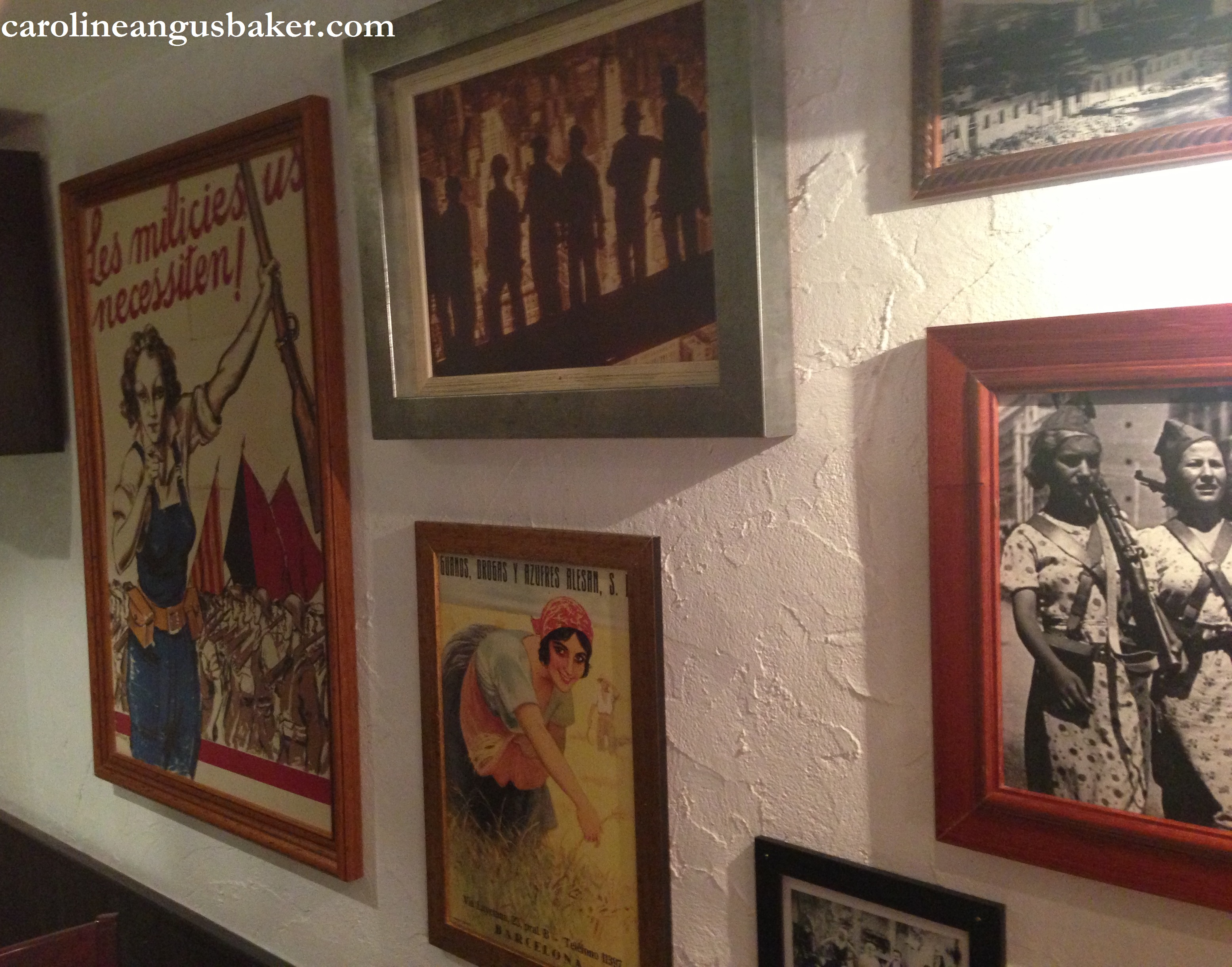
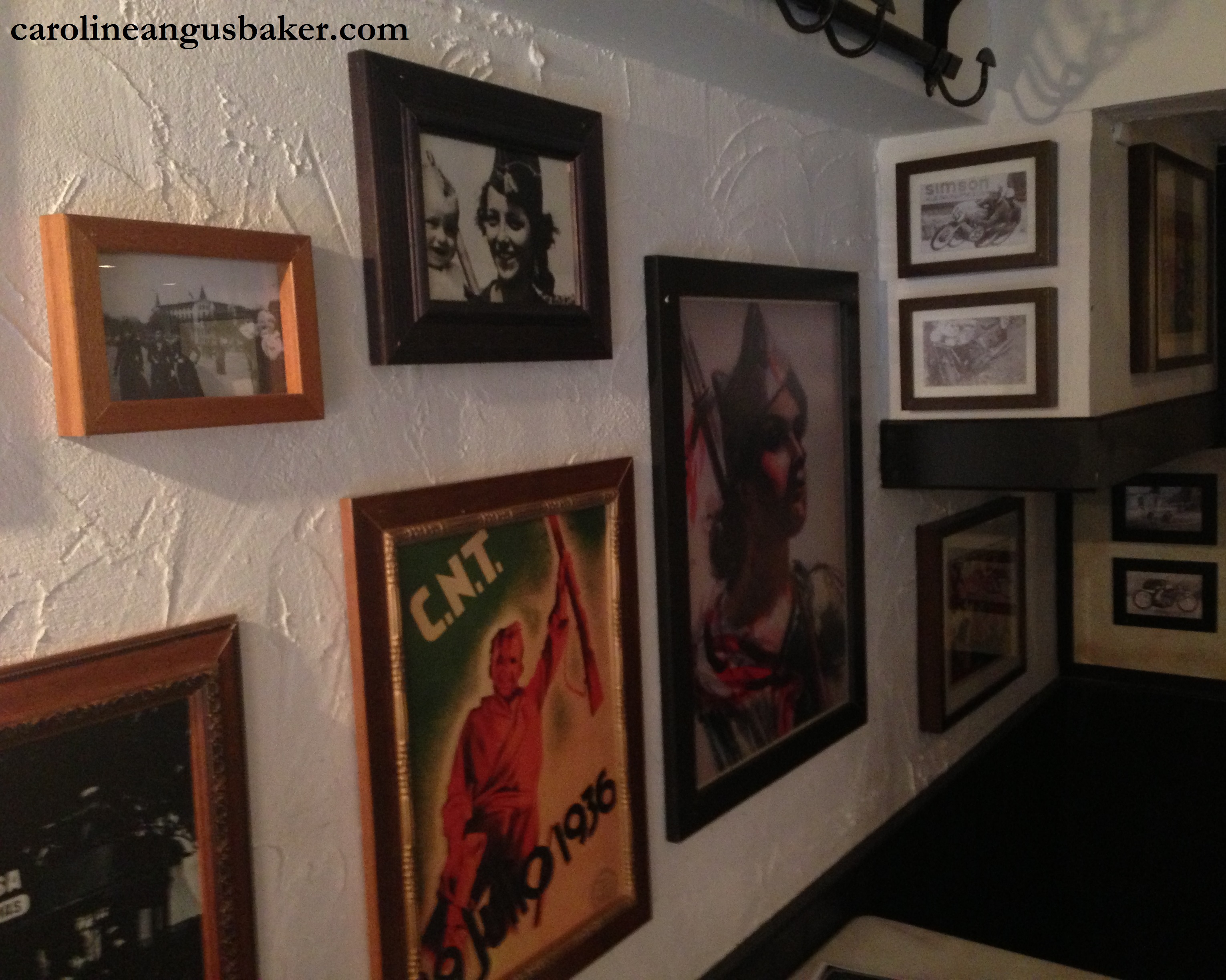
We crossed La Rambla and headed in the El Raval quarter. I don’t know why, but I felt happier and safer in this area, despite being told otherwise prior to the trip. It has more personality than Barri Gótic. It’s noisy, a bit dirty, but has good food, a diverse population and is making no claims about itself. We went into La Llibertària, a CNT co-op bar, and sat down to a twelve-way conversation about all we had seen, surrounded by war propaganda posters. A perfect end. Nick was kind enough to take time for all the questions that the group had, and as a Spanish civil war nerd, I felt really happy to be in the company of people who were genuinely interested in the history and the cause of the people. It seemed perfectly logical that our truly international group would rave about Nick and his tour when he departed.

IMG_2176a

IMG_2182a

I left La Llibertària and wandered El Raval on my own with a smile. I grew up in a working class mining town, so the actions and ideals that the area held during the war were no mystery to understand. A few flags for Catalonian independence hung on balconies. The libertarian anarchism spirit may well still exist in Barcelona, with current political situation with inequality and unemployment.

raval

Carrer dels Tallers in Raval

Before jumping on an eagerly-anticipated train to Valencia, I stopped by Plaça de George Orwell in the Barri Gótic. It’s an unremarkable place, but in an almost-ode to Orwell’s classic novel 1984, it is home to Barcelona’s first CCTV camera. That is worth a smile on its own.

I won’t lie, I felt relieved to get out of the behemoth that is Barcelona. If you want to visit for your first or tenth visit, all power to you. Climb the Sagrada Familia and the Gaudí buildings. Walk La Rambla, buy overpriced fridge magnets and walk the beach. Get crammed into the cathedral and watch for pickpockets (I saved one guy from having his wallet stolen and witnessed another lose his bag, luckily he got it back). I don’t want to accidentally to stop anyone from trying what millions have done before them. I am not a fan of tours of any kind but this trip is one-of-a-kind. You could visit these locations on your own, but without Nick they would just be sites, like the myriad on offer. For three hours and €20, Nick Lloyd can give you a visit that leaves a mark on your soul.

You can read about and book Nick Lloyd’s tour here – Spanish Civil War Tour in Barcelona

You can read over 130 5-star reviews about Nick Lloyd here – Trip Advisor – Nick Lloyd

Up next…. (a fun one) On the road with ‘Blood in the Valencian Soil’

Click here for the other parts of this series – Spain 2013 in Review

 
*in the absence of my notebook I have written this from memory, so please correct me if any war detail is incorrect!