SPAIN BOOK REVIEW: January – ‘The Exile’ by Mark Oldfield

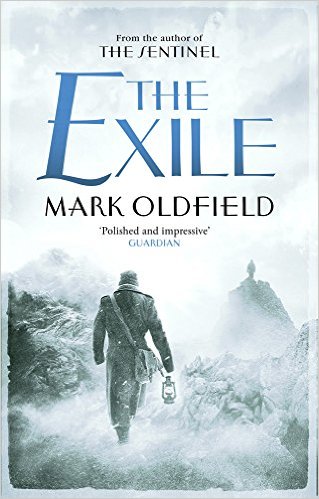
The Exile

1954: Comandante Guzmán is out of favour and in exile. Franco’s one-time favourite secret policeman has been posted to the Basque country, a desolate backwater – in his eyes – of simmering nationalism, unlikely alliances and ancient vendettas.

Guzmán was last here during the war, at the head of a platoon of bloodthirsty Moorish irregulars. Personally, he’d rather forget all that – but up in the hills, he’ll find that he hasn’t been forgotten at all.

2010, Madrid: Forensic Investigator Ana María Galindez has been sent to the Basque country where, sealed in the cellar of a ruined building are three skeletons, each bound to a chair, each savagely hacked to death. In the debris surrounding them, a scimitar, stamped with a name: Capitán Leopoldo Guzmán.

Guzmán is the key that will unlock Spain’s darkest secrets. Guzmán’s name, she’ll discover, is a death sentence.

cover art and blurb via amazon.co.uk

~~~

Here we are at last: The sequel to Mark Oldfield’s The Sentinel. If you are new, the Vengeance of Memory trilogy is based around Guzmán in the 1950’s, and Ana María Galindez in present day, with a few 1930’s war-time chapters for added plot twists. Sounds tricky? Keep up.

The Exile takes a slight leap forward from the end of The Sentinel which (potential spoilers ahead), left Ana María  in a messy state, and Guzmán surrounded by dead bodies. In 2010, Ana María is reinstated in the Guardia Civil, to continue her work as a forensic investigator. Off to the Basque country in northern Spain, she has to examine a scene of a multiple slasher-type killing spree from the 1930’s. The murder weapon is found – and it’s Guzmán’s. Ana María finally feels as if she is getting close to the man. But the bones are quickly forgotten when Ana María is put in charge of an investigation into the stolen babies of the Franco era, which started during the civil war and outlived Franco until around 1991. All the while, she is still suffering from past injuries thanks to Guzmán’s chamber of secrets and not at all over the murder of her father by Basque terrorists, something her memory has blacked out. Ana María believes in science, and with her new assistant Isabel, they come up with statistics – not only were a large majority of babies stolen from private clinics, most of the parents who complained were then killed. When a mother claiming to have had a daughter stolen at birth winds up dead, Ana María finds this old and vicious crime is still going on. The corruption and cover-ups run deep, and has the ability to kill anyone who pokes into fascist business.

Meanwhile, Guzmán is tramping around the wilderness of the Basque country in 1954, with his sidekick Ochoa. Guzmán has freshly killed a terrorist cell, but more remain at large. El Lobo (The Wolf), a mysterious bandit is riding through the forests, killing people and robbing banks. Guzmán has to kill him in order to go home to Madrid. Flashback chapters to 1937 show Guzmán and Ochoa have been north before – and straight away, faces in the small town are very familiar. Everyone wants to be Basque, speak Basque, but it is illegal. No one can be trusted and traitors lurk everywhere. Guzmán has full powers over everyone. With insane killers in power in the region and running loose in the forest, Guzmán needs to fight for his career and his life if he is see through all the murders, terrorists, special informants, inept Guardia Civil men, stupid-hat wearing French smugglers, and traitors on both sides of the political divide. He meets Magdalena Torres, beautiful daughter of a general, and while she seems perfect for Guzmán, with lives on the line and missions to complete, literally no one is who they seem.

I have waited three years to read The Exile after the release of The Sentinel. The format, chapters alternating timelines is the same as I have written, as is the stolen babies of the Franco-era storyline, along with Brigada Especial men like Guzmán. I have finished my series and it is fun to see someone else taking the ideas down a very different path. There is only one side to Guzmán – perverse and savage. Whether he is thinking, talking or acting, he is cruel. He hates everyone, especially himself. So when he is taking a dinner break rather than murdering or intimidating, he hooks up with Magdalena, who is ready to jump into bed with this emotionless man. She too is cold and emotionless. The spark between them doesn’t exist, they instead gravitate toward one another, similar beings in a land of haters. Every speaking male character in this book (almost the entire cast) are perverts. They look every woman up and down with sexual ideas. Women are kept in cells, raped and tortured. Every woman is a whore. A general holds parties where local girls, keen to avoid jail time (for invisible crimes) attend parties naked, there for gratification, to be raped, tortured and/or murdered. One is there purely to be placed naked on a garrotte machine. Women as entertainment for the depraved and over-empowered. Guzmán spends little time on anything except thinking or discussing murder or what’s under a woman’s clothing. I kept telling myself that women where treated poorly under Franco and that was part of the story, but still, the level of violence to women is explosive. Women are only good for two things in Guzmán’s world. Sex and death. One character, a young Basque woman Nieves, someone Guzmán should respect, is still watched naked, and exists for gratification, for torture, beatings, sexual assault by the whole damn world. The constant leering by every male character at every woman is truly evil. Men are in power; women are only whores. There is no other way.

In the 2010 storyline, things are no better. Ana María, a lesbian (which is not made a big deal of in this book, covered in the first installment) is leered at by men everywhere she goes. Every step and a man seemed to be leering or making a sexual innuendo. Ana María attacks a man early on; she shouldn’t be popping painkillers (addiction in disguise), she should be in therapy and on antidepressants. The crime scene early on in the book gets forgotten as the stolen babies take priority, and it takes a long time for her storyline to run parallel with Guzmán’s – almost the end of the book, but it all makes sense over time. One thing Ana María is – BADASS! Going for babysitting and ending up in a gun battle is no problem for fearless Ana María. Her storyline suggests baby stealing continued well into the 1990’s and parents were murdered; let’s hope that part never turns out to be true!

The storylines move nice and quick – accidentally skip a paragraph in 1954 and Guzmán’s body count has risen or another person has turned traitor.  In 2010, in a matter of 2-3 pages, Isabel is introduced, decides to be author, Ana María agrees to work with her, and both are hired by the government. Fast work for life-changing decisions I thought. People with little in common come together in brisk writing so the juicy details can emerge. There is a dam-full amount of juicyness, too. The first 200 pages set the scene, Guzmán being the book’s leader. After that, both 1954 and 2010 battle for supremacy. Guzmán’s end turned out just as I expected, but the twists and turns of Magdalena, Nieves and Bogeña left me feeling flat. In 2010, poor Ana María gets insanely accused, threatening her entire life, stumbles upon an old film reel laden with coincidence (and I mean insane levels) and yet, in the final sentences, ends as I expected – and (almost) hoped for (I had imagined her at least wearing undergarments and/or pants).

I would recommend this book to anyone. There is no detail on Spain’s situation in either periods, the book jumps straight in and readers get pulled along. Reading the first book would definitely be an advantage. I re-read it before picking up The Exile. The violence against women, the leering and innuendo, and the sexually frustrated losers of the book are hard to stomach, yet with all that, the twisting plot, the traitors and unlikable characters like Guzmán and Ana María, the author has produced a hell of a novel. While I liked The Sentinel, The Exile is so much better again, worth the wait for sure.

One tip – Don’t get attached to anyone (that’s easy, everyone’s horrible), because the body count is so high, the Game of Thrones writers should take notes. No one is safe. How the third book winds all the dangling storylines together will be a treat to read. I really don’t know how I want the series to end.

Read my review of the first installment – The Sentinel by Mark Oldfield

SPAIN BOOK REVIEW: ‘Waiting for Columbus’ by Thomas Trofimuk

He appears out of the sea, washed up naked, in the treacherous Straits of Gibraltar. Seemingly delirious, and claiming to be Christopher Columbus, he is taken to an insane asylum in Seville, where astonishingly he starts to reveal the true story of how he set sail on behalf of the Spanish queen five hundred years ago.Consuela, a nurse at the Institute, is charged with helping him back to reality. She listens to his fantastic tales in the hope of discovering the truth. But as his story unfolds, she finds herself falling for her patient – no longer able to tell where truth ends and fantasy begins.Meanwhile, across the continent, Emile Germain is involved in a different search. He’s an Interpol officer on the hunt for a missing person, presumed dangerous. He’s a determined man, and when his investigation leads to Spain these two stories collide.Part romance, part mysterious thriller, this is a rich and emotional novel about love, loss, and the fragile beauty of our own life stories.

cover and blurb via amazon

~~

‘Columbus’, a man who stumbles from the ocean and says he is THE Christopher Columbus. But it’s the 21st century so how can that be true? Columbus is sent to an institute where mental illness staff can treat him. There, Consuela is the nurse on a mission to find this man’s real identity. The trouble is, when talking to Columbus, he seems to know so much, it’s as if he was just washed up from 500 years ago. But the stories have their troubles – Columbus meets his girlfriend at Starbucks and the Queen’s staff have cellphones and carry guns. But sometimes Columbus is so precise and detailed that he must have come from back in time. Consuela is left with such a bizarre puzzle to solve.

Columbus just wants to tell the story of his life, in painstaking detail with little speed, to the impatience of Consuela. She has been told maybe Queen Isabella sent Columbus off to sea because of a love quarrel, and Columbus’ friend is called Juan, a famous long-dead explorer. Columbus has a story to tell, and he isn’t sparing any flourishes of his mind.

The trouble is, someone else is looking for Columbus – a man from Interpol, Emil. Something ugly and messy has happened, and Columbus could be victim, a target,  or a criminal. But Consuela, a single woman with a mind for stories, has been sucked into Columbus and his tale. Between the drama a love, stories, wine and chess, Columbus, Consuela and Dr. Balderas are having quite the time at the mental institution. It is Interpol that would have the truth, if only they could fit all the pieces together.

This is a hard book to review without giving away the end, though sit down and enjoy a twisted world, mashed between the 15th and 21 century, with adventure, love, changes, plots and everything in between. You just need to try to keep up with the crazy Columbus!

SPAIN BOOK REVIEW: ‘A Body in Barcelona’ by Jason Webster

Tensions in Spain are rising: political violence and social unrest have suddenly re-emerged. Madrid is trying to keep a tight leash on Catalonia, where the call for independence is getting louder by the day. The last time Barcelona moved to break away, in the 1930s, Spain quickly descended into civil war.

Down in Valencia, a shallow grave is found among abandoned orange groves just outside the city. Chief Inspector Max Cámara, now heading up the new Special Crime Unit, is put on the case. But this is no ordinary murder. Behind it, Max uncovers a tangled web that could awaken ghosts from the past, decimate Barcelona and destabilise the whole country

It’s all down to Max, but the stakes are higher than anything he’s ever known.

cover and blurb via amazon

~~

I love a huge lover of the Max Cámara, though after the last installment, I wondered how this book would be able to top its predecessor. Turns out that the book had no interest in doing that, rather swinging in an all-new direction. If any book could be listed under #topical, this book would be it.

Max and Alicia are in trouble, and that is no surprise after the ending of Blood Med. I like that the author did not gloss over the effects of Max and Alicia’s last dramatic case, which could have been easy. Rather, realism is put into the relationship between these two.

As ever, Max is jaded and the police headquarters where he world seems to be some type of stagnant, stuffy atmosphere. But up in Barcelona, death and revolution is rumbling. Catalonia wants independence from Spain, and this issue is well addressed in this book (and no, it’s not boring!), so you get a dose of politics with your murder mystery.

Max has to investigate the murder of a child, son of a very wealthy and powerful man. But as Max tries to bring a child killer to justice, he finds himself being dragged toward Barcelona and the boiling state of the people. People are lying, and a mysterious man seems to have plenty of answers, but doesn’t seem to help.

In this book, we see more than just Max’s perspective, as a right-wing nutball Legionarios soldier wants to stop Catalonia from regaining its independence (yes, regaining, do some homework if you are new). Added to that a father and son duo from Valencia who Max sees at their soup kitchen have also gone to Barcelona. Under the spectacular backdrop of the La Sagrada Familia, Max and all the others will come together for an explosive showdown in a city trying to be reborn.

Did I enjoy this book? Yes, and I read it quite quickly too. For me, there was no confusing information, but I think readers unaware of Spain’s political state should be fine. Sometimes I want to shake Max, sometimes hug him, and the fact he isn’t perfect makes for a great main character. I will keep my Catalonian independence opinion to myself, but I do hope that if and when Barcelona becomes free of Spain, it happens with far less bloodshed than the 1930’s.

You could read this book on its own, but treat yourself and start at the beginning of the series. Bring on Max Cámara book 6!

SPAIN BOOK REVIEW: ‘The Spanish Bow’ by Andromeda Romano-Lax

The Spanish Bow
“I was almost born Happy.” So begins The Spanish Bow and the remarkable history of Feliu Delargo, who just misses being “Feliz” by a misunderstanding at his birth, which he barely survives.
The accidental bequest of a cello bow from his dead father sets Feliu on the course of becoming a musician, unlikely given his beginnings in a dusty village in Catalonia. When he is compelled to flee to anarchist Barcelona, his education in music, life, and politics begins. But it isn’t until he arrives at the court of the embattled monarchy in Madrid that passion enters the composition with Aviva, a virtuoso violinist with a haunted past. As Feliu embarks on affairs, friendships, and rivalries, forces propelling the world toward a catastrophic crescendo sweep Feliu along in their wake.The Spanish Bow is a haunting fugue of music, politics, and passion set against half a century of Spanish history, from the tail end of the nineteenth century up through the Spanish Civil War and World War II.
~~
When a book is labelled ‘ambitious’, it mean two things – either a new author has blown away the competition, or someone has over-reached and written a lemon. The Spanish Bow is definitely the former. This book may be a work of fiction, but the real life characters, sometimes obvious, sometimes less so, show Spain’s history in a brave way. Knowing this, I felt certain to enjoy this book.
The book starts off with the birth of the main character, Feliu Delargo, mistakenly labelled stillborn and with a misspelled surname. From his start in poor country Catalonia, he grows up, through time in Barcelona and Madrid, to become a European star as a cellist. It is easy to see real-life cellist, Pablo Casals, in the main character, along with Issac Albeniz, who is fictionalised as piano player Justo Al-Cerraz. Some characters are real-real, such as King Alfonso and his Queen Ena. There is also a young man named Paquito, a lowly ranked young military man from Galicia, subject to bullies. We all know where that is going. There is no mistaking it; the author has researched the 20th century in Spain in much detail, in order to show a fictional life within the real fate of Spain (where have I seen that before? Oh wait – me lol).

Spain is a great mess through its first half of the 20th century (and the rest!). Delargo become famous, and finds that is art can make changes, can have a political voice. Delargo and Al-Cerrez meet Aviva, a Jewish violinist, who is in need of rescue as fascism folds over Europe. The life of Spaniards swallowed by fascism and dictators, as well as the over-reaching pain of fascism through Europe is examined, all through the eyes of fictional characters.  Both music and art history are explored, as well as those rich patrons to whom Delargo plays. How Madrid and Barcelona are considered ‘backward’, how politics stifles so much, and how, in the end, silence is the winner when fascism takes hold, is the focus.

The Spanish Bow is not some happy ending book – how could it be? Delargo only receives praise posthumously. At least, in the epilogue, you can see how Spain managed to pull itself out of fascism. All this in a book that far easier to read than it sounds. Bravo.