SPAIN BOOK REVIEW: ‘Nada’ by Carmen Laforet

nada

One of the most important literary works of post-Civil War Spain, Nada is the semi-autobiographical story of an orphaned young woman who leaves her small town to attend university in war-ravaged Barcelona. Edith Grossman’s vital new translation captures Carmen Laforet’s feverish energy, powerful imagery, and subtle humor. Nada, which includes an illuminating Introduction by Mario Vargas Llosa, is one of the great novels of twentieth-century Europe

~~

Nada is one of those books which sat in my to-read pile for far too long. Classics sit waiting while newer releases get sent to me for reviewing. Now, after reading this book in one day, I feel the need to facepalm for sidelining such a novel for so long. I find it difficult to connect with fiction (yes, I know…) but this book is an instant hit.

Nada is the story of 18-year-old Andrea, an orphan who moves to Barcelona from the country, to live with maternal relatives while starting university. Andrea had visited her grandparents’ home before the civil war as a very young child, and was filled with loving memories of city life. But life on Calle de Aribau has become a nightmare.

Gone is the lavish apartment of her family; now they in one half of the house, a dark, scary place filled with odd objects like a grand piano, huge mirrors, big heavy unused furniture and a candelabra, a hint of the former life of the family. As time passes, each of these expensive once-loved items gets sold off to pay for food and hope of survival. The opening chapter where Andrea meets her family is dark enough – they are like skeletons, ghosts in the night, in a home where a cold shower is relief from company, but the damp stains on the wall look like evil clutching hands. Andrea’s grandmother is a starving, frail old woman, surrounded by her adult children – Román, a vile man with hidden depths, tortured by the Republicans for being a Francoist spy. His brother, Juan, an artist who hates his life, beats his wife without remorse, with a demeanor of a broken man who has deeply suffered during the war. Gloria, Juan’s wife, a beautiful but simple-minded woman, who feeds everyone by leaving her baby son at home and winning card games in Barrio Chino. Andrea’s grandfather has died, like her own parents, and are unexplained, by it’s easy to imagine what may have happened to them.

The creepiest character lies in Angustias, the aunt from hell. She is a religious fanatic, who, in standing with her high and mighty attitude, sees Andrea as her charge, who needs to be broken and obedient. Angustias is hell-bent on making sure Andrea has no life, sees nothing, hears nothing, experiences nothing. As Angustias fails and hates Andrea, who has done nothing wrong, she tells her that she should have been beaten to death as a child. Angustias has been hiding a hypocritical lifestyle for so long that she has become almost insane. Even the crazy maid, Antonia, is a horrid and bewildering.

Andrea is a saint for coping with these vicious and hateful people in a dark, freezing cobwebbed environment. While the past hurts and torments her family, Andrea tries to break out – she makes friends, hangs out with artists, meets boys she doesn’t really like much, but reality  is still in the way. Andrea’s close friend Ena is wealthy, which puts a gap between the pair. Ena has the attitude of a child who has wanted for nothing, and has the luxury of wanting and experimenting. Andrea is starving, resorting to drinking water the family’s vegetables have been boiled in. Old pieces are bread are treats.

The book shows the pain of Barcelona post-war in human terms. With its will crushed by Francoism, some have flourished and the losers have been ground down to nothing. Being sniffed out by police for being a ‘red’ is still a threat. Work is hard to find, and money is only for some. The cathedral, in its religious beauty, shines like a beacon while people starve in the alleys nearby. There is little hope for people like Andrea. As the stories of all the characters come together, the haves and have-nots have history that provides both a big twist, and ultimately, a vicious death.

While the Barcelona that Andrea lives in no longer exists, the book gives a perfect feeling to post-war reality. The book was autobiographical, written after Carmen Laforet went to study in Barcelona, before moving on to Madrid. This book will leave you wondering about the long-term fates of all the characters (and their real-life counterparts), if indeed they had one at all.

Nada was published in 1945, the first of LaForet’s novels. If you prefer English, it was excellently translated by Edith Grossman in 2007. Don’t wait to read another week to read Nada.
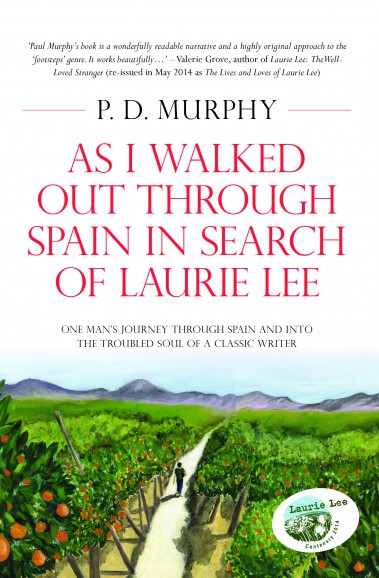
SPAIN BOOK REVIEW: ‘As I Walked Out Through Spain in Search of Laurie Lee’ by P D Murphy

As-I-Walked-Out

Have you ever read a book that changed your life? Had a hero who shared your life? Wanted a second chance in life?

In the summer of 2012, Paul’s life is falling apart: he needs to change things; find some inspiration; he needs to walk out.

Paul sets out across Spain to retrace the footsteps of his literary hero, Laurie Lee. He walks from the Atlantic Ocean in the north all the way down to the Mediterranean Sea. Lee made the same journey in 1935 and walked straight into the perfect storm of the Spanish Civil War and described the experience in his rite-of-passage book As I Walked Out One Midsummer Morning.

Like so many, as a young man, Paul read the book and fell in love with both Spain and Lee. Paul, like Lee, has always dreamed of walking down those white, dusty roads, lined by orange groves, all the way to Seville.

Paul looks deep into the troubled soul of the English national-treasure writer on an emotional journey that stretches to breaking point his relationship with Lee.

Paul is the first writer to fully retrace Laurie Lee’s classic 1935 journey through Spain.

Book cover and blurb via amazon.com

~~

Paul Murphy had a great plan – to retrace Laurie Lee’s step around Spain, as chronicled in his classic As I walked Out One Midsummer Morning. In seeing all the similarities and differences between 1935 and 2012, the author also found himself.

Anyone who has read Lee knows of his style, his matter-of-fact yet poetic prose. British born Murphy has delivered a book with a similar manner – all the details and facts on the trek, along with florid descriptions, amusing anecdotes and a style that is enjoyable to read. Visiting Spain very regularly since 1970, Murphy decided to set out across Spain in Lee’s footsteps, to be written and ready by June 2104, Lee’s 100th birthday. As I Walked Out One Midsummer Morning is a true classic, and to take on this trek would be no easy task, and that is evident throughout reading the book. As I Walked Out Through Spain in Search of Laurie Lee battles many internal demons, such as the issue that heroes can be easily shattered when examined close up. It is easy to idolise, something Murphy did with Lee, but when faced with the reality of Spain, with its powerful emotional pull, Murphy begins to see Lee in a whole different light, far from his pedestal.

Laurie Lee took a long route through Spain, a ferry from the UK to Vigo, and walked to Madrid via Zamora, Valladolid and Segovia. Then we went to Malaga via Toledo,  Valdepeñas, Cordoba, Seville, Cadiz and Gibraltar. Murphy altered the course a little, skipping Gibraltar and visiting Aracena and Ronda. The two-year task from the first steps taken until the release of the book has produced a quite a tale.

The book is laid out as a series of observations by Murphy, peppered with meetings along the journey, with those who fill the author’s conscience and pull him from his beaten path. From flamenco music, to bullfighting, to the fascist call-to-arms, the legacy of the war and Franco years, and lost loves along the way, Murphy delivers all the things people know about Spain, along with finding himself in among the contrasting nation. The book delves deep in the author’s personal life and feelings – lost love, divorce, his relationship with his own family – as a man in his fifties, Murphy goes through an immense change, one many could sympathise with, but perhaps not have the courage to fully understand, let alone express. Spain with its sights, sounds, smells, characters, noise and enlightenment can also be a lonely place, one that can invoke melancholy and a sense of feeling flat. Murphy goes through all the emotions of Spain and sugar coats nothing.

Many of Lee’s writings are open to interpretation and some believe his view too rose-tinted, or even outright lies, but irrespective of these opinions, Murphy does find some of Lee’s Spain still lurking, away from the main centres. Larger towns and cities seem to both educate and show a more modern Spain, with plenty of old opinions still interacting with the 21st century. Like Lee, Murphy is most comfortable in Granada, a wondrous place well described in the book.

We are all searching for something in life, things happen, people change, and Spain is a marvellous place to effect new directions. This huge challenge has been written up by Murphy as if this book was waiting for him all along. Of the 100-plus books I have read this year, only a few have held my interest as much as As I Walked Out Through Spain in Search of Laurie Lee. 

Whether you’re in your late teens like Laurie Lee, your mid-fifties like Paul Murphy, or somewhere in the middle like myself, this book will have something to take away and ponder. Murphy doesn’t try to become Lee, or copy him, but finds his own voice. Honest, fresh and motivating.

Read Fiona Flores Watson’s interview with Paul Murphy here – As I Walked Out: One man’s journey in the footsteps of Laurie Lee

SPAIN BOOK REVIEW: ‘Sketches of Spain (Impresiones y Paisajes)’ by Federico García Lorca

Lorca cover

At age 17, Federico García Lorca travelled around Spain with his university professor and accompanying students. This trip proved a turning point for Lorca, who, at 19, published Impresiones y Paisajes (Impressions and Landscapes 1918), an account of how he saw his homeland.  Lorca wrote this book while in Granada, before he moved to Madrid in 1919 to produce many of his well-known works. Sketches of Spain is a fine chance to read Impressions and Landscapes in English, and hear him find his own voice as an artist.

From the prologue, you can hear and understand Lorca’s prose – ‘Friend and reader: if you read the whole of this book, you will recognise a rather vague melancholy. You will see things that fade and pass on, and things portrayed always bitter, if not sadly”. Clearly, Lorca finds beauty in all things, even in the less-than pristine places that he visits. It feels like less of a story, and more of a poem, or of reading out the words to a song. Lorca finds feeling in everything he discovers on his journeys.

In each chapter as Lorca drifts from town to town, the physical is described, along with the depth of feeling and symbolism he finds in the everyday. Each description is poetic, and delivers on the promises of melancholy, along with flashes of solitude and wanting. Each place is explained until the reader can ‘feel’ them, understand them, and have moments in their own minds triggered by sounds, smells and ideas.  Lorca visits places of religion – monasteries, churches and convents, and sees the beauty in the buildings, but not the nature of them. Lorca seems to feel as if these structures are burdens on towns and people. He clearly finds no solace in religion, nor the people he meets on his visits. He feels that prayers are never answered, and that penitence has no purpose, that instead charity would be a more suitable aspiration.

The poverty of Spain during this time (1916/17) is highlighted, along with the cruelty it inflicts on the populace, yet Lorca finds moments of light within it, showing how this poor lifestyle means people can easily appreciate simple pleasures, such as the smell of their food, or the sunshine on their skin. Galicia is filled with rain, poor children and social injustice; Granada with flamenco and austerity; Castile is a wide open existence of fine scenery but harsh reality. He reflects on death in Burgos when looking through empty tombs. It’s as if Lorca travelled through Spain with his eyes sometimes closed, but the rest of his senses dramatically heightened.

Of Castile, Lorca writes – ‘Eternal death will lock you into the gentle, honeyed sound of your rivers, and hues of tawny gold will always kiss you when the fiery sun beats down… You grant the sweetest consolation to romantic souls that our century scorns, you are so romantic, so bygone, and they find tranquillity and blissful exhaustion beneath your curved ceilings…’

Given Lorca’s young age when he made this trip, it is easy to feel a soul which is still learning of who it will one day become. While you get a real insight into Lorca’s style, he himself is hidden behind the words. The book has been translated into English by Peter Bush, and it rare to find a translation that comes out feeling so smooth and comfortable. The illustrations for the book are done by Julian Bell, and easily reflect the desperate sights where Lorca once tread.

This book would go well with a chair in the sunshine, and a glass of wine in hand. (Sadly, I had access to neither of these things, so have a sip for me!) This book is perfect for escaping reality and to discover how a genius once saw the world.

SPAIN BOOK REVIEW: ‘Blood Med (Max Cámara 4)’ by Jason Webster

Blood Med jasonwebster.net

Spain is corrupt and on the brink of collapse. The king is ill, banks are closing, hospitals are in chaos, homes are lost, demonstrators riot and rightwing thugs patrol the street. The tunnels beneath the streets are at once a refuge and a source of anger. And as the blood flows Cámara roars in on his motorbike…

 Cámara is back in Valencia, with his partner Alicia and his anarchist, marijuana-growing grandfather Hilario. In the old police headquarters, the mood is tense, as the chief hunts for cuts – who will go, Cámara or his friend Torres? The two men are flung into action investigating the suicide of an ex- bank clerk and the brutal murder of a young American woman. As the city erupts around them, their case takes them into the heart of the trouble.

Photo and blurb from jasonwebster.net

~~

Blood Med is the fourth in the Max Cámara series by Jason Webster, following on from Or the Bull Kills You, A Death in Valencia and The Anarchist Detective. The story starts in early summer Valencia, where Cámara is back at work as the Chief Inspector at the Policía Nacional, after extended leave. Living with his now-unemployed girlfriend Alicia and his grandfather Hilario, readers are instantly given an insight into Valencia and its current state.

The King of Spain is close to death, throwing a huge cloud of uncertainty over the country already on the brink of collapse. As pro-Republican supporters hit the streets, ready to reclaim the nation from its monarchy and right-wing government, Cámara is assigned the murder of a young American blogger named Amy. Thanks to cutbacks in the Jefatura, the decrepit boss, Maldonado, has pitted Cámara against his friend Torres, each given separate cases to solve. In previous times, the pair have been found working together to solve cases and eat paella, but now their separate performances will decide who keeps his job, and who loses everything.

Enter a new character, Laura Martín, the only member of the sexual violence team. The differences between Laura and Cámara are apparent; she is blunt and a stickler for rules, and for some reason Cámara continues to call her by her first name, unlike other female members in the squad. As they search for Amy’s killer, Laura is convinced Amy’s Valencian husband is the culprit, while Cámara feels there are other avenues to explore. While the unlikely pair work together to find out why an everyday girl was murdered execution-style, they quickly find there is nobody they can trust.

It is not only Cámara’s professional life that highlights the corruption and despair of living in present day Valencia. Uneasiness hangs over Cámara’s happy home with the prospect of lay-offs, Alicia has no work, and they are helping Hilario, a golden character if ever there was one. Cámara’s grandfather had a stroke (in the previous book) and has relocated from Albacete. The trio work with the homeless living in underground tunnels abandoned after money to complete the metro lines (the same which destroyed Cámara’s home in book two) dried up. People are broke and desperate. Jobs are nowhere to be found and suicide is on the rise as people are forced from their homes by the banks. The streets are filled with protesters, labelled terrorists by the ridiculous and inept regional government. The striking misery of the city attacks Cámara personally, when he is forced to hunt down medication he needs for his grandfather, as pharmacies are no longer paid by the government, leaving people powerless to care for themselves. Immigrants are being harassed, the poor have nowhere to turn, and banks are being shut corralito style so the city doesn’t go bankrupt.

Cámara’s life falls in a deep pit of anguish and torment (have tissues handy) when the realities of the cutbacks to essential services touch him in such a way that it’s hard to believe Valencian’s live such difficult lives. Despite the immense pain of living in Valencia’s dark and brutal reality, there are still deaths to be solved. As Cámara tries to find Amy’s killer and help Torres with his similar killing, a storm of evil rears its ugly head in the crevices of the city, bringing the murders and corrupt bastards which have destroyed Valencia into daylight.

The book is far removed from the previous in the series. The first two almost seem light-hearted in comparison, such is the decay of Valencia, and the third gave readers an imperative insight to Cámara’s life and family. The book needs no stretches of the imagination – it shows what a blight corruption has made on Valencia. The lack of medical supplies, the rising factions – left and right, the violent divide between the rich and poor are laid bare, in a way no other writer has even attempted to portray. Max Cámara is the one of the few characters I look forward to reading, and along with the others around him. Cámara’s girlfriend, his grandfather, those whom he works with, or meets under the city, all have strong characteristics that make you love or loathe them. Driving on Cámara’s motorbike through the streets, the feelings of both the characters and the once-noble city can easily be felt. So many books talk of sunshine, the food, the beaches, but here is a book that takes on another reality, along with the serious issues which face the region of Valencia, distinct from the rest of Spain. This book was released the same week as the abdication of King Juan Carlos, followed by the streets filled with people, calling for freedom, an eerie coincidence indeed.

There are parts of this book I didn’t enjoy, though this is no disrespect to the author. The fact that women are treated as disposable, cheap fuck-toys to hurt and kill with indifference is hard to read, but is a part of how men from certain lifestyles and values see women. The evil, vulgar and sickening behaviour of the cretins in this book could well use a trigger warning for readers who feel uncomfortable with such sexual violence, something that won’t leave my mind in a hurry. That said, the book should not be dismissed as something using sexual violence for entertainment, rather the author has wandered into territory which is reality in a world gone mad.  The book is credible in its portrayal of Valencia and its current state, as is the feeling of those who are faced with having to struggle in this environment. Readers will be desperate for the vicious thugs, from the violent right-wing Franco lovers on the street, to the other super-scum, those in Valencian power, to be brought to their knees (and worse!). Sadly, whether everyone gets what they deserve in their interlinked web of corruption, either in real life or the Cámara series, will remain to be seen.

Five stars to Blood Med. May the Max Cámara series have a long and illustrious life. I don’t read crime books very often; this is a series worth an exception. Cámara may be king, but Valencia has become a dark queen thanks to Jason Webster.

SPAIN BOOK REVIEW: ‘Soldados de Salamina (Soldiers of Salamis)’ by Javier Cercas

Soldiers of Salamis

In the final moments of the Spanish Civil War, fifty prominent Nationalist prisoners are executed by firing squad. Among them is the writer and fascist Rafael Sanchez Mazas. As the guns fire, he escapes into the forest, and can hear a search party and their dogs hunting him down. The branches move and he finds himself looking into the eyes of a militiaman, and faces death for the second time that day. But the unknown soldier simply turns and walks away. Sanchez Mazas becomes a national hero and the soldier disappears into history. As Cercas sifts the evidence to establish what happened, he realises that the true hero may not be Sanchez Mazas at all, but the soldier who chose not to shoot him. Who was he? Why did he spare him? And might he still be alive?

~

Soldiers of Salamis was first released in Spanish in 2001, just one year after the Association for the Recovery of Historical Memory was founded, set on carrying out the task of excavating bodies left hidden after the Spanish Civil War. The author took on the subject of the war in a time when he felt many of his generation were not talking on the subject, and the 2007 Historical Memory Law, giving the task of digging up the past a mainstream light,  was still far away.  In a time when some voices were still just starting to be heard gain, this book clearly points out that history is merely the opinion of who tells the story, and a hero and villain can be hard to identify when faced with individual tales.

The book is put into three parts. The first tells the story of a journalist, given the same name as the author, who decides to find more about the story of founding fascist Rafael Sánchez Mazas. After an interview with the son of Sánchez Mazas, he writes an article on the man, but decides to find out more. He goes on to find the revealing tale of the night Sánchez Mazas is to be executed in the forest, and the Republican soldier who hunts for him amongst the trees and finds in him cowering the dark, and yet turns away and lets him live. Sánchez Mazas goes on to struggle to survive in the hills outside Girona, and after being taken in by a generous family, he meets three Republican men, who know that they are about to be the losers of the war. Despite their differences (Sánchez Mazas is the highest living member of the fascist party in Spain) they become friends in a brief yet solidifying time in 1939. The tale is written as if the author is retelling what he has heard, giving it a personal approach.

The second part tells the story of Sánchez Mazas, biography style, of an upper class man who shows great talent for writing, but cares little for publishing his poetry. Married to an Italian, he sees value in Italy’s fascism policies and seeks to recreate such ideals in his home nation. After hiding in the Chilean embassy for the first year of the war, he is then taken prisoner on the ship Uruguay until the end of the war, when he is taken to the countryside to be killed by firing squad. There his miraculous escape occurs.

The third book is more fiction, where the journalist Cercas is determined to seek out the Republican solider who let Sánchez Mazas go free. Cercas meets Miralles, a former French Foreign Legion with a history of brave Civil War tales. Miralles never confirms that he indeed was the soldier who chose to set Sánchez Mazes free, despite the journalist being convinced he has found the right man.

Throughout the book, Sánchez Maza’s little green notebook is mentioned, written as he struggles through the forest with his unlikely friends, who are also the enemy. All men went on to live lives of vastly different stature after the event, and the little notebook attempts to give details and validity of the story of Sánchez Mazas, his firing squad escape and battle for survival.

Most Civil War tales tend to be told from the Republican point of view, but the author chose to see it from the Nationalist point of view instead, and makes no assumptions. Never is Sánchez Mazas considered a hero in the book, and neither are opposing soldiers during a time when Spain changed forever. It shows how each individual was their own man, fighting through the turmoil that erupted around them. A moment of a shared gaze between a fleeing fascist and a Republican, who chose not to pull the trigger is the centre, along with the certainty that men are men, never heroes in war.

Rafael Sánchez Mazas seems to be someone not spoken of often, which seems unusual. A founding member of the Falange, he escaped the fate of his collaborator Jose Antonio Primo de Rivera. After spending his pre-war years setting up Falange newspapers and various other publications, and years as a prisoner, he went onto be a minister in Franco’s government, and his sons and grandsons now are also writers. Soldiers of Salamis was translated into English in 2003 and made into a movie in Spain, Soldados de Salamina, the same year. The book was a best-seller in Spain, and I am ashamed to admit it has taken me this long to read the book. It is rare to read a Civil War book which such a lack of prejudice.