
This is a very old letter of Cromwell’s, written on behalf of Thomas Wolsey, likely as a draft, as it bears no one’s signature. Cromwell wrote up the petition of yeoman Robert Leighton, the porter at the Tower, of London, against two men who assaulted his cousins in Shropshire. As it was sent under Wolsey’s signature, there is little way to find out the outcome of the case, as much of Wolsey’s work has been destroyed. John Corbett did go on to be the steward of Worthen from 1536 onwards, so clearly there was no punishment given out for the beating of Margaret Bayley. The only other recording of Margaret Bayley is of her being deceased, previously being a widow, as of 1527.
MASTER CROMWELL ON BEHALF OF CARDINAL WOLSEY TO ROBERT LEIGHTON, 22 September 1524 (LP iv no. 681)
Petition of Robert Leighton, gentleman porter of the Tower of London, and yeoman of the Crown, to Wolsey, against John and William Corbett, of Worthen parish, Shropshire, who have assaulted William Bayley and Thomas Leighton, the petitioner’s cousins, to whom he had granted the parsonage of Worthen.
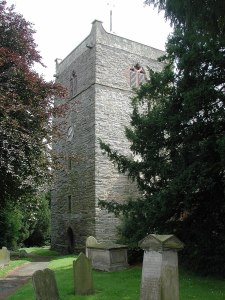
On Sunday 21 August, 1524, they entered the church during divine service with 14 armed people, and would have killed Thomas Leighton and Margaret, (William) Bayley’s wife, who were in the chancel, if the parishioners had not prevented it. After that, John and William Corbett, and Joyce, wife of the former, with 12 others, went to the parsonage, pulled Margaret Bayley out of the house, and beat her, being great with child, so that she is like to die, and boasted that they would slay her husband, who was advised not to return home. He (Bayley) went to Sir Richard Herbert, steward, asking him to see the King’s peace kept. Herbert sent for the Corbetts and their accomplices, but they would not appear before him. He then sent Bayley home with servants of his own, but he dared not stay in the house, but went to the sessions at Shrewsbury, 22 September 1524, and presented bills before the judges, which were thrown out by the jury, as the foreman was Corbetts’ cousin, and several jurymen said they could not live in the country if they did otherwise.
 CAROLINE ANGUS