
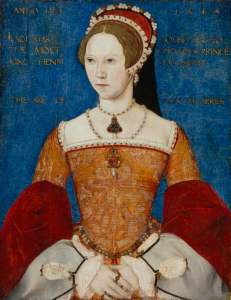
In an uncharacteristically rude manner, Cromwell writes to Princess Mary, no doubt under command to the King, and admonishes her for not signing the oath and swearing loyalty to her father. Princess Mary was in grave danger by this time, and Cromwell knew that Mary’s allegiance to Henry was the only thing that would save her. But after years of kind words to Mary, this letter must have arrived at Hunsdon to her great surprise.
CROMWELL TO THE PRINCESS MARY, 10 June 1536 (MSS Otho. C. x. 273)
I have received your letters, whereby it appears you be in great discomfort, and do desire that I should find the means to speak with you. Your discomfort can be no greater than mine, who upon your letters have spoken so much of your repentance for your wilful obstinacy against the King, and of your humble submission to obey his pleasure and laws in all things without exception or qualification. Knowing how diversely and contrarily you have proceeded at the late being of his Majesty’s Council with you, I am ashamed of what I have said and afraid of what I have done. What the sequel shall be God knows. With your folly you undo yourself, and I say to you, as I have said elsewhere heretofore, it were pity you should not be an example in punishment, if you will make yourself an example in the contempt of God, your natural father and his laws by your only fantasy, contrary to the judgments and determinations of all men that ye must confess do know and love God as well as you. To be plain with you, I think you the most obstinate woman that ever was, and I dare not open my lips to name you unless I have such a ground thereto that it may appear you were mistaken, or at least that you repent your ingratitude and are ready to do your duty. I have therefore sent you a book of articles to subscribe, on receiving which from you again, with a letter declaring that you think in your heart as you have subscribed with your hand, I will venture to speak for your reconciliation. If you do not leave all sinister counsels, which have brought you to the point of undoing, I take leave of you for ever, and desire you to write to me no more, for I will never think you other than the most ungrateful, unnatural, and most obstinate person living, both to God and your most dear and benign father. And I advise you to nothing, but I beseech God never to help me if I know it not so certainly to be your bounden duty, by God’s laws and man’s laws, that I must needs judge that person that shall refuse it not meet to live in a Christian congregation; to the witness whereof I take Christ, whose mercy I refuse if I write anything unto you that I have not professed in my heart and know to be true.
Princess Mary wrote to Cromwell that same day: ‘You will see I have followed your advice and will do so in all things concerning my duty to the King, God and my conscience not offended; for I take you as one of my chief friends next his Grace and the Queen. I desire you, for Christ’s passion, to find means that I be not moved to any further entry in this matter than I have done; for I assure you I have done the utmost my conscience will suffer me, and I neither desire nor intend to do less than I have done.’[1]
Another letter arrived from Princess Mary on 13 June, saying she had copied the letter Cromwell had ordered her to copy out and send to Henry, and she added, ‘Good Mr. Secretary, I do thank you with all my heart for the great pain and suit you have had for me. I see by your letters that you mislike my exception in my letter to the King. I assure you I did not mean it as you take it, for I do not mistrust that the King’s goodness will move me to do anything which should offend God and my conscience. But that which I did write was only by the reason of continual custom; for I have always used both in writing and speaking to except God in all things, same word for word; and it is unsealed, because I cannot endure to write another copy.’[2]
[1] MSS Otho, C. x. 262 b, 125, 10 Jun 1536
[2] MSS Otho, C. x. 263 b, 13 Jun 1536
 CAROLINE ANGUS