
The authorities at the University of Oxford had, for approximately six months, been creating laws contrary to the King’s, creating overly serious punishments for perceived crimes of locals. The Submission of the Clergy meant that the power to make laws, dispense justice, and decide upon punishments and fines, had all transferred away from those in the church to the crown. The University and the clergy could no longer had the right to do as they pleased and the king was furious at the usurpation of his power. A list of complaints exists, centred mostly around William Tresham, the commissary of the University, attempting to enact laws and speaking in the king’s name to the townspeople. The men of the university were essentially trying to extort money and goods from the local marketplace, which held special large events at multiple times per years, to the profit of the locals. Oxford University was still attempted to extort their cut of the profits, which they were no longer entitled to take. The University wrote to Cromwell the same day as his letter, arguing that they were, ‘molested by the townspeople, who did not understand the University’s privileges.’
The wording in today’s world may not sound harsh, but to receive words like those from Secretary Thomas Cromwell, as so commanded by King Henry, meant they were very serious about curbing Oxford’s power. Cromwell had worked around Oxford for years, both before and after his time with Wolsey, on the building of Christ’s, later King’s, College, and William Tresham was a friend, who had called upon Cromwell multiple times as a lawyer and colleague. The letter may seem simple enough, but it marks a clear line where Catholic control and privilege was being removed in England.
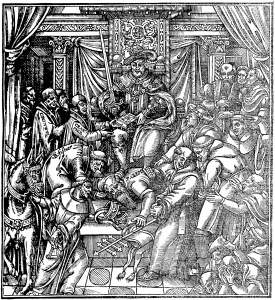
CROMWELL TO THE UNIVERSITY OF OXFORD, 6 May 1534 (LP vii no. 618)
To the Chuncelour and comissarie wt other the heddes and membres of the vnyversite of Oxforde be this given
I commend me to you and advertise to you that the king’s highness is credibly informed of your abusings, usurpations and ungentle demeanour used towards the king’s highness’ subjects and inhabitants of the town of Oxford and suburbs of the same. I cannot but marvel that you, being men of learning, and in whom should remain both wisdom and discretion, will, in such ways, demean yourself, not only in making of laws and ordinances amongst yourself to their hindrance, hurt and prejudice, but also contrary to the king’s laws, which appertain to you, to have proceeded for nothing but mere malice.
Wherefore, intending to conduce and elect you to some good conformity and quietness, the king’s highness, therefore, has commanded me to advise you not only to restore all such persons as you have discommoned (deprived), permitting them to do and occupy as they did before, without maintaining or suffering any scholar or servants who they are occupied with in the town or suburb of the same as a burgesses (citizens), except if he or they do agree with the said burgesses.
But also, that in no ways you do vex, trouble or inquiet any of the said inhabitants by suspension, excommunication, discommoning, banishment or otherwise, using such discretion that all variances may cease and be stayed amongst you. So as all malice and evil will being contemned and expulsed from you, good amity, peace, and quietness may take place accordingly.
And doubt you not, or it be long the King’s Council, by his gracious commandment, will and have determined to set such an end and redress amongst you, as god willing shall be an establishing of a perpetual peace, good unity and accord amongst you forever. Fail not in this to do as you will answer to the king’s highness and avoid the danger of his indignation and high displeasure. And so fare you well.
 CAROLINE ANGUS