
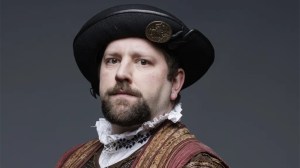
From The Private Life of Thomas Cromwell –
Richard Williams was born around 1510, the son of Morgan Williams, a Welsh lawyer based in the Wandsworth/Putney area, and Katherine Cromwell (died 1517), the eldest sister of Thomas Cromwell. Initially, Richard and his brothers Gregory and Walter were all named Williams after their father, who worked for Thomas Grey, 2nd Marquis of Dorset and the wider Grey family. From about age 10, Richard worked with his father Morgan, and his uncle, fellow lawyer Thomas Cromwell, who had married Elizabeth Williams nee Wyckes. Morgan Williams died in 1528, likely of the same sweating sickness that killed Elizabeth Cromwell (and her daughters one year later). All three Williams children were part of the Cromwell household, as were their cousins Christopher, William, and Alice Wellyfed (children of Thomas Cromwell’s sister Elizabeth and her husband William Wellyfed), in London when the sweating sickness attacked the population.
By 1529, Richard was working for his uncle, and changed his surname to Cromwell, as did his brother Walter. Middle brother Gregory stayed as Williams, to avoid confusion with Thomas Cromwell’s son Gregory. Richard Cromwell rose in noble favour, liked and respected by all, working for Stephen Gardiner between 1530-1533 before going back to his uncle to see through the Dissolution of the Monasteries. In the process, Richard was awarded many great lands and homes, including the family manor in Hinchinbrooke. Richard married Frances Murfyn, stepdaughter of London mayor (and Cromwell family friend) Sir Thomas Denys in 1533, after initially looking to marry Catherine St. Leger of Anne Boleyn’s court (Anne prevented her lady from marrying a Cromwell).
During the early 1540s, Richard Cromwell was at the height of his power, benefiting from the immense wealth and influence he had acquired through his family’s connection to the dissolution of the monasteries and King Henry’s personal favour. By 1540, Richard Cromwell had firmly established himself as a wealthy landowner and loyal servant of the Crown. But the dramatic downfall of his uncle Thomas on July 28, 1540, marked a turning point in Richard’s career. Richard had been named ‘the king’s diamond’ at the May Day celebration only one month before Thomas Cromwell’s arrest, and was given a knighthood. A painting celebrating the moment Richard was given a diamond from the king’s hand still remains today. This favour with Henry meant that when his uncle had to be destroyed to appease Emperor Charles, Richard Cromwell did not suffer the same fate as his uncle. Richard was not only in the king’s service because of his uncle and had created strong relations with powerful nobles at court on his own merit. His position remained secure, though he would have been acutely aware of the dangers of falling into royal disfavour.
Richard became the High Sheriff of Cambridgeshire and Huntingdonshire in 1541, and MP for Huntingdonshire in parliament again in 1542. King Henry loved to be bestow lands and buildings on Richard, including Huntingdon and St Neots Priories, the Friary of St Francis, the Priory of St Helen Bishopsgate, Neath Abbey in near his family home in Glamorgan, Penally and Manobier manors, and the constableship of Goodrich Castle in the Welsh Marches. These properties each had valuations that ran into the hundreds of pounds back then, translating into being worth millions today. These all came thick and fast after Thomas Cromwell’s death, who had already ensured Richard gained many monasteries during dissolution in the 1530s. Richard soon became extremely wealthy, and was the only person allowed to openly mourn Thomas Cromwell at court. Life was not easy though, as Richard lost his wife Frances in early 1542, leaving behind only two surviving children, five-year-old Henry and newborn Francis.
By 1543, Henry VIII had turned his attention toward France, renewing hostilities that had long characterised Anglo-French relations. Richard Cromwell, an experienced soldier and a member of the gentry, played a major role in these military campaigns. In 1544, he joined the English army in the invasion of northern France, where Henry sought to reclaim lost English territories. Richard participated in the siege of Boulogne, a major English military success. This military involvement demonstrated his loyalty to Henry VIII and his commitment to securing favour at court. While he was primarily known as a landowner and administrator, his service in France reinforced his status as a capable and trusted nobleman. His involvement in these campaigns also reflected his continuing ability to navigate the complexities of Tudor politics despite the stain of his uncle’s downfall.
Sir Richard Cromwell’s life was cut short in 1544 aged only 34, possibly from illness likely picked up during the French campaign. His death did not lead to the downfall of his family; rather, his descendants continued to hold influence, with his great-grandson, Oliver Cromwell, rising to become Lord Protector of England in the mid-17th century, with catastrophic consequences for the Cromwell name. After Oliver Cromwell’s death, the family name was returned to Williams.
 CAROLINE ANGUS