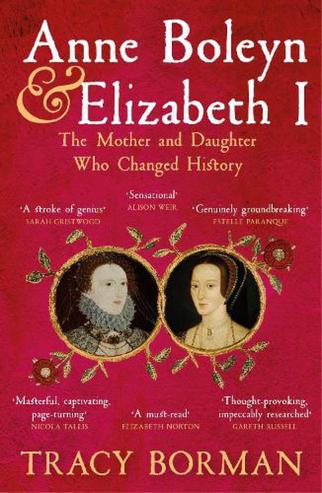
BOOK REVIEW: Anne Boleyn & Elizabeth I – The Mother and Daughter Who Changed History by Tracy Borman

Anne Boleyn may be best known for losing her head, but as Tudor expert Tracy Borman reveals in a book that recasts British history, her greatest legacy lies in the path-breaking reign of her daughter, ElizabethMuch of the fascination with Britain’s legendary Tudors centers around the dramas surrounding Henry VIII and his six wives and Elizabeth I’s rumored liaisons. Yet the most fascinating relationship in that historic era may well be that between the mother and daughter who, individually and collectively, changed the course of British history.

The future Queen Elizabeth was not yet three when her mother, Anne Boleyn, was beheaded on May 19, 1536, on Henry’s order, incensed that she had not given him a son and tired of her contentious nature. Elizabeth had been raised away from court, rarely even seeing Anne; and after her death, Henry tried in every way to erase Anne’s presence and memory. At that moment in history, few could have predicted that mother and daughter would each leave enduring, and interlocked, legacies. Yet as Tracy Borman reveals in this first-ever joint portrait, both women broke the mold for British queens and for women in general at the time. Anne was instrumental in reforming and reshaping forever Britain’s religious traditions, and her years of wielding power over a male-dominated court provided an inspiring role model for Elizabeth’s glittering, groundbreaking 45-year reign. Indeed, Borman shows how much Elizabeth–most visibly by refusing to ever marry, but in many other more subtle ways that defined her court–was influenced by her mother’s legacy.

In its originality, Anne Boleyn & Elizabeth I sheds new light on two of history’s most famous women–the private desires, hopes, and fears that lay behind their dazzling public personas, and the surprising influence each had on the other during and after their lifetimes. In the process, Tracy Borman reframes our understanding of the entire Tudor era.

In Anne Boleyn and Queen Elizabeth I: The Mother and Daughter Who Changed History, Tracy Borman offers a captivating exploration of the complex and enduring long-distance relationship between two of the most iconic figures in English history. This  work delves into the intertwined lives of Anne Boleyn, the ill-fated second wife of Henry VIII, and their daughter Queen Elizabeth I, one of England’s most celebrated monarchs.

Borman begins by providing an essential background on Anne Boleyn in her classic style of bringing out details others tend to miss, tracing Anne’s rise from a young courtier to Henry VIII’s queen consort. With meticulous attention to detail, the author paints a vivid portrait of Anne’s intelligence, charm, and ambition, as well as the political and religious forces that shaped her life. By exploring Anne’s influence on Henry and her role in the English Reformation, the author sets the stage for understanding her impact on her daughter, Elizabeth.

The heart of the book lies in the examination of the relationship between Anne Boleyn and Queen Elizabeth I, given they knew one another for less than three years. Borman delves into how Anne’s brief but tumultuous reign left a lasting imprint on her daughter, shaping her personality, her politics, and her approach to governance. Through meticulous analysis of historical records and contemporary accounts, the author uncovers how Elizabeth both emulated and distanced herself from her mother’s legacy.

One of the most fascinating aspects of the book is its exploration of Elizabeth’s upbringing and education. The author discusses how Elizabeth’s early years were marked by uncertainty and danger, as she navigated the treacherous political landscape of Tudor England. By examining the influence of Anne’s teachings and example on her daughter, the author offers valuable insights into Elizabeth’s development as a ruler and a woman.

Anne Boleyn and Queen Elizabeth I sheds light on the ways in which Elizabeth’s reign was shaped by her mother’s memory. Borman explores how Elizabeth used Anne’s legacy to her advantage, presenting herself as the rightful heir to the Tudor dynasty and emphasizing her connection to her mother’s royal lineage. Through careful analysis of Elizabeth’s speeches, portraits, and public persona, the author reveals how Anne’s ghost haunted and helped the Elizabethan court.

Anne Boleyn and Queen Elizabeth I is a captivating exploration of the enduring influence of Anne Boleyn on her daughter, Queen Elizabeth I. Borman’s engaging prose makes this book a must-read for anyone interested in Tudor history, the lives of remarkable women, or the dynamics of power and politics in early modern Europe. It is a pleasure to read about such powerful women, written by a masterful female author.
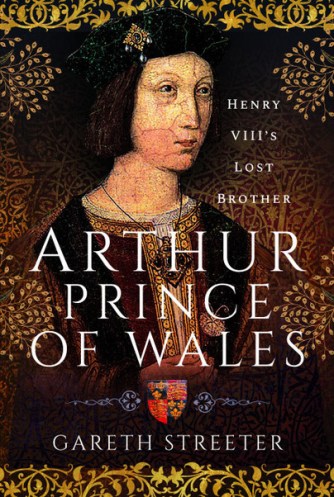
BOOK REVIEW: Arthur, Prince of Wales by Gareth Streeter

For too long, Arthur Tudor has been remembered only for what he never became. The boy who died prematurely and paved the way for the revolutionary reign of his younger brother, Henry VIII.
Yet, during his short life, Arthur was at the centre of one of the most tumultuous periods of England’s history. At the time of his birth, he represented his father’s hopes for a dynasty and England’s greatest chance of peace. As he grew, he witnessed feuds, survived rebellion and became the focal point of an international alliance.
From the threat of pretenders to West Country rebellions, the dramatic twists and turns of early Tudor England preoccupied Arthur’s thoughts. At a young age, he was dispatched to the Welsh border, becoming a figure head for a robust regional government. While never old enough to exercise full power in his dominion, he emerged as a figure of influence, beseeched by petitioners and consulted by courtiers. While the extent of his personal influence can only be guessed at, the sources that survive reveal a determined prince that came tantalisingly close to forging his future.
Finally, after years of negotiation, delay and frustration, the prince finally came face to face with his Spanish bride, Katharine of Aragon. The young couple had shared a destiny since the cradle. Securing the hand of this prestigious pride for his son had been a centre piece of Henry VII’s foreign policy. Yet, despite being 14 years in the making, the couple were to enjoy just five months together before Arthur succumbed to a mysterious illness.
Arthur’s death at the age of 15 was not just a personal tragedy for his parents. It changed the course of the future and deprived England of one of the most educated and cultivated princes in their history. Arthur would never wear the crown of England. But few Princes of Wales had been better prepared to rule.
‘Arthur, Prince of Wales: Henry VIII’s lost brother’ shows that Arthur Tudor was more than a prince who died. He was a boy that really lived.

In Arthur, Prince of Wales Gareth Streeter meticulously reconstructs the life and legacy of one of Tudor England’s questioned royal figures. What sort of king would Arthur have been? It is an interesting question, but the fifteen years Arthur spent alive are often forgotten in the wonders of what could have been. Drawing on historical sources and archival material, this book offers a portrait of Prince Arthur’s life, his childhood, upbringing,  and education, and his lasting impact on English history.

Streeter begins by tracing Arthur’s early years, from his birth in 1486 as the first son of King Henry VII and Elizabeth of York, to his education and training as the heir to the English throne. Through vivid storytelling and insightful analysis, the author explores the challenges and expectations that accompanied Arthur’s position as the future king, painting a picture of the royal court and the political intrigues of the time.

One of the book’s most compelling aspects is its exploration of Arthur’s marriage to Katharine of Aragon, a union intended to forge an alliance between England and Spain. Streeter delves into the complexities of their relationship, from their initial meeting to their wedding and wedding night(s), offering insights into the dynamics of their marriage and the role it played in shaping the course of English history.

Arthur, Prince of Wales provides a detailed account of Arthur’s brief reign as Prince of Wales, a period marked by hope and anticipation for the future of the Tudor dynasty. The author examines Arthur’s efforts to establish himself as a future ruler, as well as the challenges his father faced in asserting his authority in a kingdom still recovering from years of civil war and instability.

Tragically, Arthur’s reign was cut short by his untimely death in 1502, just months after his marriage to Katharine. The author explores the circumstances surrounding Arthur’s demise, including the various theories and rumours which have surrounded his death for centuries, and the realities his death brought to Katharine, his parents, and England.

Arthur, Prince of Wales is a patiently researched biography that offers a different perspective on one of England’s most intriguing royal figures. The narrative style makes this book a must-read for anyone interested in the Tudor era and the individuals who shaped it.

Available from Pen & Sword here

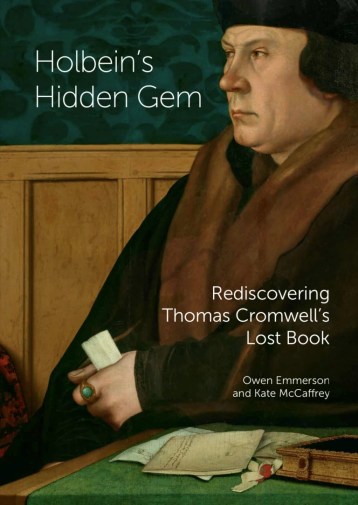
BOOK REVIEW: Holbein’s Hidden Gem: Rediscovering Thomas Cromwell’s Lost Book by Dr Owen Emmerson & Kate McCaffrey

In a discovery branded the most exciting Thomas Cromwell finding ‘in a generation’, historians Kate McCaffrey and Dr Owen Emmerson chart their discovery of a Book of Hours that once belonged to Thomas Cromwell, King Henry VIII’s Chief Minister. Hidden in plain sight, and recognised by Hever Castle’s curator Alison Palmer, the book is one of the only extant objects captured in a Tudor portrait, for it features in Hans Holbein the Younger’s celebrated painting of Cromwell.

Anyone familiar with this site or my work will surely understand how excited I was when I heard whispers of the discovery of Thomas Cromwell’s Book of Hours. To think Cromwell’s book, shown in the one and only surviving portrait of the man, could have sat undiscovered in the Wren Library for hundreds of years, only to be discovered as part of a different project, is the dream of a lifetime for any historian.

Holbein’s Hidden Gem: Rediscovering Thomas Cromwell’s Lost Book delivers a captivating exploration of a remarkable historical artefact and the discovery of the prayer book belonging to Thomas Cromwell, one of the most influential figures of Henry VIII’s court.

Emmerson and McCaffrey provide essential context about Thomas Cromwell and the work of Hans Holbein, but at the heart of the book lies in the analysis of the Cromwell Book of Hours itself. The authors take readers on a journey through the pages of this beautifully preserved book, exploring its contents, its symbolism, and its historical significance. Through detailed descriptions and insightful commentary, the authors highlight the ways the Book reflects beliefs, religious practices, and cultural interests in the Tudor period.

This book tells the story of the authors’ discovery and the evidence that links it to the Sadler family – Ralph Sadler being Cromwell’s ward, friend and protégé between 1514 – 1540. Emmerson and McCaffrey show readers  how the discovery was made, and the trail of evidence that links it to the Sadler family – Ralph Sadler was a close friend and protégé of Cromwell, and it was the wife of his grandson who donated it to the college. Emmerson and McCaffrey also examine the evidence that proves this Book to be the exact one in the famous 1532 Hans Holbein portrait of Henry VIII’s chief minister.  The book takes readers through the journey to ensuring the authenticity of the Book and its provenance, guiding readers through the various stages of how an item is proven as authentic, followed by well-written and knowledgeable insight proving what can be guaranteed in the study, and what remains unknown.

Cromwell’s Book of Hours was discovered while the authors were hosting an exhibition of the exact same Books belonging to Katharine of Aragon and Anne Boleyn on display at Hever Castle, and how this third copy came to be shown to the world once again.  These authors have literally redefined history with their work in these books, and for this Cromwell lover, it gives hope that certain items of the great man may still exist. The world should be grateful these remarkable Books, created in the late 1520s, are in such safe hands with people like Dr Owen Emmerson and Kate McCaffrey.

Holbein’s Hidden Gem: Rediscovering Thomas Cromwell’s Lost Book is only available through Hever Castle.